CarCareTruth Score
Decent, but it's tough on the environment.
Opens Amazon in a new tab. No account needed to look.
Saved to your guest loadout. Sign up to also save to your Cabinet (consumables) or Kit (tools you own).
As an Amazon Associate I earn from qualifying purchases. Full disclosure
Prices may varyThe manufacturer's Safety Data Sheet classifies this product with one or more GHS Category 1 health hazards — the most severe tier. The hazard statements in quotes below are the verbatim GHS language from the SDS, as required by OSHA's Hazard Communication Standard. The line under each statement translates the GHS classification into plain language.
GHS Category 1 aspiration toxicity — thin, oily liquids can slip into the lungs if swallowed, causing chemical pneumonia.
If swallowed:
The aspiration hazard (H304) is about the liquid being swallowed and reaching the airway, not about breathing fumes during normal use.
Call Poison Control immediately at 1-800-222-1222 (US, 24/7, free) and have the product container with you. Poison Control's standing guidance is to not induce vomiting after chemical exposure; they will direct first-aid steps based on the specific product.
About this product's hazards. This product's Safety Data Sheet uses signal word DANGER.Read the manufacturer's SDS and follow all safety instructions before use. CarCareTruth ratings translate the manufacturer's safety sheet. They do not replace the SDS or substitute for a hazard assessment specific to your task.
Health score is for adult use as intended, per the manufacturer's SDS. It does not model child ingestion, accidental spill cleanup, or off-label use. See the safety panel below for full hazard classification, and /disclaimer for the full editorial scope.
GHS hazard codes are quoted from the manufacturer’s Safety Data Sheet. PPE tiers below translate those codes and the listed ingredient chemistry; they are not CarCareTruth recommendations.
Show details for all categories ▾Hide details ▴
Only when: splash risk · prolonged use
Translated from the manufacturer’s Safety Data Sheet, Section 8
SDS Section 8 calls for safety glasses, with chemical goggles specified if splashing is possible. Section 2 carries no eye-hazard GHS code (no H318/H319) and Section 11 states the classification criteria for serious eye damage/eye irritation are not met, so this is a splash precaution rather than a mixture-level eye hazard.
CarCareTruth publishes the cited sources verbatim and does not advise what action a user should take. Consult the full SDS before use.
Only when: prolonged use
Translated from the manufacturer’s Safety Data Sheet, Section 8
No H314, H315, or H317 classified at the mixture level in SDS §2. SDS §8 specifies nitrile or FKM gloves for general protective use. Skin contact from suede applicator pad is the realistic exposure route · glove use is SDS-recommended during application given the petroleum-naphtha and aromatic solvent carrier.
CarCareTruth publishes the cited sources verbatim and does not advise what action a user should take. Consult the full SDS before use.
Only when: in enclosed space · prolonged use
Translated from the manufacturer’s Safety Data Sheet, Section 2
H373 (STOT RE 2 · may cause organ damage through prolonged or repeated exposure) reflects the chronic occupational concern for the petroleum-naphtha/aromatic carrier, not an acute single-session inhalation hazard. No H334 (respiratory sensitizer) or H335 (respiratory irritant) classified in SDS §2. SDS §8 states breathing protection is not required under correct use and normal conditions; specifies respirator only when exposure limits are exceeded or ventilation is insufficient.
U.S. regulatory standard
29 CFR 1910.134; 1910.138; 1910.1000
“the primary objective shall be to prevent atmospheric contamination…”
OSHA standards apply to workplaces. Cited here as the U.S. reference threshold for the underlying hazard class.
UN GHS hazard statement
H373“May cause damage to organs through prolonged or repeated exposure”
UN GHS Rev. 9 (2021)
CarCareTruth publishes the cited sources verbatim and does not advise what action a user should take. Consult the full SDS before use.
No PPE specified in published sources for ventilation. Absence does not imply “not needed” — consult the full Safety Data Sheet.
PPE tiers translate the manufacturer’s SDS and U.S. regulatory standards. Not professional safety advice. How we report safety.
Scope of these PPE tiers. The tiers on this page translate the product's Safety Data Sheet where one is published, plus its ingredient chemistry, into a comparable rating. They describe a formulation, not a situation: a tier is not a safety determination for any specific user, task, quantity, or environment. The manufacturer's label and use instructions govern how the product is handled. Where the product is used at work, the employer's PPE program and hazard assessment under 29 CFR 1910.132 decide what protection is selected, not this page.
No warranties. CarCareTruth makes no warranties, express or implied, and expressly disclaims the implied warranties of merchantability and fitness for a particular purpose.
This product ranks #2 of 29 in Ceramic Coating.
Last reviewed August 1, 2026
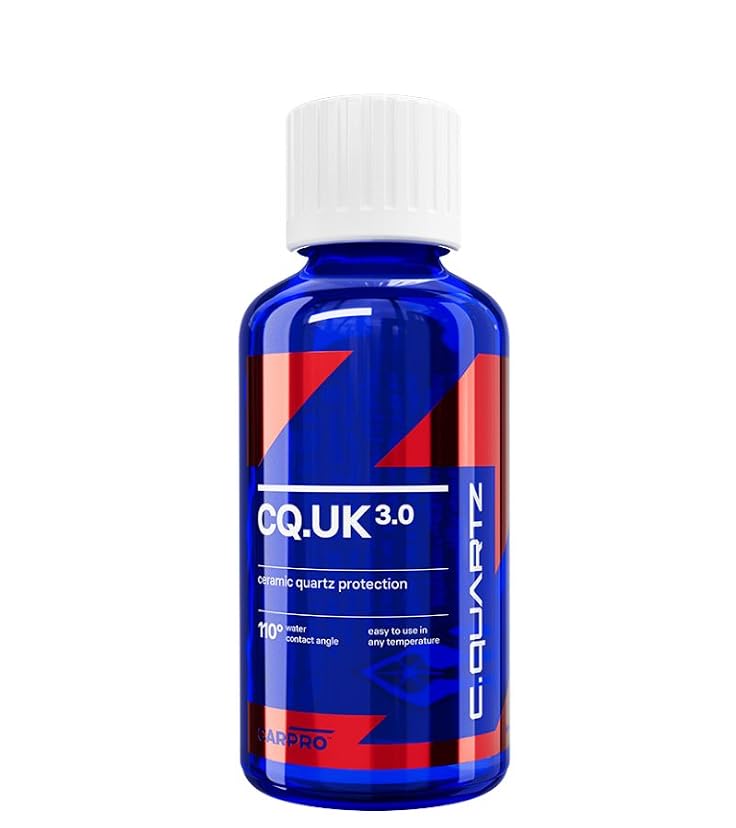
TL;DR CarPro Cquartz UK 3.0 carries a DANGER signal word, driven by H304 aspiration toxicity in its solvent-based carrier: keep it away from children, since the real exposure risk during normal application is the milder solvent vapor covered below. Forum members tracking daily drivers report 2-4 years of strong water beading and gloss, short of CarPro's 5-year best-case claim, with a flash window as fast as 30 seconds in summer heat that trips up first-timers.
Cquartz UK 3.0 bonds a hard, glassy film onto paint, glass, metal, and plastic that sheds water and resists iron fallout for years once cured. Apply panel by panel after decontamination and an alcohol wipe-down; the flash window is the tricky part, as little as 30 seconds in summer heat, up to 3 minutes in mild weather, and 10 minutes or more below 60°F. Both kit sizes bundle CarPro's Reload topper for maintenance. Community threads tracking daily drivers put real-world durability at 2-4 years with routine washing, short of CarPro's 5-year ceiling.
Best for detailers with ceramic-coating experience, working section by section in a cool, shaded space where the flash window stays forgiving. Skip it for a first ceramic-coating attempt in summer heat or without climate control; the tight flash window regularly produces high spots needing compounding to fix. A consumer SiO2 spray coating with a longer working window gets most buyers similar protection with far less risk.
The SDS classifies Cquartz UK 3.0 as DANGER, driven by H304 aspiration toxicity. The SDS precautionary statement for H304 specifies: do not induce vomiting, contact a poison center or doctor immediately, and keep it away from children. H373 flags a separate, chronic concern from repeated solvent exposure, not a single-session hazard, and the 32°C flash point calls for outdoor use or an open garage door, away from heat and flame. Safety glasses and nitrile or FKM gloves cover normal handling. Toluene, methanol, and ethylbenzene, all disclosed ingredients, are California Proposition 65 listed developmental and reproductive toxins; no US bottle has ever shown a posted warning, so this Prop 65 flag reflects the ingredient chemistry, not a confirmed label. VOC content sits in the higher bracket for the category, some solvents are aquatic-toxic at the ingredient level and only partially biodegrade, and drips should stay out of storm drains.
Community long-term data from AutoGeek Online and AutoDetailing forums (2022-2025) puts typical durability at 2-4 years on a daily driver with routine maintenance washes. CarPro claims 2-5 years, with 5 years described as achievable under ideal conditions. Outdoor daily-driver use with weekly washes typically sees 2-3 years of active hydrophobicity before retreatment is warranted.
Flash time is highly temperature-dependent: at 70-80°F (21-27°C), most applicators report 1-3 minutes; in heat above 90°F, flash can begin in under 60 seconds; in cool conditions below 60°F, it can stretch beyond 10-15 minutes. AutoGeek forum threads document high-spot formation from under-leveled applications at high temperatures. The product is rated intermediate in difficulty · experienced home detailers succeed, but first-timers in summer heat regularly need correction. Working in a shaded, temperature-controlled garage and tackling one panel at a time is the community-documented approach.
This refers to the purity of the SiO₂ component itself, not the total SiO₂ content of the working fluid. The SDS §3 does not list a specific SiO₂ percentage. The actual SiO₂ active concentration in the coating formula is not publicly disclosed by CarPro. The label claim describes the quality specification of the silica component used · not the percentage of silica in the bottle. That distinction matters when comparing coating percentages across brands.
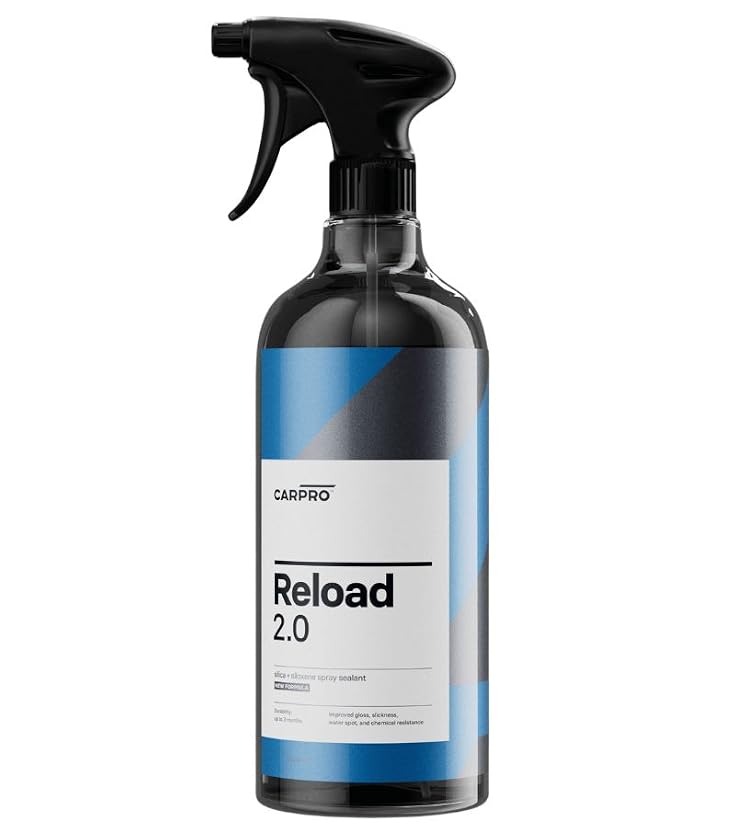
The 30ml and 50ml kit versions include Reload 2.0, which CarPro designs as the native maintenance booster for the CQuartz ecosystem. Community evidence on AutoGeek and AutoDetailing forums confirms clean application of Reload 2.0 on CQuartz-coated surfaces without bonding issues. Other SiO₂ boosters can be used for maintenance, but CarPro's own CQuartz maintenance products are the best-documented pairing. CarPro recommends waiting at least 7 days after coating cure before applying any maintenance product.
The DANGER signal word in the SDS §2 is driven by H304 (Asp. Tox. 1 · aspiration toxicity). The SDS precautionary statement for H304 specifies: do not induce vomiting · contact a poison center or doctor immediately. H304 means that if the liquid is accidentally ingested and reaches the airways (not swallowed normally), it can cause serious lung damage · a property of petroleum-based liquids in general. This is the same classification applied to Stoddard solvent and naphtha-based products broadly. It is an ingestion-pathway hazard, not an inhalation hazard during normal application. Keep out of reach of children. Applied correctly on an exterior vehicle surface by an adult, the practical exposure risk during application is the aromatic solvent vapors, which the SDS addresses under H373.
Marketing copy from CarPro, via Amazon. Not editorial.
Guide
Ceramic Coating vs Wax vs Sealant: Which Lasts Longest
Carnauba wax lasts 4 to 8 weeks, synthetic sealant 3 to 6 months, DIY ceramic coating 12 to 36 months, professional ceramic 3 to 7 years. The chemistry is the reason. Hybrid ceramic sprays sit with the sealants on durability, not with the ceramics.
Guide
How Long Does Ceramic Coating Actually Last on a Car
A pro-installed coating on a garaged car can hold five to seven years. A DIY 9H kit on an outdoor daily driver lands closer to one to two. Durability is set by prep quality, wash chemistry, parking, and UV dose, not by the warranty number on the box.
Weekly pick
One product, one safety verdict, every week. No spam.
Currently in the top 2 of its category — appears as a pick in:

Optimum
Gloss-Coat
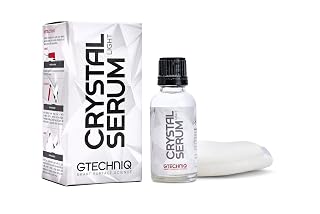
Gtechniq
Crystal Serum Light
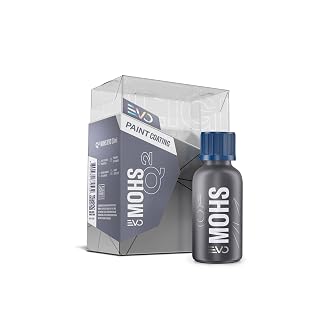
Gyeon
Q2 Mohs EVO
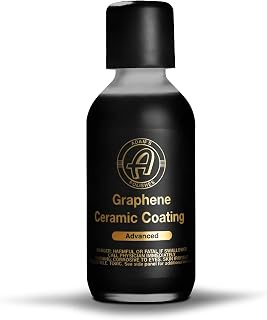
Adam's Polishes
Advanced Graphene Ceramic Coating
As an Amazon Associate I earn from qualifying purchases. Full disclosure

Community
0 postsShare how you use this product
Drop a quick comment or post a full review with photos and a star rating.
Sign in to postNew here? Create a free account.