CarCareTruth Score
Decent.
Opens Amazon in a new tab. No account needed to look.
Saved to your guest loadout. Sign up to also save to your Cabinet (consumables) or Kit (tools you own).
As an Amazon Associate I earn from qualifying purchases. Full disclosure
Prices may varyHealth score is for adult use as intended, per the manufacturer's SDS. It does not model child ingestion, accidental spill cleanup, or off-label use. See the safety panel below for full hazard classification, and /disclaimer for the full editorial scope.
GHS hazard codes are quoted from the manufacturer’s Safety Data Sheet. PPE tiers below translate those codes and the listed ingredient chemistry; they are not CarCareTruth recommendations.
Show details for all categories ▾Hide details ▴
Translated from the manufacturer’s Safety Data Sheet, Section 8
SDS §2 classifies H319 'causes serious eye irritation' (Cat 2), and §8 calls for eye protection (safety glasses / splash goggles). Because the coating is wiped onto overhead and vertical panels where a drip or splash toward the face is realistic, eye protection is indicated for application.
U.S. regulatory standard
29 CFR 1910.133(a)(1)
“The employer shall ensure that each affected employee uses appropriate eye or face protection when exposed to eye or face hazards from… liquid chemicals…”
ANSI Z87.1 (incorporated via §1910.6)
OSHA standards apply to workplaces. Cited here as the U.S. reference threshold for the underlying hazard class.
CarCareTruth publishes the cited sources verbatim and does not advise what action a user should take. Consult the full SDS before use.
Translated from the manufacturer’s Safety Data Sheet, Section 2
H315 skin irritation (Cat 2) classified at mixture level in SDS §2; gloves are indicated for application contact.
U.S. regulatory standard
29 CFR 1910.138(a)
“appropriate hand protection when employees' hands are exposed to hazards such as those from… chemicals which produce an adverse effect on the skin or eyes…”
OSHA standards apply to workplaces. Cited here as the U.S. reference threshold for the underlying hazard class.
CarCareTruth publishes the cited sources verbatim and does not advise what action a user should take. Consult the full SDS before use.
Only when: in enclosed space
Translated from the manufacturer’s Safety Data Sheet, Section 2
H227 combustible liquid (physical hazard, not a respiratory health code); apply in an open garage or outdoors; no H335 or H334 classified in SDS §2.
CarCareTruth publishes the cited sources verbatim and does not advise what action a user should take. Consult the full SDS before use.
No PPE specified in published sources for ventilation. Absence does not imply “not needed” — consult the full Safety Data Sheet.
PPE tiers translate the manufacturer’s SDS and U.S. regulatory standards. Not professional safety advice. How we report safety.
Scope of these PPE tiers. The tiers on this page translate the product's Safety Data Sheet where one is published, plus its ingredient chemistry, into a comparable rating. They describe a formulation, not a situation: a tier is not a safety determination for any specific user, task, quantity, or environment. The manufacturer's label and use instructions govern how the product is handled. Where the product is used at work, the employer's PPE program and hazard assessment under 29 CFR 1910.132 decide what protection is selected, not this page.
No warranties. CarCareTruth makes no warranties, express or implied, and expressly disclaims the implied warranties of merchantability and fitness for a particular purpose.
This product ranks #1 of 29 in Ceramic Coating.
Last reviewed August 1, 2026
TL;DR Optimum rates Gloss-Coat for up to 3 years, and owners back it: 2 to 3 years of water-beading on daily drivers is the common report, with feedback going back to 2015. One 20 mL syringe covers about two vehicles, and it protects more than paint: wheels, chrome, plastic trim, and bumpers are all fair game (glass is the one exception). A 30-minute working window lets a first-timer coat a full panel without rushing, which makes this one of the more approachable ceramics out there.
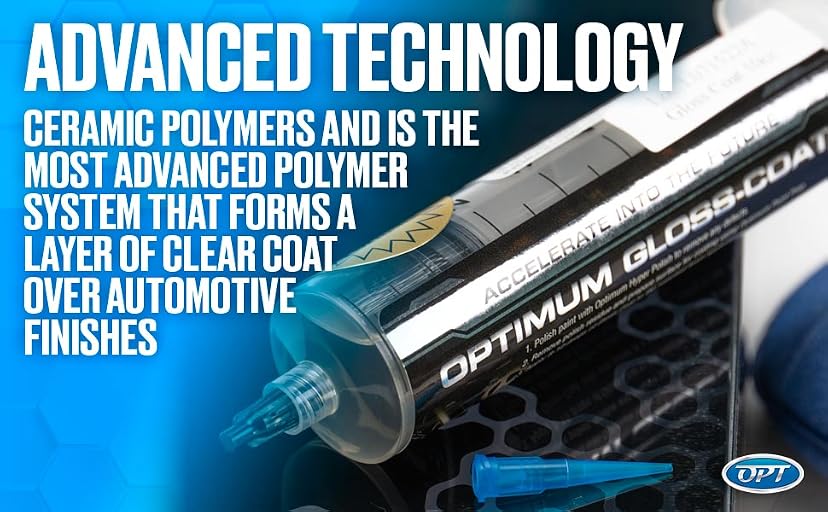
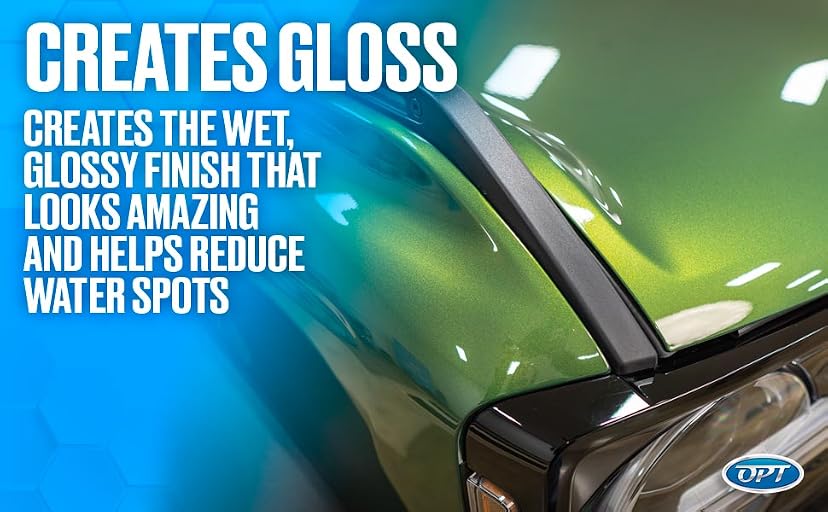
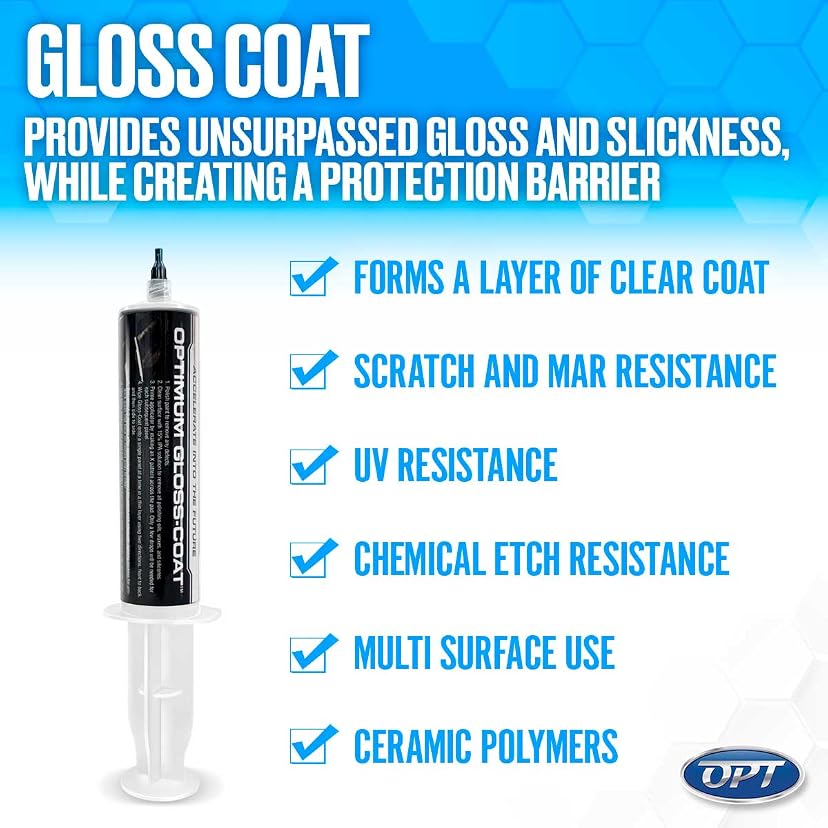
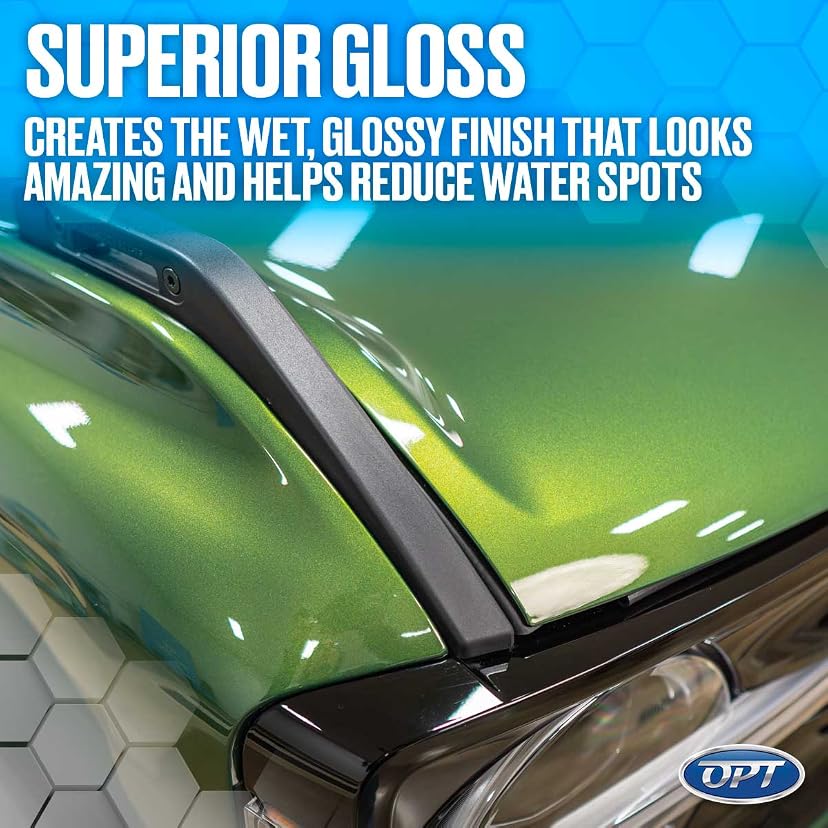
Gloss-Coat is a SiC/SiO2 hybrid that bonds to your clear coat and lays down a hard, water-shedding barrier with strong UV and chemical-etch resistance. For a real ceramic it goes on unusually easily, in six steps: polish out defects, wipe the panel with a 15% isopropyl-alcohol solution, then apply thin coats one section at a time and level the streaks before they set. It's dry to the touch in about 30 minutes, driveable in an hour, and fully cured over the following week. The silicon-carbide-and-silica chemistry is rare at the consumer level, and owners single out the standout water beading and a clean, reflective finish.
A solid pick for owners who want multi-year protection without a stressful install. The forgiving working window and two-vehicle coverage (or one car plus its wheels) make it beginner-friendly. Just know the SiC/SiO2 hardness is manufacturer-described rather than independently bench-tested, which is the norm for consumer coatings, not an Optimum gap. The job still rewards proper prep, and you'll want an applicator pad and leveling microfiber on hand, so check the listing for what's included before ordering. Before you buy, note that our health score for this product recently moved, purely from a scoring correction; see the safety section below for the honest version. Want protection with less commitment? Optimum's Ultra Ceramic Seal is an easier spray-on step down and Opti-Seal is a quick sealant, both less durable but far faster to apply.
The safety data sheet keeps this straightforward. It classifies skin and eye irritation at Category 2 under the WARNING signal word, not DANGER. The eyes are the part to respect: the SDS flags "serious eye irritation," so wear eye protection along with nitrile gloves, especially on overhead panels where a drip can reach your face. Past that the file is clean: no respiratory hazard, no carcinogens, no PFAS, no Proposition 65. Gloss-Coat's silicone carrier also has a much higher flash point than alcohol-based coatings, around 170°F, so it's less volatile to work with, though a ventilated garage is still the right call.
We score this a 6.0 out of 10 on health, down from an 8.5 we published earlier. Nothing about the product changed; the drop is a correction to how we calculate the score, which now starts every ceramic coating from a chemical-class baseline and applies a hazard ceiling once a Category-2 skin or eye code appears, a step the old method skipped. Even at 6.0, this is still the cleanest chemistry we've scored in a category that otherwise runs 4.0-5.0, and it no longer clears the bar for our Recommended badge. Our SDS copy also dates to June 2023, just past our 3-year full-confidence window, though we've confirmed it's still Optimum's current revision. Environment scores 7.0 out of 10: a leave-on coating with negligible regulatory VOC keeps the footprint modest.
Optimum rates it for up to 3 years, and owners regularly report 2 to 3 years of protection on daily drivers, with feedback going back to 2015. Real-world durability leans heavily on prep and upkeep, so treat 2 to 3 years as a realistic target rather than a guarantee. Even at the conservative end, that is a longer durability window than most consumer coatings deliver. For what actually drives coating lifespan, see our guide to [how long ceramic coatings last](/guides/how-long-does-ceramic-coating-actually-last).
More so than many ceramic coatings. It dries to the touch in about 30 minutes, a far more forgiving working window than fast-flash coatings that skin over in 60 to 90 seconds. The job is six steps: polish out any defects, wipe the panel down with a 15% isopropyl-alcohol solution, then apply thin coats one panel at a time and level the streaks before they cure. You will want an applicator pad and a leveling microfiber on hand, so check the specific listing for what is included before you order.
For the best result, yes. Optimum's process starts with polishing out defects, then a wipe-down with a 15% isopropyl-alcohol solution to strip away polishing oils and old wax so the coating can bond to bare clear coat. A coating locks in whatever is underneath, so any swirls or water spots left in the paint get sealed in too. You can apply it over clean, decontaminated paint without full correction, but skipping the prep is the most common reason a coating underperforms.
Work in the shade on a cool panel, never in direct sun, and follow general coating guidance of staying above roughly 50°F. Heat makes the coating flash and streak faster, which shrinks your already-generous 30-minute window, so a shaded garage or an overcast day is ideal. Optimum does not publish a strict temperature range for this kit, so treat these as standard application conditions rather than a hard spec.
You can drive the car one hour after application, but full cure takes about 7 days, so keep it out of the rain and hold off on washing during that first week. Once cured, you can top it with any non-abrasive wax or sealant to add gloss, though no topper is needed to keep the water-beading working. If you are still deciding between a coating, a wax, and a sealant, our guide on [which lasts longest](/guides/ceramic-coating-vs-wax-vs-sealant-which-lasts-longest) breaks down the trade-offs.
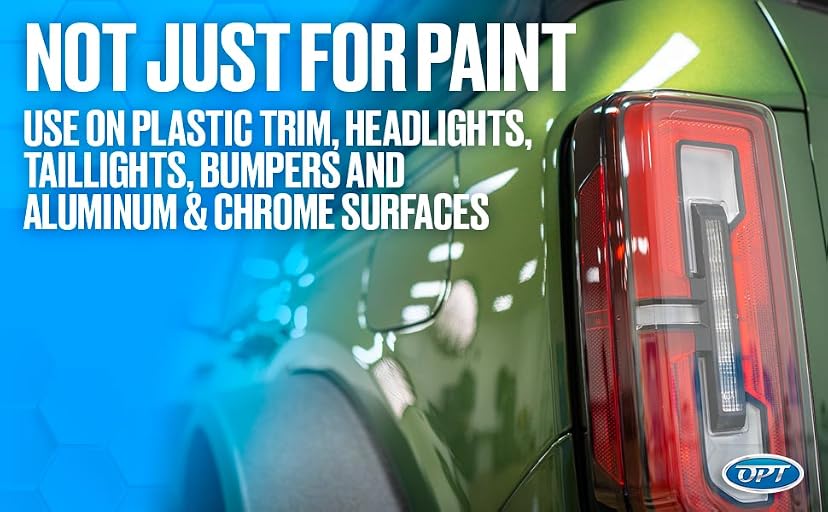
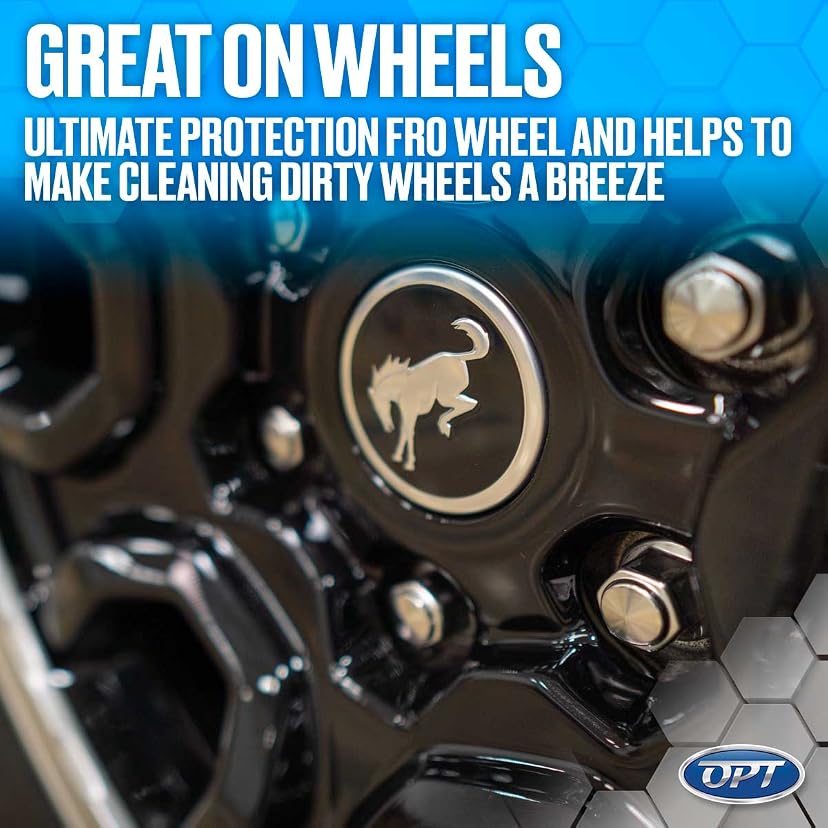
One 20 mL syringe covers about 36 square feet, which Optimum markets as a Two Vehicle Kit, so it is enough for two cars or one vehicle plus the wheels with product to spare. Optimum approves it for painted surfaces, wheels, chrome trim, exhaust tips, plastic trim, bumpers, and aluminum. The one exception is glass: Optimum directs glass to their separate Opti-Glass coating.
Both are sensible. The safety data sheet lists skin irritation and 'serious eye irritation,' and its own handling guidance calls for gloves and eye protection. Nitrile gloves cover the skin-contact side, and eye protection matters because you are often wiping the coating onto overhead panels where a drip can reach your face. No respiratory hazard is classified, so normal garage ventilation is fine. For when detailing products actually warrant gear, see our [PPE guide for home detailers](/guides/ppe-for-home-detailers-when-you-need-gloves-respirator).
No. The safety data sheet lists no Proposition 65 substances, and the product listing carries no Prop 65 warning.
No. The safety data sheet lists no fluorinated (PFAS) ingredients and no isocyanate crosslinkers. The active bonding ingredient is an aminosiloxane and the film-former is a polysilazane, both standard silicone-family chemistries.
D5 (decamethylcyclopentasiloxane) is the carrier solvent here, and it is used across much of the consumer-coating industry, not just by Optimum. Europe lists D5 as a substance of very high concern for environmental persistence, but that classification does not apply under US regulations, and the safety data sheet's own testing shows no long-term aquatic toxicity at this formula's concentration. It carries no aquatic hazard codes.
Marketing copy from Optimum, via Amazon. Not editorial.
Weekly pick
One product, one safety verdict, every week. No spam.
Currently in the top 2 of its category — appears as a pick in:


CarPro
Cquartz UK 3.0
Gtechniq
Crystal Serum Light
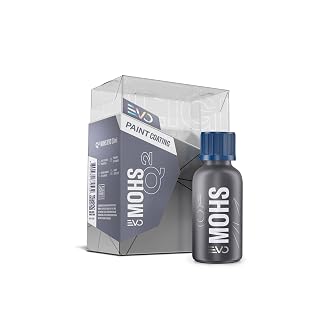
Gyeon
Q2 Mohs EVO
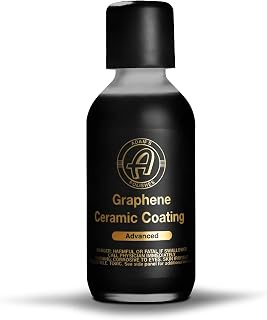
Adam's Polishes
Advanced Graphene Ceramic Coating
As an Amazon Associate I earn from qualifying purchases. Full disclosure

Community
0 postsShare how you use this product
Drop a quick comment or post a full review with photos and a star rating.
Sign in to postNew here? Create a free account.