CarCareTruth Score
Recommended.
Opens Amazon in a new tab. No account needed to look.
Saved to your guest loadout. Sign up to also save to your Cabinet (consumables) or Kit (tools you own).
As an Amazon Associate I earn from qualifying purchases. Full disclosure
Prices may varyHealth score is for adult use as intended, per the manufacturer's SDS. It does not model child ingestion, accidental spill cleanup, or off-label use. See the safety panel below for full hazard classification, and /disclaimer for the full editorial scope.
GHS hazard codes are quoted from the manufacturer’s Safety Data Sheet. PPE tiers below translate those codes and the listed ingredient chemistry; they are not CarCareTruth recommendations.
Show details for all categories ▾Hide details ▴
Only when: misting overhead · when spraying
Translated from the manufacturer’s Safety Data Sheet, Section 2
H319 eye irritation (Cat 2A) · spray mist from pump application can cause temporary redness on direct contact.
U.S. regulatory standard
29 CFR 1910.133(a)(1)
“The employer shall ensure that each affected employee uses appropriate eye or face protection when exposed to eye or face hazards from… liquid chemicals…”
ANSI Z87.1 (incorporated via §1910.6)
OSHA standards apply to workplaces. Cited here as the U.S. reference threshold for the underlying hazard class.
CarCareTruth publishes the cited sources verbatim and does not advise what action a user should take. Consult the full SDS before use.
Only when: prolonged use
Translated from the manufacturer’s Safety Data Sheet, Section 2
H315 skin irritation (Cat 2) · repeated or prolonged contact with undiluted product can cause temporary irritation.
U.S. regulatory standard
29 CFR 1910.138(a)
“appropriate hand protection when employees' hands are exposed to hazards such as those from… chemicals which produce an adverse effect on the skin or eyes…”
OSHA standards apply to workplaces. Cited here as the U.S. reference threshold for the underlying hazard class.
CarCareTruth publishes the cited sources verbatim and does not advise what action a user should take. Consult the full SDS before use.
Only when: when spraying · in enclosed space
Translated from the manufacturer’s Safety Data Sheet, Section 8
SDS Section 8 names an air-purifying respirator only 'where risk assessment shows' it is appropriate, a conditional call, not a standing requirement. Section 2 carries no H334, H335, H330, or H331, so this is a boilerplate ventilation precaution for enclosed-space or heavy spray use, not a mixture-level respiratory hazard.
CarCareTruth publishes the cited sources verbatim and does not advise what action a user should take. Consult the full SDS before use.
No PPE specified in published sources for ventilation. Absence does not imply “not needed” — consult the full Safety Data Sheet.
PPE tiers translate the manufacturer’s SDS and U.S. regulatory standards. Not professional safety advice. How we report safety.
This product ranks #5 of 28 in Ceramic Spray Coating.Three above it ↓
Last reviewed August 2, 2026
TL;DR SDS-confirmed aminosiloxane chemistry in a spray-and-wipe format that doubles as an ONR drying aid. The manufacturer claims 6 months of protection, but the owner review base is still too thin to validate that claim independently.
Ultra Ceramic Seal uses a named aminosiloxane active ingredient per SDS Section 3, which puts it ahead of most competitors on formula transparency. Spray onto a panel, wipe in with a microfiber · no cure time. It also works as a drying aid applied to a wet car after an ONR wash. Optimum says it covers paint, glass, trim, wheels, PPF, vinyl, and existing ceramic coatings. The early owner ratings (May 2024 launch) reflect an encouraging first impression, but durability and beading are scored conservatively until the review corpus fills out. The CCT quality score is 6.5 · solid application process, unverified durability.
Best fit for Optimum ONR users who want a compatible sealant with honest chemistry disclosure. Skip it if you need community-validated long-term durability data · the review corpus is too thin to confirm the 6-month claim. If you already run a ceramic coating, Optimum states PPF and coating compatibility but independent verification is limited.
Signal word is WARNING. H315 (skin irritation) and H319 (eye irritation) are the only GHS codes · both situational at typical outdoor use. No respiratory H-codes, no PFAS, no Prop 65 chemicals per SDS Section 15. IPA content is under 1% and VOC is negligible.
The manufacturer claims up to 6 months. The review corpus is very thin · early owner ratings as of May 2026 are positive but few. Independent long-term durability data is not yet available to confirm or contradict that claim. The durability dimension is scored conservatively (6.0) and should be re-evaluated once the review corpus grows substantially with time-stamped durability follow-ups.
It contains a confirmed aminosiloxane active ingredient per SDS Section 3 · the same chemistry class that bonds to paint surfaces in true ceramic sprays. The brand calls it a 'ceramic paint sealant,' and the SDS chemistry supports that classification, unlike products that use ceramic branding without SDS confirmation.
According to the manufacturer, yes · the product is designed to be sprayed onto a wet panel during the ONR drying step and wiped in with a microfiber towel. This is a stated application direction, not just community discovery.
The manufacturer states it is safe on vinyl wraps, PPF, and existing ceramic coatings. These are manufacturer claims · independent community testing on long-term coating compatibility is limited given the product's 2024 launch date.
No. The US the product listing (the product listing, 2026-05-06) shows no Proposition 65 warning, and SDS Section 15 confirms no Prop 65-listed chemicals in the formula.
SDS Section 2 classifies this product as WARNING signal word with H315 (skin irritation) and H319 (eye irritation). Eye and skin protection are situational · the SDS chemistry indicates the risk applies mainly to prolonged or repeated contact or overhead application, not routine outdoor spray-and-wipe use. SDS Section 8 also names a respirator, but only conditionally ('where risk assessment shows'), and Section 2 carries no respiratory H-code, so lungs protection is situational too · mainly relevant if you're spraying in an enclosed space rather than outdoors.
Marketing copy from Optimum, via Amazon. Not editorial.
Weekly pick
One product, one safety verdict, every week. No spam.


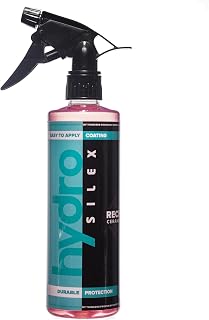
HydroSilex
Recharge Ceramic Coating
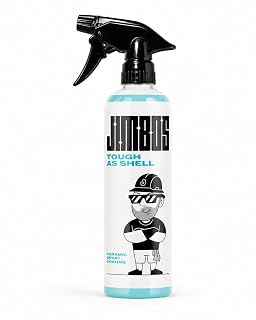
Jimbo's Detailing
Tough As Shell Ceramic Spray
SONAX
BrilliantShine Detailer
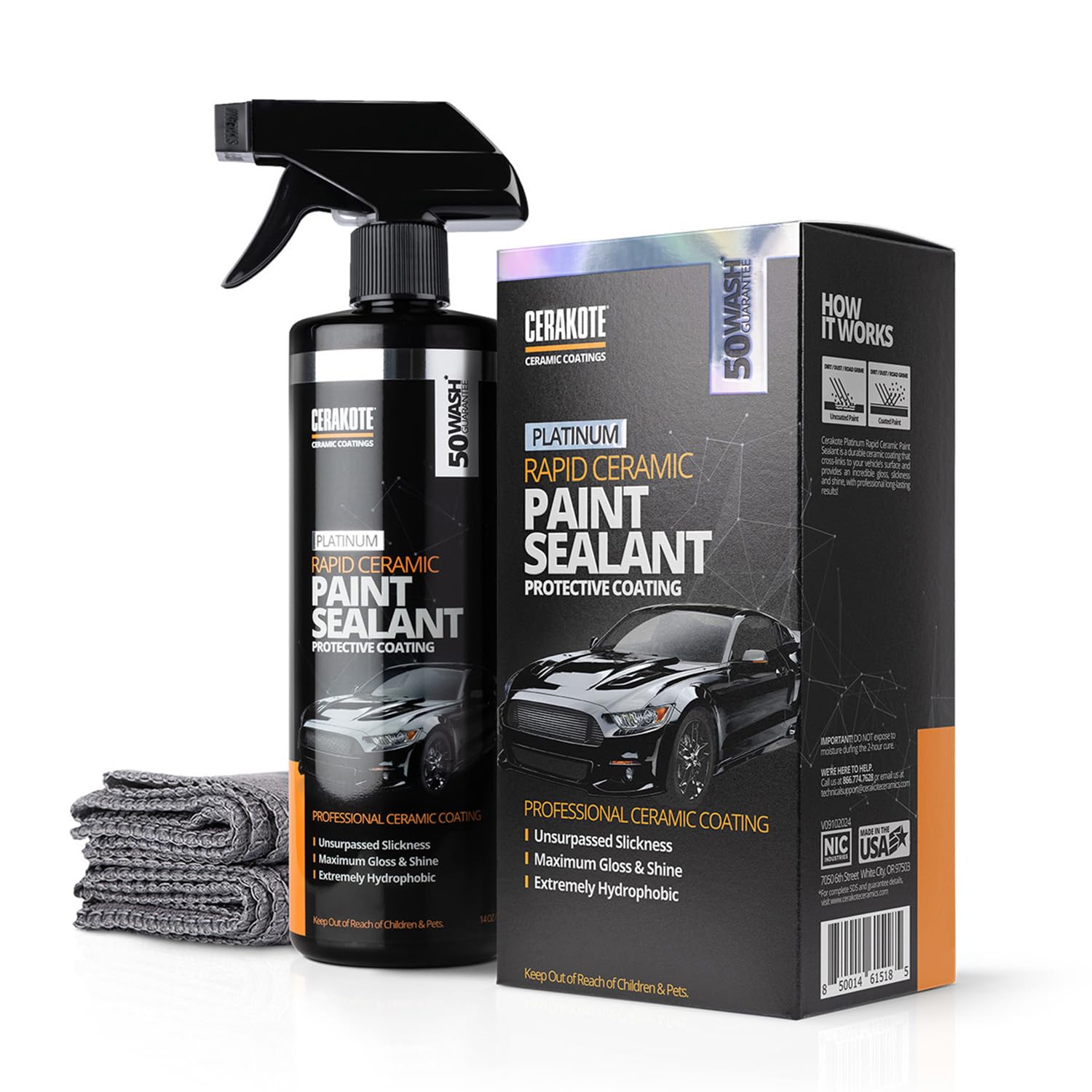
Cerakote
Platinum Rapid Ceramic Paint Sealant Spray
As an Amazon Associate I earn from qualifying purchases. Full disclosure

Community
0 postsShare how you use this product
Drop a quick comment or post a full review with photos and a star rating.
Sign in to postNew here? Create a free account.