CarCareTruth Score
Recommended.
Opens Amazon in a new tab. No account needed to look.
Saved to your guest loadout. Sign up to also save to your Cabinet (consumables) or Kit (tools you own).
As an Amazon Associate I earn from qualifying purchases. Full disclosure
Prices may varyHealth score is for adult use as intended, per the manufacturer's SDS. It does not model child ingestion, accidental spill cleanup, or off-label use. See the safety panel below for full hazard classification, and /disclaimer for the full editorial scope.
GHS hazard codes are quoted from the manufacturer’s Safety Data Sheet. PPE tiers below translate those codes and the listed ingredient chemistry; they are not CarCareTruth recommendations.
Show details for all categories ▾Hide details ▴
Only when: when spraying
Translated from the manufacturer’s Safety Data Sheet, Section 8
SDS §2 classifies the product as Eye Irritation (H320, mild · Cat 2B equivalent) · below the H319 (Cat 2A) threshold. SDS §8 advises safety glasses; pouring concentrate or wiping overhead panels are realistic splash pathways.
U.S. regulatory standard
29 CFR 1910.133(a)(1)
“appropriate eye or face protection when exposed to eye or face hazards from… liquid chemicals…”
ANSI Z87.1 (incorporated via §1910.6)
OSHA standards apply to workplaces. Cited here as the U.S. reference threshold for the underlying hazard class.
CarCareTruth publishes the cited sources verbatim and does not advise what action a user should take. Consult the full SDS before use.
Only when: prolonged use
Translated from the manufacturer’s Safety Data Sheet, Section 8
SDS §2 classifies the product as Skin Irritation (H316, mild · Cat 3). SDS §8 recommends Viton gloves for handling concentrate; brief incidental hand contact during towel work is normal and below the classification threshold.
U.S. regulatory standard
29 CFR 1910.138(a)
“appropriate hand protection when employees' hands are exposed to hazards such as those from…”
OSHA standards apply to workplaces. Cited here as the U.S. reference threshold for the underlying hazard class.
CarCareTruth publishes the cited sources verbatim and does not advise what action a user should take. Consult the full SDS before use.
Only when: in enclosed space
Beyond SDS: translated from the ingredient chemistry
No H335, H331, or H334 in SDS §2; the SDS §8 respirator language is generic 'where risk assessment shows' boilerplate · not a chemistry-driven directive. ONR is used at 1:256 working dilution with no aerosol generation. Situational for enclosed-space bucket-mixing without ventilation; in normal outdoor or vented use, no respiratory protection is indicated.
CarCareTruth publishes the cited sources verbatim and does not advise what action a user should take. Consult the full SDS before use.
No PPE specified in published sources for ventilation. Absence does not imply “not needed” — consult the full Safety Data Sheet.
PPE tiers translate the manufacturer’s SDS and U.S. regulatory standards. Not professional safety advice. How we report safety.
Scope of these PPE tiers. The tiers on this page translate the product's Safety Data Sheet where one is published, plus its ingredient chemistry, into a comparable rating. They describe a formulation, not a situation: a tier is not a safety determination for any specific user, task, quantity, or environment. The manufacturer's label and use instructions govern how the product is handled. Where the product is used at work, the employer's PPE program and hazard assessment under 29 CFR 1910.132 decide what protection is selected, not this page.
No warranties. CarCareTruth makes no warranties, express or implied, and expressly disclaims the implied warranties of merchantability and fitness for a particular purpose.
This product ranks #1 of 8 in Rinseless Wash.
Last reviewed July 16, 2026
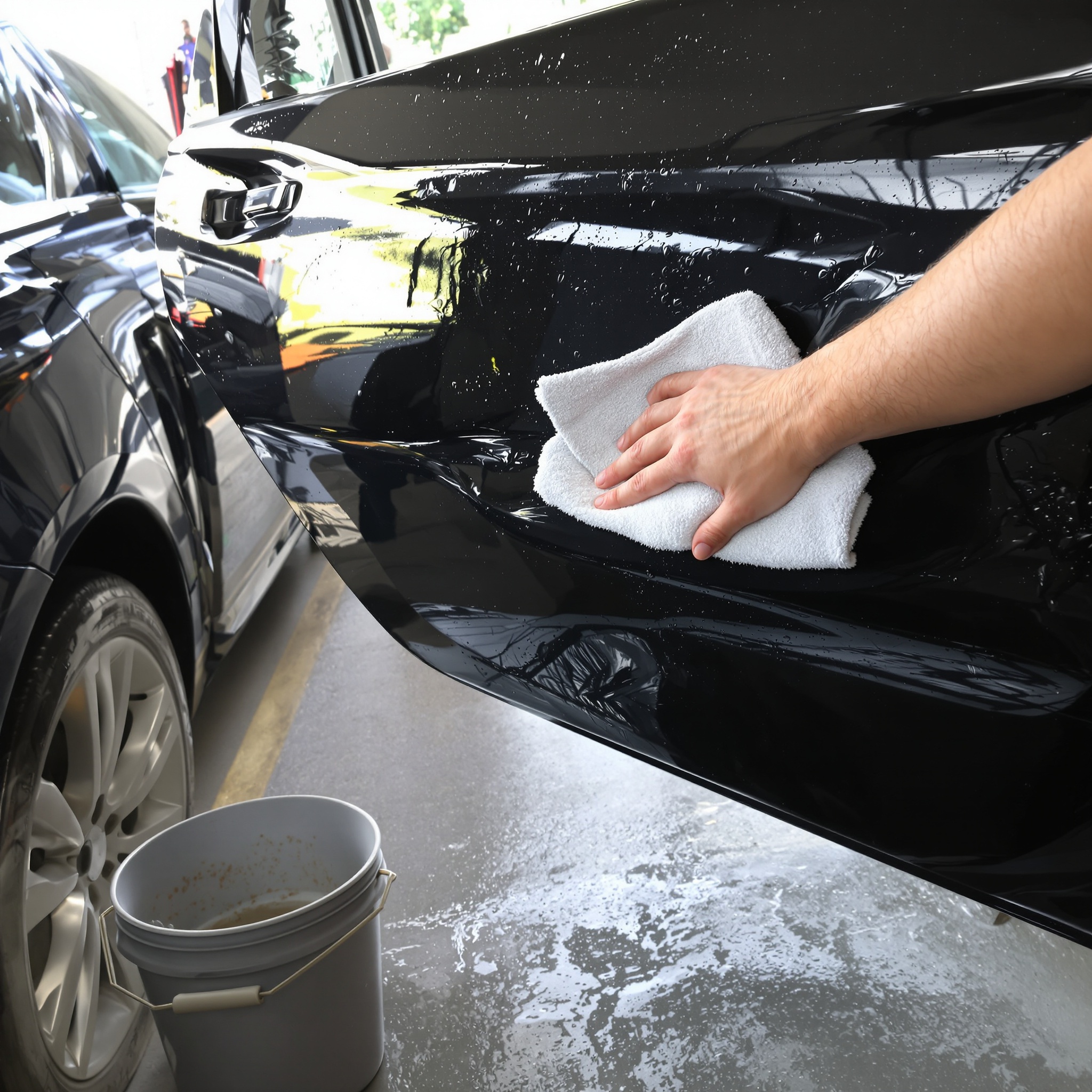
TL;DR The chemist-built benchmark for rinseless washing · dark-paint-safe with correct technique, and one 32 oz bottle makes 64 gallons of wash that also cleans wheels, glass, and interior.
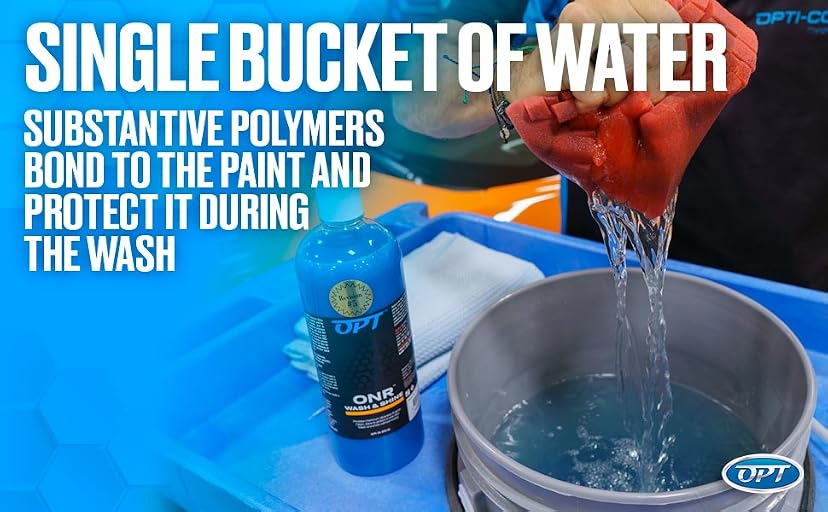
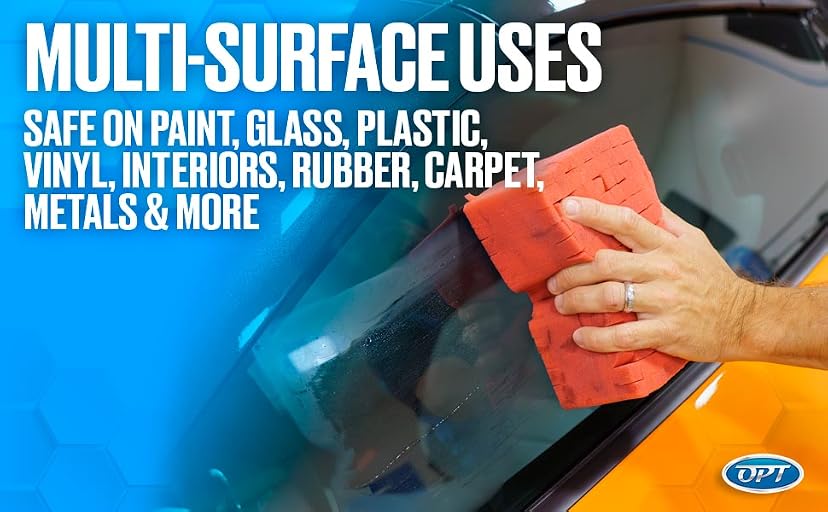
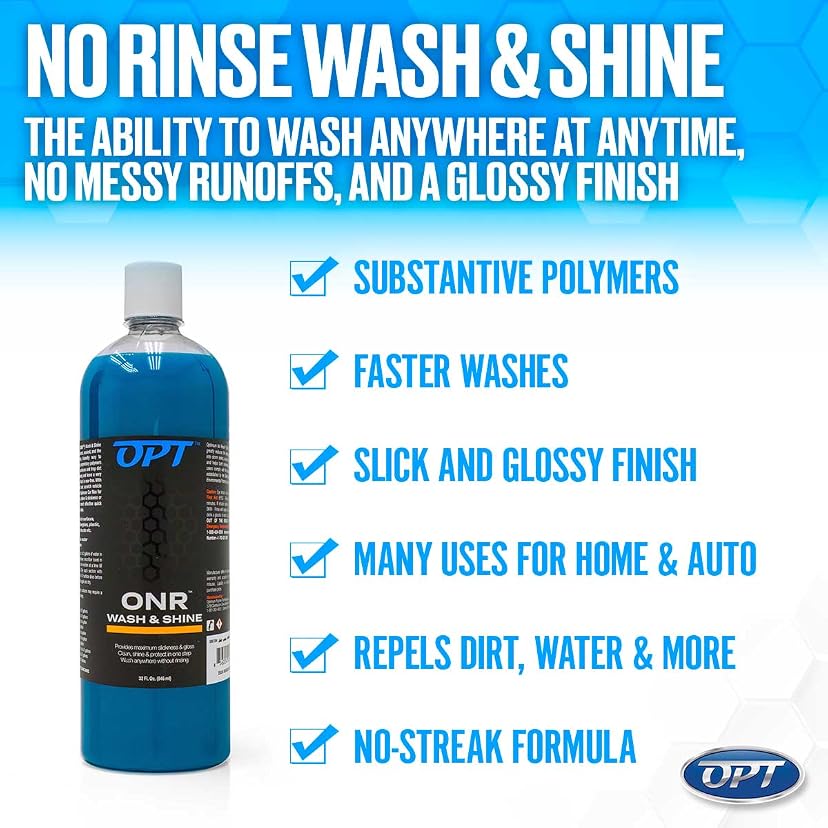
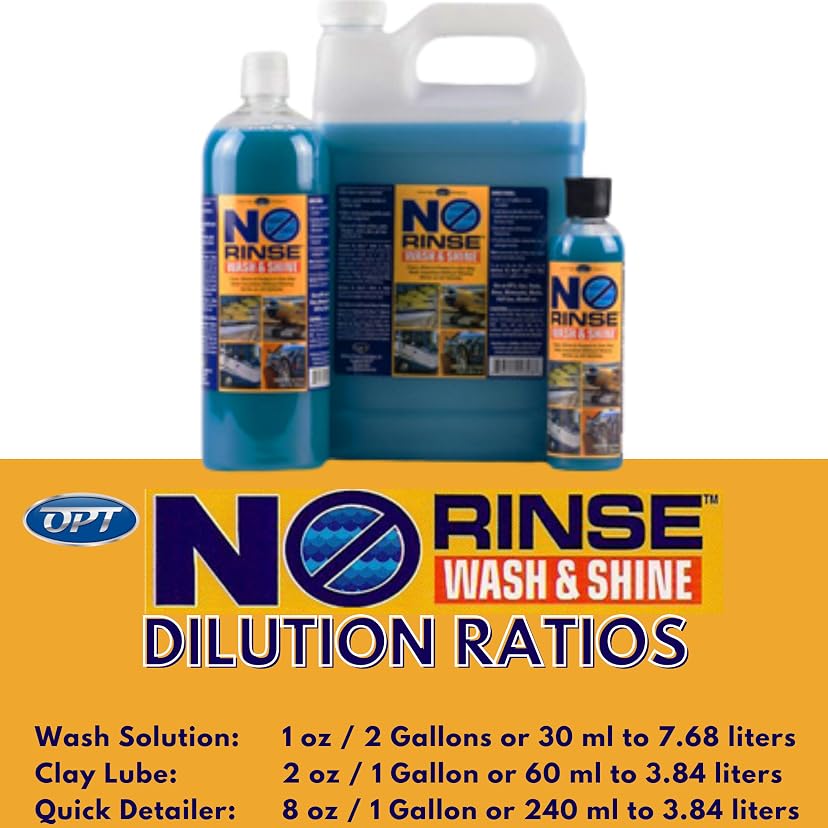
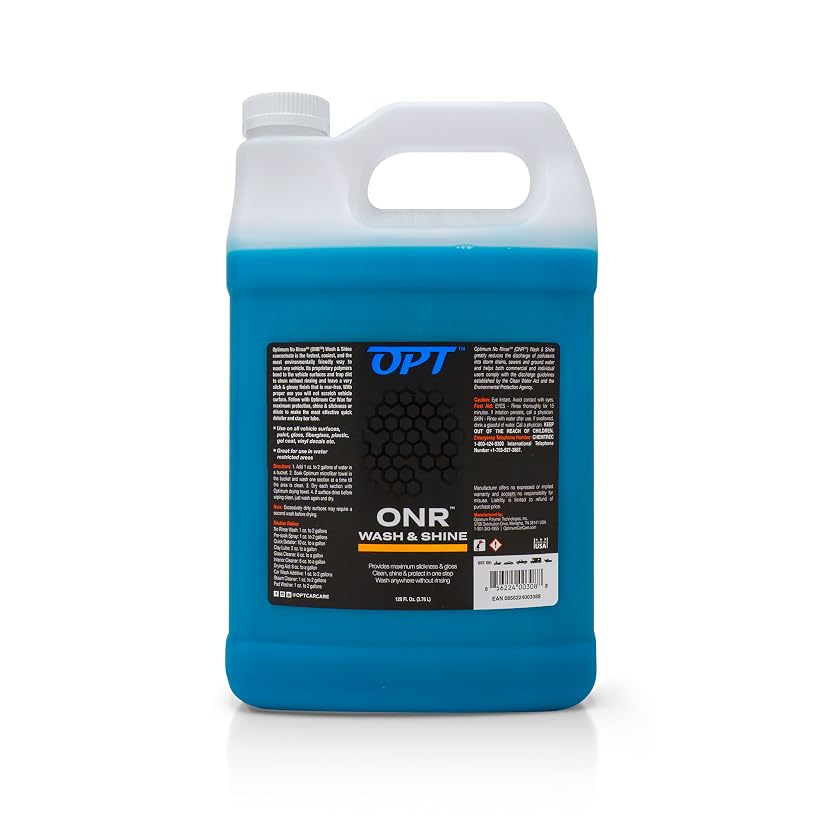
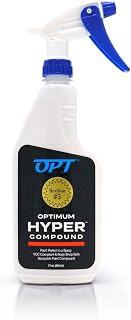
Optimum No Rinse is the industry-first rinseless wash, built by Dr. David Ghodoussi · a chemistry PhD and 2023 IDA Hall of Fame inductee. The 2023 Version 5 formula adds more lubricity, gloss, and protection. Mix one ounce per two gallons, dunk a microfiber, wring, wipe a panel top-down, then dry with a separate towel. Across a large, well-rated owner base, the lubricity verdict is consistent · even on black paint, marring isn't a recurring complaint when contamination stays light. The same concentrate doubles as a clay lubricant (2 oz/gallon) and a quick-detail spray (8 oz/gallon), rated for trim, wheels, glass, and interior surfaces · one bottle for the whole car.
Ideal for apartment dwellers, water-restricted regions, and garage owners keeping lightly-dusty paint fresh between full washes · one bottle handles wash, clay lubrication, and quick-detail duty. For heavy mud or caked road film, start with a traditional soap-and-hose wash, then maintain with ONR.
The SDS carries signal word WARNING with mild irritant codes for skin and eye, both at Category 3 and 2B levels respectively. Safety glasses make sense while pouring concentrate. The rinseless format uses no hose water at all, keeping the chemistry in the microfiber instead of the storm drain.
For a rinseless wash, mix 1 ounce of ONR per 2 gallons of water (about 0.5 oz per gallon). The same concentrate does more at higher strengths: about 2 ounces per gallon as a clay-bar lubricant and 8 ounces per gallon as a quick-detail spray. One 32 oz bottle makes roughly 64 gallons of rinseless wash.
Mix one ounce per two gallons of water in a clean wash bucket. Dunk a plush microfiber, wring it out so it's wet but not dripping, then wipe one panel at a time from the top down. Use a separate dry microfiber to immediately buff the panel dry, and rotate to a clean towel face for each new panel. The same concentrate also works as a clay-bar lubricant (2 oz/gallon) and a quick-detail spray (8 oz/gallon).
Yes, with correct technique. Community evidence across r/AutoDetailing, Detailing World, and AutoGeek over more than a decade is consistently positive · including owners with black paint who report no swirling · when the technique is right: top-down wiping, frequent towel rotation, light-to-moderate contamination, and a separate dry towel. The one caveat is that going straight to rinseless on a heavily-soiled car can cause micro-marring · that is contamination load and technique, not the formula, so give a filthy car a rinse first.
Unconfirmed either way. The SDS names 'dimethyl siloxane' only in its toxicology and ecological reference tables, with no CAS number given anywhere in the document, and it's absent from the §3 composition table entirely. That means we can't confirm whether this is linear PDMS (a common, low-concern slip additive) or the cyclic D5 (decamethylcyclopentasiloxane) that EU regulators flag as persistent and bioaccumulative. The rubric's environment deduction for D5 only applies when D5 is confirmed present with a vPvB classification in SDS §12 · since this SDS gives no CAS number for either possibility, no deduction applies, but that's an absence-of-evidence result, not a confirmed clean bill of health. We'll update this if Optimum publishes a revised SDS with a CAS number.
Version 5 is Optimum's 2023 reformulation. Per the manufacturer, it delivers increased lubricity, gloss, shine, and longer-lasting protection than earlier versions. The core use is unchanged · a concentrated rinseless wash at 1 oz per 2 gallons · and it remains an all-in-one cleaner rated for paint, ceramic coatings, glass, and interior surfaces. We scored it against the latest SDS Optimum has published.
No. ONR includes light polymer slip aids that add minor surface lubricity, but it is not a wax or sealant · it does not leave durable hydrophobic protection. Pair it with a dedicated sealant such as Optimum's own Opti-Seal, or a paste wax, for lasting paint protection between full details.
Marketing copy from Optimum, via Amazon. Not editorial.
Guide
Car Wash Methods, Explained: Every Way to Wash a Car
Every wash method is one answer to the same question: how do you lift grit off the paint without dragging it across the clear coat. Match the method to your dirt level and water access, and when in doubt, pre-rinse.
Guide
How Often to Actually Wash Your Car (by Climate)
Every two weeks is wrong for most people. Salt-belt cars need a full wash plus undercarriage rinse every 7 to 14 days through the salt season. Coastal cars run 2 to 3 weeks year-round. Desert cars stretch to 3 to 4 weeks but need waterless or rinseless methods in between.
Guide
Two-Bucket vs Rinseless vs Waterless: When Each Makes Sense
Two-bucket is mandatory for heavy contamination like salt, mud, and post-neglect grime. Rinseless wins for apartments, winter, and weekly maintenance on protected paint. Waterless is dust-only on garage queens.
Guide
What's Actually in Your Car Shampoo: An Ingredient Guide
A car shampoo is mostly water, a small mix of soaps called surfactants, and a few helpers (chelator, pH buffer, preservative, fragrance, sometimes a wax or silicone). The surfactant mix is what makes one bottle coating-safe and another a wax-stripper.
Weekly pick
One product, one safety verdict, every week. No spam.

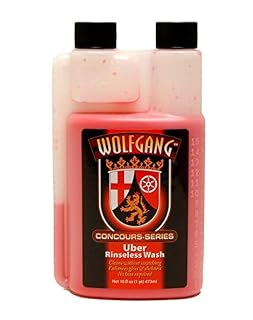
Wolfgang Concours-Series
Concours Series Uber Rinseless Wash
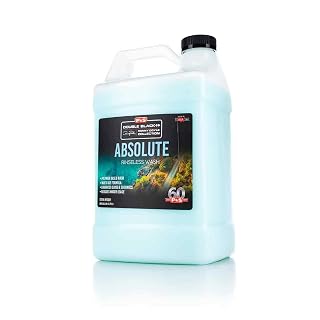
P&S Detail Products
Absolute Rinseless Wash
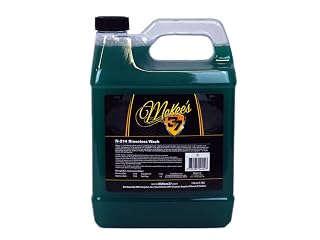
McKee's 37
N-914 Rinseless Wash V2
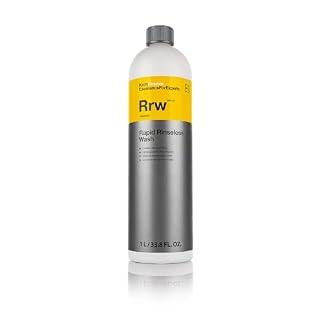
Koch-Chemie
Rapid Rinseless Wash (Rrw)
As an Amazon Associate I earn from qualifying purchases. Full disclosure

Community
0 postsShare how you use this product
Drop a quick comment or post a full review with photos and a star rating.
Sign in to postNew here? Create a free account.