CarCareTruth Score
Recommended.
Opens Amazon in a new tab. No account needed to look.
Saved to your guest loadout. Sign up to also save to your Cabinet (consumables) or Kit (tools you own).
As an Amazon Associate I earn from qualifying purchases. Full disclosure
Prices may varyHealth score is for adult use as intended, per the manufacturer's SDS. It does not model child ingestion, accidental spill cleanup, or off-label use. See the safety panel below for full hazard classification, and /disclaimer for the full editorial scope.
GHS hazard codes are quoted from the manufacturer’s Safety Data Sheet. PPE tiers below translate those codes and the listed ingredient chemistry; they are not CarCareTruth recommendations.
Show details for all categories ▾Hide details ▴
Only when: when spraying
Beyond SDS: translated from the ingredient chemistry
SDS §2 classifies the mixture as non-hazardous with no GHS hazard statements. The situational tier reflects pump-spray application physics, mist near the eyes is possible regardless of the non-hazardous classification.
CarCareTruth publishes the cited sources verbatim and does not advise what action a user should take. Consult the full SDS before use.
Only when: prolonged use
Beyond SDS: translated from the ingredient chemistry
SDS §2 is non-hazardous; no H315, H317, or H314 present. The situational tier reflects general caution for prolonged or repeated contact with any applied chemical.
CarCareTruth publishes the cited sources verbatim and does not advise what action a user should take. Consult the full SDS before use.
Only when: in enclosed space
Beyond SDS: translated from the ingredient chemistry
SDS §2 is non-hazardous; no H335, H331, or H334 present. Standard outdoor or ventilated-garage application; enclosed space without ventilation is the situational trigger.
CarCareTruth publishes the cited sources verbatim and does not advise what action a user should take. Consult the full SDS before use.
No PPE specified in published sources for ventilation. Absence does not imply “not needed” — consult the full Safety Data Sheet.
PPE tiers translate the manufacturer’s SDS and U.S. regulatory standards. Not professional safety advice. How we report safety.
This product ranks #1 of 7 in Waterless Wash.
Last reviewed July 9, 2026
TL;DR Enthusiast-grade lubrication confirmed on dark paint across multiple independent forum reviews, solid RTU light-maintenance pick without a hose; the gallon jug is the economical choice for regular use.
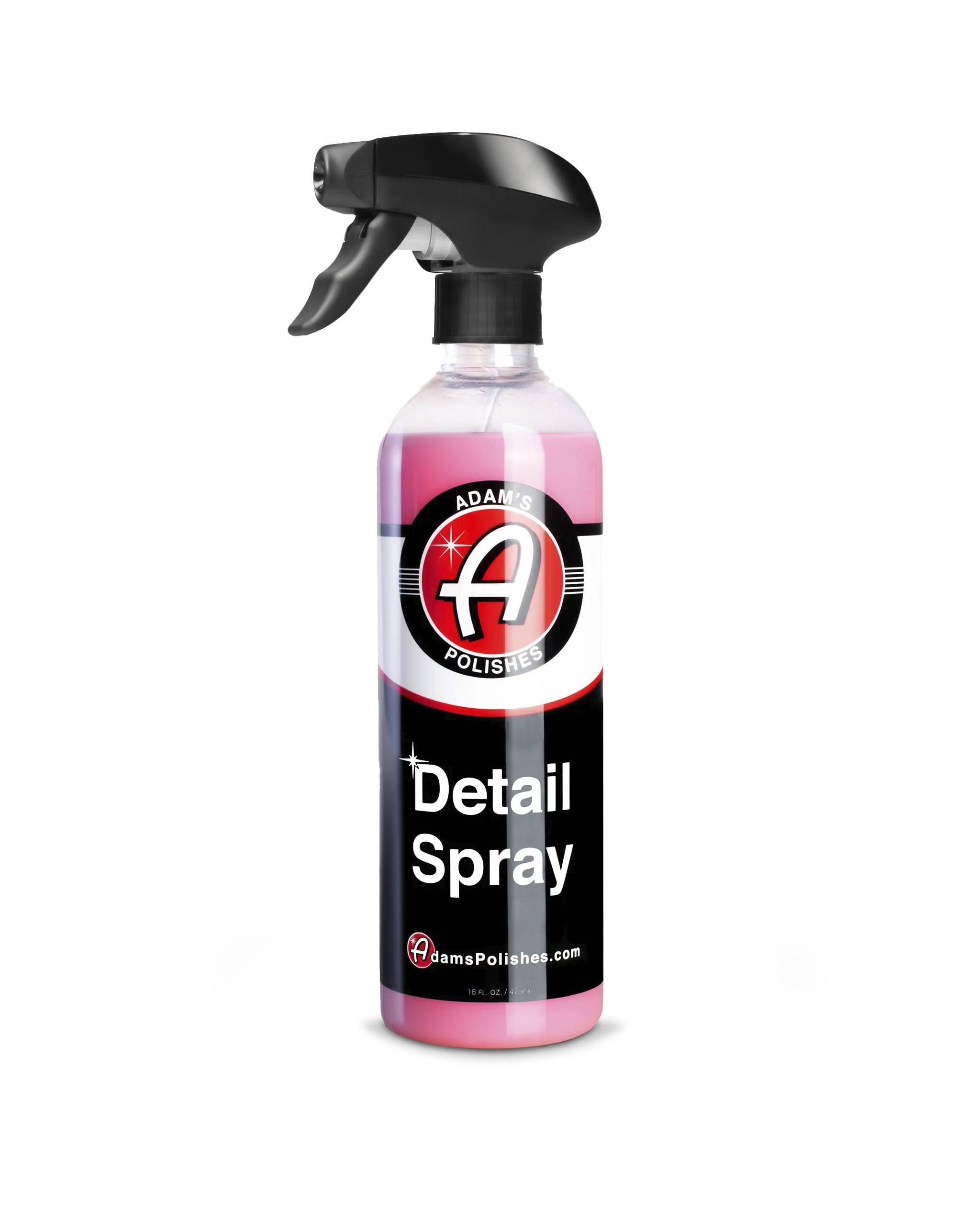
Spray onto a panel, wipe clean with a microfiber towel, the formula lifts light dust, fingerprints, and light road film while giving the towel genuine lift rather than drag. A Detailing World 6-month follow-up on dark Audi paint using two-towel technique confirmed no swirl introduction, and a large, highly rated base corroborates above-average lubricity for the category. Use on lightly soiled paint; heavy contamination calls for a soap-and-bucket wash.
Works best for enthusiasts maintaining lightly soiled paint on darker vehicles, the lubricity track record on that use case is strong. The gallon jug is significantly better economy for regular use. Skip it if your car accumulates road film or mud between washes; that contamination level increases scratch risk with any waterless product.
The SDS (rev. November 2024) classifies the mixture as non-hazardous, no GHS hazard statements, no signal word. The SDS does separately disclose a trace, ethoxylation-byproduct-level amount of a Prop 65 listed substance, well below any level SDS Section 8 treats as a handling concern. The D5 silicone ingredient carries an EU vPvB bioaccumulation designation (confirmed SDS §12), which pulls the environment score into the 6-7 range despite the format advantage. The waterless format eliminates 60-100 gallons of hose water per wash, residue ends up in the laundered towel rather than storm drains.
Community data says yes, with correct technique. Owner reviews and Detailing World long-form threads specifically on dark vehicles (including a 6-month follow-up on Audi black paint) report no swirl introduction when using a two-towel technique, a folded inspection towel and a fresh buffing towel, on lightly soiled panels. The key limit is soil level: the product is designed for light dust, fingerprints, and light road film. Attempting to clean heavily soiled paint with any waterless wash increases scratch risk regardless of lubricity.
The mixture itself carries no GHS hazard statements at working concentrations per SDS §2 (rev. November 2024): no signal word, no inhalation or skin hazard codes for the finished formula. The D5 silicone (decamethylcyclopentasiloxane) present at 1% or less carries an ingredient-level H-code for combustibility (H227), but that is the raw-ingredient classification in SDS §3, it does not apply to the finished mixture per SDS §2. The SDS does separately disclose a trace amount of 1,4-dioxane, a Prop 65 listed substance, at roughly one ten-millionth of a percent, an ethoxylation byproduct common in surfactant-based cleaners at that trace level.
D5 (decamethylcyclopentasiloxane) is classified as vPvB, very persistent, very bioaccumulative, in EU regulatory frameworks. Adam's SDS §12 (rev. 2024-11-22) explicitly confirms the vPvB designation for the D5 ingredient present at 0.1-1%. The waterless format is still environmentally advantageous over a conventional hose wash (eliminating 60-100 gallons of water and rinsed chemistry), but the D5 classification is what keeps the environment score in the 6-7 range rather than the 8-9 range. Health scoring is unaffected, D5 is a physical-hazard-class ingredient (combustibility at pure substance), not a biological health hazard.
Adam's states the product is safe for use on ceramic-coated vehicles. No independent third-party ceramic coating manufacturer endorsement has been located confirming or denying compatibility. The non-hazardous SDS and absence of strong solvents or aggressive surfactants at mixture level is consistent with coating-safe use, but no rubric dimension scores coating compatibility because no independent systematic testing exists for it in this category.
Marketing copy from Adam's Polishes, via Amazon. Not editorial.
Guide
Car Wash Methods, Explained: Every Way to Wash a Car
Every wash method is one answer to the same question: how do you lift grit off the paint without dragging it across the clear coat. Match the method to your dirt level and water access, and when in doubt, pre-rinse.
Guide
How Often to Actually Wash Your Car (by Climate)
Every two weeks is wrong for most people. Salt-belt cars need a full wash plus undercarriage rinse every 7 to 14 days through the salt season. Coastal cars run 2 to 3 weeks year-round. Desert cars stretch to 3 to 4 weeks but need waterless or rinseless methods in between.
Guide
Two-Bucket vs Rinseless vs Waterless: When Each Makes Sense
Two-bucket is mandatory for heavy contamination like salt, mud, and post-neglect grime. Rinseless wins for apartments, winter, and weekly maintenance on protected paint. Waterless is dust-only on garage queens.
Guide
What's Actually in Your Car Shampoo: An Ingredient Guide
A car shampoo is mostly water, a small mix of soaps called surfactants, and a few helpers (chelator, pH buffer, preservative, fragrance, sometimes a wax or silicone). The surfactant mix is what makes one bottle coating-safe and another a wax-stripper.
Weekly pick
One product, one safety verdict, every week. No spam.
Currently in the top 2 of its category — appears as a pick in:






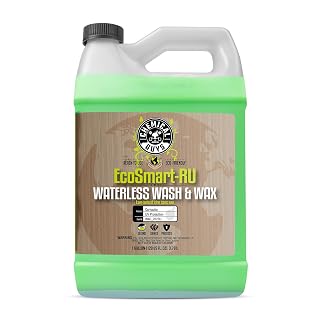
Chemical Guys
EcoSmart Waterless Car Wash & Wax (Ready To Use)
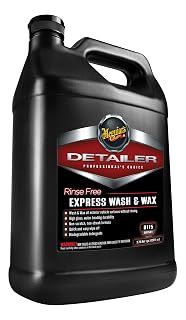
Meguiar's
D115 Rinse Free Express Wash & Wax
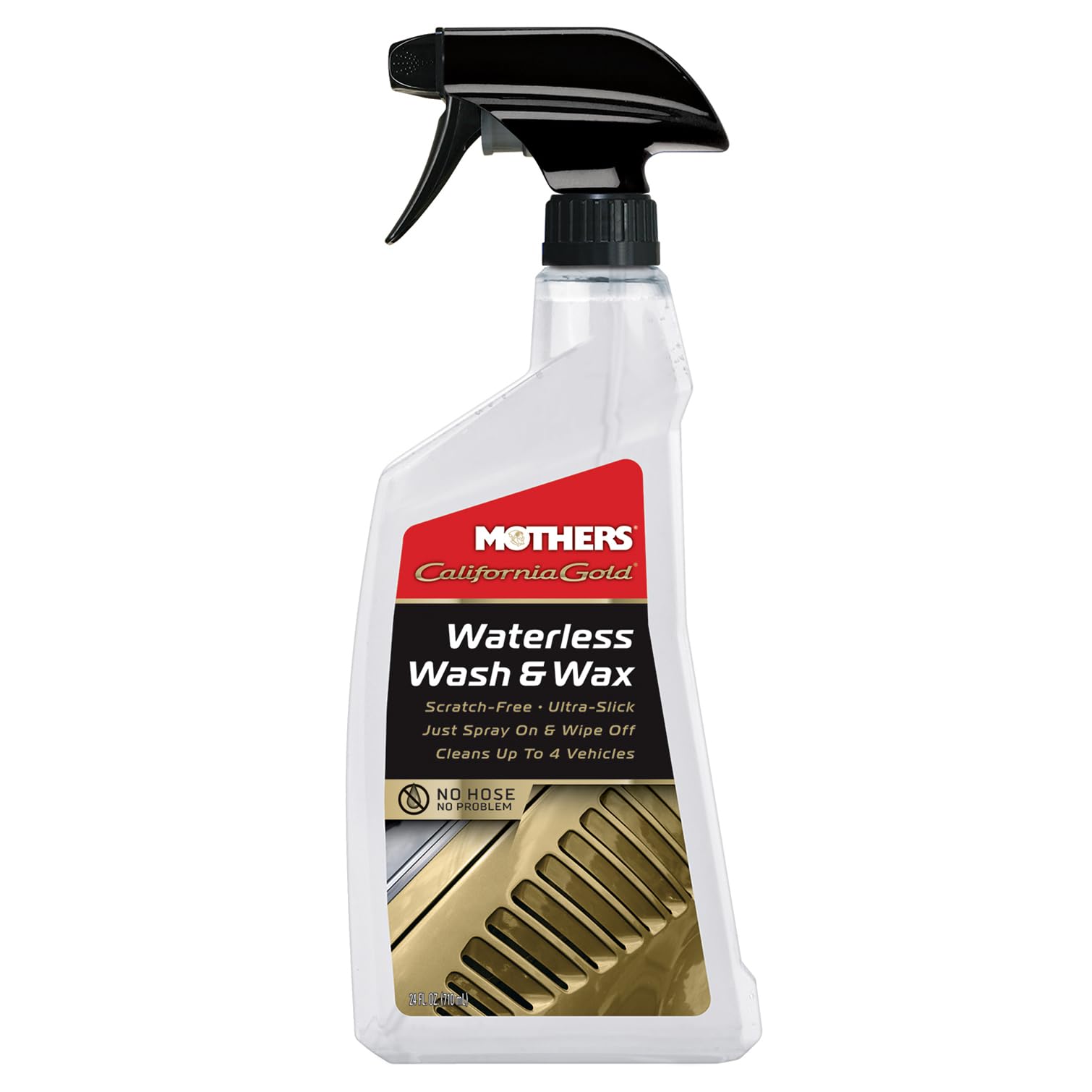
Mothers
California Gold Waterless Wash & Wax
Chemical Guys
Swift Wipe Waterless Car Wash Spray
As an Amazon Associate I earn from qualifying purchases. Full disclosure

Community
0 postsShare how you use this product
Drop a quick comment or post a full review with photos and a star rating.
Sign in to postNew here? Create a free account.