CarCareTruth Score
Recommended.
Opens Amazon in a new tab. No account needed to look.
Saved to your guest loadout. Sign up to also save to your Cabinet (consumables) or Kit (tools you own).
As an Amazon Associate I earn from qualifying purchases. Full disclosure
Prices may varyHealth score is for adult use as intended, per the manufacturer's SDS. It does not model child ingestion, accidental spill cleanup, or off-label use. See the safety panel below for full hazard classification, and /disclaimer for the full editorial scope.
GHS hazard codes are quoted from the manufacturer’s Safety Data Sheet. PPE tiers below translate those codes and the listed ingredient chemistry; they are not CarCareTruth recommendations.
Show details for all categories ▾Hide details ▴
Only when: when spraying
Translated from the manufacturer’s Safety Data Sheet, Section 8
SDS §2 classifies the concentrate as Eye Irritation Cat 2A (H319); §8 directs 'safety glasses as a minimum.' Pouring concentrate and pre-treating panels with a pump sprayer create realistic splash and mist contact pathways with the mixture-classified formula.
U.S. regulatory standard
29 CFR 1910.133(a)(1)
“The employer shall ensure that each affected employee uses appropriate eye or face protection when exposed to eye or face hazards from… liquid chemicals…”
ANSI Z87.1 (incorporated via §1910.6)
OSHA standards apply to workplaces. Cited here as the U.S. reference threshold for the underlying hazard class.
CarCareTruth publishes the cited sources verbatim and does not advise what action a user should take. Consult the full SDS before use.
Only when: prolonged use
Translated from the manufacturer’s Safety Data Sheet, Section 8
SDS §2 classifies the concentrate as Skin Irritation Cat 2 (H315); §8 states 'No special protection needed' (gloves), with 'Washing at mealtime and end of shift is adequate.' Prolonged immersion of bare hands in the wash bucket warrants gloves for sensitive skin or repeat-use sessions.
U.S. regulatory standard
29 CFR 1910.138(a)
“appropriate hand protection when employees' hands are exposed to hazards such as those from… chemicals which produce an adverse effect on the skin or eyes…”
OSHA standards apply to workplaces. Cited here as the U.S. reference threshold for the underlying hazard class.
CarCareTruth publishes the cited sources verbatim and does not advise what action a user should take. Consult the full SDS before use.
Only when: in enclosed space
Beyond SDS: translated from the ingredient chemistry
SDS §8 explicitly states 'No respiratory protection should be needed' · this is a candid no-respirator directive, not boilerplate. No H335, H331, or H334 in §2. Applied via bucket-and-mitt or pump-sprayer pre-treatment at 1:256; no aerosol generation. Situational with enclosed_space trigger covers the edge case of pre-treatment spraying inside a closed garage; outdoor or ventilated use is the standard scenario and no respiratory protection is indicated.
CarCareTruth publishes the cited sources verbatim and does not advise what action a user should take. Consult the full SDS before use.
No PPE specified in published sources for ventilation. Absence does not imply “not needed” — consult the full Safety Data Sheet.
PPE tiers translate the manufacturer’s SDS and U.S. regulatory standards. Not professional safety advice. How we report safety.
Scope of these PPE tiers. The tiers on this page translate the product's Safety Data Sheet where one is published, plus its ingredient chemistry, into a comparable rating. They describe a formulation, not a situation: a tier is not a safety determination for any specific user, task, quantity, or environment. The manufacturer's label and use instructions govern how the product is handled. Where the product is used at work, the employer's PPE program and hazard assessment under 29 CFR 1910.132 decide what protection is selected, not this page.
No warranties. CarCareTruth makes no warranties, express or implied, and expressly disclaims the implied warranties of merchantability and fitness for a particular purpose.
This product ranks #3 of 8 in Rinseless Wash.
Last reviewed August 2, 2026
TL;DR Solid mainstream rinseless option with candid, non-corrosive safety chemistry (eye and skin irritant only, no sensitizer, no Prop 65) · community evidence is thinner than the category benchmarks, and the 1-gallon-only retail size is an awkward first-buy.
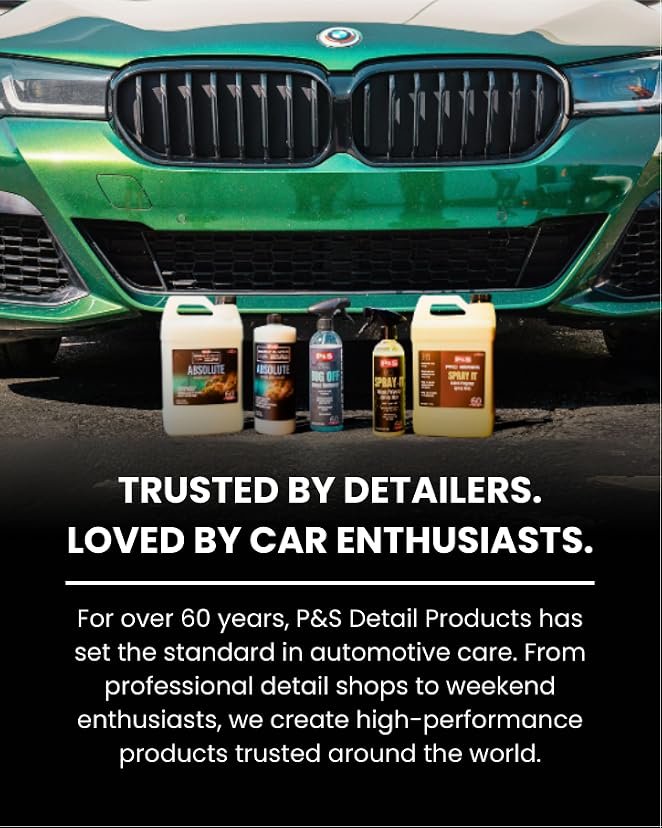
Mix one ounce per two gallons in a clean bucket, dunk a plush microfiber mitt, wring, wipe top-down, then dry with a separate towel. Owner reviews emphasize slick finishes and minimal streaking. Dark-paint scratch-test community evidence is thinner than what backs the category benchmarks, so the lubrication verdict lands mid-band rather than at the enthusiast ceiling. One gallon makes 256 gallons of wash water.
Best fit: apartment dwellers, water-restricted regions, and garage detailers already comfortable with rinseless workflow who prefer P&S across their lineup. Skip it for a first-rinseless trial · a 32-oz bottle from another brand is a friendlier entry point · or if your car carries visible road film, mud, or salt that still belongs in a soap bucket with a hose rinse.
The SDS (rev. August 2022) carries signal word WARNING with mixture-level codes H319 (serious eye irritation), H315 (skin irritation), and H303 (may be harmful if swallowed). No DANGER signal word, no skin sensitizer, no Prop 65, no PFAS, no Cat-1 hazards. Section 8 is unusually candid · no respirator needed, no gloves required for routine handling, safety glasses as the minimum eye protection. Treat the concentrate itself as a Cat-2 irritant during pouring and measuring; the diluted bucket solution is a much milder everyday contact. The rinseless format eliminates 60-100 gallons of hose water per wash.
Mix one ounce of concentrate per two gallons of water in a clean wash bucket. Dunk a plush microfiber mitt or wash pad, wring it out so it's saturated but not dripping, and wipe a single panel at a time from the top down. Immediately follow with a separate plush microfiber towel to buff the panel dry · do not let the surface air-dry. Rotate to a clean towel face for each new panel. For heavier soil on lower panels, P&S recommends pre-treating with the same 1:256 dilution in a pump sprayer before the mitt pass. One gallon of concentrate makes 256 gallons of wash solution.
Same category, different formulas. All three target the bucket-style rinseless workflow on lightly soiled paint at the same 1:256 dilution, but each brand uses its own slip and encapsulation chemistry · ONR is the long-standing category benchmark with a much larger community track record (a very large owner base and years of dark-paint scratch-test threads), McKee's N-914 keeps more of its formula proprietary, and Absolute is a newer entry from a respected pro-supply brand. Community evidence for Absolute is thinner, so the dark-paint scratch-test corpus that anchors ONR doesn't yet exist here. Pick by brand preference and what's easy to source locally.
Its SDS classifies the concentrate at the mixture level with three codes: H319 (serious eye irritation, Cat 2A), H315 (skin irritation, Cat 2), and H303 (may be harmful if swallowed, Cat 5). Under the current CarCareTruth scoring rubric, a water-based rinseless wash starts at 9.0, the eye-irritation classification caps that to 7.5, and each of the three SDS codes takes its own deduction (H319 minus 0.8, H315 minus 0.7, H303 minus 0.3), landing health at 5.7. That does not mean the product is dangerous in normal use: there is no DANGER signal word, no skin sensitizer, and no Prop 65 warning, and the SDS itself calls for nothing more than safety glasses and normal hand washing. If you handle the concentrate undiluted, treat it as a Cat-2 irritant: safety glasses on, wash hands after.
Not on Amazon as of this scoring round · the only consumer-facing the product listing is the 1-gallon F3601 jug. P&S sells F36 in 5-gallon and 55-gallon professional sizes through detail-supply distributors, but no 32 oz or quart retail size is listed. For a smaller first-buy in this category, the 32 oz Optimum No Rinse or 32 oz McKee's N-914 bottles are easier entry points.
The §3 listing is benzyldimethyl(octadecyl)ammonium chloride (CAS 122-19-0) at 0.5-3% in the concentrate · a stearalkonium-type cationic surfactant. Quats are sometimes flagged as skin sensitizers at high concentrations, but the SDS §2 does not classify this product as a sensitizer (no H317) and does not list H334. At the 1:256 working dilution the quat is at 0.002-0.012% in the bucket water · well below any sensitization concern. Sensitive-skin users handling concentrate directly should wear gloves; bucket-water exposure during normal use is not a documented sensitization pathway.
Marketing copy from P&S Detail Products, via Amazon. Not editorial.
Guide
Car Wash Methods, Explained: Every Way to Wash a Car
Every wash method is one answer to the same question: how do you lift grit off the paint without dragging it across the clear coat. Match the method to your dirt level and water access, and when in doubt, pre-rinse.
Guide
Two-Bucket vs Rinseless vs Waterless: When Each Makes Sense
Two-bucket is mandatory for heavy contamination like salt, mud, and post-neglect grime. Rinseless wins for apartments, winter, and weekly maintenance on protected paint. Waterless is dust-only on garage queens.
Guide
What's Actually in Your Car Shampoo: An Ingredient Guide
A car shampoo is mostly water, a small mix of soaps called surfactants, and a few helpers (chelator, pH buffer, preservative, fragrance, sometimes a wax or silicone). The surfactant mix is what makes one bottle coating-safe and another a wax-stripper.
Weekly pick
One product, one safety verdict, every week. No spam.

Optimum
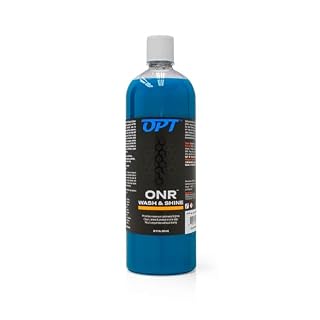
No Rinse Wash & Shine (ONR Version 5)
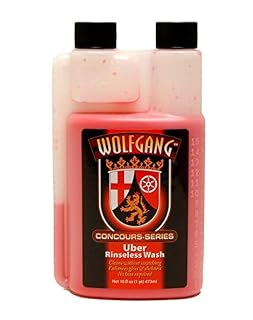
Wolfgang Concours-Series
Concours Series Uber Rinseless Wash
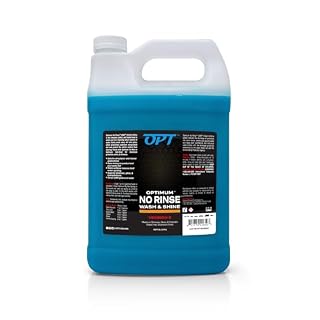
Optimum
No Rinse Wash & Shine (ONR Version 6)
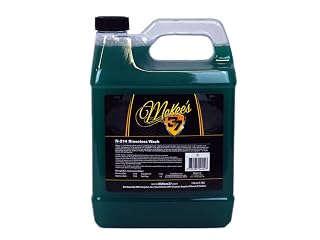
McKee's 37
N-914 Rinseless Wash V2
As an Amazon Associate I earn from qualifying purchases. Full disclosure

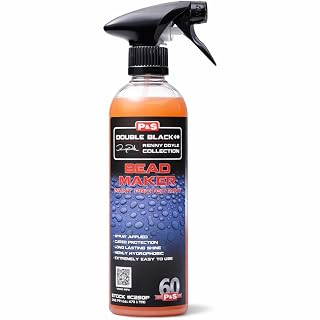
Community
0 postsShare how you use this product
Drop a quick comment or post a full review with photos and a star rating.
Sign in to postNew here? Create a free account.