CarCareTruth Score
Recommended.
Opens Amazon in a new tab. No account needed to look.
Saved to your guest loadout. Sign up to also save to your Cabinet (consumables) or Kit (tools you own).
As an Amazon Associate I earn from qualifying purchases. Full disclosure
Prices may varyHealth score is for adult use as intended, per the manufacturer's SDS. It does not model child ingestion, accidental spill cleanup, or off-label use. See the safety panel below for full hazard classification, and /disclaimer for the full editorial scope.
GHS hazard codes are quoted from the manufacturer’s Safety Data Sheet. PPE tiers below translate those codes and the listed ingredient chemistry; they are not CarCareTruth recommendations.
Show details for all categories ▾Hide details ▴
Translated from the manufacturer’s Safety Data Sheet, Section 2
SDS §2 classifies H319 (eye irritation, Cat 2A · reversible) and the GHS07 pictogram at WARNING signal word. SDS §8 also calls for chemical goggles or safety glasses where there is a risk of splash. A confirmed H319 sets eyes to recommended. Note: the label phrase 'Causes serious eye damage' reads as H318 precautionary copy, but SDS §2 classifies H319 (Cat 2A reversible), not H318 (Cat 1 irreversible), so the eyes tier stays recommended, not required, and no H318 Cat-1 deduction applies.
U.S. regulatory standard
29 CFR 1910.133(a)(1)
“The employer shall ensure that each affected employee uses appropriate eye or face protection when exposed to eye or face hazards from… liquid chemicals…”
ANSI Z87.1 (incorporated via §1910.6)
OSHA standards apply to workplaces. Cited here as the U.S. reference threshold for the underlying hazard class.
CarCareTruth publishes the cited sources verbatim and does not advise what action a user should take. Consult the full SDS before use.
Only when: handling concentrate · prolonged use
Translated from the manufacturer’s Safety Data Sheet, Section 8
SDS §8 states hand and body protection are not required under normal conditions of use, and SDS §2 carries no skin-irritation (H315) classification at mixture level. SDS §11 toxicology does note the product may cause slight skin irritation, so gloves are a reasonable precaution when handling the concentrate or during repeated contact, not a confirmed mixture-level hazard.
CarCareTruth publishes the cited sources verbatim and does not advise what action a user should take. Consult the full SDS before use.
Only when: misting overhead · in enclosed space
Translated from the manufacturer’s Safety Data Sheet, Section 8
SDS §8 states respiratory protection is not required for normal use, calling for a respirator only if exposure limits are exceeded, and SDS §2 carries no respiratory H-code (no H334, no H335). SDS §7 does caution against breathing spray or mist, and this product is marketed for foam cannon use, so a mask is a situational precaution for misting or enclosed-garage use, not a mixture-level inhalation hazard.
CarCareTruth publishes the cited sources verbatim and does not advise what action a user should take. Consult the full SDS before use.
No PPE specified in published sources for ventilation. Absence does not imply “not needed” — consult the full Safety Data Sheet.
PPE tiers translate the manufacturer’s SDS and U.S. regulatory standards. Not professional safety advice. How we report safety.
Scope of these PPE tiers. The tiers on this page translate the product's Safety Data Sheet where one is published, plus its ingredient chemistry, into a comparable rating. They describe a formulation, not a situation: a tier is not a safety determination for any specific user, task, quantity, or environment. The manufacturer's label and use instructions govern how the product is handled. Where the product is used at work, the employer's PPE program and hazard assessment under 29 CFR 1910.132 decide what protection is selected, not this page.
No warranties. CarCareTruth makes no warranties, express or implied, and expressly disclaims the implied warranties of merchantability and fitness for a particular purpose.
This product ranks #4 of 20 in Car Shampoo.Three above it ↓
Last reviewed June 9, 2026
TL;DR Cleans road film reliably in a two-bucket pass, produces slick suds that float the mitt across paint without drag, and community owners consistently confirm it does not strip wax, sealants, or ceramic coatings at 1:128 dilution.
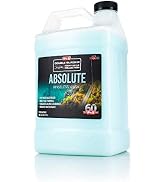
Pearl lifts dirt off paint and rinses clean · one ounce per gallon (1:128) for bucket or foam cannon use. Multiple owners with coated cars confirm the slick wash solution lets the mitt glide without contact drag, and long-term buyers report reliable single-pass cleaning on routine contamination while leaving existing coating performance intact.
Best for weekly maintenance washes on coated, waxed, or sealed vehicles where a slick, surface-safe formula is the priority. The 1-gallon size gives strong cost-per-wash value. Skip it before applying a new wax or sealant · Pearl is formulated to preserve existing protection; a dedicated strip shampoo is the right choice for pre-coating prep.
SDS §2 (2024-11-26) classifies this product at WARNING with H319 (eye irritation, Cat 2A · reversible). That is the lone health hazard code, and it sets the health score: a single mild eye-irritant on a benign water-and-surfactant base lands the product in the low-risk band rather than the near-perfect range, without being treated as a serious hazard. Eye protection is sensible when handling the concentrate. The product label states "Causes serious eye damage" (H318-level wording), but SDS §2 classifies the milder H319 (Cat 2A, reversible), not H318 · the label copy reads more severe than the actual classification. SDS §12.2 confirms all three surfactants are readily biodegradable. The sodium-C14-16 olefin sulfonate surfactant carries ingredient-level aquatic toxicity data, reflected in the environment score. No Prop 65 warning, no PFAS, no asthmagen.
Community owners consistently confirm Pearl does not strip wax, sealants, or ceramic coatings at the recommended 1:128 dilution. The formula is a mild surfactant blend that lifts dirt without the alkaline pH needed to degrade hydrophobic protection layers. Multiple owners explicitly note using it as their maintenance wash on coated and ceramic-treated vehicles without degrading water behavior.
Pearl is rated for 80-128:1 dilution with water; the label primary recommendation is 1 oz per gallon (1:128). A 1-gallon jug at that dilution yields 128 gallons of wash solution · very competitive cost-per-wash for the category.
Yes · the listing markets it as foam cannon ready and owners confirm it generates foam in both bucket and foam cannon applications. Owners note it is not a maximum-foam product by design: the formula prioritizes wash slip and dirt lift over foam volume, which some owners view as a quality signal (dense foam that clings to the car can hold dirt in place longer). Foam cannon performance is rated solid, not exceptional.
The label states 1 oz (two capfuls) per gallon of water, which is an 80-128:1 range. The primary recommended dilution is 1:128. Some detailers use 1:80 for heavier contamination. Score is computed at 1:128 (most dilute labeled use).
No. The product listing confirms no Prop 65 warning, and SDS §15 (2024-11-26) lists no Prop 65 substances in the formulation.
Lemon. Multiple owners describe it as a clean, fresh lemon fragrance · one of the more frequently praised sensory characteristics of this product.
Marketing copy from P&S Detail Products, via Amazon. Not editorial.
Guide
Car Wash Methods, Explained: Every Way to Wash a Car
Every wash method is one answer to the same question: how do you lift grit off the paint without dragging it across the clear coat. Match the method to your dirt level and water access, and when in doubt, pre-rinse.
Guide
How Long Does Ceramic Coating Actually Last on a Car
A pro-installed coating on a garaged car can hold five to seven years. A DIY 9H kit on an outdoor daily driver lands closer to one to two. Durability is set by prep quality, wash chemistry, parking, and UV dose, not by the warranty number on the box.
Guide
How Often to Actually Wash Your Car (by Climate)
Every two weeks is wrong for most people. Salt-belt cars need a full wash plus undercarriage rinse every 7 to 14 days through the salt season. Coastal cars run 2 to 3 weeks year-round. Desert cars stretch to 3 to 4 weeks but need waterless or rinseless methods in between.
Guide
Two-Bucket vs Rinseless vs Waterless: When Each Makes Sense
Two-bucket is mandatory for heavy contamination like salt, mud, and post-neglect grime. Rinseless wins for apartments, winter, and weekly maintenance on protected paint. Waterless is dust-only on garage queens.
Weekly pick
One product, one safety verdict, every week. No spam.

CarPro
Reset Intensive Car Wash Shampoo
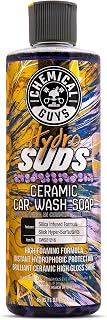
Chemical Guys
HydroSuds Ceramic Shine High Foaming Car Wash Soap
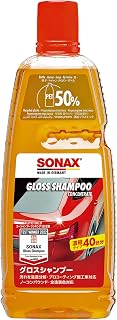
SONAX
Gloss Shampoo Concentrate
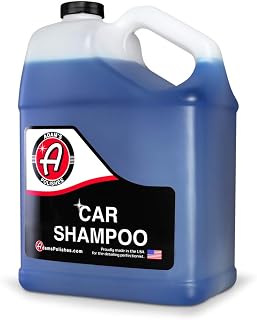
Adam's Polishes
Car Wash Shampoo
As an Amazon Associate I earn from qualifying purchases. Full disclosure

Community
0 postsShare how you use this product
Drop a quick comment or post a full review with photos and a star rating.
Sign in to postNew here? Create a free account.