CarCareTruth Score
Recommended.
Opens Amazon in a new tab. No account needed to look.
Saved to your guest loadout. Sign up to also save to your Cabinet (consumables) or Kit (tools you own).
As an Amazon Associate I earn from qualifying purchases. Full disclosure
Prices may varyHealth score is for adult use as intended, per the manufacturer's SDS. It does not model child ingestion, accidental spill cleanup, or off-label use. See the safety panel below for full hazard classification, and /disclaimer for the full editorial scope.
GHS hazard codes are quoted from the manufacturer’s Safety Data Sheet. PPE tiers below translate those codes and the listed ingredient chemistry; they are not CarCareTruth recommendations.
Show details for all categories ▾Hide details ▴
Beyond SDS: translated from the ingredient chemistry
SDS §8 directs safety glasses (chemical goggles if splashing possible) per CSA Z94.3. SDS §2 does not classify for eye irritation (H319) or serious eye damage (H318) · §11 explicitly confirms eye classification criteria are not met. The recommendation is based on the realistic pump-spray upward application scenario at wheel-arch height, where mist fallback onto the face is a credible exposure pathway.
CarCareTruth publishes the cited sources verbatim and does not advise what action a user should take. Consult the full SDS before use.
Translated from the manufacturer’s Safety Data Sheet, Section 8
H317 (Skin Sens. 1) confirmed in SDS §2 · ammonium mercaptoacetate is the sensitizing agent. SDS §8 directs nitrile gloves (0.35mm, breakthrough ≥8h). Skin sensitization is a documented occupational risk for thioglycolate handlers; once sensitized, even brief contact can trigger allergic dermatitis. SDS §11 confirms the product does NOT meet skin irritation (H315) or corrosion (H314) criteria · the risk is sensitization (immune response), not acute irritation.
U.S. regulatory standard
29 CFR 1910.138(a); 1910.132(d)
“appropriate hand protection when employees' hands are exposed to hazards such as those from skin absorption of harmful substances.”
OSHA standards apply to workplaces. Cited here as the U.S. reference threshold for the underlying hazard class.
CarCareTruth publishes the cited sources verbatim and does not advise what action a user should take. Consult the full SDS before use.
Only when: in enclosed space · when spraying
Translated from the manufacturer’s Safety Data Sheet, Section 8
SDS §8 states 'with correct and proper use, and under normal conditions, breathing protection is not required' · then specifies respiratory protection necessary at 'insufficient ventilation and aerosol or mist formation.' No inhalation H-codes present (H332/H335/H330/H331 all absent from SDS §2). The sulfur odor during dwell is a comfort issue documented in community reports but not a classified health hazard at this concentration. Respiratory protection warranted only in enclosed spaces or when pump-spray generates significant mist accumulation.
CarCareTruth publishes the cited sources verbatim and does not advise what action a user should take. Consult the full SDS before use.
No PPE specified in published sources for ventilation. Absence does not imply “not needed” — consult the full Safety Data Sheet.
PPE tiers translate the manufacturer’s SDS and U.S. regulatory standards. Not professional safety advice. How we report safety.
This product ranks #2 of 12 in Iron Remover.
Last reviewed June 17, 2026
TL;DR CarPro IronX Lemon turns vivid purple within two to three minutes on brake-dusted paint and wheels, rinses clean in one pass, and is confirmed coating-safe at SDS-disclosed pH 7.5. WARNING signal word only · H302 (harmful if swallowed) and H317 (skin sensitizer) with no eye-damage or inhalation classifications. Nitrile gloves are warranted by the H317 sensitization risk.
Spray onto cool wheels and lower panels, dwell 3 to 5 minutes, then pressure-rinse. The color change scales with actual iron load rather than developing uniformly as a cosmetic tell · one of the most reliable indicators in the category. Community evidence across r/AutoDetailing, Detailing World, and non-sponsored YouTube tests confirms single-application iron dissolution on typical commuter contamination. Flash-dries on warm panels in direct sun; apply panel-by-panel on hot days.
Right pick for enthusiasts maintaining ceramic-coated paint or PPF where confirmed pH-neutral chemistry matters. Skip it for the heaviest industrial fallout, where competing products are reported faster-acting in side-by-side tests. Skip it if you cannot tolerate sulfur odor · the lemon scent reduces but does not eliminate it.
WARNING signal word. Health-relevant codes: H302 and H317 only · the SDS explicitly confirms no eye, skin-irritation, or inhalation classifications, making it milder than most iron removers. GHS05 on the label is H290 (corrosive to metals), a physical hazard to containers, not tissue. Water-based, no aquatic toxicity codes, active ingredient aerobically biodegradable.
Yes · CarPro markets IronX as pH-neutral (SDS-confirmed pH 7.5) and safe for ceramic coatings, sealants, and waxes within reasonable dwell windows (3-5 minutes maximum). The CarPro Cquartz coating documentation explicitly endorses IronX for routine maintenance decontamination on Cquartz-coated vehicles. Community evidence on r/AutoDetailing and Detailing World threads broadly supports the coating-safe claim across multiple coating brands.
The purple is the reaction product of the active ingredient with iron oxide on the surface. The intensity scales with the amount of bonded iron present, so a vivid purple indicates heavy contamination and a faint pink indicates light contamination. When new product no longer turns purple on a freshly-sprayed panel, the iron has been chelated and you are ready to rinse.
The active chemistry uses the same compound found in hair perm solutions · the sulfur smell is from the thiol functional group. The lemon scent variant (this product) masks but does not eliminate the characteristic odor. There is no scent-free version of any thioglycolate iron remover; the sulfur character is unavoidable chemistry.
CarPro recommends 3-5 minutes maximum. Do not let it dry on the surface · flash-drying on warm panels in direct sun locks unreacted product onto paint and requires aggressive rinsing. Apply panel-by-panel in summer or on warm vehicles. The lemon variant has the same dwell window as the original.
Yes. CarPro IronX is designed for wheels, brake-dust-laden lower panels, and full painted surfaces, since the pH-neutral thioglycolate chemistry (SDS-confirmed pH 7.5) targets bonded iron without etching clear coat. Spray onto cool, shaded surfaces, let the purple reaction develop for 3 to 5 minutes, then pressure-rinse thoroughly. Work panel by panel on warm vehicles so it does not flash-dry.
Per the SDS, IronX classifies with only H302 (harmful if swallowed) and H317 (skin sensitizer) under a WARNING signal word. Many competing iron removers carry additional H312 (skin harm), H332 (inhalation harm), and H318 (serious eye damage) with a DANGER signal word. This makes IronX's verified hazard profile notably milder than the category average · though the skin sensitization risk (H317) still warrants nitrile gloves during use.
Marketing copy from CarPro, via Amazon. Not editorial.
Weekly pick
One product, one safety verdict, every week. No spam.
Currently in the top 2 of its category — appears as a pick in:
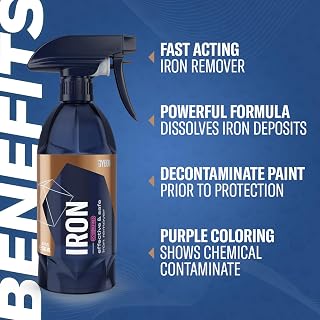
Gyeon
Q²M Iron Redefined
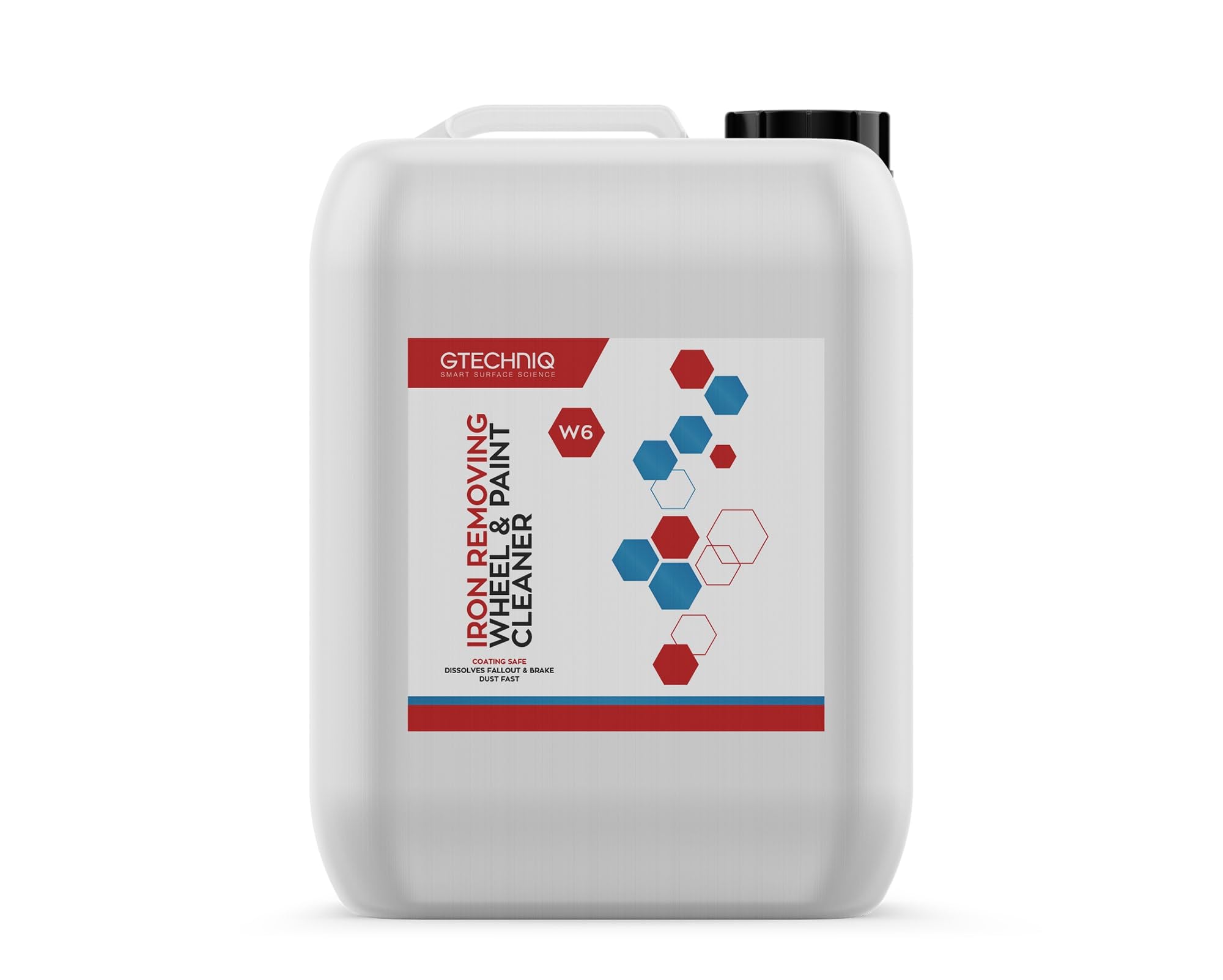
Gtechniq
W6 Iron and General Fallout Remover
Optimum
FerreX Iron Remover
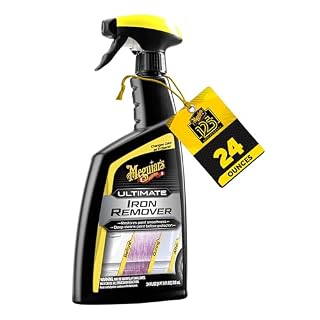
Meguiar's
Ultimate Iron Remover (24 oz)
As an Amazon Associate I earn from qualifying purchases. Full disclosure

Community
0 postsShare how you use this product
Drop a quick comment or post a full review with photos and a star rating.
Sign in to postNew here? Create a free account.