CarCareTruth Score
Recommended.
Opens Amazon in a new tab. No account needed to look.
Saved to your guest loadout. Sign up to also save to your Cabinet (consumables) or Kit (tools you own).
As an Amazon Associate I earn from qualifying purchases. Full disclosure
Prices may varyHealth score is for adult use as intended, per the manufacturer's SDS. It does not model child ingestion, accidental spill cleanup, or off-label use. See the safety panel below for full hazard classification, and /disclaimer for the full editorial scope.
GHS hazard codes are quoted from the manufacturer’s Safety Data Sheet. PPE tiers below translate those codes and the listed ingredient chemistry; they are not CarCareTruth recommendations.
Show details for all categories ▾Hide details ▴
Only when: splash risk · when spraying
Beyond SDS: translated from the ingredient chemistry
SDS Section 8 lists eye protection and marks it 'no special requirements.' Section 2 assigns no GHS hazard classification and Section 11 reports no classified eye irritation, but the formula is alkaline (pH 10.7) and includes an amine-based cleaning agent (isopropanolamine); safety glasses are a reasonable precaution during direct spray application and transfer, not a mixture-level hazard requirement.
CarCareTruth publishes the cited sources verbatim and does not advise what action a user should take. Consult the full SDS before use.
Only when: splash risk · prolonged use
Beyond SDS: translated from the ingredient chemistry
SDS Section 8 lists hand and skin/body protection and marks it 'no special requirements.' Section 2 carries no hazard classification and Section 11 shows no classified dermal irritation (dermal LD50 greater than 5000 mg/kg), but the alkaline pH (10.7) and surfactant/amine content (isopropanolamine, sodium dodecylbenzene sulfonate, lauramine oxide) make gloves a reasonable precaution for prolonged or repeated contact, not a chemistry-driven requirement.
CarCareTruth publishes the cited sources verbatim and does not advise what action a user should take. Consult the full SDS before use.
Only when: when spraying · in enclosed space
Beyond SDS: translated from the ingredient chemistry
SDS Section 8 lists respiratory protection and marks it 'no special requirements,' and Section 11 reports no classified inhalation toxicity (LC50 greater than 10 mg/L). The trigger-spray mist is a normal-use consideration in an enclosed space, since this product is marketed for use on dashboard electronics and interior glass inside a closed car, not a mixture-level respiratory hazard.
CarCareTruth publishes the cited sources verbatim and does not advise what action a user should take. Consult the full SDS before use.
No PPE specified in published sources for ventilation. Absence does not imply “not needed” — consult the full Safety Data Sheet.
PPE tiers translate the manufacturer’s SDS and U.S. regulatory standards. Not professional safety advice. How we report safety.
This product ranks #6 of 14 in Glass Cleaner.Three above it ↓
Last reviewed July 25, 2026
TL;DR Ammonia-free and labeled safe for aftermarket tint, coatings, and dashboard electronics, so no compatibility check is needed. A budget pump spray from a trusted glass-cleaner brand, though this 2025 automotive version still has a thin independent track record.
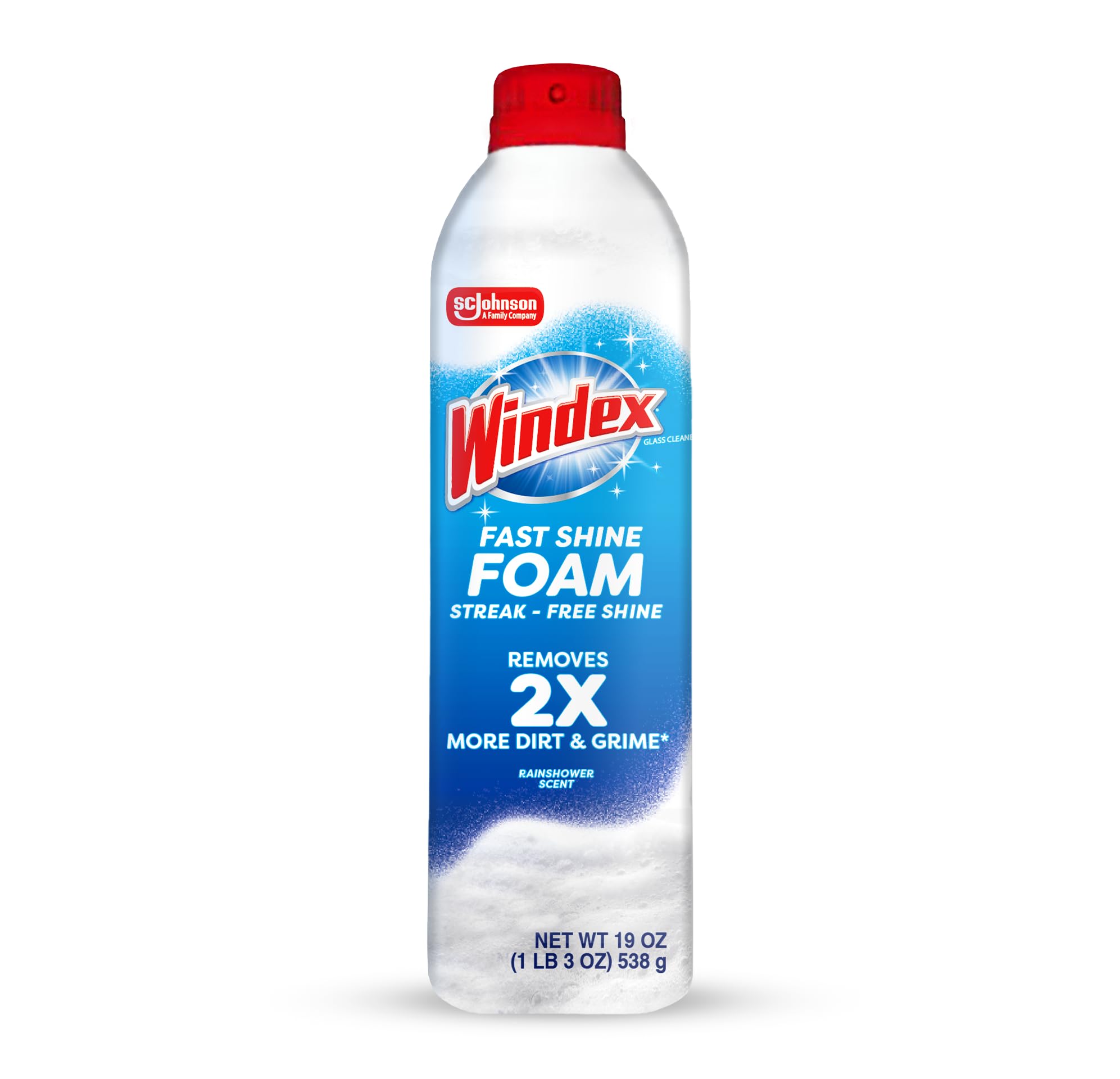
This is Windex's ammonia-free formula packaged for the car aisle: a pump-trigger spray the brand markets as safe on tinted windows, glass coatings, and dashboard electronics. Windex has a long streak-free reputation on household glass, and this version brings the same water-based, ammonia-free cleaning to automotive use. Because it is a recent relaunch, independent owner testing on interior windshield film and road-grime haze is still thin, so treat the streak-free claim as brand-backed rather than community-benchmarked for this exact product.
The right buy for anyone with aftermarket tint, a ceramic glass coating, or a rain-repellent treatment who wants a low-cost, tint-safe glass cleaner from a familiar brand, with no compatibility check required. Skip it if you want a long independent owner track record before you buy; this automotive version is new enough that community evidence is still thin.
The safety data sheet for this ammonia-free formula carries no hazard classification, no signal word, and no California Prop 65 warning. SDS Section 8 marks eye, hand, and respiratory protection as "no special requirements"; minimal PPE (safety glasses, gloves) is a reasonable precaution for splash and spray-mist exposure during normal use, given the formula's alkaline pH (10.7), rather than a chemistry-driven requirement. Scoring rests on the same ammonia-free formula sheet, since Windex has not published one named for the automotive bottle. Low-VOC and water-based, with no aquatic toxicity classified; residue reaches the drain via cloth laundering.
Yes, according to the label. This is the ammonia-free formula, and the front of the bottle states it is safe on tinted windows, with the brand also listing dashboard electronics and interior surfaces as safe. Ammonia is the ingredient that degrades aftermarket adhesive-backed tint film and the bonds in hydrophobic glass coatings over time, so an ammonia-free cleaner like this one avoids that risk. Independent owner confirmation on aftermarket tint and ceramic coatings for this specific 2025 release is still limited.
The classic blue Windex Original contains ammonia, which is what makes it risky on aftermarket tint and coated automotive glass. This Automotive version uses the brand's ammonia-free formula instead, the same base as Windex's household ammonia-free glass cleaner, repackaged for the car-care aisle. That swap is the whole point: it is built to be safe on the tinted and coated glass that the ammonia-based original can damage with repeated use.
No hazard classification and no signal word. The safety data sheet for this ammonia-free formula lists eye, hand, and respiratory protection sections and marks each 'no special requirements,' so gloves and eye protection are not mandated by the sheet. Because the formula is alkaline (pH 10.7), safety glasses and gloves are still a reasonable precaution during direct spray or transfer, not a chemistry-driven requirement. It also carries no California Proposition 65 warning; the sheet includes an explicit statement that the product is not subject to Prop 65 reporting. The health score of 9.0 reflects that benign profile for a water-based cleaner with no ammonia odor.
The brand lists the ammonia-free formula as safe for use inside the car, including on dashboard electronics, and it is a water-based, low-VOC spray rather than a harsh solvent cleaner. As with any glass cleaner, spraying onto a microfiber cloth first, rather than directly onto a screen or electronics panel, is the safer method and keeps liquid out of seams. Manufacturer guidance for a specific infotainment screen should still take priority.
Marketing copy from Windex, via Amazon. Not editorial.
Weekly pick
One product, one safety verdict, every week. No spam.
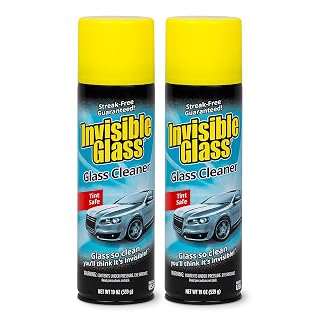
Stoner
Invisible Glass Premium Aerosol Glass Cleaner
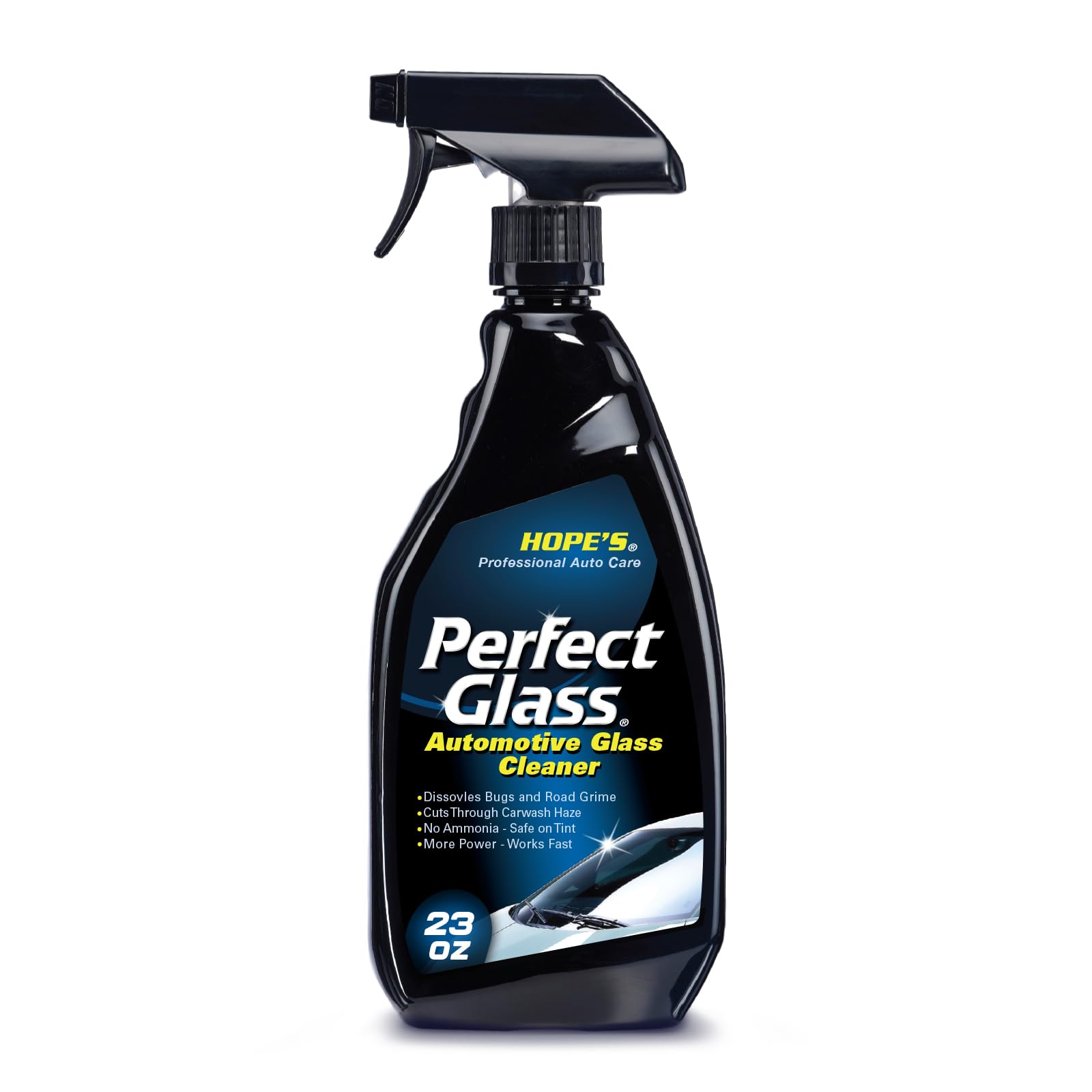
Hope's
Perfect Glass Automotive Glass Cleaner
Meguiar's
Perfect Clarity Glass Cleaner
Chemical Guys
Streak Free Window Clean Glass Cleaner
As an Amazon Associate I earn from qualifying purchases. Full disclosure

Community
0 postsShare how you use this product
Drop a quick comment or post a full review with photos and a star rating.
Sign in to postNew here? Create a free account.