CarCareTruth Score
Decent.
Opens Amazon in a new tab. No account needed to look.
Saved to your guest loadout. Sign up to also save to your Cabinet (consumables) or Kit (tools you own).
As an Amazon Associate I earn from qualifying purchases. Full disclosure
Prices may varyHealth score is for adult use as intended, per the manufacturer's SDS. It does not model child ingestion, accidental spill cleanup, or off-label use. See the safety panel below for full hazard classification, and /disclaimer for the full editorial scope.
GHS hazard codes are quoted from the manufacturer’s Safety Data Sheet. PPE tiers below translate those codes and the listed ingredient chemistry; they are not CarCareTruth recommendations.
Show details for all categories ▾Hide details ▴
Translated from the manufacturer’s Safety Data Sheet, Section 8
SDS Section 8 names tight-sealing safety goggles for eye/face protection. Section 2 carries no eye-hazard GHS code (no H318 serious eye damage, no H319 eye irritation), so this is an SDS-named precaution rather than a mixture-level eye hazard.
CarCareTruth publishes the cited sources verbatim and does not advise what action a user should take. Consult the full SDS before use.
Only when: splash risk · prolonged use
Beyond SDS: translated from the ingredient chemistry
SDS Section 8 states no special skin protection is required, and Section 2 carries no skin H-code (no H315 irritation, no H317 sensitizer). This row is surfaced as a precaution given the mildly acidic pH (4.0) and spray application method, not because the SDS names a skin-protection requirement.
CarCareTruth publishes the cited sources verbatim and does not advise what action a user should take. Consult the full SDS before use.
Only when: in enclosed space · when spraying
Translated from the manufacturer’s Safety Data Sheet, Section 8
SDS Section 8 states no respiratory protection is needed under normal use, only if exposure limits are exceeded or irritation is experienced. Section 7 separately advises against breathing vapor or mist and recommends local exhaust ventilation during handling. Section 2 carries no respiratory H-code (no H334 sensitizer, no H335 irritation, no H330/H331 toxic-if-inhaled), so this is a mist-exposure precaution for enclosed or prolonged spray use, not a mixture-level inhalation hazard.
CarCareTruth publishes the cited sources verbatim and does not advise what action a user should take. Consult the full SDS before use.
No PPE specified in published sources for ventilation. Absence does not imply “not needed” — consult the full Safety Data Sheet.
PPE tiers translate the manufacturer’s SDS and U.S. regulatory standards. Not professional safety advice. How we report safety.
This product ranks #8 of 28 in Ceramic Spray Coating.Three above it ↓
Last reviewed June 29, 2026
TL;DR Community confirms 8·12 weeks on daily drivers · solid for the category, even if the "minimum 6 months" label is fiction. Gloss is genuinely warm and deep on dark paint, better than a pure ceramic spray. Apply panel by panel in the shade; direct sun means streaks.
Spray a few pumps per panel, wipe with a clean microfiber, and the paint comes up glossy with real water-beading. The ceramic chemistry bonds to the clear coat and keeps beading through more washes than a plain spray wax; the wax component adds warm depth to the finish. The catch is the application window: the formula dries quickly, so panel-by-panel work in the shade is essential. First-timers in direct sun or on warm panels encounter streaking. Real-world durability from owner reports and detailing forums is 8·12 weeks on a weekly-washed daily driver · well short of the "minimum 6 months" label claim.
Daily-driver owners who want ceramic protection and wax gloss in one step, without prep, cure time, or a high price. Skip it if maximum durability is the goal · a spray sealant or ceramic coating will outlast any spray wax format. Skip it if you can't apply in the shade; the quick-dry behavior makes hot or sunny conditions genuinely difficult.
The SDS carries no health hazard classifications · only H227 (Flammable Liquid Cat 4, flash point 93°C), a fire-safety classification, not a health one. No skin, eye, or inhalation H-codes are present. pH 4.0 is mildly acidic; routine outdoor application involves brief contact only. No Prop 65, no PFAS; estimated VOC is below the lowest reporting bracket.
The label claims 'minimum 6 months,' but community-confirmed durability on daily drivers washed weekly is 8·12 weeks from multiple independent owner and forum sources. That's still strong for a spray-and-wipe product · it outperforms most spray waxes · but it falls well short of the label claim. If you're washing weekly, expect to reapply every 2·3 months.
Turtle Wax markets it as compatible with existing coatings, and no widespread degradation reports appear in owner reviews or detailing forums. However, no named third-party ceramic coating manufacturer (e.g., CARPRO, Gtechniq, Gyeon) has published a formal compatibility endorsement. Use on a test panel first if your existing coating is expensive.
Applying in direct sunlight or on a hot panel increases the risk of the product flashing too quickly, leaving water spots or streaking before you can buff it off. The brand acknowledges a quick-dry behavior · apply panel by panel in the shade or on a cool vehicle. Most negative reviews that cite streaking mention hot conditions or direct sun.
The label states it is safe for glass, wheels, trim, and more. Community feedback on Amazon and r/AutoDetailing confirms use on glass and plastic trim with no reported damage. For wheels, results depend on the wheel type and how dirty they are before application · it is not a wheel cleaner and performs best as a maintenance layer on already-clean wheels.
Shake the bottle before use. Spray 2·3 pumps per panel onto the paint (not the microfiber). Wipe in straight passes with a clean, dry microfiber. Flip to the dry side to buff. Work one panel at a time and stay out of direct sun. Reduce product volume if you see streaking · a little goes a long way.
Marketing copy from Turtle Wax, via Amazon. Not editorial.
Guide
Ceramic Coating vs Wax vs Sealant: Which Lasts Longest
Carnauba wax lasts 4 to 8 weeks, synthetic sealant 3 to 6 months, DIY ceramic coating 12 to 36 months, professional ceramic 3 to 7 years. The chemistry is the reason. Hybrid ceramic sprays sit with the sealants on durability, not with the ceramics.
Guide
How Long Does Ceramic Coating Actually Last on a Car
A pro-installed coating on a garaged car can hold five to seven years. A DIY 9H kit on an outdoor daily driver lands closer to one to two. Durability is set by prep quality, wash chemistry, parking, and UV dose, not by the warranty number on the box.
Weekly pick
One product, one safety verdict, every week. No spam.


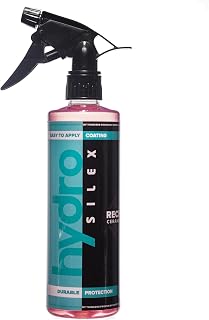
HydroSilex
Recharge Ceramic Coating
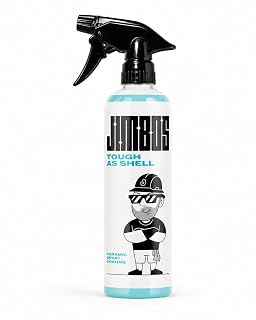
Jimbo's Detailing
Tough As Shell Ceramic Spray
SONAX
BrilliantShine Detailer
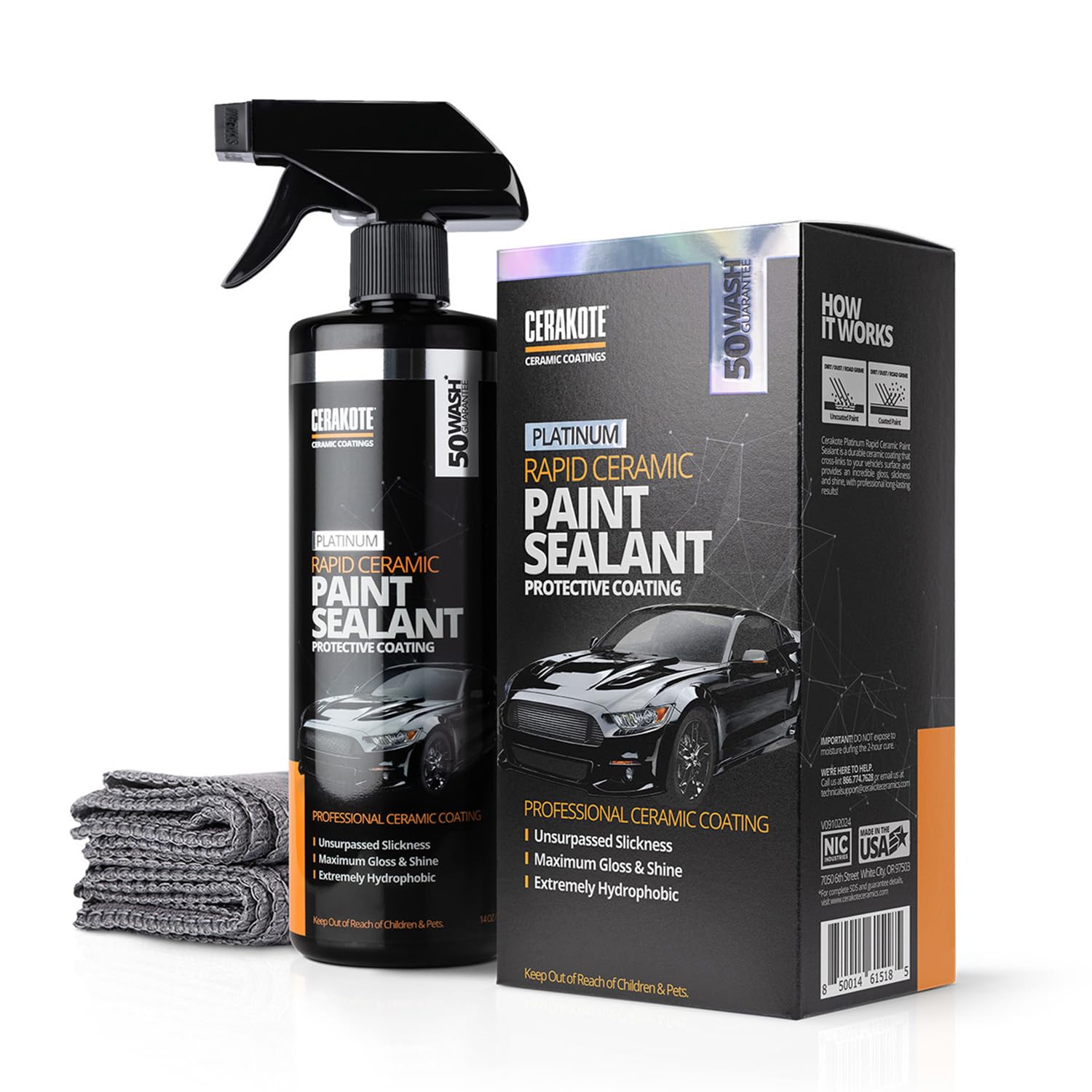
Cerakote
Platinum Rapid Ceramic Paint Sealant Spray
As an Amazon Associate I earn from qualifying purchases. Full disclosure

Community
0 postsShare how you use this product
Drop a quick comment or post a full review with photos and a star rating.
Sign in to postNew here? Create a free account.