CarCareTruth Score
Decent, but it's tough on the environment.
Opens Amazon in a new tab. No account needed to look.
Saved to your guest loadout. Sign up to also save to your Cabinet (consumables) or Kit (tools you own).
As an Amazon Associate I earn from qualifying purchases. Full disclosure
Prices may varyThe manufacturer's Safety Data Sheet classifies this product with one or more GHS Category 1 health hazards — the most severe tier. The hazard statements in quotes below are the verbatim GHS language from the SDS, as required by OSHA's Hazard Communication Standard. The line under each statement translates the GHS classification into plain language.
GHS Category 1 aspiration toxicity — thin, oily liquids can slip into the lungs if swallowed, causing chemical pneumonia.
If swallowed, inhaled, or splashed in eyes:
Call Poison Control immediately at 1-800-222-1222 (US, 24/7, free) and have the product container with you. Poison Control's standing guidance is to not induce vomiting after chemical exposure; they will direct first-aid steps based on the specific product.
About this product's hazards. This product's Safety Data Sheet uses signal word danger. Read the manufacturer's SDS and follow all safety instructions before use. CarCareTruth ratings translate the manufacturer's safety sheet. They do not replace the SDS or substitute for a hazard assessment specific to your task.
This product ranks #1 of 5 in Diesel Treatment.
Last reviewed July 31, 2026
TL;DR 2-EHN cetane improver confirmed in SDS at a notably high concentration (10.5-28%), backed by strong community reports on idle smoothness and cold-start improvement but no independent ASTM D613 test. Soy methyl ester lubricity chemistry is genuine. The anti-gel active is not disclosed in the SDS; the cold-weather claim is brand-stated only. Petroleum concentrate with DANGER signal word (H304 aspiration hazard) and Prop 65 chemicals on board; the concentrate pour is the primary exposure window.
XPD is built around 2-EHN (2-ethylhexyl nitrate), the most independently studied cetane improver on the market. At 10.5-28% concentration, this is a high-dose 2-EHN formula (most consumer diesel additives run 5-15%), which accounts for the aggressive 1:64 treat ratio: one 4 oz bottle per 16 gallons. The brand states a 3-cetane-point improvement; no independent ASTM D613 test specific to this product has been published, but the 2-EHN chemistry class is well-supported in SAE literature and community feedback on idle smoothness and cold-start performance is broadly consistent with a real cetane effect.
Lubricity is addressed by soy methyl ester at a fixed 5%. FAME-class chemistry like this is the same base as biodiesel and is independently documented to improve HFRR wear-scar performance in ULSD. The brand claims over 45% lubricity enhancement; no published ASTM D6079 test for this specific product backs that figure, but 5% FAME is a meaningful lubricity addition regardless.
The detergent package uses a quaternary ammonium compound at low concentration (0.05-0.5%), which is capable of addressing carbonaceous injector deposits at the chemistry level, though at the lower end of typical detergent-package concentrations for a maintenance product. The anti-gel function is the weakest link: XPD is marketed as all-season with a -10°F cold-protection claim, but the wax-crystal modifier or other anti-gel active is not identified anywhere in the SDS. The cold-weather claim should be treated as brand-stated until independently verified.
The single-serve 4 oz bottle is a genuine convenience advantage: one bottle per fill-up, no measuring, no partial-bottle fumbling at the pump.
The right choice for owners of diesel trucks, farm equipment, or construction equipment running ULSD who want a named-2-EHN cetane treatment with confirmed lubricity chemistry and a proven track record in the Cummins, Power Stroke, and Duramax communities. The single-serve format makes consistent fill-up dosing practical for everyday use. Worth considering for anyone using non-Top-Tier diesel or experiencing rough idle or cold-start hesitation.
Skip it if the anti-gel function is the primary need. The chemistry behind that claim is undisclosed, so there is no objective basis to prefer XPD over a product with a named wax modifier and a documented CFPP improvement. Fleet operators who run modern CRDI engines and want documented injector deposit test data should note that the injector cleaning claim rests on community evidence rather than SAE test data.
The SDS classifies XPD as DANGER, driven by H304 (aspiration hazard, GHS08). That aspiration classification alone floors the health score at 5.0 (the H304 worst-hazard ceiling); the DANGER signal word, H312, H319, H335, a confirmed Prop 65 listing, and a high-VOC aromatic carrier stack underneath it, so this is a full-strength aromatic-solvent concentrate, not a benign additive. The H304 classification means the primary hazard is lung aspiration if the product is swallowed or siphoned; aromatic petroleum concentrate entering the lungs can cause chemical pneumonia. Normal pour-use does not trigger that aspiration pathway, but the skin, eye, inhalation, and carcinogen exposures are all live during a concentrate pour. H312 (harmful in contact with skin) and H319 (serious eye irritation) are also classified in SDS §2; skin and eye protection are both warranted for concentrate handling. The aromatic carrier system, including 1,2,4-trimethylbenzene at up to 9.1%, drives the respiratory irritation (H335) classification and a recommended lungs tier for semi-enclosed or fleet-yard pour scenarios.
Prop 65 chemicals confirmed in SDS §15: naphthalene and cumene (carcinogens), plus reproductive-harm chemicals. The SDS §15 carries the explicit California Prop 65 warning statement. The concentrate VOC is estimated in the 350-450 g/L range from the aromatic carrier system.
On environment, the product scores at the category ceiling. Diesel treatment combusts in the tank; the exhaust pathway carries aromatic carrier byproducts. The concentrate itself carries aquatic toxicity from aromatic naphtha, xylene, and naphthalene if spilled; avoid concentrate contact with storm drains or waterways.
2-EHN (2-ethylhexyl nitrate) is the most independently studied cetane improver in the diesel additive category. It works by donating oxygen radicals during combustion, shortening the ignition delay period. A shorter ignition delay means smoother combustion, better cold-start behavior, and less diesel knock at idle. The brand states XPD delivers up to 3 cetane points improvement. No independent ASTM D613 test specific to this product has been published, but the chemistry class is well-validated in SAE literature.
The brand states XPD is compatible with all vehicle emissions systems, including DPF, DOC, and SCR. No community reports of DPF clogging or emissions-system damage at the standard 1:64 treat ratio (4 oz per 16 gallons) have been documented. The soy methyl ester lubricity additive is FAME-class chemistry, the same base as biodiesel, which is known to be emissions-system compatible.
Yes. The brand explicitly includes farm and construction equipment in the product description. The chemistry (2-EHN cetane improver, soy methyl ester lubricity, quaternary ammonium detergent) is engine-agnostic for diesel applications. The 4 oz bottle treats up to 16 gallons at the warm-weather dose rate, which scales to most agricultural tank sizes.
The DANGER signal word is driven by H304 (aspiration hazard), not by corrosivity or acidity. H304 means aspirating the product into the lungs during swallowing or siphoning is a real hazard · the aromatic concentrate can cause chemical pneumonia if inhaled into the lungs. Normal pour-use does not trigger this pathway, but it is the reason the SDS carries DANGER. Prop 65 chemicals (naphthalene, cumene) confirmed in SDS §15 are an additional hazard flag.
The anti-gel chemistry is not identified in SDS §3. The brand states cold protection to -10°F depending on base fuel conditions, and the product name includes 'All-Season.' Whether the protection derives from a minor undisclosed wax modifier, the soy methyl ester depression effect, or the 2-EHN chemistry interaction is not established. The cold-weather claim should be treated as brand-stated rather than independently verified for the anti-gel function specifically.
Marketing copy from Opti-Lube, via Amazon. Not editorial.
Weekly pick
One product, one safety verdict, every week. No spam.
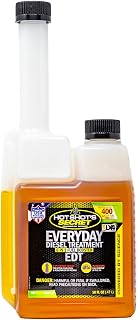
Hot Shot's Secret
Everyday Diesel Treatment (EDT)
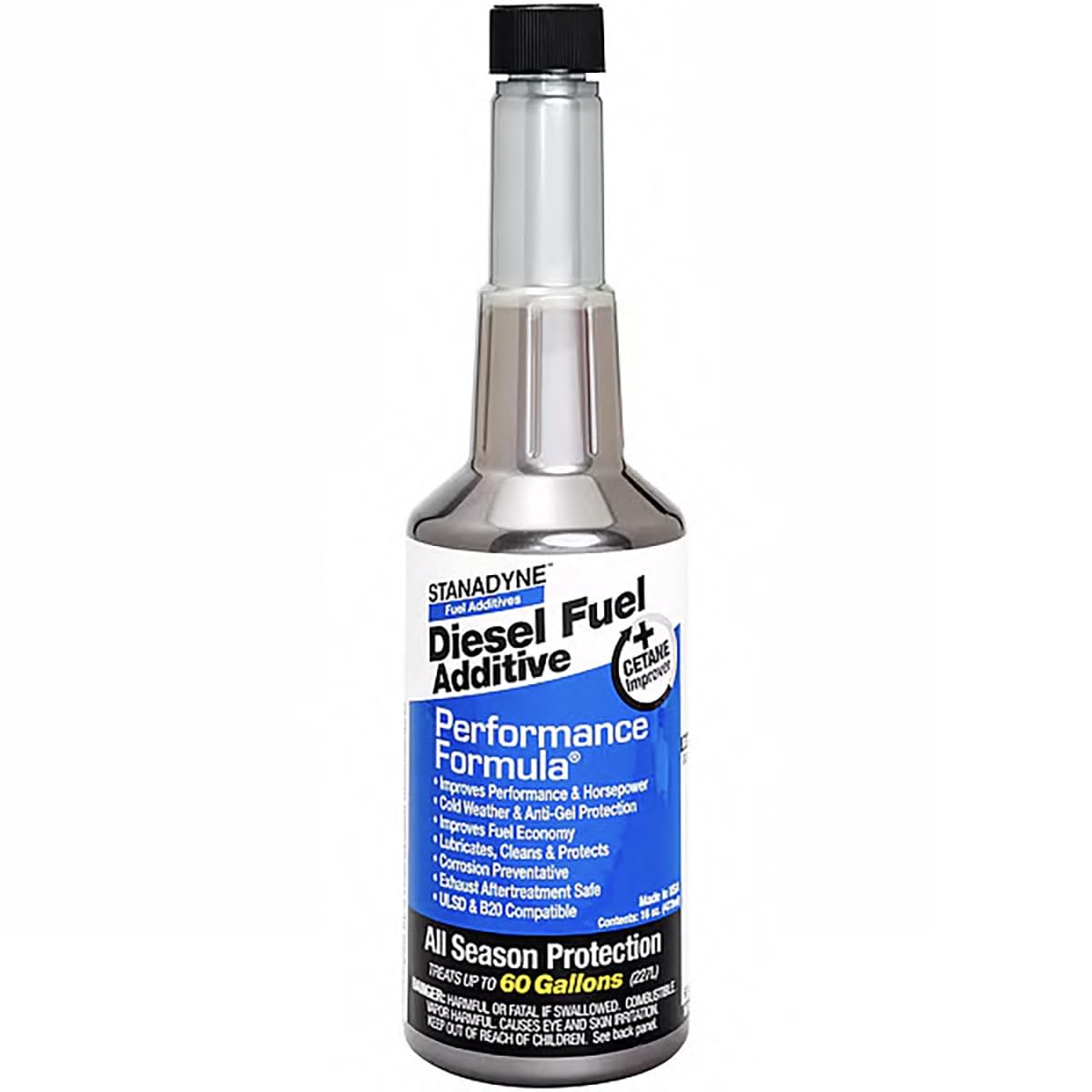
Stanadyne
Performance Formula Diesel Fuel Additive
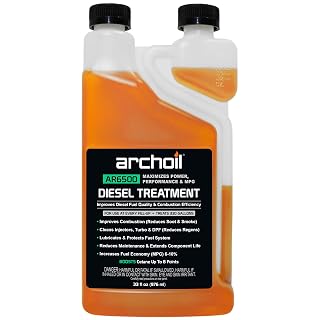
Archoil
AR6500 Diesel Treatment
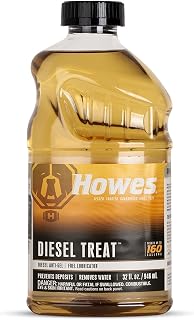
Howes
Diesel Treat
As an Amazon Associate I earn from qualifying purchases. Full disclosure

Community
0 postsShare how you use this product
Drop a quick comment or post a full review with photos and a star rating.
Sign in to postNew here? Create a free account.