
2-Ethylhexyl Nitrate (2-EHN)
- Other solvents
- CAS 27247-96-7
- IUPAC: 2-ethylhexyl nitrate
2-Ethylhexyl Nitrate (2-EHN) (CAS 27247-96-7) appears in 5 of the 2,168 car-care products CarCareTruth tracks (as of August 2026). It is classified as a VOC.
H302 (harmful if swallowed), H312 (harmful in contact with skin), H332 (harmful if inhaled) at the substance level. Acute oral toxicity: rat LD50 ~500 mg/kg. The primary consumer exposure route is inhalation of vapors during pour into the diesel fuel tank — brief (15-45 seconds) but at full concentrate strength. Known occupational sensitizer at elevated concentrations in industrial settings.
What it is
2-Ethylhexyl nitrate (2-EHN, also written as ethylhexyl nitrate, octyl nitrate, or EHN; CAS 27247-96-7) is an organic nitrate ester. The neat substance is a clear, pale-yellow liquid with a mild ester odor and a density near 0.96 g/mL. It is the dominant cetane number improver used in the diesel fuel market.
Typical treat rate in finished refinery or terminal-blended diesel sits between 300 and 2,000 ppm. Aftermarket in-tank diesel additives sold to consumers usually deliver an in-tank concentration of 200 to 500 ppm once mixed with a full tank.
How it works
EHN is a free-radical initiator. The nitrate ester bond has a low thermal-decomposition temperature, so as the fuel-air charge is compressed and heated in a diesel cylinder, the molecule breaks apart before the bulk fuel reaches its autoignition point. Decomposition yields nitrogen dioxide (NO2) and an alkyl radical, both of which seed the combustion chain reaction earlier in the compression stroke.
The practical result is a shorter ignition delay. Effects associated with shorter ignition delay in diesel engines include easier cold starting, reduced white smoke during warm-up, smoother idle on older direct-injection engines, and a measurable bump in cetane number from base diesel.
Where it appears in car care
The most common consumer encounter with EHN is inside diesel fuel additives: cetane boosters, winter-blend anti-gel and starting aids, and combination diesel fuel system cleaners that market a cetane claim. It also turns up in some racing or performance gasoline additives that advertise cetane equivalence, though gasoline engines do not benefit from cetane improvement in the same way diesels do.
In the CarCareTruth catalog, EHN shows up specifically on the ingredient list of diesel-targeted fuel additives and fuel system cleaners.
Thermal stability and shipping
EHN concentrates are sensitive to heat. Bulk neat EHN can self-decompose if stored at elevated temperatures, which is why aftermarket diesel additives blend it with stabilizers and dilute it well below concentrate strength. Bulk shipments of the neat substance move under DOT and UN transport rules as a Class 5.1 oxidizer, typically Packing Group II at concentrate.
Finished consumer additive bottles do not ship as Class 5.1 because the in-bottle concentration sits well below the cutoff thresholds.
SDS facts
Safety data sheets for neat 2-EHN typically carry the following CLP hazard statements:
- H272: may intensify fire; oxidizer
- H315: causes skin irritation
- H319: causes serious eye irritation
- H335: may cause respiratory irritation
The H302/H312/H332 acute toxicity classifications reported on this product page reflect the mixture-level SDS data used for the CarCareTruth scoring snapshot. Acute oral toxicity in rats is reported around LD50 500 mg/kg.
Organic nitrates can oxidize hemoglobin to methemoglobin, and methemoglobinemia is a recognized industrial-exposure hazard for workers handling bulk EHN. The published case literature is at occupational exposure levels, not at the dilute concentrations present in a consumer fuel additive once dosed into a diesel tank.
Environmental profile
At finished-fuel concentrations, EHN has low aquatic toxicity, is not classified as persistent, and is not bioaccumulative. The dominant environmental pathway is combustion in the engine, where the nitrate group contributes to engine-out NOx. NOx is a regulated air pollutant, and an increase in NOx is one of the trade-offs documented when cetane improvers are evaluated against base diesel.
Regulatory snapshot
2-EHN is not listed on California Proposition 65. It is a volatile organic compound by general definition but is not on the EPA's lists of specific regulated VOCs for finished-fuel additive use. Workplace exposure to the neat substance falls under the OSHA Hazard Communication Standard via the CLP hazard statements above.
Where to look on the SDS
For a quick read on a diesel additive that lists 2-EHN as an ingredient:
- Section 2: confirm the H272 oxidizer classification and any acute-tox H-codes.
- Section 3: composition and 2-EHN concentration range.
- Section 9: physical and chemical properties. Boiling point of the neat substance is roughly 260 °C and density is around 0.96 g/mL.
- Section 14: transport classification. Concentrate ships as UN3358 / Class 5.1 PG II; diluted consumer bottles usually do not.
Health & environment profile
- VOC
- yes
- Prop 65 listed
- no
- Asthmagen
- no
- EPA Safer Choice
- no
- Aquatic toxicity
- no
- Biodegradable
- no
- Bioaccumulative
- no
- Persistent
- no
- Ozone depleting
- no
- Microplastic
- no
- PFAS
- no
- Env. score
- 3/5
Common questions about 2-Ethylhexyl Nitrate (2-EHN)
- What is 2-Ethylhexyl Nitrate (2-EHN) used for in car care?
- Cetane improver for diesel fuel — decomposes during combustion to release NO radicals that reduce ignition delay, raising the effective cetane number.
- Is 2-Ethylhexyl Nitrate (2-EHN) a VOC?
- Yes. 2-Ethylhexyl Nitrate (2-EHN) is classified as a volatile organic compound (VOC).
- Is 2-Ethylhexyl Nitrate (2-EHN) on California's Proposition 65 list?
- No. 2-Ethylhexyl Nitrate (2-EHN) is not on California's Proposition 65 list.
5 products contain this
 Archoil AR6500 Diesel TreatmentProp 65
diesel-treatment
 Chevron Techron D Concentrate Diesel Fuel System Cleaner
fuel-system-cleaner
 Hot Shot's Secret Everyday Diesel Treatment (EDT)Prop 65
diesel-treatment
 Opti-Lube XPD All-Season Diesel Fuel Additive (4 oz 8-Pack)Prop 65
diesel-treatment
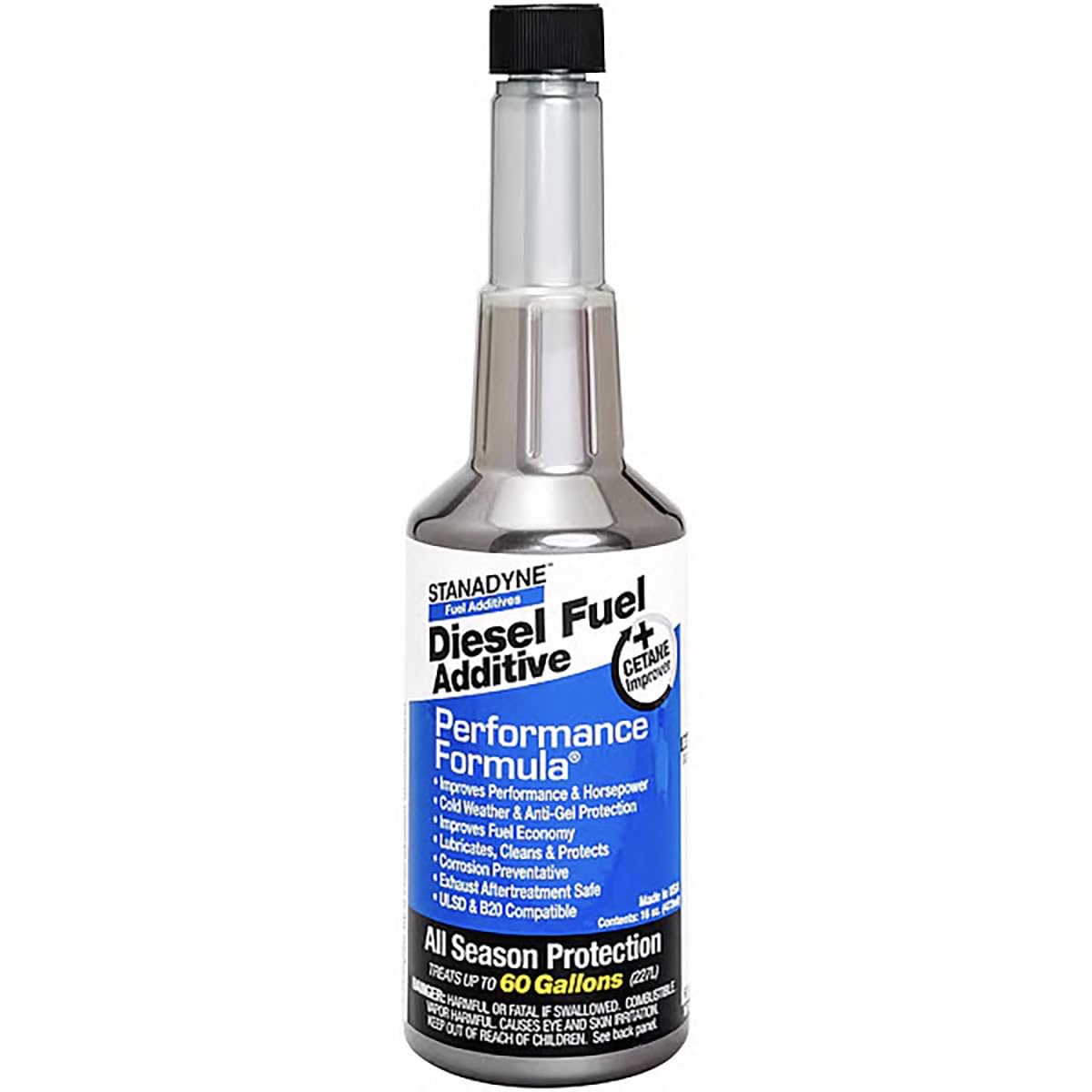 Stanadyne Performance Formula Diesel Fuel AdditiveProp 65
diesel-treatment
Related
Health and environment notes translate the manufacturer Safety Data Sheet, the GHS classification, and authoritative regulatory listings (California Prop 65, EPA). Not medical advice. They describe the ingredient itself; whether a hazard applies to a finished product depends on its concentration and how it's used.