CarCareTruth Score
Decent.
Opens Amazon in a new tab. No account needed to look.
Saved to your guest loadout. Sign up to also save to your Cabinet (consumables) or Kit (tools you own).
As an Amazon Associate I earn from qualifying purchases. Full disclosure
Prices may varyThe manufacturer's Safety Data Sheet classifies this product with one or more GHS Category 1 health hazards — the most severe tier. The hazard statements in quotes below are the verbatim GHS language from the SDS, as required by OSHA's Hazard Communication Standard. The line under each statement translates the GHS classification into plain language.
GHS Category 1 eye damage — classified as causing irreversible eye damage on contact.
If swallowed, inhaled, or splashed in eyes:
Call Poison Control immediately at 1-800-222-1222 (US, 24/7, free) and have the product container with you. Poison Control's standing guidance is to not induce vomiting after chemical exposure; they will direct first-aid steps based on the specific product.
About this product's hazards. This product's Safety Data Sheet uses signal word danger. Read the manufacturer's SDS and follow all safety instructions before use. CarCareTruth ratings translate the manufacturer's safety sheet. They do not replace the SDS or substitute for a hazard assessment specific to your task.
Health score is for adult use as intended, per the manufacturer's SDS. It does not model child ingestion, accidental spill cleanup, or off-label use. See the safety panel below for full hazard classification, and /disclaimer for the full editorial scope.
GHS hazard codes are quoted from the manufacturer’s Safety Data Sheet. PPE tiers below translate those codes and the listed ingredient chemistry; they are not CarCareTruth recommendations.
Show details for all categories ▾Hide details ▴
Translated from the manufacturer’s Safety Data Sheet, Section 2
H318 serious eye damage (Cat 1) in SDS §2. Contact can cause permanent injury. Wear safety goggles.
U.S. regulatory standard
29 CFR 1910.133(a)(1); 1910.151(c)
“The employer shall ensure that each affected employee uses appropriate eye or face protection when exposed to eye or face hazards from… liquid chemicals, acids or caustic liquids…”
ANSI Z87.1 (chemical splash protection — incorporated via §1910.6)
OSHA standards apply to workplaces. Cited here as the U.S. reference threshold for the underlying hazard class.
CarCareTruth publishes the cited sources verbatim and does not advise what action a user should take. Consult the full SDS before use.
Translated from the manufacturer’s Safety Data Sheet, Section 2
H315 skin irritation in SDS §2. 2-Butoxyethanol at 10-30% is a known skin absorber; nitrile gloves are recommended for any prolonged contact.
U.S. regulatory standard
29 CFR 1910.138(a)
“appropriate hand protection when employees' hands are exposed to hazards such as those from… chemicals which produce an adverse effect on the skin or eyes…”
OSHA standards apply to workplaces. Cited here as the U.S. reference threshold for the underlying hazard class.
CarCareTruth publishes the cited sources verbatim and does not advise what action a user should take. Consult the full SDS before use.
Translated from the manufacturer’s Safety Data Sheet, Section 2
Aerosol form factor with H336 narcotic/drowsiness effects drives required tier. VOC 280 g/L in aerosol stream. Use a half-face respirator with organic vapor cartridges; apply outdoors or in a fully open garage.
CarCareTruth publishes the cited sources verbatim and does not advise what action a user should take. Consult the full SDS before use.
The published Safety Data Sheet for this product does not specify ventilation protection for consumer use.
Workplace context
29 CFR 1910.134(a); 1910.1000
“the primary objective shall be to prevent atmospheric contamination [via] accepted engineering control measures (for example, enclosure or confinement of the operation, general and local ventilation…).”
Triggered by GHS H336 on the SDS.
OSHA standards apply to workplaces. Cited here as the U.S. reference threshold for the underlying hazard class.
PPE tiers translate the manufacturer’s SDS and U.S. regulatory standards. Not professional safety advice. How we report safety.
This product ranks #7 of 8 in Rust Converter.Three above it ↓
Last reviewed July 31, 2026
TL;DR A DANGER-rated aerosol rust converter with serious hazard chemistry: wear safety goggles, nitrile gloves, and a respirator, and apply outdoors or in a fully open garage. It converts light surface rust to a dark polymer coating that accepts oil-based and lacquer topcoats, but aerosol delivery limits penetration into deep rust pits.
Spray onto wire-brushed, dry metal and it applies milky-white wet; as the solvents flash off over about 20 minutes, it cures to a dark polymer layer that halts further oxidation and serves as a primer base for paint. Prep is minimal: remove loose scale with a wire brush, let the surface dry, and apply. Coverage runs about 23 sq ft per can, above average for an aerosol at this size. On deep rust pits the aerosol coat weight sits on the accessible surface rather than wetting in, and a second coat helps. Paintability with oil-based and alkyd topcoats is manufacturer-specified and consistent with community experience; epoxy primer and urethane clearcoat compatibility are not documented.
The right fit is a home owner treating light-to-moderate surface rust on non-structural metal: railings, truck bed ribs, undercarriage seams, or body panels destined for oil-based paint. Skip it for deep scale rust or structural steel, and if you need urethane clearcoat compatibility, confirm on a test area first.
The DANGER signal word is driven by H318 serious eye damage and H336 narcotic/drowsiness effects from the 280 g/L VOC aerosol stream; safety goggles, nitrile gloves, and a half-face respirator with organic vapor cartridges are required. A California Proposition 65 warning is confirmed on the listing; the specific substance was not identified in the 2014 SDS. The product cures in place and is not rinsed to a drain; SDS Section 12 aquatic toxicity data was not available.
It applies milky-white wet and cures to a dark polymer coating as the solvents flash off. The manufacturer describes it as converting rust to a neutral black surface. Some users note the wet coat can appear clear depending on coat thickness; the cured finish is dark. Either way, the converted surface serves as a primer base for oil-based or lacquer topcoats.
The manufacturer specifies oil-based or lacquer-based paint as topcoat. Allow 20 minutes per coat before applying paint. Epoxy primer and urethane clearcoat compatibility are not independently documented in community testing; confirm with a small test area if using a non-specified system.
Manufacturer Q&A on Home Depot estimates approximately 23 sq ft per 10.25 oz can, with yield varying depending on spray rate and distance. This is above average coverage for an aerosol rust converter at this can size.
Yes, and it is a completely different product with different chemistry. The liquid version (Loctite SF 754, IDH 234984) uses a water-based tannic acid formula with a WARNING signal word and substantially lower VOC. The aerosol reviewed here (IDH 633877, B001AZLA08) uses an acetone/butoxyethanol carrier with formic acid as the active converter, driving the DANGER classification.
Marketing copy from Loctite, via Amazon. Not editorial.
Weekly pick
One product, one safety verdict, every week. No spam.


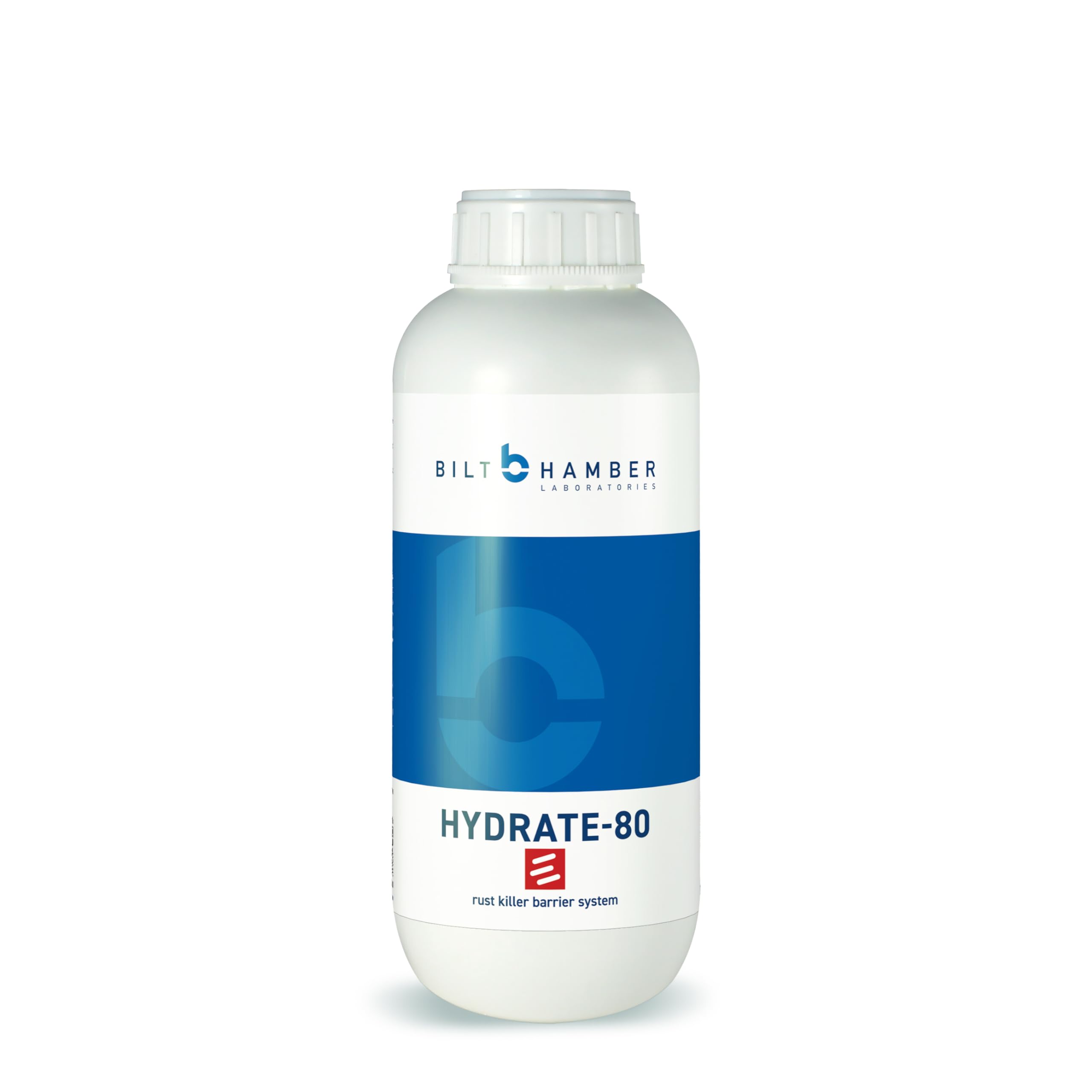
Bilt Hamber
Hydrate 80 Rust Killer
Gempler's
Rust Converter
Corroseal
Water-Based Rust Converter Metal Primer
Rust Kutter
Rust Converter
As an Amazon Associate I earn from qualifying purchases. Full disclosure

Community
0 postsShare how you use this product
Drop a quick comment or post a full review with photos and a star rating.
Sign in to postNew here? Create a free account.