CarCareTruth Score
Decent.
Opens Amazon in a new tab. No account needed to look.
Saved to your guest loadout. Sign up to also save to your Cabinet (consumables) or Kit (tools you own).
As an Amazon Associate I earn from qualifying purchases. Full disclosure
Prices may varyHealth score is for adult use as intended, per the manufacturer's SDS. It does not model child ingestion, accidental spill cleanup, or off-label use. See the safety panel below for full hazard classification, and /disclaimer for the full editorial scope.
GHS hazard codes are quoted from the manufacturer’s Safety Data Sheet. PPE tiers below translate those codes and the listed ingredient chemistry; they are not CarCareTruth recommendations.
Show details for all categories ▾Hide details ▴
Beyond SDS: translated from the ingredient chemistry
pH 1-3 (SDS §9) at working concentration. The formulated mixture is GHS Not Classified (no H318 at mixture level), but the disclosed low-end pH forces required-tier eye protection: concentrated acid at this pH can cause serious eye tissue damage on direct contact below GHS corrosive classification thresholds.
CarCareTruth publishes the cited sources verbatim and does not advise what action a user should take. Consult the full SDS before use.
Beyond SDS: translated from the ingredient chemistry
pH 1-3 (SDS §9) at working concentration. The formulated mixture is GHS Not Classified (no H314 at mixture level), but the disclosed low-end pH forces required-tier skin protection: concentrated acid contact with skin at this pH carries a genuine corrosive risk below GHS mixture-classification thresholds. Apply with nitrile or chemical-resistant gloves.
CarCareTruth publishes the cited sources verbatim and does not advise what action a user should take. Consult the full SDS before use.
Only when: when spraying
Translated from the ingredient chemistry
No inhalation H-codes (H330, H331, H335) present at the mixture level; GHS Not Classified. Mist generated during pump-spray or airless-spray application can carry acidic droplets, so ventilation is warranted in that scenario. Brush and roll application in open air carries no meaningful inhalation risk.
CarCareTruth publishes the cited sources verbatim and does not advise what action a user should take. Consult the full SDS before use.
No PPE specified in published sources for ventilation. Absence does not imply “not needed” — consult the full Safety Data Sheet.
PPE tiers translate the manufacturer’s SDS and U.S. regulatory standards. Not professional safety advice. How we report safety.
Scope of these PPE tiers. The tiers on this page translate the product's Safety Data Sheet where one is published, plus its ingredient chemistry, into a comparable rating. They describe a formulation, not a situation: a tier is not a safety determination for any specific user, task, quantity, or environment. The manufacturer's label and use instructions govern how the product is handled. Where the product is used at work, the employer's PPE program and hazard assessment under 29 CFR 1910.132 decide what protection is selected, not this page.
No warranties. CarCareTruth makes no warranties, express or implied, and expressly disclaims the implied warranties of merchantability and fitness for a particular purpose.
This product ranks #2 of 7 in Rust Converter.
Last reviewed July 12, 2026
TL;DR Converts surface rust to a stable black layer · community-confirmed with oil-based and spray enamel topcoats and a Tacoma frame follow-up past 12 months in road-salt conditions. The formulated mixture is GHS Not Classified (no signal word, no H-codes), but the pH 1-3 means wear safety glasses and nitrile gloves · direct eye or skin contact can cause tissue damage.
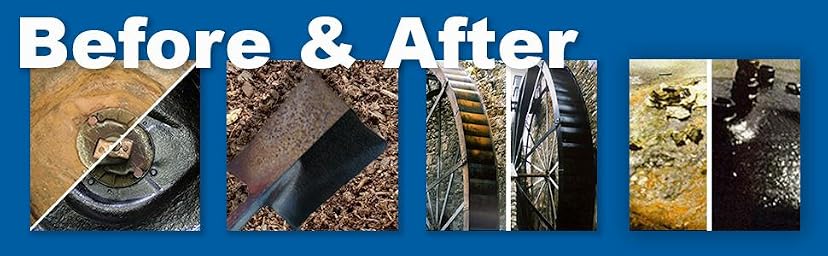
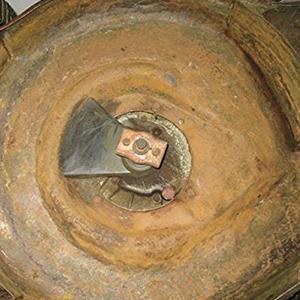
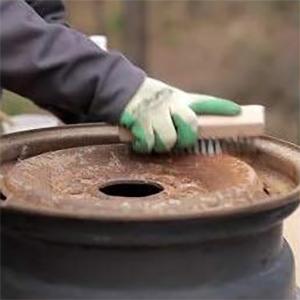
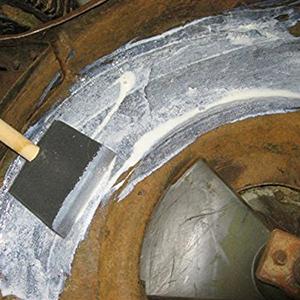
Wire-brush the loose scale off, apply, and watch the rust turn black. Includes an integrated latex metal primer, so the converted surface accepts topcoat directly. Community 12-month follow-ups document stable converted surfaces on vehicle frames and undercarriage; coverage is 200-250 sq ft per gallon. Works via brush, roller, or pump sprayer; first-time users consistently report success with basic prep and no sandblasting.
Right for surface rust on frame rails, truck beds, wheel arches, and body panels before repainting. Skip it for scale rust with structural metal loss · a converter stabilizes iron oxide on the surface, it doesn't restore thinned steel, and cut-and-weld is the correct fix for structural sections.
SDS (Rodda Paint, v1.5, 2023-03-27) classifies the mixture as GHS Not Classified · no signal word, no H-codes. The pH 1-3 (SDS §9) drives the required eye and skin protection: concentrated acid at that pH can cause tissue damage below GHS corrosive thresholds · wear safety glasses and nitrile gloves. No inhalation H-codes; spray application warrants ventilation outdoors or cross-ventilated. Cures in place on metal, not rinsed to a drain; SDS §12 confirms no aquatic toxicity; no Prop 65 required.
Community data says it genuinely converts. Long-term community follow-up confirms that the black-converted surface holds without re-rusting when properly topcoated. The strong, broadly positive owner consensus is consistent with a product that delivers on its core promise for surface and moderate pit rust. That said, this is not a metal replacement: it stabilizes iron oxide on the surface, it doesn't restore metal that has thinned or perforated.
Yes, with the right primer family. Community evidence documents successful topcoating with oil-based enamel and rattle-can spray enamel · adhesion confirmed in multiple long-term owner reviews. Urethane clearcoat compatibility is not well-documented in independent community tests; if you need urethane-clearcoat compatibility, verify with a test panel first. The product is marketed as a self-priming converter, meaning it includes a latex metal primer layer · but that does not eliminate the need for a proper topcoat for exposed applications.
Brush or roll application in a well-ventilated garage is low inhalation risk · the formulation has no inhalation H-codes at the mixture level. Spray application generates acidic mist and should be done outdoors or with adequate ventilation. The SDS classifies the mixture as GHS Not Classified with no signal word, but the pH 1-3 means nitrile gloves and safety glasses are required regardless: direct eye or skin contact with acidic material at this pH can cause tissue damage before GHS classification thresholds are triggered.
The current Rodda Paint SDS (v1.5, 2023-03-27) classifies the mixture as GHS Not Classified at the mixture level with no H-codes · this is different from many phosphoric acid rust converters that carry H314 and H318. The active rust-converting chemistry is proprietary and not listed in SDS §3. The pH 1-3 (SDS §9) confirms acidic chemistry, and that acidity is the basis for the required eye and skin PPE · not from an H-code but from the physical reality of direct tissue contact at that pH. The SDS §15 explicitly confirms no Prop 65 warning is required.
The label states 200-250 sq ft per gallon (8-10 mils wet). Community experience is consistent with the label. Coverage varies with rust severity: heavily pitted surfaces absorb more product and may need a second coat in the pits.
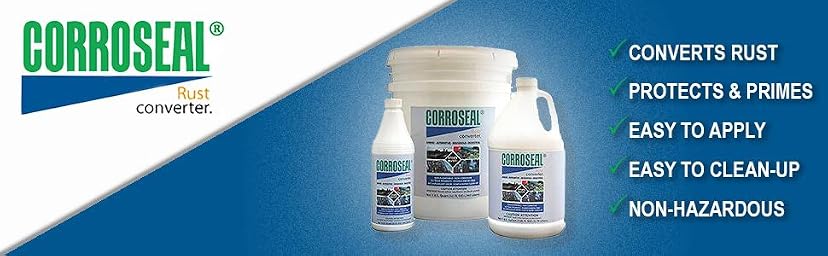
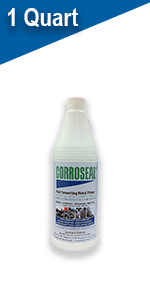
Marketing copy from Corroseal, via Amazon. Not editorial.
Weekly pick
One product, one safety verdict, every week. No spam.

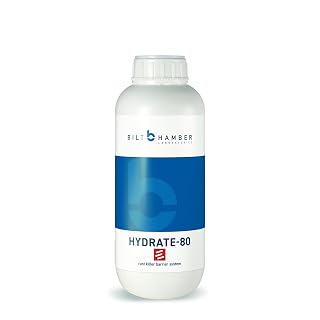
Bilt Hamber
Hydrate 80 Rust Killer
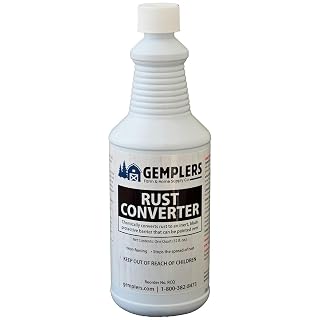
Gempler's
Rust Converter
Rust Kutter
Rust Converter
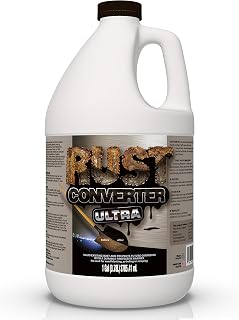
FDC
Rust Converter ULTRA (1 Gallon)
As an Amazon Associate I earn from qualifying purchases. Full disclosure

Community
0 postsShare how you use this product
Drop a quick comment or post a full review with photos and a star rating.
Sign in to postNew here? Create a free account.