CarCareTruth Score
Decent.
Saved to your guest loadout. Sign up to also save to your Cabinet (consumables) or Kit (tools you own).
As an Amazon Associate I earn from qualifying purchases. Full disclosure
Health score is for adult use as intended, per the manufacturer's SDS. It does not model child ingestion, accidental spill cleanup, or off-label use. See the safety panel below for full hazard classification, and /disclaimer for the full editorial scope.
GHS hazard codes are quoted from the manufacturer’s Safety Data Sheet. PPE tiers below translate those codes and the listed ingredient chemistry; they are not CarCareTruth recommendations.
Show details for all categories ▾Hide details ▴
Only when: misting overhead
Beyond SDS: translated from the ingredient chemistry
SDS §2 carries H280 (compressed gas, physical hazard) only, no H319 or H318. Aerosol mist delivery increases eye-contact probability at normal working distance, particularly when cleaning overhead interior glass where mist can reach eye level.
CarCareTruth publishes the cited sources verbatim and does not advise what action a user should take. Consult the full SDS before use.
No PPE specified in published sources for skin. Absence does not imply “not needed” — consult the full Safety Data Sheet.
Only when: in enclosed space
Beyond SDS: translated from the ingredient chemistry
No H335 or H331 in SDS §2. Aerosol format with solvent content generates finer particulate than pump spray; interior cabin cleaning concentrates mist in a roughly 3 m3 enclosed space. The aerosol exception applies: aerosol format with any solvent content and interior cabin use meets the situational threshold without H335.
CarCareTruth publishes the cited sources verbatim and does not advise what action a user should take. Consult the full SDS before use.
No PPE specified in published sources for ventilation. Absence does not imply “not needed” — consult the full Safety Data Sheet.
PPE tiers translate the manufacturer’s SDS and U.S. regulatory standards. Not professional safety advice. How we report safety.
Scope of these PPE tiers. The tiers on this page translate the product's Safety Data Sheet where one is published, plus its ingredient chemistry, into a comparable rating. They describe a formulation, not a situation: a tier is not a safety determination for any specific user, task, quantity, or environment. The manufacturer's label and use instructions govern how the product is handled. Where the product is used at work, the employer's PPE program and hazard assessment under 29 CFR 1910.132 decide what protection is selected, not this page.
No warranties. CarCareTruth makes no warranties, express or implied, and expressly disclaims the implied warranties of merchantability and fitness for a particular purpose.
Last reviewed June 7, 2026
TL;DR Confirmed ammonia-free from the safety data sheet, streak-free in one pass, and a genuine category favorite that owners reach for again and again. Sprayway discloses a California Prop 65 warning. Patch-test before use on aftermarket adhesive-backed tint and use with windows open when cleaning inside a closed cabin.
Ammonia-free and safe for OEM tinted glass, confirmed by the safety data sheet. The foaming aerosol clings to vertical side and rear windows instead of running off, giving the cleaning formula more contact time on oily film and interior haze. Community evidence confirms single-pass streak-free results on interior and exterior glass. Aerosol overspray onto adjacent trim is the main trade-off versus a pump trigger. Patch-test on aftermarket adhesive-backed tint per the brand's own label before full use.
The right buy for exterior side and rear glass where vertical-cling foam helps, and for anyone who wants a reliable ammonia-free formula safe for OEM tinted glass. Skip it if you have aftermarket adhesive-backed tint without patch-testing first, or if pump-spray precision matters for interior windshield work.
The safety data sheet WARNING reflects compressed gas pressure, a physical aerosol hazard rather than a health signal. No health hazard codes appear in the mixture classification. The eye- and lung-protection guidance here is translated from the aerosol-mist delivery and solvent content (ethanol, 2-butoxyethanol), not stated in the SDS: because it mists, eye contact is more likely when cleaning overhead glass, and solvent mist concentrates in a closed cabin, so open a window when cleaning inside. Sprayway discloses a California Prop 65 warning. Drain-destined via cloth laundering; one solvent ingredient has documented aquatic toxicity.
Yes for OEM (factory-embedded) tint. The formula contains no ammonia, confirmed by the safety data sheet and brand labeling. The solvent content can be aggressive on some adhesive-backed aftermarket films. Sprayway's own label recommends patch-testing on aftermarket tint in an inconspicuous area before full use.
The aerosol foam clings to vertical glass, exterior side windows, door glass, and rear hatch glass, without immediately running off. This gives the cleaner more contact time on heavily filmed glass and wastes less product. Trade-off: aerosol spray drifts more, so overspray onto adjacent vinyl trim is the main risk.
Yes. The solvent component handles oily film, fingerprints, and bug residue better than alcohol-only formulas. Community evidence on r/AutoDetailing supports single-pass clearing of moderate interior film; heavy long-term smoke residue may need a second pass.
H280 means Contains gas under pressure; may explode if heated. This applies to all aerosol cans because of their compressed propellant, not a health classification. Don't store the can in a hot car or near an ignition source. The signal word WARNING reflects the physical hazard, not a chemical exposure risk.
Sprayway has been making aerosol foaming glass cleaner since 1947. The current formulation uses an alcohol and solvent base with propane/butane propellants. The ammonia-free position has been a brand differentiator since the start and is corroborated by the 2023 safety data sheet.
Marketing copy from Sprayway, via Amazon. Not editorial.
Weekly pick
One product, one safety verdict, every week. No spam.
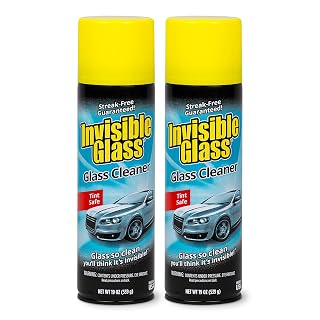
Stoner
Invisible Glass Premium Aerosol Glass Cleaner
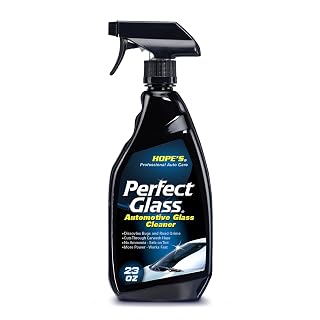
Hope's
Perfect Glass Automotive Glass Cleaner
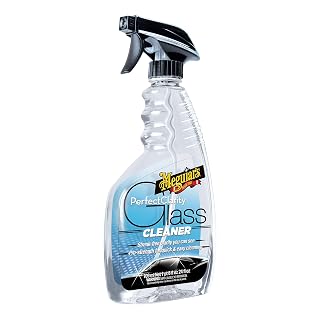
Meguiar's
Perfect Clarity Glass Cleaner
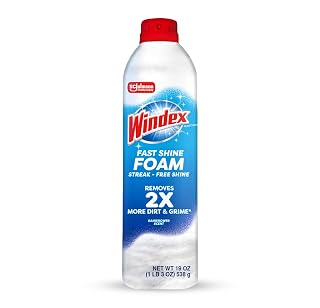
Windex
Fast Shine Foam Glass Cleaner
As an Amazon Associate I earn from qualifying purchases. Full disclosure

Community
0 postsShare how you use this product
Drop a quick comment or post a full review with photos and a star rating.
Sign in to postNew here? Create a free account.