CarCareTruth Score
Mediocre.
Opens Amazon in a new tab. No account needed to look.
Saved to your guest loadout. Sign up to also save to your Cabinet (consumables) or Kit (tools you own).
As an Amazon Associate I earn from qualifying purchases. Full disclosure
Prices may varyThe manufacturer's Safety Data Sheet classifies this product with one or more GHS Category 1 health hazards — the most severe tier. The hazard statements in quotes below are the verbatim GHS language from the SDS, as required by OSHA's Hazard Communication Standard. The line under each statement translates the GHS classification into plain language.
GHS Category 1 reproductive toxicity — classified as suspected of damaging fertility or harming an unborn child.
GHS Category 1 aspiration toxicity — thin, oily liquids can slip into the lungs if swallowed, causing chemical pneumonia.
If swallowed, inhaled, or splashed in eyes:
Call Poison Control immediately at 1-800-222-1222 (US, 24/7, free) and have the product container with you. Poison Control's standing guidance is to not induce vomiting after chemical exposure; they will direct first-aid steps based on the specific product.
About this product's hazards. This product's Safety Data Sheet uses signal word danger. Read the manufacturer's SDS and follow all safety instructions before use. CarCareTruth ratings translate the manufacturer's safety sheet. They do not replace the SDS or substitute for a hazard assessment specific to your task.
Health score is for adult use as intended, per the manufacturer's SDS. It does not model child ingestion, accidental spill cleanup, or off-label use. See the safety panel below for full hazard classification, and /disclaimer for the full editorial scope.
GHS hazard codes are quoted from the manufacturer’s Safety Data Sheet. PPE tiers below translate those codes and the listed ingredient chemistry; they are not CarCareTruth recommendations.
Show details for all categories ▾Hide details ▴
Translated from the manufacturer’s Safety Data Sheet, Section 2
SDS §2 classifies the mixture Eye Irrit. 2A (H319, 'Causes serious eye irritation') and the DANGER signal word is driven by health H-codes (H360 reproductive toxicity, H304 aspiration hazard). SDS §8 directs: 'Wear safety glasses with side shields (or goggles).' No H318 (serious eye damage) is classified at §2, so the tier is recommended, not required.
U.S. regulatory standard
29 CFR 1910.133(a)(1)
“The employer shall ensure that each affected employee uses appropriate eye or face protection when exposed to eye or face hazards from… liquid chemicals…”
ANSI Z87.1 (incorporated via §1910.6)
OSHA standards apply to workplaces. Cited here as the U.S. reference threshold for the underlying hazard class.
CarCareTruth publishes the cited sources verbatim and does not advise what action a user should take. Consult the full SDS before use.
Only when: handling concentrate
Translated from the manufacturer’s Safety Data Sheet, Section 8
SDS §2 classifies no skin-hazard code at mixture level (skin corrosion/irritation: not classified). SDS §8 nonetheless names specific hand protection - 'Wear protective gloves. Butyl-rubber protective gloves >= 0.5 mm, or nitrile rubber gloves >= 0.4 mm' - so per the full-cautious render rule the floor is situational rather than omission. The trigger is direct handling of the concentrated coating fluid during application (suede-sponge saturation, bottle transfer), not a classified dermal hazard.
U.S. regulatory standard
29 CFR 1910.1000; 1910.1200
“Each employer shall assure that no employee is exposed [in excess of the PEL]…”
OSHA standards apply to workplaces. Cited here as the U.S. reference threshold for the underlying hazard class.
CarCareTruth publishes the cited sources verbatim and does not advise what action a user should take. Consult the full SDS before use.
Only when: in enclosed space · prolonged use
Translated from the manufacturer’s Safety Data Sheet, Section 8
SDS §2 classifies no respiratory-irritation code (no H335/H336) at mixture level. SDS §8 uses conditional boilerplate ('where exposure guideline levels may be exceeded, use an approved NIOSH respirator'). The carrier is a naphtha/toluene/methanol solvent blend with a low 25C flash point (H226) - the inhalation pathway is realistic only in an enclosed or poorly ventilated space, or with repeated/professional-frequency use, not in normal single-application outdoor/open-garage use.
U.S. regulatory standard
29 CFR 1910.1200(f); 1910.132(d)
“The employer shall assess the workplace to determine if hazards are present, or are likely to be present, which necessitate the use of personal protective equipment.”
OSHA standards apply to workplaces. Cited here as the U.S. reference threshold for the underlying hazard class.
CarCareTruth publishes the cited sources verbatim and does not advise what action a user should take. Consult the full SDS before use.
No PPE specified in published sources for ventilation. Absence does not imply “not needed” — consult the full Safety Data Sheet.
PPE tiers translate the manufacturer’s SDS and U.S. regulatory standards. Not professional safety advice. How we report safety.
This product ranks #21 of 29 in Ceramic Coating.Three above it ↓
Last reviewed August 2, 2026
TL;DR This is a DANGER-labeled product: the SDS's core hazard is a reproductive toxicity classification (H360) at the mixture level, plus an aspiration hazard and eye irritation, so handle the concentrate with real care around skin, eyes, and ingestion. It's SONAX's professional single-coat system, built for experienced detailers rather than first-timers, with a roughly one-minute flash window, no panel-wipe prep included, and no community-confirmed durability or protection record yet behind its five-year marketing claim.
CC Pro is SONAX's professional single-coat ceramic system: once cured, it leaves a hard, glossy film that beads water and helps the paint resist iron fallout and light contamination. Application is fast and unforgiving: work one panel at a time, let it flash for about a minute, then wipe it off before it tacks up. The 50 mL kit includes four application sponges and a microfiber pad, but not the panel-wipe prep product SONAX's own instructions call for, so budget for one separately. The kit is brand new to US retail, so no independent owner has yet confirmed how it holds up over a full season or longer.
Best for experienced detailers and pros comfortable with a strict, fast-moving single-coat process, who don't need a proven multi-year track record before buying. Skip it if you're new to ceramic coatings: the short flash window and missing prep step trip up first-timers, and a more forgiving consumer-grade coating with years of community feedback gets most owners most of the protection with far less risk of a botched application.
The DANGER signal word is driven by a reproductive toxicity classification (H360) at the mixture level, along with an eye irritant (H319) and a flash point close to room temperature, so apply it outdoors or with the garage door open, away from any ignition source. The SDS precautionary statement for H304 (aspiration hazard) specifies: do not induce vomiting; contact a poison center or doctor immediately. Safety glasses or goggles cover the eye-irritation risk, gloves matter most while handling the concentrated fluid directly during application, and respiratory protection only becomes relevant in an enclosed or poorly ventilated space. California's Proposition 65 warning applies here due to disclosed toluene in the formula; the SDS lists no fluorinated PFAS ingredient, but the estimated solvent content lands in a high VOC bracket, part of why the Environment score sits at 6 out of 10.
There is no community-confirmed durability record yet. This kit only recently reached US Amazon, and independent owner follow-ups past the first few months have not surfaced on the usual detailing forums. SONAX's US listing markets five years of professional protection, but a SONAX distributor page for the same kit lists a four-year warranty instead, so treat the marketing figure as unconfirmed until real owner data accumulates.
The SDS classifies the mixture DANGER at the reproductive toxicity Category 1B level (H360), meaning it may damage fertility or an unborn child, alongside an aspiration hazard if swallowed and a Category 2A eye irritant. It also carries a flash point close to room temperature, so keep it away from ignition sources and apply it outdoors or with the garage door open.
Yes. SONAX's own application instructions call for a freshly decontaminated, panel-wiped surface, but the kit only includes four application sponges and a microfiber pad, not a dedicated panel-wipe prep product. Skipping that step risks trapping polishing oils under the coating, so budget for a separate prep product before you start.
Not really. SONAX describes the formula as built for experienced users and professional detailers, and the roughly one-minute flash window is short enough that first-timers commonly struggle to wipe it off evenly before it tacks up. Amazon's own feature bullet for this listing claims it is designed for everyone, which conflicts with the manufacturer's own positioning, so a more forgiving coating is the safer starting point for a first application.
No. The SDS discloses all six formula ingredients by name, and none of them is a fluorinated compound, so this kit does not carry the PFAS persistence concern that shows up in some ceramic coatings. The Environment score is instead driven by an estimated high-VOC solvent bracket, calculated from the two petroleum-distillate carriers the SDS discloses.
Marketing copy from SONAX, via Amazon. Not editorial.
Weekly pick
One product, one safety verdict, every week. No spam.
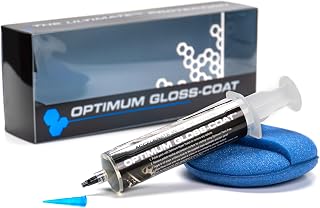
Optimum
Gloss-Coat
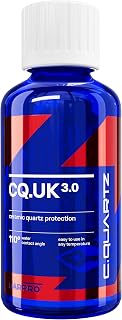
CarPro
Cquartz UK 3.0
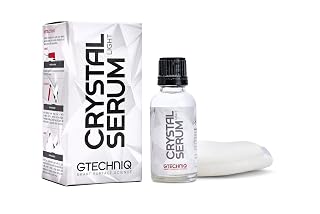
Gtechniq
Crystal Serum Light
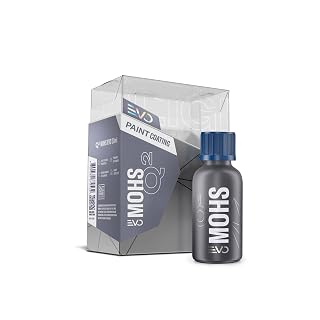
Gyeon
Q2 Mohs EVO
As an Amazon Associate I earn from qualifying purchases. Full disclosure

Community
0 postsShare how you use this product
Drop a quick comment or post a full review with photos and a star rating.
Sign in to postNew here? Create a free account.