CarCareTruth Score
Recommended.
Opens Amazon in a new tab. No account needed to look.
Saved to your guest loadout. Sign up to also save to your Cabinet (consumables) or Kit (tools you own).
As an Amazon Associate I earn from qualifying purchases. Full disclosure
Prices may varyHealth score is for adult use as intended, per the manufacturer's SDS. It does not model child ingestion, accidental spill cleanup, or off-label use. See the safety panel below for full hazard classification, and /disclaimer for the full editorial scope.
GHS hazard codes are quoted from the manufacturer’s Safety Data Sheet. PPE tiers below translate those codes and the listed ingredient chemistry; they are not CarCareTruth recommendations.
Show details for all categories ▾Hide details ▴
Translated from the manufacturer’s Safety Data Sheet, Section 8
SDS §8 recommends protective eyewear whenever the product is handled such that it could splash into the eyes, and §11 reports the product as slightly irritating to the eye. §2 carries no eye-hazard GHS code (no H318, no H319) · this is a real, if mild, contact-irritation signal, not a mixture-level classification.
CarCareTruth publishes the cited sources verbatim and does not advise what action a user should take. Consult the full SDS before use.
Translated from the manufacturer’s Safety Data Sheet, Section 8
SDS §7 advises avoiding prolonged or repeated skin contact; §8 recommends PVC, neoprene, or nitrile gloves wherever hand contact with the product may occur, with glove breakthrough-time guidance for continuous contact. §11 reports the product as slightly irritating to skin and separately warns that continuous contact with USED engine oil (not fresh oil) has caused skin cancer in animal tests, plus oil acne/folliculitis from repeated unwashed contact (§2 other hazards). §2 mixture classification carries no H314/H315 · the combination of real irritation and the used-oil finding is why gloves are a genuine precaution here, not boilerplate.
CarCareTruth publishes the cited sources verbatim and does not advise what action a user should take. Consult the full SDS before use.
Translated from the manufacturer’s Safety Data Sheet, Section 8
SDS §8 states respiratory protection is not ordinarily required under normal conditions of use, escalating only if engineering controls fail to hold airborne oil mist below the workplace limit (5 mg/m³, §8 control-parameter table) · typically when oil is heated, sprayed, or misted, or handled without adequate ventilation. §11 separately reports the product as slightly irritating to the respiratory system. §2 carries no inhalation hazard code (no H331, no H335), so this reflects a real if mild irritation signal plus a ventilation-dependent trigger, not a mixture-level respiratory hazard.
CarCareTruth publishes the cited sources verbatim and does not advise what action a user should take. Consult the full SDS before use.
No PPE specified in published sources for ventilation. Absence does not imply “not needed” — consult the full Safety Data Sheet.
PPE tiers translate the manufacturer’s SDS and U.S. regulatory standards. Not professional safety advice. How we report safety.
Scope of these PPE tiers. The tiers on this page translate the product's Safety Data Sheet where one is published, plus its ingredient chemistry, into a comparable rating. They describe a formulation, not a situation: a tier is not a safety determination for any specific user, task, quantity, or environment. The manufacturer's label and use instructions govern how the product is handled. Where the product is used at work, the employer's PPE program and hazard assessment under 29 CFR 1910.132 decide what protection is selected, not this page.
No warranties. CarCareTruth makes no warranties, express or implied, and expressly disclaims the implied warranties of merchantability and fitness for a particular purpose.
This product ranks #3 of 23 in Motor Oil.
Last reviewed May 25, 2026
TL;DR API CK-4 plus ACEA E9, with Cummins CES 20081, MB 228.31, Volvo VDS-4, Ford WSS-M2C171-E, Caterpillar ECF-3, and JASO DH-2/MA/MA2 · broad heavy-duty diesel coverage plus credible wet-clutch motorcycle compatibility. Shell publishes no mileage drain claim; the spec is "follow the OEM interval." California Proposition 65 warning applies for trace benzene in the petroleum base stock.
A full-synthetic heavy-duty diesel oil on a Group III hydroisomerized base stock with a low-SAPS additive package compatible with diesel particulate filters. API CK-4 with backwards compatibility to earlier diesel categories; ACEA E9; JASO DH-2/MA/MA2. Drain intervals follow OEM specification. Shell's TDS lists KV100 = 14.2 cSt (mid-range SAE 40).
Best for diesel-pickup owners (Duramax, Power Stroke, Cummins) and commercial diesel applications specifying API CK-4. JASO MA/MA2 makes it a credible 5W-40 option for wet-clutch motorcycles. Skip it for gasoline-only passenger cars that specify API SP + ILSAC GF-6A/GF-7A; the TDS lists API SM gasoline-side, superseded for modern GDI engines. Confirm Shell's current approval list before relying on it for warranty documentation.
SDS §2 is explicitly unclassified · no signal word, no pictograms, no health H-codes at mixture level · reflecting the highly refined base stock (DMSO-extract <3% per IP346). H304 aspiration does not apply: KV40 sits well above the 20.5 mm²/s CLP exemption threshold. SDS §15 carries the California Proposition 65 warning for trace benzene (0.0002%). SDS §12 affirmatively classifies the mixture as practically non-toxic to fish, daphnia, and algae. The SDS on file was last revised in 2018 · 7 years old; the H-codes here reflect that revision and may not capture additive changes since. Used oil goes to a collection facility, not down the drain or on the ground.
Yes · by industry convention. Shell's Technical Data Sheet markets Rotella T6 as full synthetic; the SDS §3 chemistry description ('highly refined mineral oils') reflects the post-1999 SAE/NAD ruling that Group III hydroisomerized base oils may be marketed as 'synthetic' in North America. The base stock is hydrocracked Group III, not Group II conventional. This is the same naming convention every Group III·based North American 'synthetic' uses, including Mobil 1 (in some grades), Pennzoil Platinum, and Castrol Edge.
Shell's Technical Data Sheet documents API CJ-4 backwards-compatible (CI-4 PLUS, CI-4, CH-4) plus API SM gasoline-side; ACEA E9; Caterpillar ECF-3/ECF-2; Cummins CES 20081; Detroit Diesel 93K218; Ford WSS-M2C171-E; JASO DH-2 (diesel) and MA/MA2 (motorcycle wet-clutch); Mack EO-O Premium Plus; MB-Approval 228.31; and Volvo VDS-4. The current the product listing further claims API CK-4 (which superseded CJ-4 in December 2016) plus expanded approvals (Cummins CES 20086, Allison TES 439, MAN M3575, Volvo VDS-4.5). Confirm the exact approval list for your engine manufacturer on Shell's current published TDS before relying on it for warranty documentation.
The TDS-documented JASO MA/MA2 certifications mean the formulation meets the wet-clutch friction requirements for motorcycle applications. JASO MA2 is the higher-friction tier suitable for sport motorcycles; JASO MA is appropriate for many cruisers and touring bikes. Verify your motorcycle's owner-manual viscosity and JASO requirement · many bikes spec 10W-40 rather than 5W-40, and viscosity matters for wet-clutch behavior.
Shell does not stamp a specific mileage drain interval on the bottle · Rotella T6 follows the OEM service interval for your engine. Diesel-pickup community UOA discussion on Bob Is The Oil Guy (BITOG) generally supports the OEM-recommended interval (Duramax 7,500-10,000 mi; Power Stroke 10,000-15,000 mi; Cummins 15,000+ mi) with adequate TBN retention. Long-haul commercial fleets routinely extend to 25,000+ miles with formal UOA monitoring. Two independently sourced UOA reports would be needed to credit a score above 6 on drain-interval performance · community-consensus references alone do not.
SDS §15 carries the California Proposition 65 warning verbatim: 'This product can expose you to chemicals including benzene, which is/are known to the State of California to cause cancer and birth defects or other reproductive harm.' Benzene appears at trace levels (0.0002% per SDS §15 Clean Water Act table) as an impurity in the petroleum base stock · common across nearly every motor oil derived from crude-oil refining. The exposure scenario during a routine oil change is materially below the occupational benzene exposures that drove the listing.
Marketing copy from Shell, via Amazon. Not editorial.
Weekly pick
One product, one safety verdict, every week. No spam.
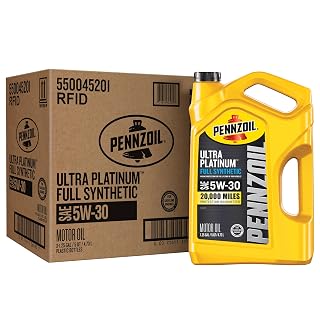
Pennzoil
Ultra Platinum Full Synthetic 5W-30 Motor Oil
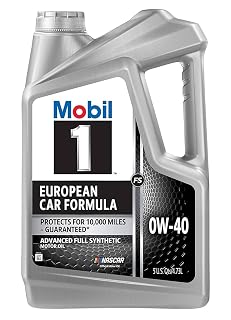
Mobil 1
FS European Car Formula Full Synthetic Motor Oil 0W-40
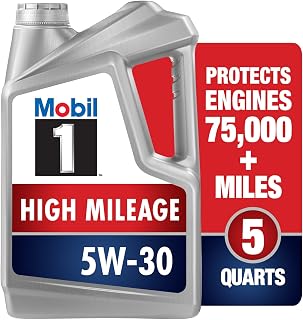
Mobil 1
High Mileage Full Synthetic Motor Oil 5W-30
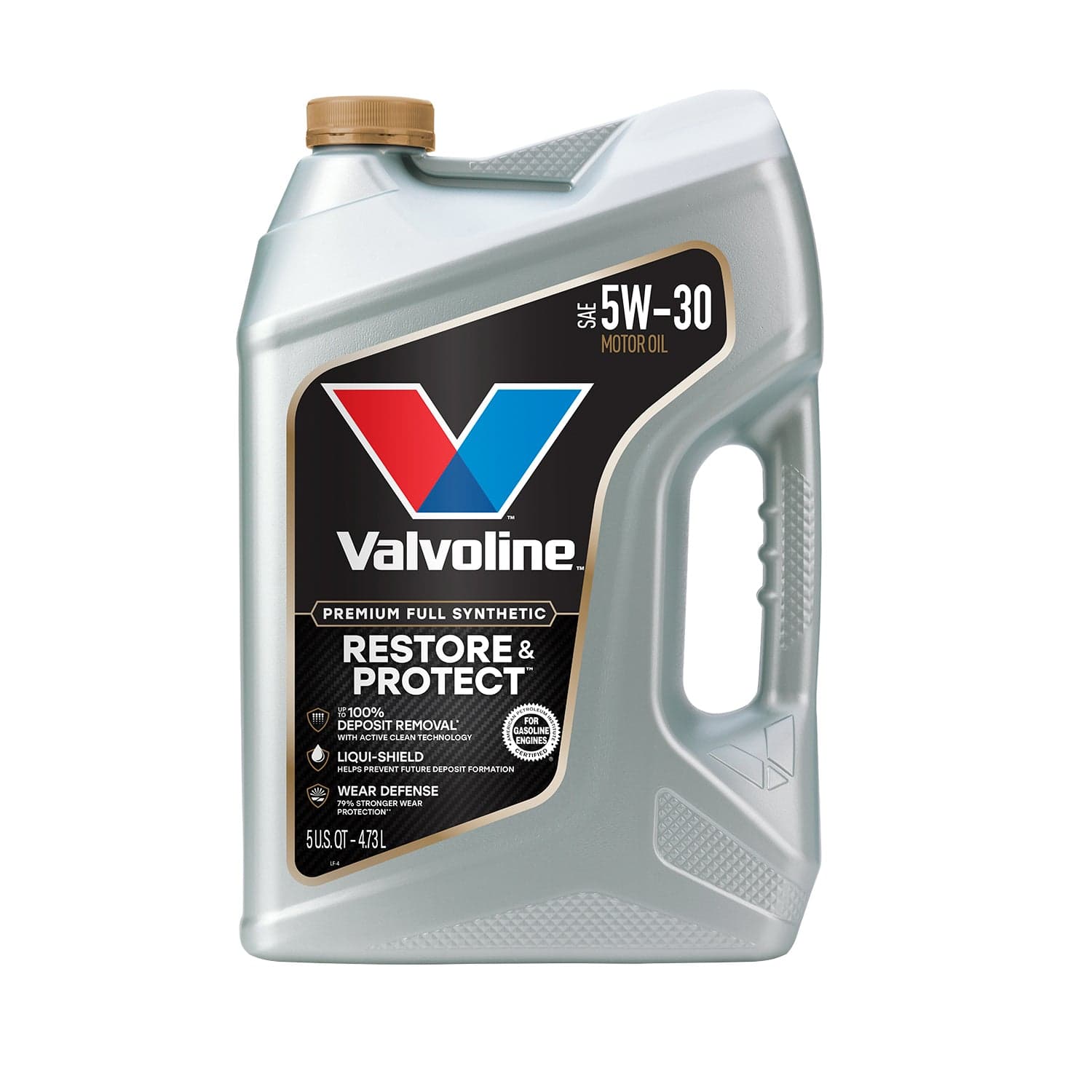
Valvoline
Restore & Protect Full Synthetic SAE 5W-30 Motor Oil
As an Amazon Associate I earn from qualifying purchases. Full disclosure

Community
0 postsShare how you use this product
Drop a quick comment or post a full review with photos and a star rating.
Sign in to postNew here? Create a free account.