CarCareTruth Score
Decent.
Opens Amazon in a new tab. No account needed to look.
Saved to your guest loadout. Sign up to also save to your Cabinet (consumables) or Kit (tools you own).
As an Amazon Associate I earn from qualifying purchases. Full disclosure
Prices may varyHealth score is for adult use as intended, per the manufacturer's SDS. It does not model child ingestion, accidental spill cleanup, or off-label use. See the safety panel below for full hazard classification, and /disclaimer for the full editorial scope.
GHS hazard codes are quoted from the manufacturer’s Safety Data Sheet. PPE tiers below translate those codes and the listed ingredient chemistry; they are not CarCareTruth recommendations.
Show details for all categories ▾Hide details ▴
Only when: splash risk
Translated from the manufacturer’s Safety Data Sheet, Section 2
H319 serious eye irritation in SDS §2. Gel format applied by foam applicator minimizes splash risk; eye protection appropriate on splash contact or if pump-spraying diluted product.
U.S. regulatory standard
29 CFR 1910.133(a)(1)
“The employer shall ensure that each affected employee uses appropriate eye or face protection when exposed to eye or face hazards from… liquid chemicals…”
ANSI Z87.1 (incorporated via §1910.6)
OSHA standards apply to workplaces. Cited here as the U.S. reference threshold for the underlying hazard class.
CarCareTruth publishes the cited sources verbatim and does not advise what action a user should take. Consult the full SDS before use.
Only when: prolonged use
Translated from the manufacturer’s Safety Data Sheet, Section 2
No H315 or H314 skin classification in SDS §2. pH 11.5 alkaline formula warrants gloves during prolonged or repeated direct contact. Foam applicator limits incidental exposure in normal use.
CarCareTruth publishes the cited sources verbatim and does not advise what action a user should take. Consult the full SDS before use.
Translated from the manufacturer’s Safety Data Sheet, Section 2
Trace biocide preservative system carries asthmagen classification at ingredient level. Site rubric policy requires this tier when contains_asthmagen is true. SDS §11 notes no respiratory sensitivity at product level; the tier is a conservative system rule for trace asthmagen-classified ingredients.
CarCareTruth publishes the cited sources verbatim and does not advise what action a user should take. Consult the full SDS before use.
No PPE specified in published sources for ventilation. Absence does not imply “not needed” — consult the full Safety Data Sheet.
PPE tiers translate the manufacturer’s SDS and U.S. regulatory standards. Not professional safety advice. How we report safety.
Scope of these PPE tiers. The tiers on this page translate the product's Safety Data Sheet where one is published, plus its ingredient chemistry, into a comparable rating. They describe a formulation, not a situation: a tier is not a safety determination for any specific user, task, quantity, or environment. The manufacturer's label and use instructions govern how the product is handled. Where the product is used at work, the employer's PPE program and hazard assessment under 29 CFR 1910.132 decide what protection is selected, not this page.
No warranties. CarCareTruth makes no warranties, express or implied, and expressly disclaims the implied warranties of merchantability and fitness for a particular purpose.
This product ranks #5 of 17 in Tire Dressing.Three above it ↓
Last reviewed June 28, 2026
TL;DR Water-based silicone gel with a satin-to-wet-gloss finish; community-confirmed 3-5 weeks on a daily driver washed weekly, strong track record for no sling. WARNING signal word (H319 eye irritation); no aspiration-hazard petroleum distillates at classification threshold. Trace biocide preservative system flags this product for a lung PPE tier per site rubric policy; wear goggles on splash contact and ensure ventilation when spraying diluted product.
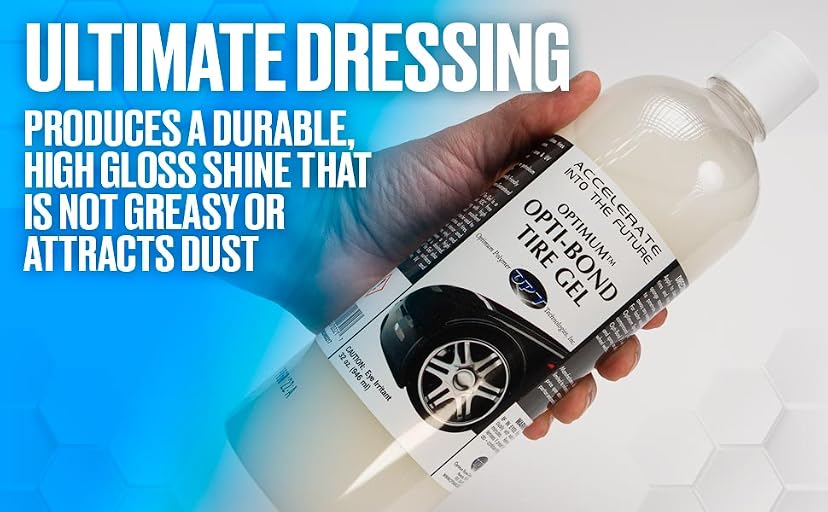
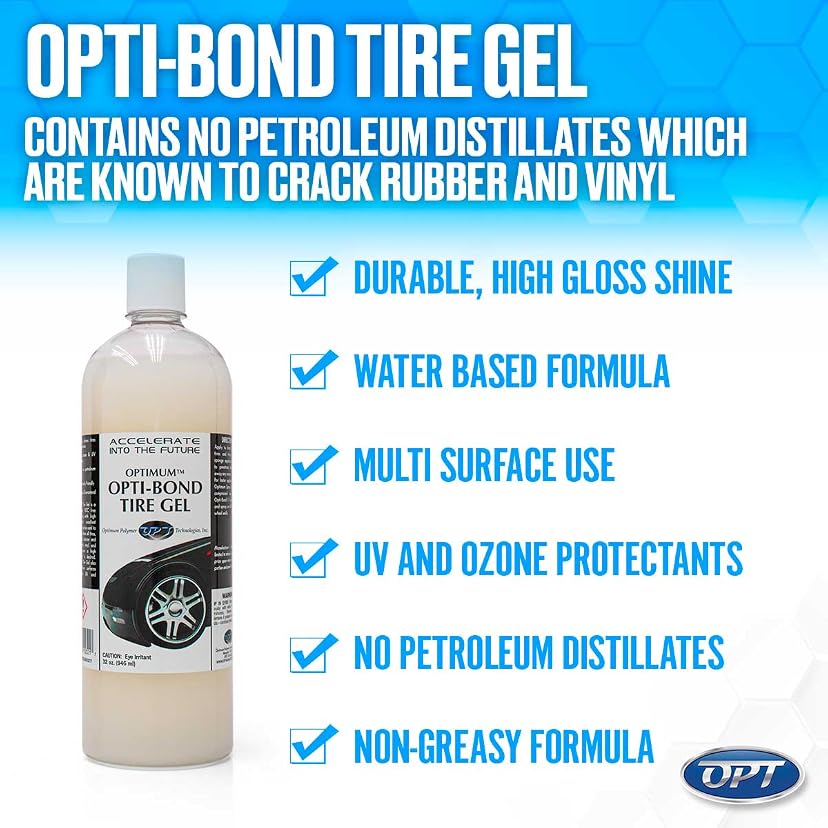
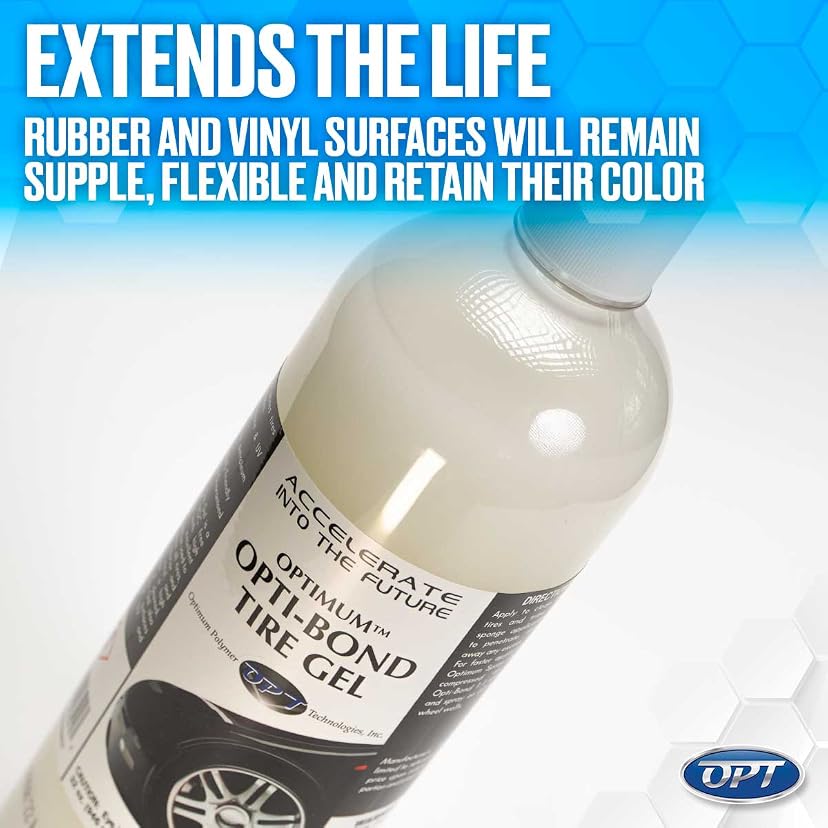
Opti-Bond is a water-based silicone emulsion gel for tire sidewalls, vinyl trim, rubber door seals, and wheel wells. Applied straight from the bottle via foam applicator it delivers a wet-gloss finish; diluted 1:1 with water it shifts toward natural satin, the finish most community members prefer for daily-driver tires. The gel clings to the sidewall rather than running onto the wheel face. Community-confirmed durability is 3-5 weeks on a regularly washed daily driver. The 1:1 dilution roughly doubles applications per bottle, and the water-based formula carries no rubber-degrading petroleum chemistry documented with petroleum-gel alternatives used long-term.
Good fit for owners who want a low-hazard tire and trim dressing that produces a clean, sling-free finish through regular washing. Dilution flexibility suits those who prefer natural-black over wet-gloss. Skip it if you want maximum gloss or durability beyond 5 weeks; petroleum-gel alternatives deliver more gloss and longer hold at the cost of an aspiration-hazard SDS profile.
WARNING signal word from H319 (eye irritation). Trace biocide preservative system carries asthmagen classification at ingredient level; wear goggles on splash contact and ensure ventilation when spraying. H412 (chronic aquatic Cat 3) and trace aquatic-toxic ingredients in §3: do not drain directly into waterways. VOC is 30 g/L.
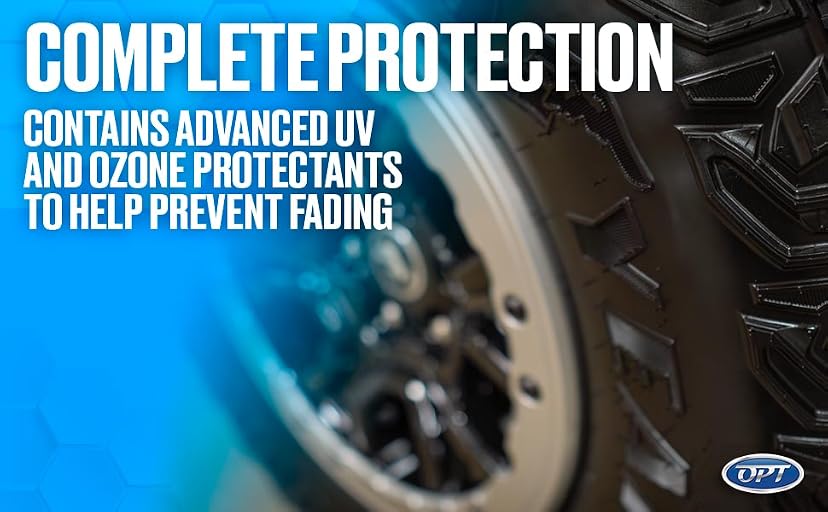
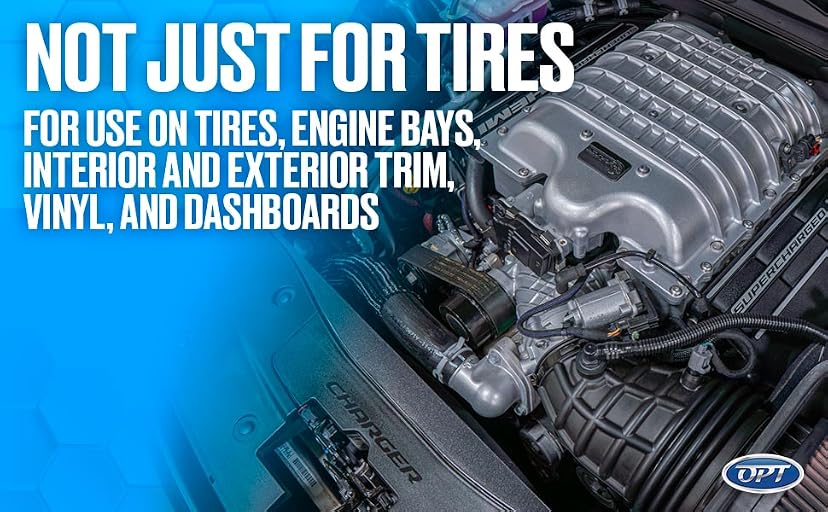
The formula is a water-based silicone emulsion with no petroleum-distillate base at aspiration-hazard classification threshold, and is designed for tire sidewalls, exterior vinyl trim, rubber door seals, wheel wells, and interior vinyl including dashboards. The SDS §2 carries only H319 (eye irritation) with a WARNING signal word, which translates to a low toxicity profile for skin contact in normal use. It does not carry rubber-degrading petroleum chemistry that causes the premature cracking or browning documented with long-term petroleum-gel use.
Straight from the bottle, Opti-Bond delivers a noticeable wet-look gloss. Diluted 1:1 with water, it produces a more natural satin finish. Community feedback consistently describes the diluted satin result as a clean deep-black look without the artificial wetness of petroleum gels. Durability on a regularly washed daily driver is community-confirmed at roughly 3-5 weeks depending on wash frequency and weather. The gel bonds to the rubber rather than sitting on top, which limits washoff and keeps the finish consistent through light rain without sling.
Yes. Optimum specifies a 1:1 water dilution for spray application with a spray gun or pump sprayer, which is useful for wheel wells and trim. At 1:1, the finish shifts from wet-gloss toward natural-satin and the product becomes pourable, which many applicators find easier to spread evenly on a foam pad. Dilution also roughly doubles the number of applications per bottle, improving cost per use. Community members who prefer a matte or restrained finish report the diluted version as their preferred method, while those wanting more gloss apply it straight.
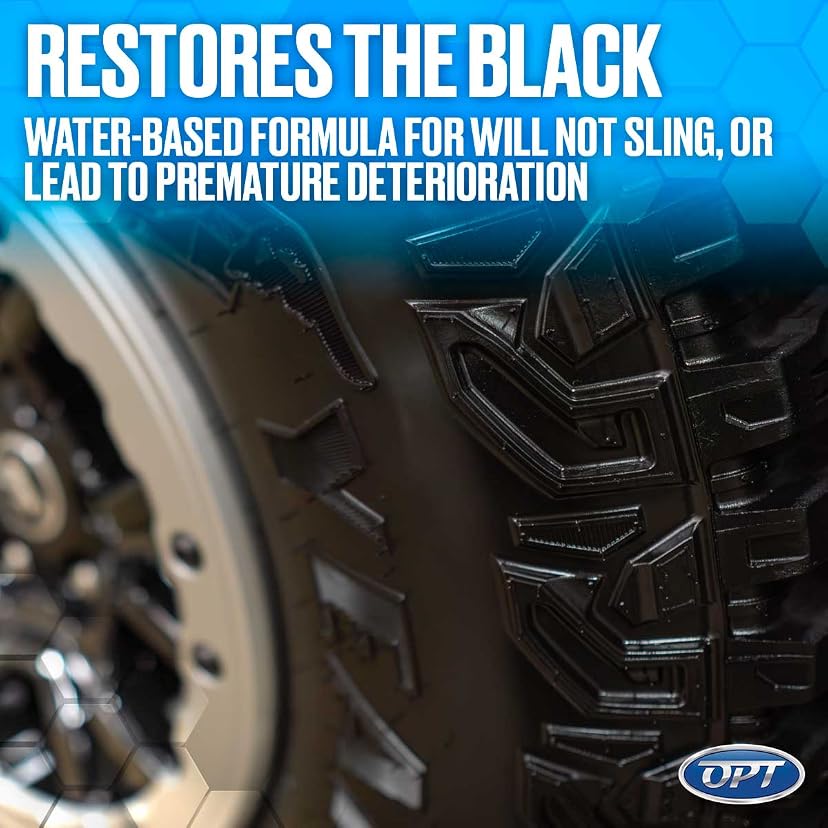
Sling is the primary complaint category for tire dressings, and Opti-Bond has a notably strong track record here. The water-based gel formula dries to the tire surface rather than staying liquid, which is the main mechanism preventing sling. Community reviews consistently report little to no sling when applied thin and allowed a short drying period before driving. Applying undiluted product in excess without wiping off residue is the documented cause of the infrequent sling complaints; a single thin pass with buffing of any excess eliminates the issue.
The product SDS §3 lists a trace amount of hydrotreated light petroleum distillate at 0.2-0.4% as a processing aid. At that concentration, it falls below the US HazCom threshold for product-level aspiration-hazard classification, so it does not appear in SDS §2. The manufacturer's marketing language of 'no petroleum distillates' refers to the absence of aspiration-hazard petroleum chemistry at classification threshold, not to a completely petroleum-free formula. The practical implication is no H304 aspiration hazard at the product level and no rubber-degrading petroleum chemistry.
Marketing copy from Optimum, via Amazon. Not editorial.
Weekly pick
One product, one safety verdict, every week. No spam.

Chemical Guys
VRP Vinyl, Rubber, and Plastic Dressing
Adam's Polishes
Graphene Tire Dressing
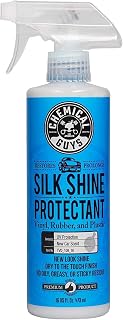
Chemical Guys
Silk Shine Tire and Trim Dressing
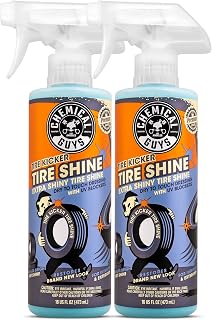
Chemical Guys
Tire Kicker Sprayable Extra Glossy Tire Shine
As an Amazon Associate I earn from qualifying purchases. Full disclosure

Community
0 postsShare how you use this product
Drop a quick comment or post a full review with photos and a star rating.
Sign in to postNew here? Create a free account.