
Ammonia
- Bases
- CAS 7664-41-7
- IUPAC: Ammonia
Ammonia (CAS 7664-41-7) appears in 4 of the 2,122 car-care products CarCareTruth tracks (as of August 2026), 3 of which carry a DANGER signal word on their published Safety Data Sheet. It is classified as a respiratory sensitizer (asthmagen).
Corrosive and acutely toxic at high concentrations — pure ammonia carries H314 (corrosion), H331 (toxic if inhaled), H400 (aquatic acute Cat 1). At typical cleaning product concentrations (0.1-5%), the mixture classification is significantly milder. A recognized asthmagen and respiratory irritant. Pungent odor provides a natural warning signal.
What ammonia actually is in a car-care bottle
In car care, "ammonia" almost never means anhydrous ammonia gas. It means aqueous ammonia (ammonium hydroxide, NH4OH), dissolved in water at 0.5 to 5 percent in the finished product. On an SDS, look in Section 3 for "ammonium hydroxide," "ammonia solution," or the trade label "ammonia-D." All three are the same chemistry. The CAS number 7664-41-7 covers the parent gas; the solution often carries the auxiliary CAS 1336-21-6 for ammonium hydroxide.
The product category where this matters is glass cleaners. A handful of heavy-duty degreasers and a small number of all-purpose cleaners still carry ammonia, but modern interior and exterior car-care formulations have largely moved away from it. Glass is where ammonia still earns its place on the ingredient panel, and glass is where the interesting failure mode lives.
Why glass cleaners reach for ammonia
Ammonia raises the pH of a finished cleaner to roughly 10 to 11. At that pH, three useful things happen on a windshield. First, oily films saponify, which is the chemistry word for "turn into soap." Skin oil from fingerprints, the haze that builds up from off-gassing dashboard plastics, and the road-film mix of diesel soot and tire residue all break down into water-rinsable salts. Second, light mineral deposits from hard-water spotting loosen as the alkaline solution attacks the carbonate bonds. Third, ammonia evaporates fast and leaves nothing behind. No surfactant residue, no polymer film, no streak. That last property is the reason ammonia cleaners built the streak-free reputation in the first place.
You can replicate the streak-free finish with other chemistries, but for decades ammonia was the cheapest way to get there.
The window-tint problem
This is the single most repeated piece of car-care advice about ammonia, and it is accurate. Aftermarket window tint is either a dyed polyester laminate or a metallized polyester laminate, bonded to the inside of the glass with a pressure-sensitive adhesive. Ammonia attacks both layers.
On the dye layer, repeated ammonia contact bleaches the color toward purple and then toward clear. This is the "purple haze" that older tinted cars develop after years of being cleaned with the blue stuff from the grocery store. On the adhesive layer, ammonia softens the bond between film and glass. Edges lift first, which produces the silvery bubble line that creeps inward from the door seal. Eventually the film delaminates entirely.
Tint warranties from 3M, LLumar, SunTek, and the other major film brands explicitly void coverage if an ammonia-based cleaner is used on the film. Tint shops and detail shops that handle tinted vehicles default to ammonia-free glass cleaner across the board, because there is no clean way to clean OEM glass on one side of the car and tinted glass on the other without cross-contamination.
The glass itself is not the problem. OEM windshields, factory side glass, and sunroofs are not damaged by ammonia at consumer concentrations. The vulnerability is the film, not the substrate.
Ammonia-free is now the default
Premium glass cleaners marketed at detailers have replaced ammonia with ethanolamine (a milder amine that still raises pH), isopropyl alcohol blends, or surfactant-driven formulations that rely on low-foaming cleaners to lift soil without an alkali at all. Stoner Invisible Glass, Chemical Guys Streak Free, Meguiar's Perfect Clarity, Sonax Xtreme, and Griot's Glass Cleaner all advertise "ammonia-free" on the front label.
"Ammonia-free" has become a category-wide purchase signal. On the catalog side, it is a legitimate filter for shoppers with tint, and a meaningful one even for shoppers without tint who do not want the smell in a closed cabin.
The cabin-air angle
Ammonia carries H314 (skin corrosion) at concentrate strength and H335 (respiratory irritation) at the finished-product level. The NIOSH workplace exposure limit is 25 ppm averaged over eight hours, with a short-term ceiling of 35 ppm. Applying an ammonia-based glass cleaner to interior glass with windows up and HVAC recirculating can briefly approach those numbers in a small sedan cabin.
The realistic exposure profile is not a serious health event. You will smell it (the odor threshold sits near 5 ppm, well below the irritation level), your eyes will water, and you will instinctively crack a window. The honest framing is that ammonia announces itself before it harms you. Cracking a window or switching the HVAC to fresh-air mode during interior glass work eliminates the issue.
Where it shows up beyond glass cleaners
Ammonia occasionally appears in heavy-duty engine bay degreasers and in a small number of older multi-surface interior cleaners. It rarely appears in modern all-purpose cleaners, wheel cleaners, or upholstery shampoos, because the tint risk and the cabin odor make ammonia an outlier among current formulations.
Reading the SDS
Section 3 (Composition) lists ammonium hydroxide or ammonia solution with a percent range. Section 9 (Physical Properties) gives the finished-product pH; readings above 10 strongly suggest ammonia or another strong alkali. Section 2 (Hazards) carries H335 at typical consumer dilution and H314 at concentrate strength, alongside the GHS05 (corrosion) pictogram for concentrated solutions.
Related references
For the broader chemical context, see the /chemicals/ hub. For the specific respiratory hazard code, see H335 (respiratory irritation). For products that avoid this ingredient entirely, the "ammonia-free" filter on the glass-cleaner category surfaces the relevant catalog entries.
Health & environment profile
- VOC
- no
- Prop 65 listed
- no
- Asthmagen
- yes
- EPA Safer Choice
- no
- Aquatic toxicity
- yes
- Biodegradable
- yes
- Bioaccumulative
- no
- Persistent
- no
- Ozone depleting
- no
- Microplastic
- no
- PFAS
- no
- Env. score
- 5/5
Common questions about Ammonia
- What is Ammonia used for in car care?
- pH adjuster and alkaline cleaning agent — raises pH for grease-cutting and soil emulsification in cleaning products
- Is Ammonia a VOC?
- No. Ammonia is not classified as a volatile organic compound (VOC).
- Is Ammonia on California's Proposition 65 list?
- No. Ammonia is not on California's Proposition 65 list.
- Is Ammonia a respiratory sensitizer?
- Yes. Ammonia is classified as a respiratory sensitizer (asthmagen).
- Is Ammonia biodegradable?
- Yes. Ammonia has a confirmed biodegradable profile.
4 products contain this
 Motorcraft Carburetor Tune-Up Cleaner PM-3Prop 65
carb-cleaner
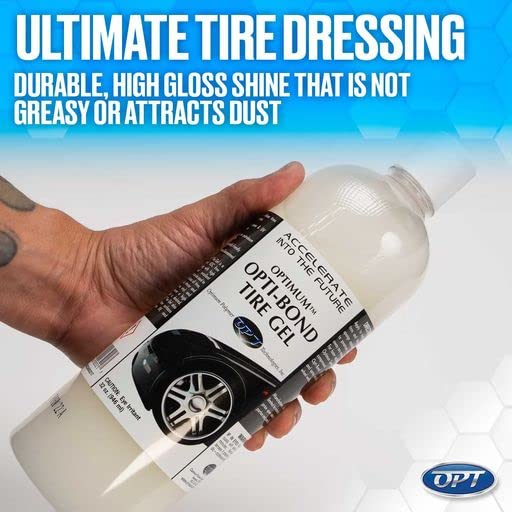 Optimum Opti-Bond Tire Gel
tire-dressing
 Permatex 80369 Battery Cleaner Aerosol (5.75 oz)Prop 65
battery-terminal-cleaner
 Turtle Wax Power Out! Carpet & Mats Heavy Duty Cleaner
carpet-cleaner
Related
Health and environment notes translate the manufacturer Safety Data Sheet, the GHS classification, and authoritative regulatory listings (California Prop 65, EPA). Not medical advice. They describe the ingredient itself; whether a hazard applies to a finished product depends on its concentration and how it's used.