CarCareTruth Score
Decent, but it's tough on the environment.
Opens Amazon in a new tab. No account needed to look.
Saved to your guest loadout. Sign up to also save to your Cabinet (consumables) or Kit (tools you own).
As an Amazon Associate I earn from qualifying purchases. Full disclosure
Prices may varyThe manufacturer's Safety Data Sheet classifies this product with one or more GHS Category 1 health hazards — the most severe tier. The hazard statements in quotes below are the verbatim GHS language from the SDS, as required by OSHA's Hazard Communication Standard. The line under each statement translates the GHS classification into plain language.
GHS Category 1 aspiration toxicity — thin, oily liquids can slip into the lungs if swallowed, causing chemical pneumonia.
GHS Category 2 acute dermal toxicity — classified as toxic in contact with skin.
If swallowed or on skin:
The aspiration hazard (H304) is about the liquid being swallowed and reaching the airway, not about breathing fumes during normal use.
Call Poison Control immediately at 1-800-222-1222 (US, 24/7, free) and have the product container with you. Poison Control's standing guidance is to not induce vomiting after chemical exposure; they will direct first-aid steps based on the specific product.
About this product's hazards. This product's Safety Data Sheet uses signal word DANGER.Read the manufacturer's SDS and follow all safety instructions before use. CarCareTruth ratings translate the manufacturer's safety sheet. They do not replace the SDS or substitute for a hazard assessment specific to your task.
Health score is for adult use as intended, per the manufacturer's SDS. It does not model child ingestion, accidental spill cleanup, or off-label use. See the safety panel below for full hazard classification, and /disclaimer for the full editorial scope.
GHS hazard codes are quoted from the manufacturer’s Safety Data Sheet. PPE tiers below translate those codes and the listed ingredient chemistry; they are not CarCareTruth recommendations.
Show details for all categories ▾Hide details ▴
Only when: splash risk
Translated from the manufacturer’s Safety Data Sheet, Section 8
H319 (serious eye irritation, Cat 2) is present at the mixture level. SDS §8 directs safety glasses with side shields. GHS06 (skull and crossbones) reflects acute dermal/oral toxicity routes (H311), not an eye-hazard escalation · only H318 or H314 would force eyes to required. Splash risk during pouring is the trigger for eye protection.
U.S. regulatory standard
29 CFR 1910.133(a)(1)
“The employer shall ensure that each affected employee uses appropriate eye or face protection when exposed to eye or face hazards from… liquid chemicals…”
ANSI Z87.1 (incorporated via §1910.6)
OSHA standards apply to workplaces. Cited here as the U.S. reference threshold for the underlying hazard class.
CarCareTruth publishes the cited sources verbatim and does not advise what action a user should take. Consult the full SDS before use.
Translated from the manufacturer’s Safety Data Sheet, Section 8
H311 acute dermal toxicity Category 3 is present at the mixture level. The SDS §8 lists nitrile or butyl rubber gloves. 2-butoxyethanol is dermally absorbable with skin designations from ACGIH, OSHA, and multiple state regulations.
U.S. regulatory standard
29 CFR 1910.138(a); 1910.132(d)
“appropriate hand protection when employees' hands are exposed to hazards such as those from skin absorption of harmful substances.”
OSHA standards apply to workplaces. Cited here as the U.S. reference threshold for the underlying hazard class.
CarCareTruth publishes the cited sources verbatim and does not advise what action a user should take. Consult the full SDS before use.
Translated from the manufacturer’s Safety Data Sheet, Section 8
No H335 or H331 at mixture level, but aromatic naphthas at 37-45% produce significant vapor. The SDS §7 directs 'avoid breathing vapor' and §8 specifies an approved respirator when engineering controls cannot maintain concentrations below OELs. HNOC notes narcotic effects from vapor exposure.
U.S. regulatory standard
29 CFR 1910.1000; 1910.1200
“Each employer shall assure that no employee is exposed [in excess of the PEL]…”
OSHA standards apply to workplaces. Cited here as the U.S. reference threshold for the underlying hazard class.
CarCareTruth publishes the cited sources verbatim and does not advise what action a user should take. Consult the full SDS before use.
No PPE specified in published sources for ventilation. Absence does not imply “not needed” — consult the full Safety Data Sheet.
PPE tiers translate the manufacturer’s SDS and U.S. regulatory standards. Not professional safety advice. How we report safety.
Scope of these PPE tiers. The tiers on this page translate the product's Safety Data Sheet where one is published, plus its ingredient chemistry, into a comparable rating. They describe a formulation, not a situation: a tier is not a safety determination for any specific user, task, quantity, or environment. The manufacturer's label and use instructions govern how the product is handled. Where the product is used at work, the employer's PPE program and hazard assessment under 29 CFR 1910.132 decide what protection is selected, not this page.
No warranties. CarCareTruth makes no warranties, express or implied, and expressly disclaims the implied warranties of merchantability and fitness for a particular purpose.
This product ranks #7 of 13 in Carburetor Cleaner.Three above it ↓
Last reviewed July 31, 2026
TL;DR A poured liquid carb cleaner from Ford's OEM parts brand · aromatic-solvent dominant, good for gum and varnish removal in pour-through induction cleaning and carburetor bench work on gasoline engines. Owner reception is good, not great: owners describe reliable cleaning without major complaints, though the review base is still modest. The DANGER signal word reflects real hazards: H311 (toxic in contact with skin), H304 (aspiration hazard · do not induce vomiting if swallowed), and a California Prop 65 warning for a carcinogen and developmental toxin listed in SDS §15. Nitrile or butyl gloves are required; use with adequate ventilation per SDS §7.
Ford's PM-3 is a pourable aromatic-hydrocarbon cleaner designed specifically for carburetor and induction-system cleaning in gasoline engines · not for diesel or EFI systems. The formula dissolves gum, varnish, and fuel residue from carb passages, port areas, and intake valves. The label's pour-through method involves warming the engine to operating temperature, gaining throttle-body access if needed, then slowly pouring the cleaner through the induction system while maintaining idle · the final pour stalls the engine and soaks combustion chamber deposits. The aromatic-solvent base (30-45% total aromatic naphtha) is an aggressive deposit cutter; the 2-butoxyethanol coupling agent improves wetting on metallic surfaces and fuel residue. Post-clean, aromatic naphthas evaporate within a few minutes of air exposure. The formula is not marketed as O2-sensor or catalytic-converter safe · the label directions include a note to avoid catalyst overheating during the pour-through procedure.
The right buy for a home mechanic with an older carbureted gasoline engine · Ford, Lincoln, or Mercury models where an OEM-approved cleaner matters, or any gasoline-engine vehicle where carburetor gum buildup is causing rough idle, hesitation, or starting difficulties. Also appropriate for pour-through induction cleaning on throttle bodies and port areas. Skip it if your vehicle is diesel, if you want an aerosol spray-can application, or if the carburetor has years of heavy lacquer varnish from long-term fuel stagnation · that level of deposit typically calls for an overnight dip soak or ultrasonic cleaning rather than a pour-through.
The SDS §2 signal word is DANGER, driven by health-tier H-codes: H311 (toxic in contact with skin, Category 3), H304 (aspiration hazard Category 1 · may be fatal if swallowed and enters airways · do not induce vomiting), H319 (serious eye irritation), and H351 (suspected carcinogen). The SDS §15 confirms a California Prop 65 warning · 4-methylpentan-2-one (MIBK family) is listed as both a carcinogen and developmental toxin. Nitrile or butyl rubber gloves are the chemistry-indicated minimum per SDS §8; safety glasses with side shields are directed for eye protection. The SDS §8 respiratory guidance specifies an approved respirator when engineering controls cannot maintain concentrations below occupational exposure limits · SDS §7 directs use with adequate ventilation and to avoid breathing vapor. VOC is approximately 413 g/L (44% by weight at 0.94 g/mL density). The product is classified as aquatic chronic hazard Category 2 (H411) · do not allow runoff to drains or waterways.
The PM-3 is designed for carburetor cleaning and pour-through induction cleaning, not EFI fuel injectors. The label explicitly states 'Not for use in diesel engines.' For EFI systems, Ford recommends a dedicated fuel injector cleaner.
Yes. The SDS §15 lists 4-methylpentan-2-one (MIBK) as the Prop 65 carcinogen and developmental toxin. The back label confirms the Prop 65 warning.
The label directions describe both an engine-running pour-through method and a bench-soak approach. At standard dwell times, the formula is compatible with assembled metal carb components, but prolonged contact with rubber O-rings and plastic linkages should be avoided.
Marketing copy from Motorcraft, via Amazon. Not editorial.
Weekly pick
One product, one safety verdict, every week. No spam.
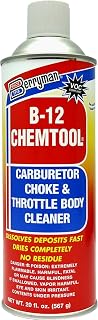
Berryman
B-12 Carburetor, Choke and Throttle Body Cleaner
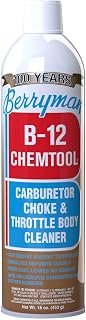
Berryman
B-12 Chemtool Carburetor, Choke & Throttle Body Cleaner
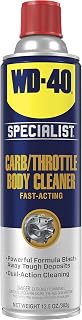
WD-40
Specialist Carb/Throttle Body & Parts Cleaner
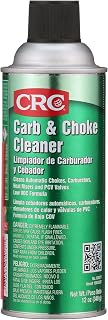
CRC
Carb & Choke Cleaner (12 oz aerosol)
As an Amazon Associate I earn from qualifying purchases. Full disclosure

Community
0 postsShare how you use this product
Drop a quick comment or post a full review with photos and a star rating.
Sign in to postNew here? Create a free account.