CarCareTruth Score
Recommended.
Opens Amazon in a new tab. No account needed to look.
Saved to your guest loadout. Sign up to also save to your Cabinet (consumables) or Kit (tools you own).
As an Amazon Associate I earn from qualifying purchases. Full disclosure
Prices may varyHealth score is for adult use as intended, per the manufacturer's SDS. It does not model child ingestion, accidental spill cleanup, or off-label use. See the safety panel below for full hazard classification, and /disclaimer for the full editorial scope.
GHS hazard codes are quoted from the manufacturer’s Safety Data Sheet. PPE tiers below translate those codes and the listed ingredient chemistry; they are not CarCareTruth recommendations.
Show details for all categories ▾Hide details ▴
Only when: splash risk
Translated from the manufacturer’s Safety Data Sheet, Section 2
SDS §2 lists H320 (Eye Irritation Category 2B · the mildest GHS eye-irritation tier, below H319 Cat 2A and far below H318 serious eye damage). The pump-spray format creates a low-level splash risk during application. The situational tier reflects the spray format rather than serious eye damage. H320 carries a −0.5 deduction in the health score.
U.S. regulatory standard
29 CFR 1910.133(a)(1)
“appropriate eye or face protection when exposed to eye or face hazards from… liquid chemicals…”
ANSI Z87.1 (incorporated via §1910.6)
OSHA standards apply to workplaces. Cited here as the U.S. reference threshold for the underlying hazard class.
CarCareTruth publishes the cited sources verbatim and does not advise what action a user should take. Consult the full SDS before use.
Only when: prolonged use · sensitive individuals
Translated from the manufacturer’s Safety Data Sheet, Section 8
SDS §8 recommends impervious gloves (rubber, neoprene, or nitrile) for prolonged or repeated contact; general body/skin protection is otherwise "not required" for normal use. SDS §11 documents an allergic skin reaction (redness, swelling, blistering, itching) in sensitive individuals, though §2 assigns no H315 (skin irritation), H317 (skin sensitizer), or H314 (corrosion) classification. The situational tier reflects the SDS's own contact-duration caveat and its sensitive-individual note, not a mixture-level skin hazard.
CarCareTruth publishes the cited sources verbatim and does not advise what action a user should take. Consult the full SDS before use.
Only when: in enclosed space
Translated from the manufacturer’s Safety Data Sheet, Section 2
SDS §2 carries no H335 (respiratory irritation), H331 (toxic if inhaled), H330, or H334 classification. Water-based formula with no volatile organic co-solvent; estimated VOC ≈ 0 g/L. No inhalation hazard pathway under normal outdoor or well-ventilated garage application. The situational tier applies only if sprayed continuously in a confined space without ventilation.
CarCareTruth publishes the cited sources verbatim and does not advise what action a user should take. Consult the full SDS before use.
No PPE specified in published sources for ventilation. Absence does not imply “not needed” — consult the full Safety Data Sheet.
PPE tiers translate the manufacturer’s SDS and U.S. regulatory standards. Not professional safety advice. How we report safety.
Scope of these PPE tiers. The tiers on this page translate the product's Safety Data Sheet where one is published, plus its ingredient chemistry, into a comparable rating. They describe a formulation, not a situation: a tier is not a safety determination for any specific user, task, quantity, or environment. The manufacturer's label and use instructions govern how the product is handled. Where the product is used at work, the employer's PPE program and hazard assessment under 29 CFR 1910.132 decide what protection is selected, not this page.
No warranties. CarCareTruth makes no warranties, express or implied, and expressly disclaims the implied warranties of merchantability and fitness for a particular purpose.
This product ranks #3 of 17 in Tire Dressing.
Last reviewed June 9, 2026
TL;DR A water-based silicone emulsion pump spray that produces a clean satin finish on tires, vinyl, and plastic · community-confirmed 4-6 weeks of durability on daily drivers with zero sling documentation. The SDS carries a WARNING signal word driven by two mild hazard codes (H303 acute oral Cat 5 and H320 eye irritation Cat 2B), each the mildest tier in its GHS family, a −0.3 and −0.5 deduction respectively under the tire-dressing rubric. The chemistry is neutral-pH PDMS with no aspiration-hazard petroleum distillates. The Amazon Prop 65 flag is a documented false positive · SDS §15 is explicitly negative.
Spray a thin coat directly onto the tire sidewall or apply with a foam applicator, spread evenly, and wipe off any excess · four tires takes about 5 minutes. The water-based silicone emulsion dries to a satin, non-greasy film that the brand describes as "dry-to-the-touch factory-fresh shine." This is not a wet-look gloss product; buyers expecting the deep black mirror-shine of a petroleum gel should look elsewhere. The trade-off is a real one: the satin result looks clean and natural without the initial sling risk or dust-attracting oiliness of petroleum-based alternatives. Community durability runs 4-6 weeks on a regularly driven vehicle with weekly washing · the lower bound of 4 weeks is the confirmed floor, not an optimistic claim. The same formula is listed for interior dashboards, door panels, weatherstripping, and exterior trim, making it a versatile multi-surface option.
Buy it if you want a sling-free, satin-finish tire dressing with a clean health profile and multi-surface versatility · the 4-6 week community-confirmed durability is competitive with mid-range petroleum gels, and the water-based PDMS chemistry avoids aspiration-hazard codes entirely. Daily-driver owners who want a quick, foolproof weekly detail without worrying about sling on freshly polished wheels will find this a strong fit. Skip it if you want a deep, wet-look gloss · the satin finish is by design and will not intensify with extra product. Buyers who prioritize maximum gloss over health profile should compare petroleum-gel alternatives, accepting the SDS hazard differences.
The SDS signal word is WARNING, driven by H303 (Acute Tox Cat 5 oral · the mildest GHS ingestion classification) and H320 (Eye Irritation Category 2B · the mildest GHS eye-irritation tier, below H319 Cat 2A and far below H318 serious eye damage). H303 carries a −0.3 deduction and H320 a −0.5 deduction under the tire-dressing health rubric. No GHS pictogram is assigned in the SDS. The water-based formula contains no petroleum distillates as a primary carrier and no volatile organic co-solvents; estimated VOC is approximately 0 g/L. The main environmental note is that linear PDMS (the primary active, CAS 63148-62-9) is not readily biodegradable; it cures on the tire and leaves the system slowly through wear friction rather than via drain runoff.
For the full SDS breakdown of this category, solvent gels versus water-based sprays, see Is Tire Shine Toxic?.
Community evidence from owner reviews and r/AutoDetailing threads clusters at 4-6 weeks on a regularly driven vehicle. The product does not appear to break down or discolor with heat cycling. For high-wash-frequency use, 4 weeks is the realistic lower-bound expectation; the upper end of the range appears on cars washed less frequently.
Sling reports are essentially absent in the community record. The product listing explicitly markets the product as sling-free, and owner reviews corroborate this. The water-based silicone emulsion dries to a dry-to-touch satin film that does not migrate off the sidewall during driving the way petroleum gels can.
Satin/natural finish · the product listing title and feature bullets describe the result as a non-greasy natural satin finish that dries to the touch. This is a deliberate formulation choice, not a limitation. Buyers expecting a deep wet-look gloss should look at petroleum-gel tire dressings; Silk Shine will not produce that result.
Yes · the product description explicitly lists dashboards, door panels, weatherstripping, bumpers, and tires as intended surfaces. The non-greasy, satin finish is well-suited to interior vinyl and plastic where an oily sheen would attract dust. The same formula handles both interior and exterior applications.
This is a documented false positive for this product. The SDS (§15 regulatory information) explicitly states no Prop 65-listed substances are present, and the ingredient list in SDS §3 contains no Prop 65-listed chemicals at actionable concentrations. The Prop 65 flag in the listing data is believed to be an automated listing-level trigger, not a confirmed ingredient disclosure. This is the 10th such false positive documented for Chemical Guys products in this catalog.
Both are water-based silicone emulsions from Chemical Guys with similar chemistry and satin finish. Silk Shine's community-confirmed durability range of 4-6 weeks overlaps with VRP's documented 3-5 week range; Silk Shine may have a slight edge at the upper end. The primary practical difference is form factor: Silk Shine is a pump spray designed for direct application to the tire or foam applicator; VRP is positioned as a multi-surface protectant with broader interior use emphasis. Both products carry similarly clean SDS profiles with no aspiration-hazard petroleum distillates.
Marketing copy from Chemical Guys, via Amazon. Not editorial.
Guide
Detailing Chemicals That Damage Paint, Trim, or Your Lungs
Most paint, trim, and respiratory damage from car-care products traces to a short list of chemistries (fluoride wheel acids, strong solvents, high-pH degreasers, isocyanate sprays, methylene chloride). This guide names the H-codes, the failure modes, and the catalog pages that show which products carry them.
Guide
Detailing PPE: When You Actually Need Gloves or a Respirator
Most weekend car care needs zero PPE. A small list of chemistries (fluoride wheel acids, isocyanate spray, strong solvent aerosols) genuinely does need gloves, goggles, or a respirator. This guide names the H-codes that trigger each, and points to safer picks by category.
Guide
Tire Dressings: Solvent vs Water-Based vs Hybrid Guide
Solvent gel wins for a wet show-car gloss that lasts a few days. Water-based wins for daily-driver satin that lasts a week or two. Hybrid (graphene or acrylic) wins for set-and-forget durability that lasts weeks.
Weekly pick
One product, one safety verdict, every week. No spam.
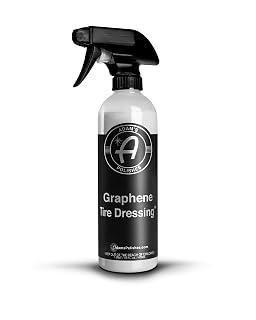
Adam's Polishes
Graphene Tire Dressing
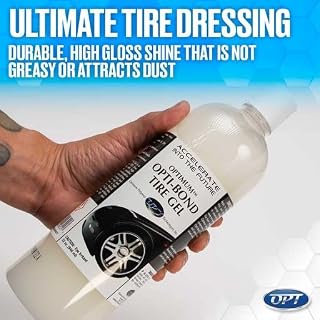
Optimum
Opti-Bond Tire Gel
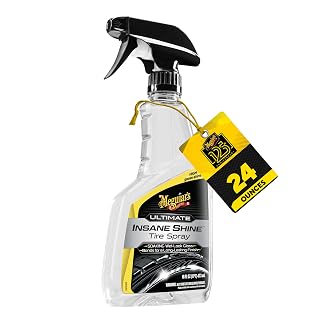
Meguiar's
Ultimate Insane Shine Tire Spray
SONAX
Tire Gloss Gel
As an Amazon Associate I earn from qualifying purchases. Full disclosure

Community
0 postsShare how you use this product
Drop a quick comment or post a full review with photos and a star rating.
Sign in to postNew here? Create a free account.