CarCareTruth Score
Recommended, but it's tough on the environment.
Opens Amazon in a new tab. No account needed to look.
Saved to your guest loadout. Sign up to also save to your Cabinet (consumables) or Kit (tools you own).
As an Amazon Associate I earn from qualifying purchases. Full disclosure
Prices may varyHealth score is for adult use as intended, per the manufacturer's SDS. It does not model child ingestion, accidental spill cleanup, or off-label use. See the safety panel below for full hazard classification, and /disclaimer for the full editorial scope.
GHS hazard codes are quoted from the manufacturer’s Safety Data Sheet. PPE tiers below translate those codes and the listed ingredient chemistry; they are not CarCareTruth recommendations.
Show details for all categories ▾Hide details ▴
Translated from the manufacturer’s Safety Data Sheet, Section 8
SDS Section 8 recommends safety glasses or goggles whenever eye contact is possible, and Section 11 reports moderate eye irritation (redness, swelling, pain, tearing, blurred vision) as a real exposure effect. Section 2 carries H320 (Eye Irritation Category 2B, the milder GHS tier) at the product level, so basic eye protection is a normal-use precaution rather than a concentrate-only special case.
U.S. regulatory standard
29 CFR 1910.133(a)(1)
“appropriate eye or face protection when exposed to eye or face hazards from… liquid chemicals…”
ANSI Z87.1 (incorporated via §1910.6)
OSHA standards apply to workplaces. Cited here as the U.S. reference threshold for the underlying hazard class.
CarCareTruth publishes the cited sources verbatim and does not advise what action a user should take. Consult the full SDS before use.
Translated from the manufacturer’s Safety Data Sheet, Section 8
SDS Section 8 calls skin protection 'not normally required' for brief contact but recommends impervious gloves (rubber, neoprene, or nitrile) for prolonged or repeated contact, which describes routine wash-bucket and foam-cannon handling. Section 11 also reports a real, if uncommon, allergic skin reaction (redness, swelling, blistering, itching) in sensitive individuals.
CarCareTruth publishes the cited sources verbatim and does not advise what action a user should take. Consult the full SDS before use.
Only when: in enclosed space
Translated from the manufacturer’s Safety Data Sheet, Section 8
SDS Section 8 asks for good general ventilation 'equivalent to outdoors,' standard wording rather than a specific inhalation hazard. Section 2 carries no respiratory GHS code (no H334, H335, or H331) and Section 11 reports no respiratory tract irritation, so a respirator is only a precaution when washing in an enclosed, poorly ventilated space.
CarCareTruth publishes the cited sources verbatim and does not advise what action a user should take. Consult the full SDS before use.
No PPE specified in published sources for ventilation. Absence does not imply “not needed” — consult the full Safety Data Sheet.
PPE tiers translate the manufacturer’s SDS and U.S. regulatory standards. Not professional safety advice. How we report safety.
This product ranks #9 of 20 in Car Shampoo.Three above it ↓
Last reviewed May 28, 2026
TL;DR High-foam, pH-balanced shampoo that produces exceptional suds for foam cannon and bucket use, and it's a genuine category favorite for good reason. Owners broadly confirm it cleans road film reliably without stripping wax, sealants, or ceramic coatings. The current the product listing carries a California Prop 65 warning, and both primary surfactants carry ingredient-level aquatic toxicity data · worth knowing if environmental footprint matters to you.
Mr. Pink uses anionic surfactants to lift and suspend road film and light contamination at a 1:64 dilution (about 2 oz per gallon), rinsing away cleanly without stripping paint protection. Add it to a wash bucket or foam cannon reservoir and it produces a thick, candy-scented foam that clings to panels and lubricates the wash mitt through a full-car wash. Cleaning power is above average for its tier · community owners consistently describe clean results on weekly-washed daily drivers with no residue · but it is a maintenance soap, not a heavy degreaser; neglected cars with heavy contamination may need a pre-soak or stronger formula.
The strongest fit is any detailer doing routine maintenance washes on a waxed, sealed, or ceramic-coated car, particularly those using a foam cannon or foam gun. The high foam volume and confirmed coating-compatibility make it the go-to weekly wash in a large segment of the enthusiast community. Skip it if you need a dedicated strip wash before applying a new wax or paint protection film · a purpose-built strip shampoo is the right tool for that use case. Skip it also if environmental footprint is a priority: both primary surfactants (LAS and AOS) carry aquatic toxicity data at the ingredient level, and no biodegradability credit is available from the SDS.
The SDS carries a WARNING signal word. The classified hazards · H303 (may be harmful if swallowed, the lowest oral-toxicity category) and H320 (mild eye irritation, a category below the more commonly cited H319) · are concentrate-level classifications; at the 1:64 working solution, surfactant concentration drops to under 0.3% and neither code applies to normal use. Per the SDS, safety glasses or goggles are worth wearing given the documented eye irritation, and impervious gloves are a reasonable precaution for prolonged or repeated contact during bucket or foam gun use; a respirator is only warranted when washing in an enclosed, poorly ventilated space. The product listing carries a California Prop 65 warning; the 2019 SDS Section 15 states no Prop 65 chemicals are present, and ingredient cross-checks identify no known listed substances · the discrepancy is noted and the current listing flag is treated as authoritative. The formula is drain-destined; SDS Section 12 reports no aquatic toxicity data at the mixture level, but ingredient files for both primary surfactants (linear alkylbenzene sulfonate and alpha-olefin sulfonate) show confirmed aquatic toxicity · reflected in the environment score. No biodegradability data is available from the SDS.
The product label explicitly states it is safe for waxes, sealants, and ceramic coatings. The SDS reports a pH of 7.5 at concentrate · near-neutral · which at the recommended 1:64 working-solution dilution produces a pH very close to neutral water. Community consensus across detailing forums consistently confirms it does not strip wax or sealant at normal wash dilutions. It is a maintenance wash soap, not a strip wash.
The label recommends 1:64 · approximately 2 oz per gallon of water in a wash bucket. For foam cannons and foam guns, dilution varies by equipment; the manufacturer's guidance typically suggests 1·3 oz per bucket, and most foam cannon users adjust concentrate to achieve desired foam consistency. At 1:64 the working-solution concentration is low enough that the concentrate-level SDS hazard codes do not apply.
The SDS carries a WARNING signal word · the milder of the two GHS tiers. The classified hazards are H303 (may be harmful if swallowed · Acute Toxicity Oral Cat 5, the lowest severity tier) and H320 (causes eye irritation · Eye Irritation Cat 2B, milder than Cat 2A). No GHS pictograms apply under CPSC consumer product labeling rules. The product listing carries a California Prop 65 warning; the 2019 SDS Section 15 does not identify a specific Prop 65 chemical, and ingredient cross-checks find no known listed substances at reported concentrations · but the current the product listing displays the flag, so it is acknowledged here.
Yes. The current Amazon product listing carries a Prop 65 warning. The 2019 SDS Section 15 states 'This product does not contain any chemicals known to the state of California to cause cancer, birth defects, or any other reproductive harm,' and ingredient cross-checks (LAS surfactant, AOS, trace NaOH, fragrance) do not identify a known Prop 65-listed substance at reported concentrations. The discrepancy is documented: the product listing flag is treated as authoritative for the current product state.
Yes · the product is marketed and widely used with foam cannons, foam blasters, and foam guns. It produces a thick, dense foam when run through a pressure washer foam lance. Community owners consistently note strong foam volume with foam cannon use. Dilution adjustment in the cannon reservoir is typically needed to reach optimal foam density · most users find 1·2 oz per fill works well.
Both are mainstream enthusiast-tier maintenance shampoos in the same price range. Mr. Pink is the higher-volume foam producer and is commonly preferred for foam cannon use due to its thick suds. Both are confirmed wax-safe and sealant-safe. The key difference is community presence: Mr. Pink is a genuine category favorite, highly rated by a large owner base, while Meguiar's Gold Class has a longer track record as a household name. Neither carries EPA Safer Choice certification.
Marketing copy from Chemical Guys, via Amazon. Not editorial.
Guide
Best Detailing Kit Under $100, $200, and $500 (2026)
The $100 kit washes, dresses, and protects a daily driver for the year. The $200 kit adds foam, decontamination, and a real protection layer. The $500 kit is the first tier where paint correction and ceramic enter the chat.
Guide
Car Wash Methods, Explained: Every Way to Wash a Car
Every wash method is one answer to the same question: how do you lift grit off the paint without dragging it across the clear coat. Match the method to your dirt level and water access, and when in doubt, pre-rinse.
Guide
Detailing PPE: When You Actually Need Gloves or a Respirator
Most weekend car care needs zero PPE. A small list of chemistries (fluoride wheel acids, isocyanate spray, strong solvent aerosols) genuinely does need gloves, goggles, or a respirator. This guide names the H-codes that trigger each, and points to safer picks by category.
Guide
Two-Bucket vs Rinseless vs Waterless: When Each Makes Sense
Two-bucket is mandatory for heavy contamination like salt, mud, and post-neglect grime. Rinseless wins for apartments, winter, and weekly maintenance on protected paint. Waterless is dust-only on garage queens.
Weekly pick
One product, one safety verdict, every week. No spam.


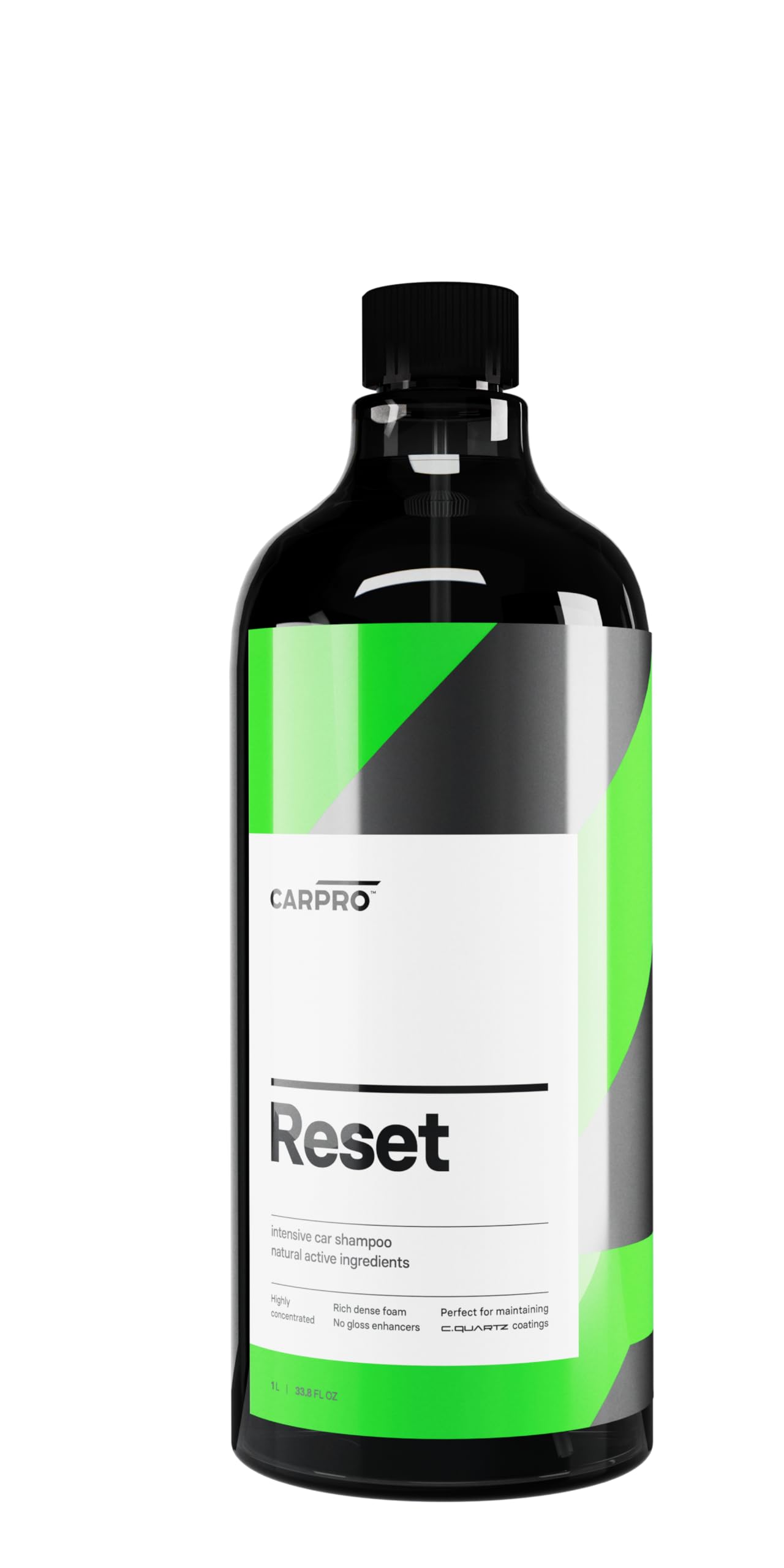
CarPro
Reset Intensive Car Wash Shampoo
SONAX
Gloss Shampoo Concentrate
P&S Detail Products
Pearl Auto Shampoo
Adam's Polishes
Car Wash Shampoo
As an Amazon Associate I earn from qualifying purchases. Full disclosure

Community
0 postsShare how you use this product
Drop a quick comment or post a full review with photos and a star rating.
Sign in to postNew here? Create a free account.