CarCareTruth Score
Decent, but wear gloves and ventilate.
Opens Amazon in a new tab. No account needed to look.
Saved to your guest loadout. Sign up to also save to your Cabinet (consumables) or Kit (tools you own).
As an Amazon Associate I earn from qualifying purchases. Full disclosure
Prices may varyHealth score is for adult use as intended, per the manufacturer's SDS. It does not model child ingestion, accidental spill cleanup, or off-label use. See the safety panel below for full hazard classification, and /disclaimer for the full editorial scope.
GHS hazard codes are quoted from the manufacturer’s Safety Data Sheet. PPE tiers below translate those codes and the listed ingredient chemistry; they are not CarCareTruth recommendations.
Show details for all categories ▾Hide details ▴
Only when: splash risk
Translated from the manufacturer’s Safety Data Sheet, Section 8
SDS §8 states eye/face protection is not required in normal cases. Section 2 carries no eye-hazard GHS classification and Section 11 confirms serious eye damage/irritation criteria are not met for this mixture, so this is a routine splash precaution during gel application, not a mixture-level eye hazard.
CarCareTruth publishes the cited sources verbatim and does not advise what action a user should take. Consult the full SDS before use.
Beyond SDS: translated from the ingredient chemistry
Petroleum hydrocarbon chemistry (C12-C20 isoalkanes at 35-50% of formula) means nitrile gloves are appropriate for gel application. The UK SDS §8 states hand protection is not required in normal cases, but this reflects the UK CLP mixture-level exemption; the ingredient-level H304 chemistry, scored conservatively under the tire-dressing scoring rules, still warrants glove use.
CarCareTruth publishes the cited sources verbatim and does not advise what action a user should take. Consult the full SDS before use.
Only when: in enclosed space
Beyond SDS: translated from the ingredient chemistry
No H335 (respiratory irritation) in SDS §2 and the gel format produces no spray mist. The SDS §8 mentions a respirator only in case of insufficient ventilation, standard boilerplate. Situational tier is appropriate given the petroleum hydrocarbon content; apply outdoors or in a ventilated area.
CarCareTruth publishes the cited sources verbatim and does not advise what action a user should take. Consult the full SDS before use.
No PPE specified in published sources for ventilation. Absence does not imply “not needed” — consult the full Safety Data Sheet.
PPE tiers translate the manufacturer’s SDS and U.S. regulatory standards. Not professional safety advice. How we report safety.
Scope of these PPE tiers. The tiers on this page translate the product's Safety Data Sheet where one is published, plus its ingredient chemistry, into a comparable rating. They describe a formulation, not a situation: a tier is not a safety determination for any specific user, task, quantity, or environment. The manufacturer's label and use instructions govern how the product is handled. Where the product is used at work, the employer's PPE program and hazard assessment under 29 CFR 1910.132 decide what protection is selected, not this page.
No warranties. CarCareTruth makes no warranties, express or implied, and expressly disclaims the implied warranties of merchantability and fitness for a particular purpose.
This product ranks #7 of 17 in Tire Dressing.Three above it ↓
Last reviewed August 2, 2026
TL;DR Aspiration hazard (H304) at the ingredient level: the only SDS on file is a UK document that clears this petroleum-silicone gel of a formal Danger classification on a viscosity technicality, so we score it conservatively, and outdoor application plus nitrile gloves are the right precaution. Once cured, it leaves a semi-gloss satin black, not a dripping wet look, matching the listing's own "semi-gloss satin luster" wording. Community-confirmed durability runs roughly 2 to 4 weeks on a daily driver and longer on a weekend car, with minimal sling from a thin coat left to tack off before driving. Up to 50 applications per bottle.
Squeeze a small amount onto a foam applicator and wipe it across a clean, dry sidewall. The thick gel clings instead of running, so four tires take under ten minutes with nothing slung onto your wheels. Owners describe the finish as a semi-gloss satin black like a new tire, not the glassy wet look some sprays chase. Most report the shine holding for weeks through rain and washing, dropping toward two weeks after heavy rain, with minimal sling from a thin coat left to dry before driving.
Buy it if you want durable semi-gloss satin from a concentrated gel that stays on the sidewall without dripping or misting onto your wheels. Skip it if you are after a deep wet-look gloss, because the listing and owner consensus both put this at semi-gloss. Also skip it if you prefer a water-based formula with a cleaner SDS profile: the petroleum carrier means a different chemistry and PPE tier than water-based emulsions.
The only SDS on file is a UK document, and its Section 2 formally reads Not Classified: a viscosity technicality (Note P) waives the aspiration hazard (H304) at the product level even though the petroleum hydrocarbons that drive it make up 35 to 50% of the formula. US labeling rules do not recognize that technicality and no US SDS has surfaced, so we score this product as if Danger applies. If swallowed, do not induce vomiting; seek medical attention immediately. Wear nitrile gloves during application. The listing carries a California Prop 65 warning. The UK SDS confirms 67 to 74% ready biodegradability.
For the full SDS breakdown of this category, solvent gels versus water-based sprays, see Is Tire Shine Toxic?.
The product listing title says 'Semi-Gloss finish on Tires' and the first feature bullet states it delivers 'a rich, semi-gloss satin luster that restores tires to a deep black, like-new appearance.' Community owners consistently describe the result as a clean semi-gloss, not a dripping wet look. Buyers who want an extreme high-gloss wet-look finish should consider products marketed specifically for that effect.
Community reviews report a wide range depending on weather and washing frequency, from several weeks on a weekend car down to 3-4 days after heavy rain on a daily driver. Most owners report multi-week durability. The product listing description states 'weeks of long-lasting shine and gloss with just one application,' and the broad owner consensus corroborates multi-week performance under typical conditions.
Most community owners report minimal or no sling when the gel is applied as a thin coat and allowed to dry before driving. Some owners note the product did sling on their vehicle, so results can vary. The standard technique, applying sparingly with a foam applicator, letting it tack off, then wiping any excess, dramatically reduces sling risk.
An Amazon gallery marketing image includes the text 'Innovative Water Based Gel Formula,' but this is contradicted by the UK REACH SDS §3, which identifies petroleum hydrocarbon distillates (C12-C20 isoalkanes) at 35-50% as the primary classified components. The formula is a petroleum-silicone gel. The 'water based' claim appears on a lifestyle marketing image only, not on the bottle label or in the SDS.
The UK SDS §8 states hand protection 'not required in normal cases,' but that reflects the UK-specific classification exemption. The 35-50% petroleum hydrocarbon fraction carries H304 aspiration-hazard chemistry at the ingredient level, so nitrile gloves are appropriate per that ingredient chemistry during gel application.
No. The bottle label reads 'Ultra Wet Look' but Amazon's official listing title says 'Semi-Gloss finish on Tires,' and community reviews consistently describe a satin semi-gloss result, not a dripping wet look. The listing title and feature bullets are the more accurate description; buyers expecting an extreme high-gloss wet look should choose a product marketed specifically for that finish.
Marketing copy from SONAX, via Amazon. Not editorial.
Guide
Best Detailing Kit Under $100, $200, and $500 (2026)
The $100 kit washes, dresses, and protects a daily driver for the year. The $200 kit adds foam, decontamination, and a real protection layer. The $500 kit is the first tier where paint correction and ceramic enter the chat.
Guide
Detailing Chemicals That Damage Paint, Trim, or Your Lungs
Most paint, trim, and respiratory damage from car-care products traces to a short list of chemistries (fluoride wheel acids, strong solvents, high-pH degreasers, isocyanate sprays, methylene chloride). This guide names the H-codes, the failure modes, and the catalog pages that show which products carry them.
Guide
Tire Dressings: Solvent vs Water-Based vs Hybrid Guide
Solvent gel wins for a wet show-car gloss that lasts a few days. Water-based wins for daily-driver satin that lasts a week or two. Hybrid (graphene or acrylic) wins for set-and-forget durability that lasts weeks.
Weekly pick
One product, one safety verdict, every week. No spam.


Chemical Guys
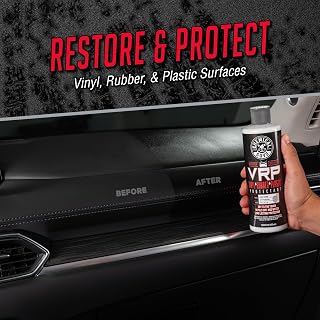
VRP Vinyl, Rubber, and Plastic Dressing
Adam's Polishes
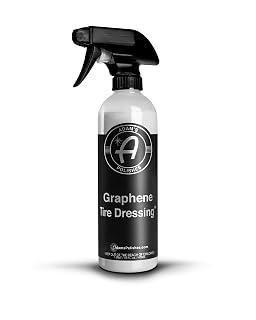
Graphene Tire Dressing
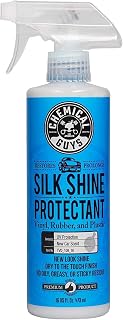
Chemical Guys
Silk Shine Tire and Trim Dressing
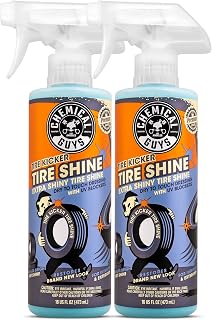
Chemical Guys
Tire Kicker Sprayable Extra Glossy Tire Shine
As an Amazon Associate I earn from qualifying purchases. Full disclosure

Community
0 postsShare how you use this product
Drop a quick comment or post a full review with photos and a star rating.
Sign in to postNew here? Create a free account.