CarCareTruth Score
Decent, but wear gloves and ventilate.
Opens Amazon in a new tab. No account needed to look.
Saved to your guest loadout. Sign up to also save to your Cabinet (consumables) or Kit (tools you own).
As an Amazon Associate I earn from qualifying purchases. Full disclosure
Prices may varyThe manufacturer's Safety Data Sheet classifies this product with one or more GHS Category 1 health hazards — the most severe tier. The hazard statements in quotes below are the verbatim GHS language from the SDS, as required by OSHA's Hazard Communication Standard. The line under each statement translates the GHS classification into plain language.
GHS Category 1 aspiration toxicity — thin, oily liquids can slip into the lungs if swallowed, causing chemical pneumonia.
GHS Category 1 carcinogenicity — classified as suspected of causing cancer with repeated or prolonged exposure.
If swallowed:
The aspiration hazard (H304) is about the liquid being swallowed and reaching the airway, not about breathing fumes during normal use.
Call Poison Control immediately at 1-800-222-1222 (US, 24/7, free) and have the product container with you. Poison Control's standing guidance is to not induce vomiting after chemical exposure; they will direct first-aid steps based on the specific product.
About this product's hazards. This product's Safety Data Sheet uses signal word DANGER.Read the manufacturer's SDS and follow all safety instructions before use. CarCareTruth ratings translate the manufacturer's safety sheet. They do not replace the SDS or substitute for a hazard assessment specific to your task.
Health score is for adult use as intended, per the manufacturer's SDS. It does not model child ingestion, accidental spill cleanup, or off-label use. See the safety panel below for full hazard classification, and /disclaimer for the full editorial scope.
GHS hazard codes are quoted from the manufacturer’s Safety Data Sheet. PPE tiers below translate those codes and the listed ingredient chemistry; they are not CarCareTruth recommendations.
Show details for all categories ▾Hide details ▴
Translated from the manufacturer’s Safety Data Sheet, Section 2
H319 (eye irritation Cat 2A) present in SDS §2 plus DANGER signal word driven by health H-codes (H350, H304). Safety glasses or chemical goggles are warranted during application, particularly given the applicator-pad transfer and splatter risk from an IPA-heavy formula.
U.S. regulatory standard
29 CFR 1910.133(a)(1)
“The employer shall ensure that each affected employee uses appropriate eye or face protection when exposed to eye or face hazards from… liquid chemicals…”
ANSI Z87.1 (incorporated via §1910.6)
OSHA standards apply to workplaces. Cited here as the U.S. reference threshold for the underlying hazard class.
CarCareTruth publishes the cited sources verbatim and does not advise what action a user should take. Consult the full SDS before use.
Only when: prolonged use
Translated from the manufacturer’s Safety Data Sheet, Section 2
No H315 or H314 classified in SDS §2. High-alcohol carrier (IPA 60-80%, H225 present) plus H336 (CNS narcosis from vapor) creates a defatting skin-contact concern under prolonged or repeated dermal contact. A single application session with incidental applicator-pad contact does not warrant gloves for most users; repeated or prolonged direct skin contact during the application warrants nitrile gloves.
CarCareTruth publishes the cited sources verbatim and does not advise what action a user should take. Consult the full SDS before use.
Only when: in enclosed space · prolonged use
Translated from the manufacturer’s Safety Data Sheet, Section 2
H336 (drowsiness/dizziness) from high IPA + petroleum-distillates vapor accumulates in enclosed space. H304 is a swallowing-related aspiration hazard, not an airborne inhalation concern. Outdoors or with garage door open, vapor dissipates readily; in a closed garage during prolonged or repeated application, a respirator with organic-vapor cartridge is reasonable. H225 (flash point below 23°C from IPA) also makes ventilation a fire-safety requirement regardless of inhalation concerns.
U.S. regulatory standard
29 CFR 1910.1003; substance-specific 1910.1001–1910.1052
“Each employer shall ensure that no employee is exposed [in excess of the substance-specific PEL]…”
OSHA standards apply to workplaces. Cited here as the U.S. reference threshold for the underlying hazard class.
CarCareTruth publishes the cited sources verbatim and does not advise what action a user should take. Consult the full SDS before use.
The published Safety Data Sheet for this product does not specify ventilation protection for consumer use.
Workplace context
29 CFR 1910.134(a); 1910.1000
“the primary objective shall be to prevent atmospheric contamination [via] accepted engineering control measures (for example, enclosure or confinement of the operation, general and local ventilation…).”
Triggered by GHS H336 on the SDS.
OSHA standards apply to workplaces. Cited here as the U.S. reference threshold for the underlying hazard class.
PPE tiers translate the manufacturer’s SDS and U.S. regulatory standards. Not professional safety advice. How we report safety.
Scope of these PPE tiers. The tiers on this page translate the product's Safety Data Sheet where one is published, plus its ingredient chemistry, into a comparable rating. They describe a formulation, not a situation: a tier is not a safety determination for any specific user, task, quantity, or environment. The manufacturer's label and use instructions govern how the product is handled. Where the product is used at work, the employer's PPE program and hazard assessment under 29 CFR 1910.132 decide what protection is selected, not this page.
No warranties. CarCareTruth makes no warranties, express or implied, and expressly disclaims the implied warranties of merchantability and fitness for a particular purpose.
This product ranks #4 of 7 in Glass Coating.Three above it ↓
Last reviewed June 14, 2026
TL;DR Community data puts real-world durability at 6-9 months on a daily-driver windshield · shorter than the 12-month label claim · with solid highway sheeting. The 2024 SDS classifies the formula with a Carcinogenicity Cat 1A flag (the most severe in the category) from the carrier-solvent fraction, an ingredient competing kits do not carry.
Bonds to glass and creates a hydrophobic layer that beads water tightly and sheets at highway speed. Prep the glass with IPA, apply a few drops to the included applicator pad, wait 60-120 seconds for a light haze, then buff completely. Community data confirms 6-9 months of effective beading on a daily-driver windshield · shorter than the 12-month label claim but consistent with the 24-month claim for wiper-free side glass. No persistent wiper chatter documented in community reviews.
Best for Griot's Garage brand loyalists who value the brand's satisfaction-guarantee policy. Skip it if the carcinogen classification concerns you · Invisible Glass Pro Ceramic, Cerakote Rapid Ceramic, and Adam's Graphene Glass Coating deliver similar 6-12 month durability with cleaner SDS profiles.
The 2024 SDS carries DANGER: H225 (highly flammable · IPA flash point below 23°C), H350 (Carcinogenicity Cat 1A · hydrotreated petroleum distillates at 10-30%), H304 (aspiration hazard · do not induce vomiting if ingested), H319 (eye irritation), and H336 (vapor drowsiness). Apply outdoors or with the garage door open. Safety glasses are warranted. No PFAS · chemistry is SiO₂-based, not fluoropolymer. Environment score reflects estimated working VOC above 550 g/L via the stay-on-car pathway.
H350 'May cause cancer' is a Category 1A classification · meaning evidence from human studies (not just animal studies) supports the carcinogenicity. In Griot's Ceramic Glass Coating, the H350 is driven by the hydrotreated petroleum distillates at 10-30% of the formula. The classification is based on chronic occupational exposure; a single windshield treatment session does not create acute cancer risk. The classification is real and reflects a more-concerning chemistry profile than competing kits · Invisible Glass Pro Ceramic and Cerakote do not carry H350.
Two reasons: (1) the specific grade of hydrotreated petroleum distillates Griot's uses may carry a higher residual aromatic content than other brands' carriers, and (2) the SDS filing is recent (2024-07-26) and reflects current OSHA carcinogen-classification guidance, while older SDSs may have predated the H350 classification for similar hydrocarbon grades. Other brands using petroleum-distillate carriers (Cerakote, Adam's, Invisible Glass) either use different grades or different filing approaches.
The manufacturer claims up to 12 months on the front windshield and up to 24 months on wiper-free side and rear windows. Community data from long-term owner feedback and r/AutoDetailing shows 6-9 months on a daily driver windshield, consistent with most consumer SiO₂ kits, and longer durability on side glass that does not see wiper abrasion. Reports past 12 months on the windshield are uncommon outside garaged vehicles.
No. The chemistry is SiO₂-based with IPA and hydrocarbon carriers · silicon-oxygen and carbon-hydrogen bonds, no carbon-fluorine bonds. No PFAS-classified ingredients are disclosed in SDS Section 3.
The H350 classification reflects chronic exposure risk from the carrier solvent at 10-30% concentration; a single application with proper ventilation does not create meaningful cancer exposure. However, the rest of the category achieves similar 6-12 month durability without the carcinogen flag. Invisible Glass Pro Ceramic, Cerakote, and Adam's Graphene Glass Coating all perform comparably without H350. There is no performance reason to accept the chemistry trade-off if the classification concerns you.
For typical outdoor or open-garage application, a respirator is not required · the IPA and petroleum-distillate vapors dissipate quickly in ventilated air. In a closed garage during a prolonged application session, an organic-vapor respirator is a reasonable precaution per the SDS H336 (drowsiness/dizziness) classification. H225 (flash point below 23°C) means an ignition source in an unventilated space is also a fire concern · keep garage door open regardless.
Marketing copy from Griot's Garage, via Amazon. Not editorial.
Weekly pick
One product, one safety verdict, every week. No spam.


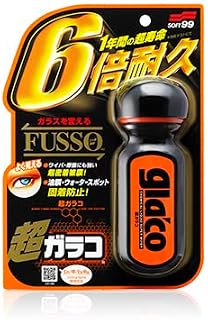
Soft99
Ultra Glaco
Gtechniq
G1 ClearVision Smart Glass
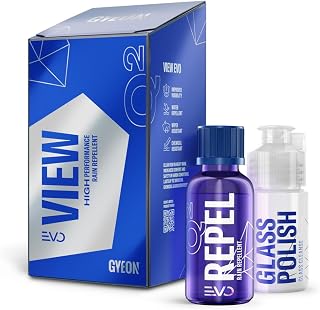
Gyeon
Q² View EVO
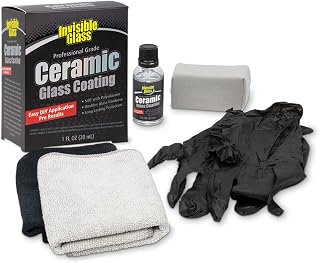
Stoner
Pro Ceramic Glass Coating Kit (95151)
As an Amazon Associate I earn from qualifying purchases. Full disclosure



Community
0 postsShare how you use this product
Drop a quick comment or post a full review with photos and a star rating.
Sign in to postNew here? Create a free account.