CarCareTruth Score
Decent.
Saved to your guest loadout. Sign up to also save to your Cabinet (consumables) or Kit (tools you own).
As an Amazon Associate I earn from qualifying purchases. Full disclosure
About this product's hazards. This product's Safety Data Sheet uses signal word DANGER.Read the manufacturer's SDS and follow all safety instructions before use. CarCareTruth ratings translate the manufacturer's safety sheet. They do not replace the SDS or substitute for a hazard assessment specific to your task.
Health score is for adult use as intended, per the manufacturer's SDS. It does not model child ingestion, accidental spill cleanup, or off-label use. See the safety panel below for full hazard classification, and /disclaimer for the full editorial scope.
GHS hazard codes are quoted from the manufacturer’s Safety Data Sheet. PPE tiers below translate those codes and the listed ingredient chemistry; they are not CarCareTruth recommendations.
Show details for all categories ▾Hide details ▴
Only when: splash risk
Translated from the manufacturer’s Safety Data Sheet, Section 2
H319 (eye irritation Cat 2A) confirmed in SDS §2. DANGER signal word is driven by H225 (flammable liquid, physical hazard only) · not by a health H-code. Per glass-coating health rubric v2.0 §PPE eyes: H319 present with DANGER from physical hazard only = situational tier (not recommended). Splash or drip risk during pouring or applicator loading warrants chemical splash goggles or safety glasses.
U.S. regulatory standard
29 CFR 1910.133(a)(1)
“The employer shall ensure that each affected employee uses appropriate eye or face protection when exposed to eye or face hazards from… liquid chemicals…”
ANSI Z87.1 (incorporated via §1910.6)
OSHA standards apply to workplaces. Cited here as the U.S. reference threshold for the underlying hazard class.
CarCareTruth publishes the cited sources verbatim and does not advise what action a user should take. Consult the full SDS before use.
Only when: prolonged use
Translated from the manufacturer’s Safety Data Sheet, Section 8
SDS §2 does not classify H315 (skin irritation Cat 2). However, SDS §9 reports pH 2.5 (moderate acid bracket 2.1-4.0) from alkoxysilane hydrolysis chemistry. Per glass-coating health rubric v2.0 §PPE skin: pH 2.1-4.0 without H315 = situational · gloves warranted for prolonged or repeated contact with the saturated applicator pad or working fluid.
CarCareTruth publishes the cited sources verbatim and does not advise what action a user should take. Consult the full SDS before use.
Only when: in enclosed space
Translated from the manufacturer’s Safety Data Sheet, Section 2
H336 (STOT SE Cat 3, CNS narcosis) confirmed in SDS §2 from IPA carrier. H225 (highly flammable) also present. No H335 (respiratory irritation) classified in §2; SDS §8 ventilation language is boilerplate. Per glass-coating health rubric v2.0 §PPE lungs: H225+H336 without H335 and with boilerplate SDS §8 = situational with trigger enclosed_space. In an open garage or outdoors, inhalation risk is low; in a small enclosed space, IPA vapor at ≥40% concentration can reach CNS-relevant levels.
CarCareTruth publishes the cited sources verbatim and does not advise what action a user should take. Consult the full SDS before use.
Translated from the manufacturer’s Safety Data Sheet, Section 2
H225 (highly flammable, flash point 12°C · below room temperature) AND H336 (CNS narcosis from IPA vapor) confirmed in SDS §2. Per glass-coating health rubric v2.0 §PPE ventilation: H225 + H336 = ventilation required. Open garage door or work outdoors. Keep ignition sources away during application and cure.
U.S. regulatory standard
29 CFR 1910.134(a); 1910.1000
“the primary objective shall be to prevent atmospheric contamination [via] accepted engineering control measures (for example, enclosure or confinement of the operation, general and local ventilation…).”
OSHA standards apply to workplaces. Cited here as the U.S. reference threshold for the underlying hazard class.
CarCareTruth publishes the cited sources verbatim and does not advise what action a user should take. Consult the full SDS before use.
PPE tiers translate the manufacturer’s SDS and U.S. regulatory standards. Not professional safety advice. How we report safety.
Last reviewed June 14, 2026
TL;DR Expect 12-18 months of protection on a daily driver · close to the label's '1-2 years' claim · and highway sheeting strong enough that drivers report running without wipers above 50 mph in moderate rain. The 60-90 second cure window and required separate prep step make this an intermediate-level application; first-timers regularly need to polish out a missed buff. Apply outdoors or with the garage door open · the high-alcohol carrier is highly flammable.
Wipe the windshield down with the matching G2 prep (or a clean 99% alcohol wipe), apply a few drops to a saturated suede applicator pad, work it across the glass in cross-hatched 12x12 inch sections, wait 60-90 seconds for the slight haze to form, then buff completely with a clean microfiber. The full windshield takes 20-30 minutes including prep. Once cured, rain beads tightly and sheets off at highway speed with enough force that multiple community members report shutting the wipers off above 50 mph in moderate rain. Forum members tracking daily drivers across r/AutoDetailing and Detailing World put real durability at 12-18 months · close to the '1-2 years' or '20,000 miles' label claim, longer than any consumer topical repellent and roughly double the lifespan of most consumer-grade spray kits. The main catch: the cure window is tight, and a missed buff leaves streaks that require polish-out to clear. Brief wiper chatter in the first few rain cycles is normal and resolves on its own.
Best for daily drivers who want year-plus protection in a single application and have the patience for a careful 30-minute install with a tight buff window. Gtechniq's enthusiast-community track record means the durability claim is well-documented · forum follow-ups consistently back it up. Skip it if you're a first-time applicator nervous about a missed cure window: a single-step spray kit (forgiving cure window, complete kit, 10-12 months realistic durability) gets most buyers close to the same outcome with far less risk of a botched application. Also skip it if you're sensitive to solvent odors · the high-alcohol carrier has a strong smell during application that requires open-garage or outdoor work regardless of experience level.
The SDS carries signal word DANGER, driven primarily by the highly flammable carrier (flash point 12°C · below room temperature) plus eye irritation and CNS-narcosis classification from the concentrated alcohol vapor. Open the garage door or work outdoors, and keep ignition sources away during application and cure · this is a hard requirement, not a precaution. The acidic working fluid (SDS §9 reports pH 2.5) reflects the chemistry of the alkoxysilane active reacting with moisture, not an added corrosive ingredient · gloves are appropriate as a precaution for applicator-pad contact. The product does not contain PFAS · Gtechniq's chemistry is alkoxysilane-based, not fluorinated. Environmental profile is moderate: the high estimated VOC from the alcohol carrier is the dominant deduction, moderated by the leave-on pathway (the cured film stays on the glass rather than draining off). No aquatic toxicity codes are present in the SDS.
Community data from r/AutoDetailing and Detailing World forums consistently shows 12-18 months of effective beading on daily-driven vehicles washed regularly · close to but typically under the label's 'up to 2 years' or '20,000 miles' claim. Reports past 18 months are common on garaged or lightly-driven cars. Daily drivers in heavy automatic-wash use see closer to 12 months.
Yes. G1 chemically bonds to clean, oil-free glass · applying it over wax residue, silicone topical repellent (Rain-X), or any glass cleaner residue causes premature failure within 2-3 months. Gtechniq's G2 is the matching prep wipe. A clean dedicated 99% isopropyl alcohol wipe-down works equivalently if you don't have G2 specifically. Do not skip the prep step.
Hazing occurs when the alkoxysilane active partially cures before being buffed off. G1 has a tight 60-90 second cure window depending on temperature and humidity · buff too early and it smears, buff too late and it bonds permanently in a streaked pattern that requires polish-out to clear. Apply in 12x12 inch sections one at a time, wait for the slight haze to form, then buff completely before moving to the next section. Avoid direct sunlight and apply when glass is below 75°F.
Generally no. Once a windshield has any chemically-bonded coating on it (G1, FlyBy30, factory-applied glass coating), additional alkoxysilane products cannot anchor properly and will fail prematurely. If your windshield has an existing coating that is degraded but not removed, polish the glass with a glass-specific compound before applying G1.
G1 is significantly more durable in automatic-wash use than topical rain repellents, but high-pH detergents and brush abrasion will still erode the coating over time. Community reports show 12+ months of strong beading in mixed hand-wash and automatic-wash use, dropping to 6-9 months with frequent automatic-wash exposure. Avoid touchless washes with strong alkaline detergents during the first week of cure.
Marketing copy from Gtechniq, via Amazon. Not editorial.
Weekly pick
One product, one safety verdict, every week. No spam.
Currently in the top 2 of its category — appears as a pick in:


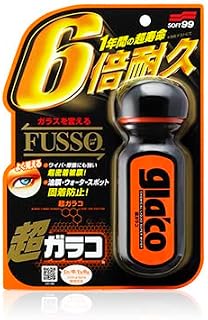
Soft99
Ultra Glaco
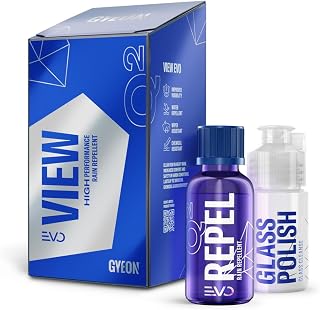
Gyeon
Q² View EVO
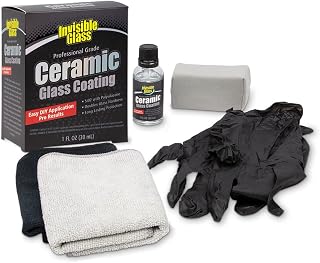
Stoner
Pro Ceramic Glass Coating Kit (95151)
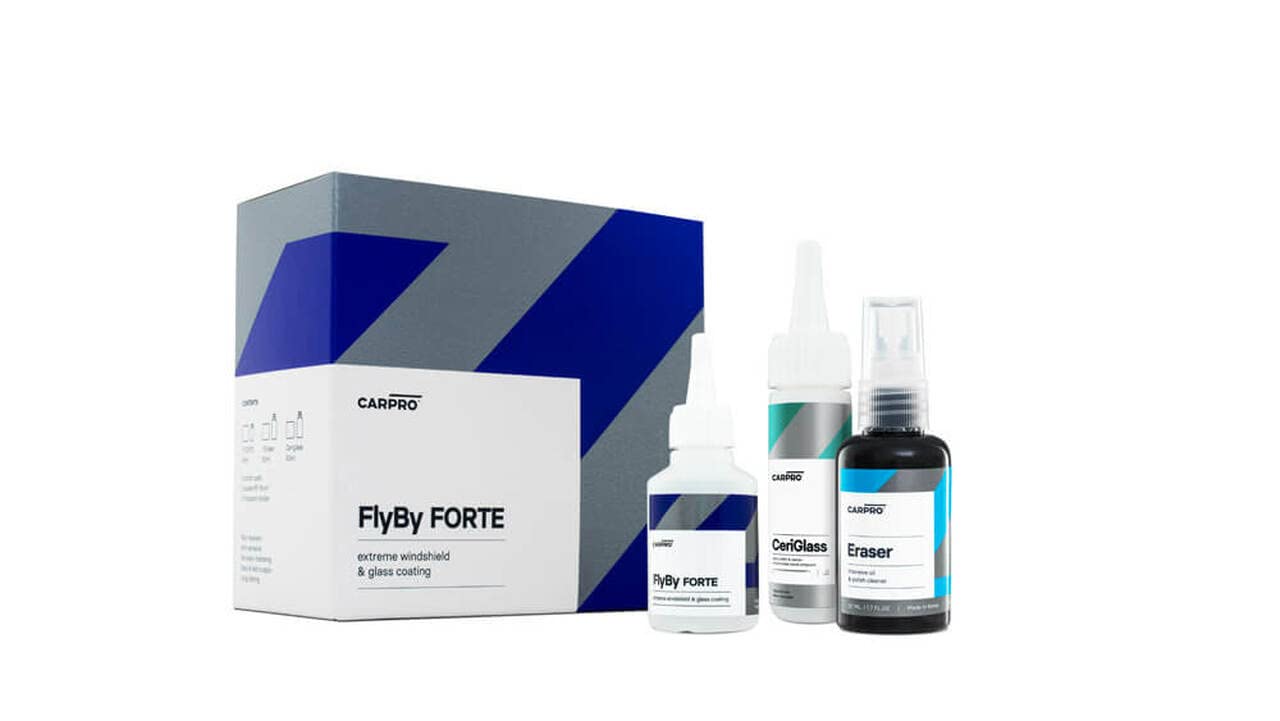
CarPro
FlyBy Forte V4 Glass Coating
As an Amazon Associate I earn from qualifying purchases. Full disclosure

Community
0 postsShare how you use this product
Drop a quick comment or post a full review with photos and a star rating.
Sign in to postNew here? Create a free account.