CarCareTruth Score
Recommended.
Opens Amazon in a new tab. No account needed to look.
Saved to your guest loadout. Sign up to also save to your Cabinet (consumables) or Kit (tools you own).
As an Amazon Associate I earn from qualifying purchases. Full disclosure
Prices may varyHealth score is for adult use as intended, per the manufacturer's SDS. It does not model child ingestion, accidental spill cleanup, or off-label use. See the safety panel below for full hazard classification, and /disclaimer for the full editorial scope.
GHS hazard codes are quoted from the manufacturer’s Safety Data Sheet. PPE tiers below translate those codes and the listed ingredient chemistry; they are not CarCareTruth recommendations.
Show details for all categories ▾Hide details ▴
Only when: splash risk
Translated from the manufacturer’s Safety Data Sheet, Section 2
SDS §2 classifies the mixture as not a hazardous substance: no H318 (serious eye damage), no H319 (eye irritation), no signal word. SDS §9 confirms neutral pH 7.5-8.0. No GHS pictograms; eye protection is not chemically mandated but reasonable during pump-spray application to avoid mist reaching eyes.
CarCareTruth publishes the cited sources verbatim and does not advise what action a user should take. Consult the full SDS before use.
Only when: prolonged use
Translated from the manufacturer’s Safety Data Sheet, Section 2
SDS §2 classifies the mixture as not a hazardous substance: no H314 (skin corrosion), no H315 (skin irritation), no H317 (sensitizer), no signal word. SDS §9 confirms neutral pH. Aqueous-base formulation below the OSHA HazCom disclosure threshold; protection warranted only during prolonged or repeated skin contact.
CarCareTruth publishes the cited sources verbatim and does not advise what action a user should take. Consult the full SDS before use.
Only when: in enclosed space
Translated from the manufacturer’s Safety Data Sheet, Section 2
SDS §2 carries no inhalation H-codes (no H334, H335, H331, H330). Aqueous-base pump-spray with no disclosed volatile co-solvents and flash point >93°C. The situational tier reflects the general principle that any pump-spray application in a closed garage can produce mild airborne mist: not an SDS-derived hazard, but a use-pattern consideration. Outdoor or open-garage application requires no respiratory PPE.
CarCareTruth publishes the cited sources verbatim and does not advise what action a user should take. Consult the full SDS before use.
No PPE specified in published sources for ventilation. Absence does not imply “not needed” — consult the full Safety Data Sheet.
PPE tiers translate the manufacturer’s SDS and U.S. regulatory standards. Not professional safety advice. How we report safety.
This product ranks #1 of 7 in Tire Cleaner.
Last reviewed July 31, 2026
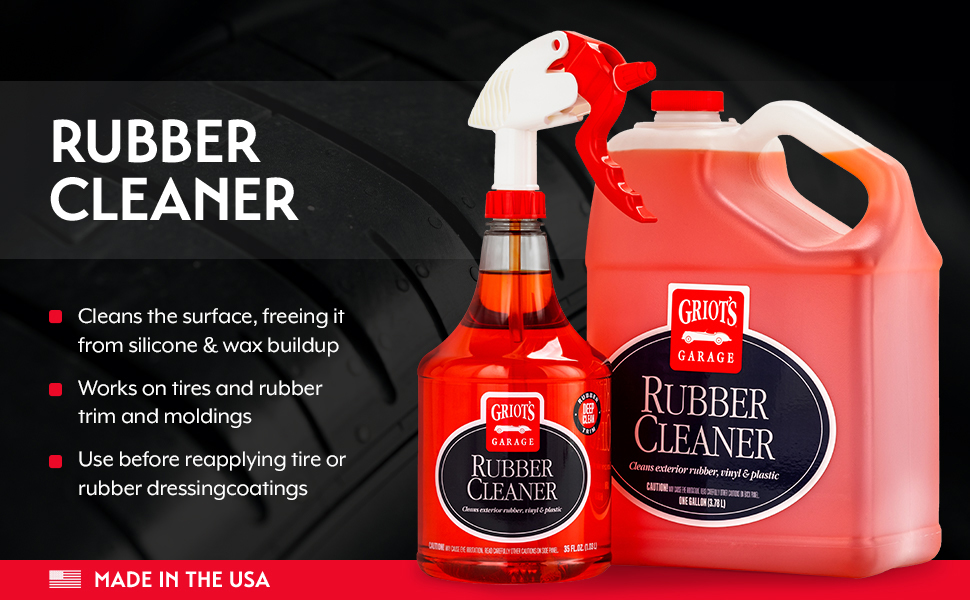
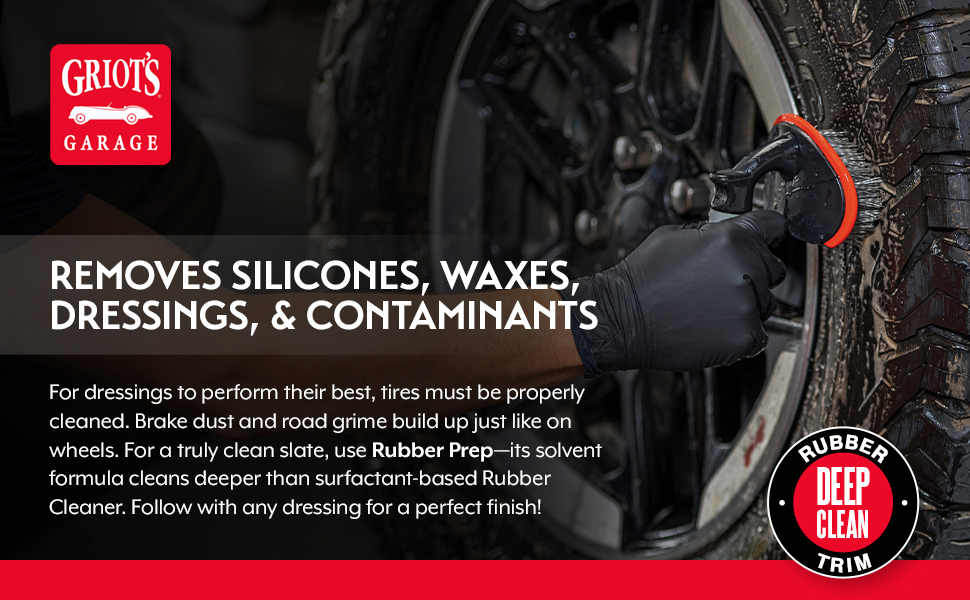
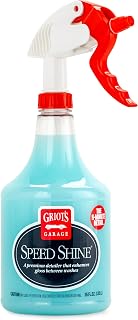
TL;DR Mild, unclassified tire and rubber cleaner with neutral pH 7.5-8.0 that strips silicone dressing residue and surface dirt without aggressive chemistry. The SDS classifies the formula as not a hazardous substance (no signal word, no H-codes), making it the safest routine prep choice in the tire-cleaner category. Trade-off: limited on heavily oxidized or neglected tires where the caustic-class alternatives are more effective in a single pass.
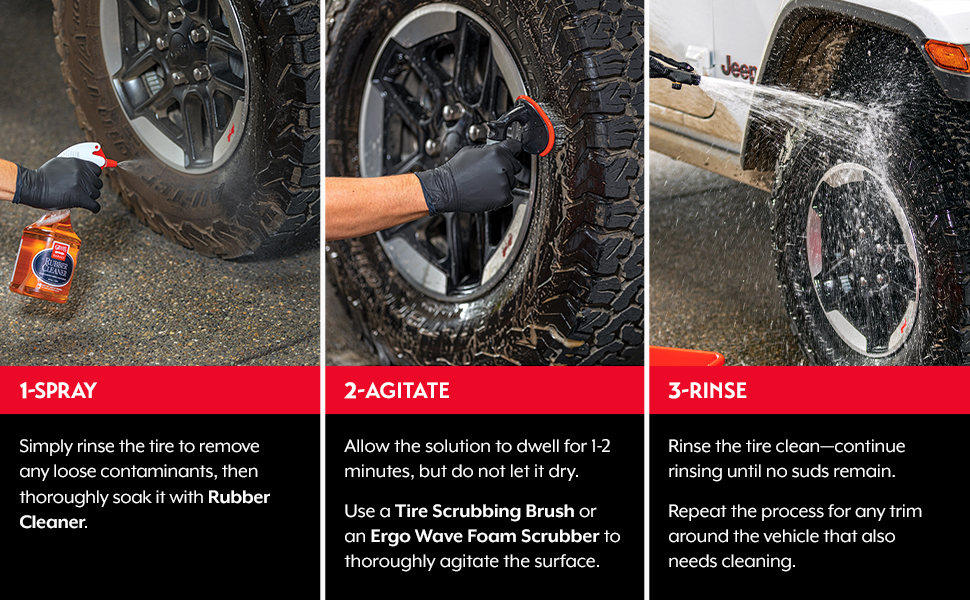
Spray onto a wet tire sidewall, agitate with a stiff brush after a 30-second dwell, and rinse off. The mild formula lifts silicone dressing residue and surface dirt to leave a clean, neutral surface ready for fresh dressing. On light-to-moderate bloom, one or two applications typically suffice. On heavily oxidized tires, this cleaner is less aggressive than the caustic-class alternatives in this aisle; the brand positions it as a dressing-prep step rather than a heavy-duty bloom remover, and community evidence consistently supports that framing. Application is straightforward; the chemistry warrants no special PPE for normal use outdoors.
Buy it for the cleanest possible chemistry in this category: neutral pH, no GHS hazard codes, no signal word. It's the right pick for routine weekly tire prep before applying a dressing, or when there is a household reason to prefer the lowest-hazard option (asthma, sensitive skin, children in the wash area). Skip it if there is heavily neglected brown bloom that needs single-application restoration; the caustic-class cleaners are stronger for that initial deep clean. A reasonable workflow is one initial pass with a stronger cleaner followed by routine Griot's prep maintenance.
The SDS classifies the product as not a hazardous substance or mixture under OSHA HazCom: no GHS hazard codes, no signal word, neutral pH 7.5-8.0, HMIS health and flammability ratings all 0. SDS Section 3 states no components require disclosure under applicable regulations. This is the cleanest chemistry profile in the tire-cleaner category, meaningfully milder than the WARNING-level surfactant cleaners and substantially milder than the DANGER-level caustic class. Standard hand-washing after use is sufficient; open-garage or outdoor application requires no respiratory protection. Environmental footprint is low: water-based formulation with no petroleum solvents disclosed, no Prop 65 warning, no aquatic toxicity classification in SDS Section 12. The drain-destined rinse pathway applies (every tire wash ends in storm runoff), but the absence of caustic alkaline rinsate, PFAS, or elevated VOC keeps the environment score in the Environmentally Responsible band.
It's meaningfully different chemistry. Adam's Tire and Rubber Cleaner and Black Magic Bleche-Wite both carry DANGER signal words and serious-eye-damage classifications at pH 12-13.5; 303 Tire and Rubber Cleaner is WARNING-level at pH 10. Griot's Rubber Cleaner is unclassified per SDS at neutral pH 7.5-8.0: no signal word, no H-codes. Cleaning aggressiveness is correspondingly lower; this is positioned as a dressing-prep step rather than a heavy bloom remover.
On light to moderate bloom and silicone dressing residue, yes: it strips old protectant and surface dirt to leave a clean, neutral surface for fresh dressing application. On heavily oxidized or browned tires, it's less aggressive than the caustic-class alternatives; two or three applications may be needed to fully restore color, or step up to a stronger cleaner for the initial restoration before switching to Griot's for routine maintenance.
Yes. The 2016-10-19 SDS explicitly states 'Not a hazardous substance or mixture' under OSHA Hazard Communication, with HMIS Health/Flammability/Physical hazard ratings all 0. Section 3 states no ingredients require disclosure under applicable regulations. This is a meaningful safety differentiator in a category where most products carry WARNING or DANGER signal words.
Griot's notes that SDS documents are provided as a service for business customers and 'are not applicable to consumer use.' This is a legal positioning statement common in detailing: the OSHA HazCom Standard formally applies to workplace exposure rather than consumer-product disclosures. The chemistry information in the SDS is still accurate and useful for assessing the product.
Griot's pricing on the 35 oz bottle is mid-tier for this category. The trade-off is meaningfully cleaner chemistry for slightly less single-application cleaning power on heavy bloom. For an owner who already has heavy bloom, a one-time pass with a caustic or surfactant cleaner followed by routine Griot's maintenance is a reasonable workflow. For an owner with healthy tires who wants a routine prep cleaner, this is the safest choice in the category.
Marketing copy from Griot's Garage, via Amazon. Not editorial.
Weekly pick
One product, one safety verdict, every week. No spam.



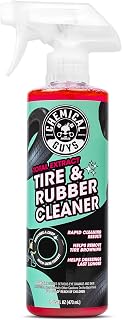
Chemical Guys
Total Extract Tire & Rubber Cleaner
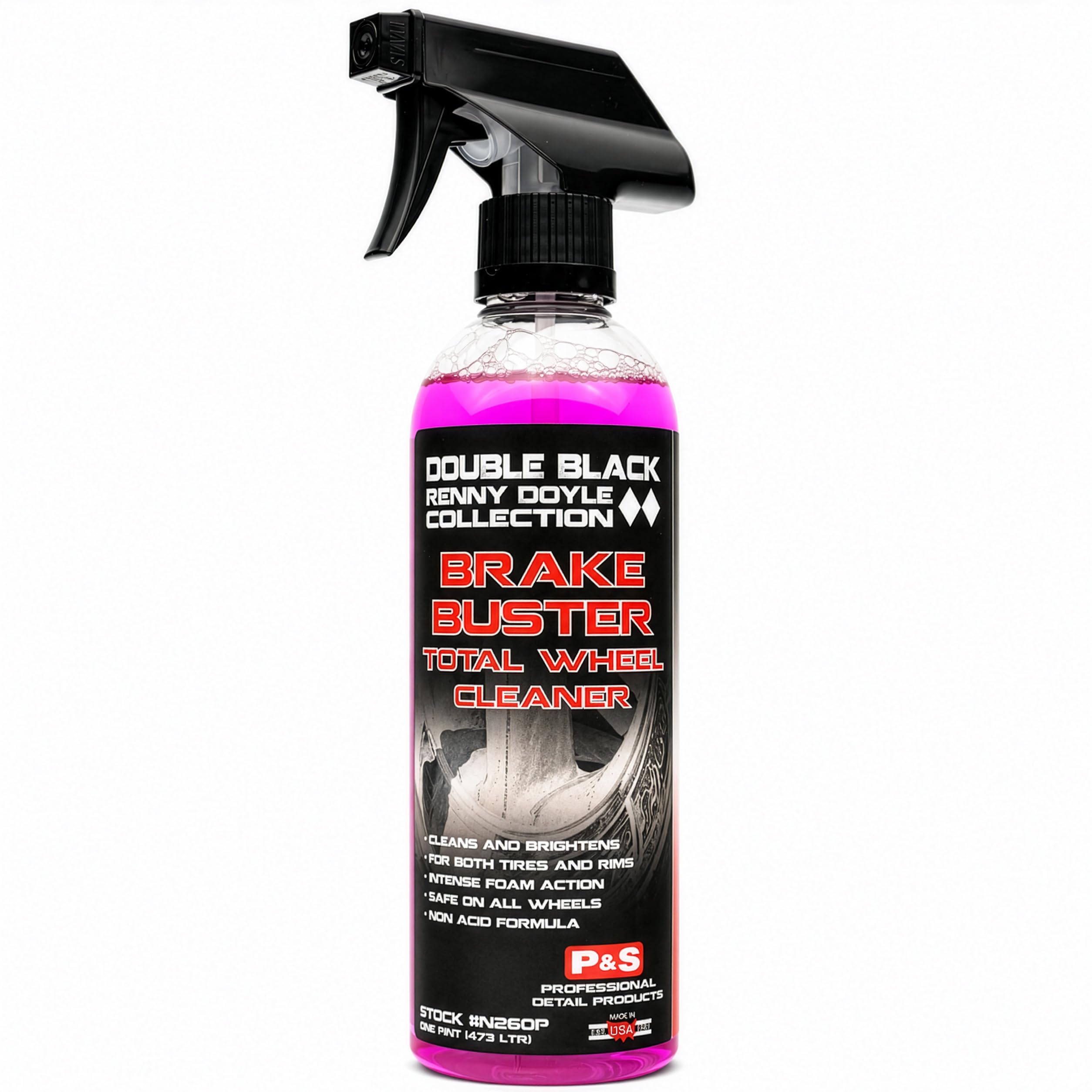
P&S Detail Products
Brake Buster Wheel & Tire Cleaner
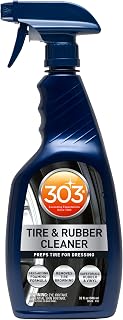
303 Products
303 Tire and Rubber Cleaner
Gyeon
Q2M TireCleaner
As an Amazon Associate I earn from qualifying purchases. Full disclosure


Community
0 postsShare how you use this product
Drop a quick comment or post a full review with photos and a star rating.
Sign in to postNew here? Create a free account.