CarCareTruth Score
Decent, but wear gloves and ventilate.
Saved to your guest loadout. Sign up to also save to your Cabinet (consumables) or Kit (tools you own).
As an Amazon Associate I earn from qualifying purchases. Full disclosure
Health score is for adult use as intended, per the manufacturer's SDS. It does not model child ingestion, accidental spill cleanup, or off-label use. See the safety panel below for full hazard classification, and /disclaimer for the full editorial scope.
GHS hazard codes are quoted from the manufacturer’s Safety Data Sheet. PPE tiers below translate those codes and the listed ingredient chemistry; they are not CarCareTruth recommendations.
Show details for all categories ▾Hide details ▴
Translated from the manufacturer’s Safety Data Sheet, Section 8
SDS §2 classifies as Eye Irrit. Cat 2 (H319 · causes serious eye irritation). Mild irritant chemistry at consumer use concentration; eye protection is appropriate to prevent direct splash during application.
U.S. regulatory standard
29 CFR 1910.133(a)(1)
“The employer shall ensure that each affected employee uses appropriate eye or face protection when exposed to eye or face hazards from… liquid chemicals…”
ANSI Z87.1 (incorporated via §1910.6)
OSHA standards apply to workplaces. Cited here as the U.S. reference threshold for the underlying hazard class.
CarCareTruth publishes the cited sources verbatim and does not advise what action a user should take. Consult the full SDS before use.
Translated from the manufacturer’s Safety Data Sheet, Section 8
SDS §2 classifies as Skin Irrit. Cat 2 (H315) and Skin Sens. Cat 1 (H317 · may cause allergic skin reaction, from trace ethyl acrylate). Nitrile gloves are sufficient for the brush agitation step.
U.S. regulatory standard
29 CFR 1910.138(a)
“appropriate hand protection when employees' hands are exposed to hazards such as those from… chemicals which produce an adverse effect on the skin or eyes…”
OSHA standards apply to workplaces. Cited here as the U.S. reference threshold for the underlying hazard class.
CarCareTruth publishes the cited sources verbatim and does not advise what action a user should take. Consult the full SDS before use.
Only when: in enclosed space
Translated from the manufacturer’s Safety Data Sheet, Section 8
No H335, H331, or H334 in SDS §2. The glycol ether co-solvent at 0.1-10% can produce mild odor in enclosed application. SDS §7 advises adequate ventilation; applying outdoors or in an open garage satisfies the guidance without elevated PPE.
CarCareTruth publishes the cited sources verbatim and does not advise what action a user should take. Consult the full SDS before use.
No PPE specified in published sources for ventilation. Absence does not imply “not needed” — consult the full Safety Data Sheet.
PPE tiers translate the manufacturer’s SDS and U.S. regulatory standards. Not professional safety advice. How we report safety.
Last reviewed June 14, 2026
TL;DR Mild-alkaline foaming tire cleaner (pH 10, WARNING signal word) that clears bloom in one or two applications and is safe for weekly use on healthy tires · wear nitrile gloves and safety glasses during application. Carries a Prop 65 notice and a trace skin sensitizer.
Spray onto a wet tire sidewall, agitate with a stiff brush for 30-60 seconds, and rinse · the foaming formula lifts brown bloom and old dressing residue without the aggressive chemistry of caustic alternatives. Community evidence on r/AutoDetailing supports single-application bloom removal on light-to-moderate contamination; heavily oxidized tires may need a second pass. The mild chemistry trades some single-pass aggressiveness for better rubber safety and a lower PPE burden, making it a practical maintenance cleaner rather than a restoration product.
Buy it if you clean tires weekly and want a formula that won't dry out sidewalls over time. The foaming pump-spray is practical for a driveway detail and PPE stays at the recommended level, not required. Skip it if you're tackling severely neglected, heavily oxidized tires · caustic-class alternatives strip heavy bloom in one pass; come back to 303 for routine maintenance after the initial deep clean.
WARNING signal word from mild skin and eye irritant codes plus a trace skin sensitizer (ethyl acrylate in SDS §3); eye protection and nitrile gloves are appropriate for application. The product carries a Prop 65 notice. Water-based formula with no petroleum solvents and no aquatic toxicity H-codes · low environmental footprint for a drain-destined cleaner. The brand's biodegradability claim lacks a stated test standard and is not credited in the environment score.
303 is meaningfully milder chemistry. Adam's Tire & Rubber Cleaner and Black Magic Bleche-Wite both carry the DANGER signal word and serious-eye-damage classifications (H318) at pH 12-13.5. 303 is WARNING signal word with mild irritant codes only at pH 10. Cleaning aggressiveness on heavy bloom is correspondingly lower · 303 may need a second application where the caustic alternatives clear in one · but routine monthly use carries less risk to skin, eyes, and tire chemistry.
On light to moderate bloom, yes · community evidence on r/AutoDetailing supports single-application bloom removal with normal foam-and-brush agitation. On heavily bloomed or oxidized tires, two applications may be needed. The trade-off versus more aggressive cleaners is consistent: milder chemistry means slightly less single-application punch, with offsetting safety and tire-longevity benefits.
Community long-term reports indicate the milder pH-10 alkanolamine chemistry is safer for routine use than caustic alternatives. Weekly application is supported on healthy tires; it's not as universally bloom-stripping as monthly heavier-cleaner use, but it's a more sustainable cleaning cadence for newer tires that don't need aggressive treatment.
The 303 brand markets multiple products with biodegradability claims; the SDS for this product does not state OECD 301 biodegradability for the surfactant system. The claim is treated as unverified marketing copy and is not credited in the environment score.
The trace ethyl acrylate (CAS 140-88-5) at 0.1-1% in SDS Section 3 carries an H317 (may cause allergic skin reaction) classification. Risk is low at consumer concentration but not negligible · a small fraction of users can develop contact sensitivity with repeated unprotected exposure. Standard nitrile gloves during use eliminate the practical risk.
Marketing copy from 303 Products, via Amazon. Not editorial.
Guide
Detailing Chemicals That Damage Paint, Trim, or Your Lungs
Most paint, trim, and respiratory damage from car-care products traces to a short list of chemistries (fluoride wheel acids, strong solvents, high-pH degreasers, isocyanate sprays, methylene chloride). This guide names the H-codes, the failure modes, and the catalog pages that show which products carry them.
Guide
Tire Dressings: Solvent vs Water-Based vs Hybrid Guide
Solvent gel wins for a wet show-car gloss that lasts a few days. Water-based wins for daily-driver satin that lasts a week or two. Hybrid (graphene or acrylic) wins for set-and-forget durability that lasts weeks.
Weekly pick
One product, one safety verdict, every week. No spam.


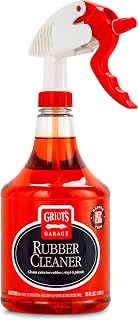
Griot's Garage
Rubber Cleaner
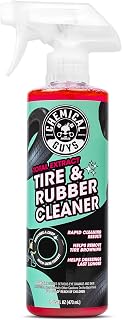
Chemical Guys
Total Extract Tire & Rubber Cleaner
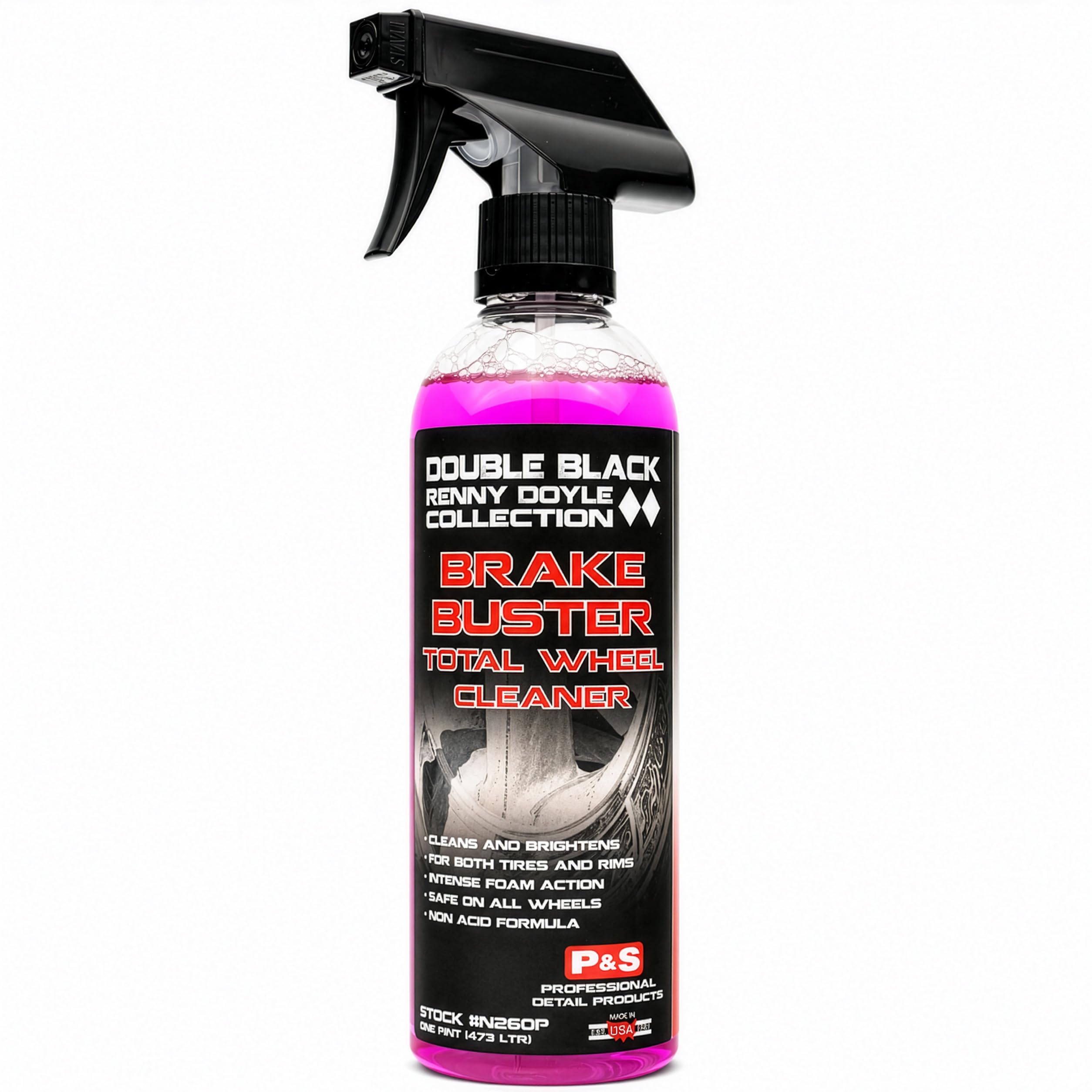
P&S Detail Products
Brake Buster Wheel & Tire Cleaner
Gyeon
Q2M TireCleaner
As an Amazon Associate I earn from qualifying purchases. Full disclosure

Community
0 postsShare how you use this product
Drop a quick comment or post a full review with photos and a star rating.
Sign in to postNew here? Create a free account.