CarCareTruth Score
Decent, but it's tough on the environment.
Opens Amazon in a new tab. No account needed to look.
Saved to your guest loadout. Sign up to also save to your Cabinet (consumables) or Kit (tools you own).
As an Amazon Associate I earn from qualifying purchases. Full disclosure
Prices may varyThe manufacturer's Safety Data Sheet classifies this product with one or more GHS Category 1 health hazards — the most severe tier. The hazard statements in quotes below are the verbatim GHS language from the SDS, as required by OSHA's Hazard Communication Standard. The line under each statement translates the GHS classification into plain language.
GHS Category 1 aspiration toxicity — thin, oily liquids can slip into the lungs if swallowed, causing chemical pneumonia.
If swallowed:
The aspiration hazard (H304) is about the liquid being swallowed and reaching the airway, not about breathing fumes during normal use.
Call Poison Control immediately at 1-800-222-1222 (US, 24/7, free) and have the product container with you. Poison Control's standing guidance is to not induce vomiting after chemical exposure; they will direct first-aid steps based on the specific product.
About this product's hazards. This product's Safety Data Sheet uses signal word DANGER.Read the manufacturer's SDS and follow all safety instructions before use. CarCareTruth ratings translate the manufacturer's safety sheet. They do not replace the SDS or substitute for a hazard assessment specific to your task.
Health score is for adult use as intended, per the manufacturer's SDS. It does not model child ingestion, accidental spill cleanup, or off-label use. See the safety panel below for full hazard classification, and /disclaimer for the full editorial scope.
GHS hazard codes are quoted from the manufacturer’s Safety Data Sheet. PPE tiers below translate those codes and the listed ingredient chemistry; they are not CarCareTruth recommendations.
Show details for all categories ▾Hide details ▴
Only when: splash risk
Translated from the manufacturer’s Safety Data Sheet, Section 2
SDS §2 classifies H315 (skin irritation Cat 2) but does NOT classify H319 (eye irritation). DANGER signal word is driven by H304 (aspiration), not by an eye-pathway code. Per glass-coating rubric v2.0: no H318 and no H319 → eye PPE tier is situational. The wipe-on pad applicator format makes direct eye contact unlikely except through deliberate splash.
CarCareTruth publishes the cited sources verbatim and does not advise what action a user should take. Consult the full SDS before use.
Translated from the manufacturer’s Safety Data Sheet, Section 2
SDS §2 classifies H315 (skin irritation Cat 2). SDS §8 specifies protective gloves. Per glass-coating rubric v2.0: H315 + DANGER signal word → recommended tier. Nitrile gloves appropriate during the wipe-on application · direct hand contact with the saturated foam pad is the normal use pattern.
U.S. regulatory standard
29 CFR 1910.138(a)
“appropriate hand protection when employees' hands are exposed to hazards such as those from… chemicals which produce an adverse effect on the skin or eyes…”
OSHA standards apply to workplaces. Cited here as the U.S. reference threshold for the underlying hazard class.
CarCareTruth publishes the cited sources verbatim and does not advise what action a user should take. Consult the full SDS before use.
Only when: in enclosed space
Translated from the manufacturer’s Safety Data Sheet, Section 2
SDS §2 classifies H336 (STOT SE Cat 3, CNS narcosis) from the petroleum distillate carrier vapor. SDS §2 does NOT classify H335 (respiratory irritation), H330, H331, or H334. Estimated VOC > 550 g/L from the petroleum distillate carrier · typical home-garage application produces vapor concentrations where the H336 narcosis threshold becomes relevant in an enclosed space. Outdoor application or open-garage work avoids the trigger. Per glass-coating rubric v2.0 lungs guidance: H336 without H335 → situational with enclosed_space trigger.
U.S. regulatory standard
29 CFR 1910.1200(f); 1910.132(d)
“The employer shall assess the workplace to determine if hazards are present, or are likely to be present, which necessitate the use of personal protective equipment.”
OSHA standards apply to workplaces. Cited here as the U.S. reference threshold for the underlying hazard class.
CarCareTruth publishes the cited sources verbatim and does not advise what action a user should take. Consult the full SDS before use.
The published Safety Data Sheet for this product does not specify ventilation protection for consumer use.
Workplace context
29 CFR 1910.134(a); 1910.1000
“the primary objective shall be to prevent atmospheric contamination [via] accepted engineering control measures (for example, enclosure or confinement of the operation, general and local ventilation…).”
Triggered by GHS H336 on the SDS.
OSHA standards apply to workplaces. Cited here as the U.S. reference threshold for the underlying hazard class.
PPE tiers translate the manufacturer’s SDS and U.S. regulatory standards. Not professional safety advice. How we report safety.
Scope of these PPE tiers. The tiers on this page translate the product's Safety Data Sheet where one is published, plus its ingredient chemistry, into a comparable rating. They describe a formulation, not a situation: a tier is not a safety determination for any specific user, task, quantity, or environment. The manufacturer's label and use instructions govern how the product is handled. Where the product is used at work, the employer's PPE program and hazard assessment under 29 CFR 1910.132 decide what protection is selected, not this page.
No warranties. CarCareTruth makes no warranties, express or implied, and expressly disclaims the implied warranties of merchantability and fitness for a particular purpose.
This product ranks #3 of 8 in Glass Coating.
Last reviewed July 31, 2026
TL;DR Aquapel bonds chemically to the windshield and lasts 4-12 months for most drivers, with highway sheeting strong enough that most owners shut wipers off in moderate rain. The active is a fluorinated silane (PFAS), which drives the durability and also caps the environment score at the category minimum.
Aquapel bonds a fluorine-based active to the glass itself rather than coating it topically, which is why its durability runs months instead of weeks. Snap the pre-saturated foam applicator to activate, wipe across clean dry glass, let it haze for three to five minutes, then buff off. Community data on r/AutoDetailing, IH8MUD, and AutoGeek puts realistic durability at four to twelve months on a daily driver · most owners land at six to eight months, consistent with the "up to 6 months" label claim. Multiple owners document wiper shutoff in moderate rain at highway speed. Wiper chatter after application is documented across several independent sources · usually break-in chatter resolving within a few cycles, though some owners report persistent chatter.
Best for buyers who want category-defining durability from a single quick application and accept the PFAS trade-off. Skip it if PFAS chemistry is a concern: Gtechniq G1 (alkoxysilane, 12-18 months community-confirmed) outlasts Aquapel without the fluorinated active, and SiO2-based kits (Cerakote, Adam's Graphene Glass, Griot's) deliver 6-12 months with milder chemistry.
The SDS identifies a fluoroalkylsilane active (not disclosed in Section 3 below the 1% threshold, but confirmed via the product description's "fluorinated compounds" language and PPG patent US7138186B2) · a per- and polyfluoroalkyl substance (PFAS). PFAS compounds are persistent in the environment; the EPA classifies many as health and environmental concerns. The Environment score of 3/10 reflects the persistence classification. The DANGER signal word is driven by H304 (aspiration) from the petroleum distillate carrier · do not induce vomiting if ingested; seek medical attention. SDS Section 2 also classifies H315 (skin irritation) and H336 (CNS narcosis); nitrile gloves are appropriate, and outdoor or open-garage work avoids vapor accumulation. H411 (chronic aquatic toxicity Cat 2) means do not apply near storm drains. SDS Section 15 lists Prop 65 as "Not Listed," even though the Amazon description carries Prop 65 warning text · the SDS is the authoritative source.
Yes. The active ingredient is a fluoroalkylsilane · a fluorinated silane compound in the per- and polyfluoroalkyl substances (PFAS) class. The 2015 SDS does not disclose the fluorinated active in Section 3 (it sits below the 1% disclosure threshold or is proprietary), but the Amazon product description explicitly identifies 'fluorinated compounds,' and PPG patent records (US7138186B2) confirm the chemistry. The PFAS classification drives both the long durability and the environment score cap at 3.
Community data puts the realistic range at 4-12 months on a daily driver, with most owners reporting 6-8 months under regular washing. The IH8MUD forum review confirmed about 7 months; AutoGeek Online reports cluster at 4-5 months; early owner feedback reports about a year. The label claim of 'up to 6 months' is consistent with the community median. Wash frequency, wiper use, and climate all affect realized durability.
Wiper chatter after Aquapel application is documented across multiple independent sources. Most describe break-in chatter that resolves within a few wiper cycles in rain, though some owners report persistent chatter that did not resolve. Checking wiper blade condition before application is reasonable. If the blades are aged or have hardened edges, the coating can amplify chatter rather than cause it on its own.
The manufacturer (Pittsburgh Glass Works, the PPG spinoff that holds the brand) states it is safe for treated and tinted glass, side windows, and mirrors. The formula bonds chemically to the glass surface itself, not to coatings, so compatibility with rear-defrost grid lines is generally reported as fine. Use one wipe per application and avoid over-saturating the defrost grid area.
Different chemistry, different durability tier. Rain-X Original is a topical silicone polymer that sits on top of the glass and washes off in 2-6 weeks. Aquapel's fluoroalkylsilane active chemically bonds to the glass surface, lasting months instead of weeks. The trade-offs: Aquapel costs roughly 5-10x per application, is a PFAS product, and requires more careful technique. Non-PFAS alternatives with comparable durability include Gtechniq G1 (alkoxysilane, 12-18 months) and SiO2-based kits.
Marketing copy from Aquapel, via Amazon. Not editorial.
Weekly pick
One product, one safety verdict, every week. No spam.
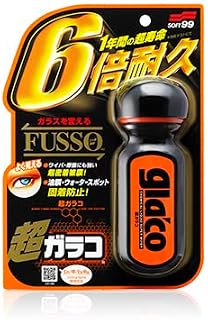
Soft99
Ultra Glaco
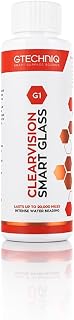
Gtechniq
G1 ClearVision Smart Glass
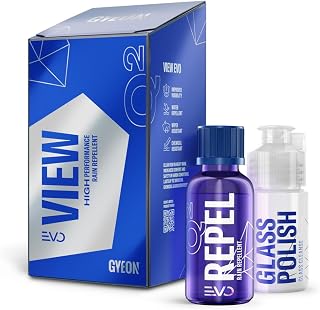
Gyeon
Q² View EVO
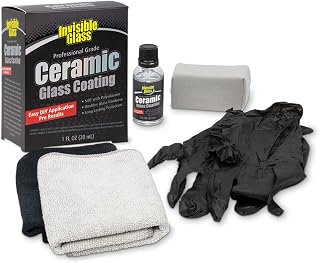
Stoner
Pro Ceramic Glass Coating Kit (95151)
As an Amazon Associate I earn from qualifying purchases. Full disclosure

Community
0 postsShare how you use this product
Drop a quick comment or post a full review with photos and a star rating.
Sign in to postNew here? Create a free account.