CarCareTruth Score
Mediocre, but it's tough on the environment.
Opens Amazon in a new tab. No account needed to look.
Saved to your guest loadout. Sign up to also save to your Cabinet (consumables) or Kit (tools you own).
As an Amazon Associate I earn from qualifying purchases. Full disclosure
Prices may varyHealth score is for adult use as intended, per the manufacturer's SDS. It does not model child ingestion, accidental spill cleanup, or off-label use. See the safety panel below for full hazard classification, and /disclaimer for the full editorial scope.
GHS hazard codes are quoted from the manufacturer’s Safety Data Sheet. PPE tiers below translate those codes and the listed ingredient chemistry; they are not CarCareTruth recommendations.
Show details for all categories ▾Hide details ▴
Only when: misting overhead · splash risk
Translated from the manufacturer’s Safety Data Sheet, Section 2
SDS §2 H319 (eye irritation Cat 2A) present. WARNING signal word (not DANGER). Per glass-coating rubric v2.0 PPE tier guidance: H319 + WARNING = situational, not required or recommended. Required tier applies only when H318 (serious eye damage Cat 1) is present. Triggers: overhead application or applicator drip risk.
U.S. regulatory standard
29 CFR 1910.133(a)(1)
“The employer shall ensure that each affected employee uses appropriate eye or face protection when exposed to eye or face hazards from… liquid chemicals…”
ANSI Z87.1 (incorporated via §1910.6)
OSHA standards apply to workplaces. Cited here as the U.S. reference threshold for the underlying hazard class.
CarCareTruth publishes the cited sources verbatim and does not advise what action a user should take. Consult the full SDS before use.
Translated from the manufacturer’s Safety Data Sheet, Section 2
SDS §2 H315 (skin irritation Cat 2) confirmed. SDS §8 specifies protective gloves. Per glass-coating rubric v2.0: H315 + WARNING signal word → recommended tier. Required tier applies only when H314 (skin corrosion) is present; H315 is irritation Cat 2, not corrosion.
U.S. regulatory standard
29 CFR 1910.138(a)
“appropriate hand protection when employees' hands are exposed to hazards such as those from… chemicals which produce an adverse effect on the skin or eyes…”
OSHA standards apply to workplaces. Cited here as the U.S. reference threshold for the underlying hazard class.
CarCareTruth publishes the cited sources verbatim and does not advise what action a user should take. Consult the full SDS before use.
Only when: in enclosed space · prolonged use
Beyond SDS: translated from the ingredient chemistry
No H334 / H335 / H330 / H331 in SDS §2. H226 (combustible liquid) is a physical-hazard code that contributes 0 to health score per the flammability-not-health principle. Methoxysilane chemistry releases methanol on cure (acutely more toxic than ethanol if accumulated) · outdoors or with garage door open, methanol vapor dissipates readily. In a closed garage during prolonged application a respirator is reasonable. Ethanol carrier vapor is mild at these concentrations.
CarCareTruth publishes the cited sources verbatim and does not advise what action a user should take. Consult the full SDS before use.
Beyond SDS: translated from the ingredient chemistry
H226 (combustible liquid, flash point 23-93°C) + methanol release on cure (confirmed in SDS §7 non-boilerplate: methoxysilane hydrolysis byproduct). Per glass-coating rubric ventilation guidance L-GC-3: H226 + secondary toxic-release chemistry → recommended ventilation. Apply outdoors or with garage door open.
CarCareTruth publishes the cited sources verbatim and does not advise what action a user should take. Consult the full SDS before use.
PPE tiers translate the manufacturer’s SDS and U.S. regulatory standards. Not professional safety advice. How we report safety.
This product ranks #8 of 9 in Glass Coating.Three above it ↓
Last reviewed June 14, 2026
TL;DR FlyBy30 delivers 6-12 months of confirmed beading on a daily driver and sheets water at highway speed · most users report running wipers off above 50 mph in moderate rain. The cure window is 60-90 seconds, which is workable but leaves no room for error on a first application. The SDS identifies a fluorine-based active ingredient that meets the PFAS definition · the Environment score is capped at 3 and the Health score is 4.0.
Wipe the windshield with an IPA prep, apply a few drops to a saturated applicator pad, and work it across the glass in cross-hatched sections · then wait 60-90 seconds and buff with a clean microfiber. A full windshield takes 15-25 minutes. The cured coating bonds to the glass and beads water with a contact angle the brand states at 112 degrees, producing strong highway sheeting. Forum members tracking daily drivers on r/AutoDetailing and Detailing World consistently report 6-12 months of effective beading · close to the label's claim · with documented reports past 12 months on garaged or lightly-driven vehicles. The cure window is more forgiving than the tightest alternatives in the category, but missed buffs still leave streaks. No persistent wiper chatter is documented across community reviews; initial break-in chatter resolves within a few wiper cycles in rain.
Best for buyers who want proven long-term durability and have researched the chemistry tradeoffs · CarPro's SDS discloses the active ingredient by CAS number, which is unusually transparent for the category. Skip it if PFAS chemistry is a concern: Gtechniq G1 (alkoxysilane, 12-18 months) outlasts FlyBy30 on durability without PFAS, and SiO₂ kits (Cerakote, Adam's Graphene Glass) match the 6-12 month duration with milder chemistry. First-time applicators should also consider a more forgiving cure window · the 60-90 second flash means technique errors lock in permanently.
The SDS carries signal word WARNING, driven by H315 (skin irritation) and H319 (eye irritation) · the milder profile reflects an ethanol carrier rather than high-concentration IPA. Apply outdoors or with the garage door open: H226 (combustible liquid) combined with methanol vapor released during cure makes ventilation recommended. The SDS identifies the active as Trimethoxy(1H,1H,2H,2H-heptadecafluorodecyl)silane (CAS 83048-65-1) · a per- and polyfluoroalkyl substance (PFAS) by OECD structural definition. PFAS compounds are persistent in the environment; the EPA and scientific literature classify many as health and environmental concerns at cumulative exposure levels. The quantity applied per vehicle treatment is small (≤ 10 mL). The Environment score of 3/10 reflects the persistence classification. The methoxysilane active also releases methanol on cure, which is acutely more toxic than ethanol at concentration; at small application volumes outdoors this is not a practical concern.
Yes. The SDS Section 3 lists Trimethoxy(1H,1H,2H,2H-heptadecafluorodecyl)silane (CAS 83048-65-1) at 1-5% as the active glass-coating ingredient. The 'heptadecafluorodecyl' chain contains 17 carbon-bonded fluorine atoms in a perfluorinated C8 chain · this meets the OECD PFAS structural definition. The product is one of the more openly-disclosed PFAS-containing glass coatings on the market because the SDS names the CAS number directly rather than hiding the chemistry behind a proprietary blend.
Community data from r/AutoDetailing and Detailing World forums shows 6-12 months on a daily driver · close to the label's claim. Fluorine-based chemistry is genuinely durable and produces tight contact angles for water beading. Reports past 12 months are common on lightly-driven or garaged vehicles. The trade-off for that durability is the PFAS chemistry.
The fluoroalkylsilane active is a trimethoxysilane (note 'trimethoxy' in the chemical name) · when it hydrolyzes on the windshield to bond with the glass, it releases methanol as a byproduct. Methanol is acutely more toxic than ethanol if inhaled at concentration. For the small volumes used in a single windshield application, the risk is minimal in a ventilated space; in a closed garage during prolonged use it warrants ventilation.
That's an editorial judgment call, not a chemistry one. The SDS identifies the PFAS active, and the EPA classifies PFAS compounds as persistent environmental concerns. The performance is real · fluorine-based chemistry is durable and produces excellent water repellency. Non-PFAS alternatives with comparable durability include Gtechniq G1 (alkoxysilane, 12+ months) and SiO₂ kits like Cerakote or Adam's Graphene Glass (6-12 months).
Generally no. Once a windshield has any chemically-bonded coating on it, additional silane-chemistry products cannot anchor properly. If your windshield has a degraded existing coating, polish the glass with a glass-specific compound before applying FlyBy30. Applying over wax residue, silicone topical repellent, or glass cleaner residue causes premature failure within 2-3 months.
Marketing copy from CarPro, via Amazon. Not editorial.
Weekly pick
One product, one safety verdict, every week. No spam.









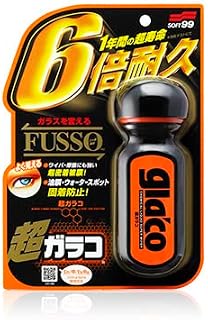
Soft99
Ultra Glaco
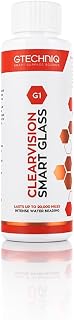
Gtechniq
G1 ClearVision Smart Glass
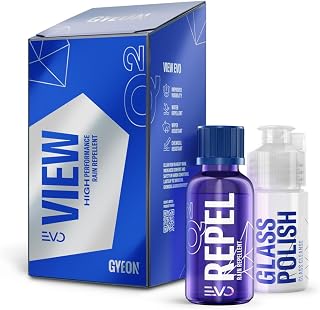
Gyeon
Q² View EVO
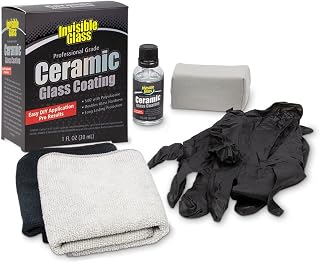
Stoner
Pro Ceramic Glass Coating Kit (95151)
As an Amazon Associate I earn from qualifying purchases. Full disclosure

Community
0 postsShare how you use this product
Drop a quick comment or post a full review with photos and a star rating.
Sign in to postNew here? Create a free account.