
Best Transmission Fluid of 2026: 21 Fluids Scored, Ranked by Spec
We score every transmission fluid we can verify, for performance and ingredient safety. These are the 10 best of 21 in our catalog.
CarCareTruth scored 21 transmission fluids for 2026. Read this one differently from a normal ranking: transmission fluid is spec-locked, so the best fluid overall is meaningless and the right fluid for your car is the only question. Start with the spec named in your owner's manual, then buy the leader inside it. Valvoline DEXRON VI ranks first outright and is the pick for most 2006-and-newer GM automatics, though GM publishes a list of exceptions worth checking against your model and year. Honda and Acura automatics take Honda's own ATF DW-1. Chrysler, Dodge, Jeep and Ram split in two: 4, 5 and 6-speed automatics take ATF+4, while the ZF-sourced 8 and 9-speeds take a completely different fluid, and mixing those two up is the most expensive mistake on this page. Most 2005-and-newer Toyota and Lexus automatics take Toyota ATF WS, while older ones take Type T-IV, and the two are not interchangeable. Ford Mercon LV owners want the Motorcraft factory bottle, and should check whether their car actually takes Mercon ULV first. CVTs never take ATF, and most manual gearboxes do not either, though a few genuinely do specify one, so read your manual. Both are covered below. One theme runs through all of it: a license is a real thing an automaker issued, and most bottles on the shelf carry a compatibility claim instead.
Affiliate disclosure: CarCareTruth is reader-supported. As an Amazon Associate I earn from qualifying purchases. We may also earn commissions from other retailers linked on this page, at no extra cost to you. Affiliate revenue never influences our scores or rankings. Full disclosure
Best of Transmission Fluid
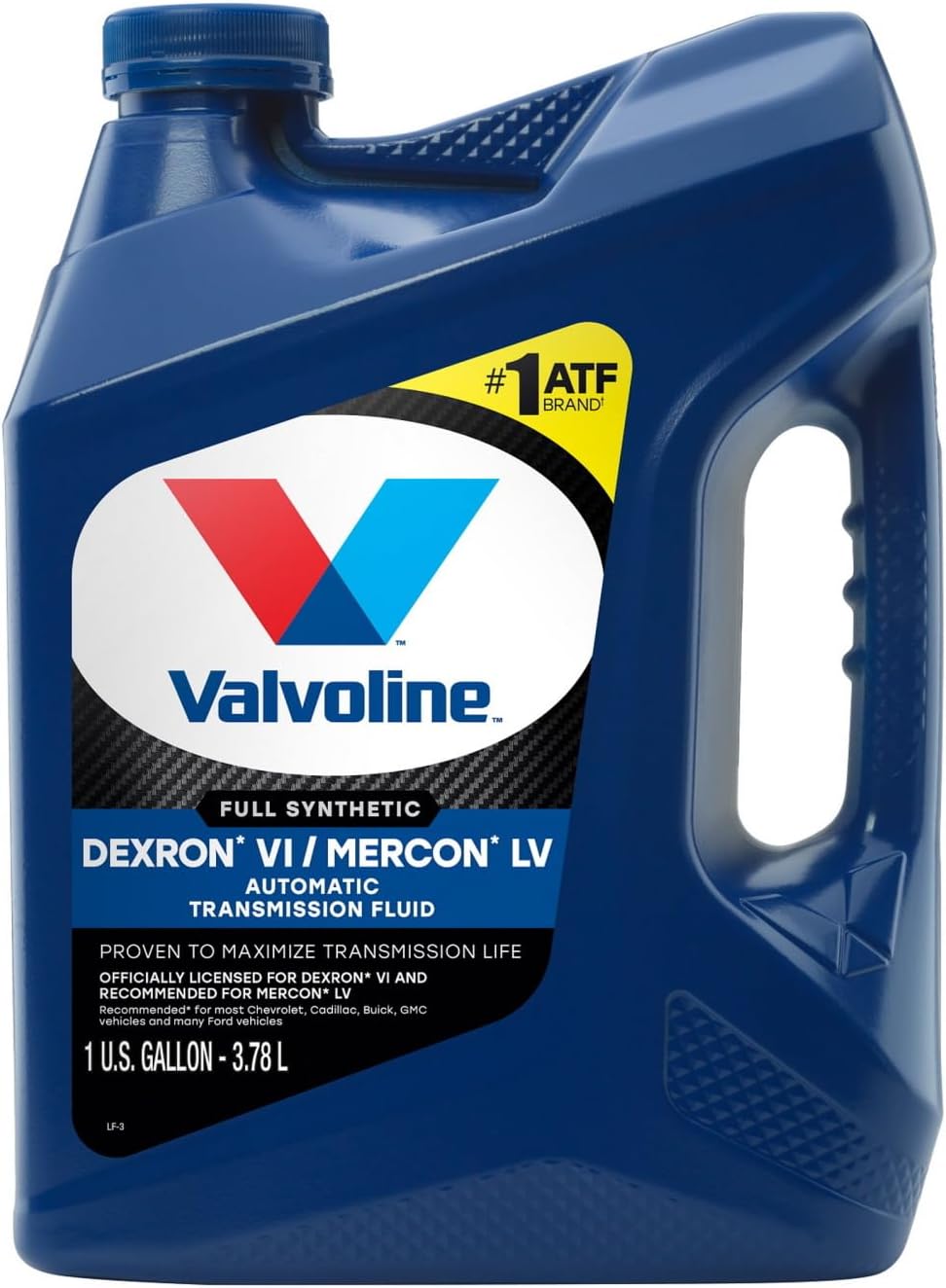
Valvoline DEXRON VI / MERCON LV Full Synthetic ATF
The Full Ranking
| Rank | Product | CCTCCT Score | HealthHealth & Safety | Price tier | Buy |
|---|---|---|---|---|---|
1 | DEXRON VI / MERCON LV Full Synthetic ATFValvolineBest Overall, and Best for GM Dexron VI Prop 65 | 7.3/10 | 8.5/10 | Check Price | |
2 | Genuine ATF DW-1 Automatic Transmission Fluid (4-Pack)HondaBest for Honda and Acura Automatics Prop 65 | 7.3/10 | 8.5/10 | Check Price | |
3 | ATF+4 Full Synthetic Automatic Transmission FluidValvolineBest for Chrysler, Dodge, Jeep and Ram ATF+4 | 6.8/10 | 8.5/10 | Check Price | |
4 | ATF Dexron VIRavenol Prop 65 | 6.8/10 | 8.5/10 | Check Price | |
5 | Genuine ATF WS Automatic Transmission Fluid (6-Pack)ToyotaBest for Toyota, Lexus and Scion Prop 65 | 6.7/10 | 8.5/10 | Check Price | |
6 | DEXRON-VI Automatic Transmission FluidACDelcoBest GM Factory Bottle Prop 65 | 6.5/10 | 8.5/10 | Check Price | |
7 | 8 & 9 Speed Automatic Transmission FluidMoparBest for Chrysler, Jeep and Ram 8 and 9-Speeds | 6.5/10 | 8.5/10 | Check Price | |
8 | Genuine Manual Transmission Fluid (08798-9031, 1 Quart)HondaBest Manual Transmission Fluid | 6.3/10 | 6.7/10 | Check Price | |
9 | Genuine HCF-2 CVT Transmission FluidHondaBest for Honda and Acura CVTs Prop 65 | 6.3/10 | 8.5/10 | Check Price | |
10 | XT105Q3LV Mercon LV Automatic Transmission FluidMotorcraftBest Ford Factory Bottle Prop 65 | 6.2/10 | 8.5/10 | Check Price | |
Editorial pick, unranked | MaxLife Multi-Vehicle ATF Full SyntheticValvolineBest Multi-Vehicle | 6.1/10 | 8.5/10 | Check Price |
The rest of the job
Transmission fluid is the one line people plan for. These are the things the job actually needs, and unlike the fluid itself none of them are spec-locked.
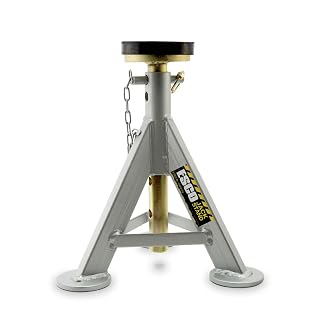
Jack stands
ESCO 10498 3-Ton Performance Jack Stand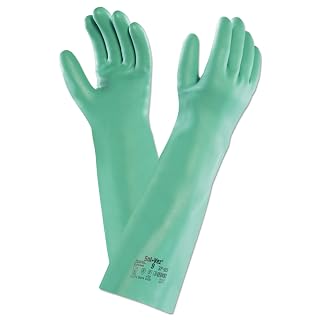
Nitrile gloves
Ansell AlphaTec Solvex 37-185 Chemical-Resistant Gloves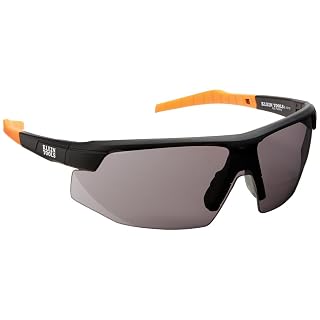
Eye protection
Klein Tools 60160 Pro Safety Glasses (Gray Lens)
As an Amazon Associate I earn from qualifying purchases. Pricing and stock are set by the retailer and can change at any time.
Why each pick earned its spot
Best Overall, and Best for GM Dexron VI: Valvoline DEXRON VI / MERCON LV Full Synthetic ATF
The highest-scoring fluid on this page, and the pick for any 2006-or-newer GM automatic. It is an officially GM-licensed DEXRON-VI fluid, which is the thing to look for, because DEXRON-VI is a licensed program and a bottle either holds one or does not. It also carries a documented anti-shudder additive package, and community drain-and-fill reports on the GM 6L50, 6L80 and 6T40 describe torque-converter shudder going away after a change. Dexron VI is also the current answer for the older 4L60E, the four-speed in a great many 1990s-to-2013 GM trucks and SUVs, since it supersedes the Dexron III those units were built around. Two things to read carefully before you buy it on the Ford half of the label. Valvoline words its Ford coverage as recommended for Mercon LV applications, which is Valvoline's own claim rather than a Ford-issued license. If you drive a Ford and you want a bottle with an actual Ford credential behind it, the Motorcraft pick further down is the honest answer. This one also carries a California Proposition 65 warning.
Best for Honda and Acura Automatics: Honda Genuine ATF DW-1 Automatic Transmission Fluid (4-Pack)
Honda automatics are unusually particular about fluid, and this is the fluid rather than a fluid that claims to match it. ATF DW-1 is Honda's own specification and this bottle is the specification itself, made by Idemitsu under Honda contract. That distinction matters more here than in most categories, because the community evidence behind it is the strongest of any fluid on this page: shudder elimination is documented across multiple model years and into high mileage, which is why it scores 9 on both anti-shudder effectiveness and friction consistency, the top marks anywhere in this catalog. It is not interchangeable with Dexron or with a universal ATF, and it is not the fluid for a Honda CVT, which takes HCF-2 further down this page. The base stock is conventional petroleum rather than synthetic, which is the one place it gives ground to the fluids above it. Carries a California Proposition 65 warning.
Best for Chrysler, Dodge, Jeep and Ram ATF+4: Valvoline ATF+4 Full Synthetic Automatic Transmission Fluid
This scores the highest spec-compliance mark of any fluid in the catalog, an 8, and the reason is worth understanding. ATF+4 is a registered Chrysler trademark, so every product legally sold under that name has been licensed against the MS-9602 specification. The name is the approval, which is a much firmer footing than the meets-spec wording most universal bottles use. It covers the 545RFE, 65RFE and 68RFE and other ATF+4 applications, all of them transmission families where torque-converter shudder is the failure the specification exists to manage. It is deliberately single-spec, and Valvoline does not pretend otherwise: it is not for Dexron VI, Mercon LV, Toyota WS, ZF LifeGuard or Honda DW-1. One safety note that is real rather than boilerplate. The safety data sheet classifies this as a skin sensitizer, so gloves during the drain and pour are a genuine call here, not a generic precaution.
Best for Toyota, Lexus and Scion: Toyota Genuine ATF WS Automatic Transmission Fluid (6-Pack)
Toyota's World Standard fluid, formulated by ExxonMobil to Toyota's own specification, and Toyota names it as the sole approved fluid for most 2005-and-newer U-series automatics. Community threads on Toyota Nation and the oil-analysis forums report shudder resolution in most U-series applications after a fluid-only change, which is why it scores above the baseline on shudder. Two honest caveats. Toyota markets this as a sealed lifetime fill, and that claim has no independent oil-analysis backing; community consensus lands closer to a 30,000 to 60,000 mile practical interval, so treat lifetime as a warranty-period statement rather than a mechanical one. And although some label variants describe a synthetic base, the ingredient numbers on the safety data sheet are conventional paraffinic stocks. There is a cheaper WS-compatible alternative in the catalog from Idemitsu, but it is a compatibility claim rather than a Toyota-issued approval, and it scores well below this. Carries a California Proposition 65 warning.
Best GM Factory Bottle: ACDelco DEXRON-VI Automatic Transmission Fluid
If you would rather buy the fluid GM itself sells than a licensed alternative, this is it, carrying DEXRON-VI license number J-60301. It covers GM 6-speed and newer automatics from 2006 and supersedes Dexron-III and Dexron-II in most applications, which is the usual reason someone lands here with an older GM in the driveway. Owner and forum reports confirm shudder resolution on the 6L80 and 6L45 after a fluid-only change. It scores just below the Valvoline pick above rather than beside it, for a reason worth knowing: GM markets this as a full synthetic, but the safety data sheet describes a Group III hydrotreated base stock, which is a highly refined petroleum oil rather than a built-from-scratch synthetic. That is an industry-wide labeling convention rather than anything specific to ACDelco. No independent oil analysis was found for this part number. Carries a California Proposition 65 warning.
Best for Chrysler, Jeep and Ram 8 and 9-Speeds: Mopar 8 & 9 Speed Automatic Transmission Fluid
Read this one before you buy anything for a modern Chrysler product, because this is where the expensive mistake happens. If your Chrysler, Dodge, Jeep or Ram has the ZF-sourced 8-speed or 9-speed automatic, it does not take ATF+4. ATF+4 is the older specification for the 4, 5 and 6-speed automatics, and the two are different fluids for different transmission families. This is the factory fill for the 8HP70, 8HP75, 8HP95, 9HP48 and 948TE, built by Shell to ZF's own material standard ZF005946, better known as the LifeGuardFluid 9 specification. On the strength of that credential we will be precise: it is corroborated across four independent community and industry sources, and we did not confirm it against ZF's own published roster, so treat it as well-supported rather than documented. Two genuine bright spots: the safety data sheet carries no hazard classification at all, which is among the cleanest health profiles in this category, and Proposition 65 resolves clean on an explicit negative rather than an absence of information.
Best Manual Transmission Fluid: Honda Genuine Manual Transmission Fluid (08798-9031, 1 Quart)
Manual gearboxes are the part of this page most often got wrong, because manual transmission fluid is not automatic transmission fluid and the two are not substitutes. A manual has no torque converter and no clutch packs, so none of the friction modifiers that define an ATF are doing anything useful in there. What a manual fluid is formulated around is synchronizer engagement and the specific metals in the gearset, which is why Honda makes its own. This is that fluid, part 08798-9031, built by Idemitsu for Honda and Acura manual gearboxes and formulated for Honda's synchro and gear metallurgy. It is the only dedicated manual fluid scored in this catalog so far, which is a coverage gap on our side rather than a verdict on the alternatives. Community evidence specific to this exact part number was thin, so the shift-quality and durability marks sit at the baseline rather than above it. If you drive something other than a Honda, check your manual for a GL rating or a factory part number before assuming any bottle fits.
Best for Honda and Acura CVTs: Honda Genuine HCF-2 CVT Transmission Fluid
A CVT is not an automatic with fewer gears, and it does not take ATF. If you own a second-generation Honda or Acura CVT, this is the factory fill, part 08200-HCF2, made by Idemitsu under Honda contract. The evidence behind it is unusually specific for a fluid: Honda service bulletin 17-050, covering the 2017 and 2018 CR-V, prescribes a complete HCF-2 drain and fill for a 20 to 40 mph judder caused by depleted friction modifiers letting the lockup clutch micro-slip, with a transmission control module calibration update for full resolution. Owner forums confirm the fluid-only change resolves the judder for most people at the recommended interval. Buy it for the Honda CVT and nothing else: it does not cover Dexron, Mercon, ZF or Toyota WS, and it is not the Honda automatic fluid either, which is DW-1 higher up this page. It carries a California Proposition 65 warning for trace naphthalene and a Category 2 reproductive-toxicity classification.
Best Multi-Vehicle: Valvoline MaxLife Multi-Vehicle ATF Full Synthetic
The multi-vehicle fluid with the strongest real-world track record here, and the one to reach for if you keep one jug on the shelf for a mixed driveway. Community oil-analysis threads confirm shudder resolution in the GM 6L80 and the Ford 6F55, which is more than most universal fluids can show, and the base stock is a genuine full synthetic confirmed in the safety data sheet rather than claimed on the front label. Now the honest part, because it is the whole reason this sits ninth rather than first. The bottle lists an enormous spread of specifications, Dexron VI, Mercon LV, Toyota WS, Honda and Nissan CVT, BMW, Mercedes, ZF LifeGuard 6, 8 and 9, Hyundai and Kia, and not one of them carries a license number or a verified entry on that automaker's approved list. Every one is a compatibility claim, which is why it scores 3 on spec compliance while a single licensed fluid scores 6. Two more things to weigh: shudder tends to return at roughly 40,000 to 50,000 miles in the reports we found, and Valvoline's 100,000-mile interval claim runs far ahead of the 40,000 to 60,000 miles the community actually practices. If your car names a specification and a licensed fluid exists for it, buy that instead.
Best Ford Factory Bottle: Motorcraft XT105Q3LV Mercon LV Automatic Transmission Fluid
The genuine Ford bottle, license MLV070701, confirmed on Ford's own technical data sheet. This is the reference formulation Ford built the Mercon LV specification around, which is a meaningful thing to be: seal compatibility scores an 8 here, among the strongest on this page, because the transmission's seals were developed against this exact fluid. Ford and Lincoln owners who want the factory answer should stop here, with one caveat worth checking first: Ford's newer 10-speed automatics, the 10R80 family, call for Mercon ULV rather than Mercon LV, and those are not the same fluid. Read your manual before assuming LV. It scores lower overall than its position as the OEM reference might suggest, and the reason is one number worth taking seriously. Ford's service interval for this fluid runs far beyond what the oil-analysis community actually practices, roughly 25,000 to 30,000 miles, and at least one analysis returned a critical result around 80,000 miles. Shift-quality reports are mixed in both directions with no dominant pattern, and shudder evidence on the 6R80 cuts both ways, including one clean 140,000-mile case and one early failure. Carries a Proposition 65 warning, resolved cautiously because Ford discloses no ingredients at all.
Full ranked catalog — including picks 11+, out-of-stock options, and the ones we couldn’t crown.
How we rank
Every transmission fluidin our catalog runs through the same scoring rubric: measured effectiveness, ingredient-safety data translated from each product’s SDS, and environmental impact. We don’t take placement fees, and affiliate links never move a product up the list.
Transmission fluid is the category where the usual buying-guide format breaks down. With car wax or tire shine, a ranking is honest: the products do the same job, and one does it better. Automatic transmission fluid does not work that way. The fluid is part of the transmission's design, tuned to the friction behavior its torque converter and clutch packs were calibrated around, and the wrong one can destroy an expensive unit that the right one would have protected.
So this page is organized the way the problem actually presents itself. Find the specification your car takes, then buy the strongest fluid inside it.
Start with the specification, not the brand
Your owner's manual names a specification, and that name is the whole answer. The common ones in the United States are GM's DEXRON-VI, Ford's MERCON LV, Chrysler's ATF+4, Toyota's WS, Honda's DW-1, and the ZF LifeGuard family used by a long list of European makes and by Chrysler's 8 and 9-speed automatics.
Two traps are worth naming before you shop.
The first is assuming the badge tells you the specification. It does not, on Chrysler products in particular: a Jeep with a 6-speed takes ATF+4, and a Jeep with the ZF-sourced 9-speed takes something else entirely. Find the transmission, not the brand.
The second is color. Almost all ATF is dyed red, which exists so you can tell a transmission leak from an oil leak on the driveway, not to indicate what is in the bottle. Two red fluids can be completely incompatible.
Two exceptions to the shorthand above, because specifications are never quite as tidy as the headline version. On the GM side, Dexron VI covers the overwhelming majority of 2006-and-newer automatics, but GM published a list of exceptions that do not take it, including the Aveo, Epica, Equinox, Optra, Torrent, Vibe, Wave, Astra and the Saturn CVTs. On the Ford side, Mercon LV is not the end of the story: the newer 10-speed automatics, the 10R80 family, increasingly specify Mercon ULV, which is a thinner and separate fluid. In both cases the manual settles it.
CVT fluid, by brand
A continuously variable transmission drives a steel belt or chain across variable pulleys instead of shifting through gears, so its fluid is formulated for metal-to-metal traction rather than for clutch packs and a torque converter. Putting ATF in a CVT risks belt slip, and it is not a cheap mistake to undo.
The specifications split by manufacturer. Honda and Acura second-generation CVTs take HCF-2, which is a pick on this page. Nissan CVTs take NS-2 or NS-3, Toyota uses TC and FE, Subaru has its own Lineartronic fluid, and Mitsubishi, Hyundai and Kia each publish their own. We score a Valvoline full synthetic CVT fluid that lists compatibility across most of that range, though as a compatibility claim rather than a license, which is the same distinction that governs everything else here. For a Nissan, Toyota or Subaru CVT specifically, the OEM fluid is the lower-risk purchase until we have scored a licensed alternative.
What a license proves, and what it does not
The single most useful thing to learn in this category is how to read the back of the bottle, because two fluids at the same price can be making entirely different promises.
A license means the automaker tested that specific formulation and issued an approval, usually with a number attached. GM's DEXRON-VI program issues J-numbers. Ford's MERCON LV program issued MLV numbers. ATF+4 works differently again: it is a registered Chrysler trademark, so the name itself is the license.
A compatibility claim is the manufacturer's own assessment that its fluid is close enough. On the shelf it reads as recommended for use in, suitable for, or meets the requirements of. Nobody audited it.
Both kinds of bottle are legal, and a compatibility-claim fluid is not automatically a bad product. But the difference is real, and this guide's scoring reflects it deliberately: spec compliance is the heaviest-weighted dimension in the transmission-fluid rubric, so a licensed fluid starts well ahead of an unlicensed one.
It cuts in unexpected directions. Some aftermarket bottles carry better-documented credentials than the factory ones: Castrol Transmax holds both a GM and a Ford license, verified by photographing the back label. And some fluids marketed heavily on their specification coverage hold no license at all. One fluid in our catalog states plainly in its own manufacturer datasheet that it is "not licensed, approved, certified, or endorsed by BMW or ZF," which is an unusually candid disclosure and exactly the sort of thing worth knowing before you pour it into a transmission.
Lifetime fill is a warranty statement
Several manufacturers describe their transmission fluid as a lifetime or sealed fill. Toyota does it with ATF WS; Ford's Mercon LV interval is open-ended.
We could not find independent oil-analysis support for either claim, and the analysis community consistently lands much shorter: roughly 30,000 to 60,000 miles for the Toyota fluid, and around 25,000 to 30,000 miles for the Ford, where at least one published analysis returned a critical result near 80,000 miles.
None of that means the fluid is bad. It means "lifetime" is doing a specific job in a sentence written by a manufacturer, and it tends to describe the warranty period rather than the mechanical life of the transmission. Your manual is the baseline; towing, sustained heat and stop-and-go traffic are all reasons to shorten it.
What we could not cover well
Two honest gaps, because a page that only lists what it has is not much use for deciding.
European fluids are thin here. We score a German-made Dexron VI fluid carrying a Mercedes-Benz approval, a BMW-oriented ZF fluid, and a multi-brand ZF fluid, but neither of the two ZF-oriented options holds an actual ZF license, and both say so in their own documentation. If you drive a BMW, Audi, Land Rover or Mercedes with a ZF automatic, the genuinely licensed answer is ZF's own LifeGuard fluid or the OEM-rebadged equivalent, which we do not currently score.
Manual gearboxes are barely covered. One dedicated manual fluid is scored so far. That is a gap on our side rather than a judgment about the alternatives, and if you drive something other than a Honda you should be reading your manual for a GL rating or a factory part number rather than generalizing from this page.
How we scored these
Every fluid here was scored against the same rubric, with the arithmetic done by script rather than by hand, across quality, health and environmental impact. Quality is weighted most heavily toward spec compliance, for the reason this whole page exists: in this category, being the correct fluid matters more than any other property.
Health scores come from the manufacturer's safety data sheet, and the fluids genuinely differ. One carries no hazard classification whatsoever; another is a skin sensitizer; another carries a reproductive-toxicity classification. Several carry California Proposition 65 warnings, and in a few cases we resolved a warning from ingredients disclosed in the safety data sheet that the retail listing does not post.
We have never physically tested a transmission fluid, and we do not claim to have. What is on this page comes from manufacturer documentation, safety data sheets, published license records, and the used-oil-analysis and owner communities, with the sourcing noted on each product's own page.
Related guides
Frequently Asked Questions
What is the best transmission fluid?
There is no best transmission fluid, and any page that names one without asking what you drive is not being straight with you. Automatic transmission fluid is spec-locked: Dexron VI, Mercon LV, ATF+4, Toyota WS, Honda DW-1 and the ZF LifeGuard fluids are different formulations with different friction characteristics, and they are not interchangeable. The right question is which specification your owner's manual names, and then which bottle is strongest inside that specification. That is how this guide is organized. If you want the single highest-scoring fluid here, it is Valvoline DEXRON VI, but that is only the right answer if you drive a 2006-or-newer GM vehicle.
Can I use ATF+4 in a Chrysler 8-speed or 9-speed transmission?
No. This is the most consequential mix-up in this category. ATF+4, the Chrysler MS-9602 specification, is for the 4, 5 and 6-speed automatics such as the 545RFE, 65RFE and 68RFE. The 8-speed and 9-speed automatics in modern Chrysler, Dodge, Jeep and Ram vehicles are ZF-sourced units, the 8HP and 9HP families, and they take a completely different fluid built to ZF's own material standard. Both are sold under the Mopar name, both are correct for some Chrysler products, and neither is correct for the other's transmission. Check which transmission your vehicle actually has before you buy, not just the badge on the tailgate.
What does a licensed transmission fluid actually prove?
That an automaker tested that specific formulation and issued an approval for it, rather than the bottler deciding on its own that the fluid is close enough. The wording on the label is where you can see the difference. Licensed, approved by, or a printed license number is a real credential. Recommended for use in, suitable for, or meets the requirements of is a claim the manufacturer made about itself with nobody auditing it. Both kinds of bottle sit on the same shelf at similar prices. In this guide the licensed fluids consistently score higher, and that is a deliberate consequence of how the rubric weighs spec compliance rather than a coincidence.
Is a universal or multi-vehicle transmission fluid safe to use?
It depends entirely on whether the coverage is licensed or claimed, and most universal fluids are claimed. Valvoline MaxLife, the multi-vehicle pick in this guide, lists well over a dozen specifications and prints no license number for any of them, which is why it scores 3 on spec compliance despite a good real-world record. The counter-example in our catalog is Castrol Transmax, which holds genuine GM and Ford licenses that we verified on the physical bottle, so a universal bottle can be properly credentialed; most just are not. The practical risk is not that the fluid is bad, it is that a friction characteristic tuned as a compromise across many transmissions may not match what your torque converter was calibrated around. If your manual names a specification and a licensed fluid exists for it, that is the lower-risk purchase.
Do CVTs use transmission fluid?
They use CVT fluid, which is not automatic transmission fluid and is not interchangeable with it. A continuously variable transmission drives a steel belt or chain across variable pulleys, so its fluid is formulated for metal-to-metal traction rather than for the clutch packs and torque converter in a conventional automatic. Putting ATF in a CVT risks belt slip. Honda and Acura second-generation CVTs take Honda HCF-2, the pick in this guide. Nissan CVTs take NS-2 or NS-3, Toyota uses TC and FE, and Subaru uses its own Lineartronic fluid. We also score a Valvoline full synthetic CVT fluid that lists compatibility with most of those specifications, though as a compatibility claim rather than a license.
Is manual transmission fluid the same as automatic transmission fluid?
No, and the difference is functional rather than marketing. An automatic transmission fluid is built around friction: it has to let a torque converter lock up smoothly and let clutch packs grab in a controlled way, which is what the friction modifiers in it are for. A manual gearbox has neither. What it has is synchronizer rings that need to engage cleanly against a specific gear metallurgy, so manual fluids are formulated around that instead. Some manuals do specify an ATF, which is why the answer is always to read your manual rather than to generalize. Honda's own manual transmission fluid is the pick in this guide for Honda and Acura gearboxes.
How often should transmission fluid be changed?
More often than several manufacturers imply, and the phrase to be skeptical of is lifetime fill. Toyota describes ATF WS as a sealed lifetime fluid, and Ford's Mercon LV interval is open-ended, but neither claim has independent oil-analysis support and the analysis community lands considerably shorter in both cases: roughly 30,000 to 60,000 miles for the Toyota fluid, and 25,000 to 30,000 miles for the Ford. At least one Mercon LV analysis returned a critical result around 80,000 miles. Lifetime, in practice, tends to mean the life of the warranty rather than the life of the transmission. Follow your owner's manual as the baseline, and treat towing, heat and stop-and-go traffic as reasons to shorten it.
Is transmission fluid harmful to handle?
It varies more than people expect, and the safety data sheets disagree with each other. The Mopar 8 and 9-speed fluid carries no hazard classification at all. Valvoline ATF+4, by contrast, is classified as a skin sensitizer, which means repeated contact can provoke an allergic skin reaction, so gloves during a drain and fill are a real call rather than generic caution. Castrol Transmax carries a reproductive-toxicity classification. Several fluids here carry California Proposition 65 warnings, in some cases for trace ingredients disclosed in the safety data sheet that the retail listing does not mention. Nitrile gloves and eye protection are the sensible default across the category, and that follows from the chemistry rather than from any manufacturer telling you to.
Does the color of transmission fluid tell you anything?
Less than the internet suggests about which fluid to buy, and something useful about the fluid already in your car. Most automatic transmission fluid is dyed red when new, largely so a transmission leak can be told apart from an engine oil leak on the driveway. The dye is not a specification, and two red fluids can be completely incompatible, so never buy on color. What color does tell you is condition: fluid that has gone dark brown or smells burnt has been overheated, and that is a reason to investigate rather than simply to top up. Some CVT and manual fluids are not red at all.
#1 · DEXRON VI / MERCON LV Full Synthetic ATF
7.3/10 CCT