CarCareTruth Score
Decent, but it's tough on the environment.
Opens Amazon in a new tab. No account needed to look.
Saved to your guest loadout. Sign up to also save to your Cabinet (consumables) or Kit (tools you own).
As an Amazon Associate I earn from qualifying purchases. Full disclosure
Prices may varyHealth score is for adult use as intended, per the manufacturer's SDS. It does not model child ingestion, accidental spill cleanup, or off-label use. See the safety panel below for full hazard classification, and /disclaimer for the full editorial scope.
GHS hazard codes are quoted from the manufacturer’s Safety Data Sheet. PPE tiers below translate those codes and the listed ingredient chemistry; they are not CarCareTruth recommendations.
Show details for all categories ▾Hide details ▴
Translated from the manufacturer’s Safety Data Sheet, Section 8
SDS §2.1 does not classify serious eye damage/eye irritation at the mixture level, but §8 recommends safety glasses with side shields as minimum protection, and §11.1 reports the fluid may cause slight eye irritation on contact. Wear eye protection during drain and pour.
CarCareTruth publishes the cited sources verbatim and does not advise what action a user should take. Consult the full SDS before use.
Only when: splash risk
Translated from the manufacturer’s Safety Data Sheet, Section 8
No H315/H317 at mixture level (SDS §2.1: Skin corrosion/irritation and Skin sensitization both 'Not classified'). SDS §8 recommends Neoprene/Nitrile gloves as general handling guidance and §2.3 notes 'may be harmful in contact with skin' as an other-hazards statement; petroleum base-stock contact is possible during pan removal and pour.
U.S. regulatory standard
29 CFR 1910.1000; 1910.1200
“Each employer shall assure that no employee is exposed [in excess of the PEL]…”
OSHA standards apply to workplaces. Cited here as the U.S. reference threshold for the underlying hazard class.
UN GHS hazard statement
H361“Suspected of damaging fertility or the unborn child”
UN GHS Rev. 9 (2021)
CarCareTruth publishes the cited sources verbatim and does not advise what action a user should take. Consult the full SDS before use.
Translated from the manufacturer’s Safety Data Sheet, Section 8
SDS §2.1 does not classify inhalation toxicity or respiratory sensitization at the mixture level, but §11.1 reports the fluid may cause irritation of the respiratory tract, and §8 calls for NIOSH/MSHA-approved respiratory protection if exposure limits are exceeded or irritation occurs. Work in a well-ventilated area and avoid breathing vapors or mist during drain and fill.
CarCareTruth publishes the cited sources verbatim and does not advise what action a user should take. Consult the full SDS before use.
No PPE specified in published sources for ventilation. Absence does not imply “not needed” — consult the full Safety Data Sheet.
PPE tiers translate the manufacturer’s SDS and U.S. regulatory standards. Not professional safety advice. How we report safety.
Scope of these PPE tiers. The tiers on this page translate the product's Safety Data Sheet where one is published, plus its ingredient chemistry, into a comparable rating. They describe a formulation, not a situation: a tier is not a safety determination for any specific user, task, quantity, or environment. The manufacturer's label and use instructions govern how the product is handled. Where the product is used at work, the employer's PPE program and hazard assessment under 29 CFR 1910.132 decide what protection is selected, not this page.
No warranties. CarCareTruth makes no warranties, express or implied, and expressly disclaims the implied warranties of merchantability and fitness for a particular purpose.
This product ranks #9 of 18 in Transmission Fluid.Three above it ↓
Last reviewed July 13, 2026
TL;DR Honda Genuine HCF-2 (part 08200-HCF2) is the factory-fill fluid for second-generation Honda and Acura CVTs, made by Idemitsu under Honda's OEM contract, and holds the HCF-2 spec itself. A Honda service bulletin and owner forums confirm a drain-and-fill resolves low-speed CVT judder for many owners. Carries a Prop 65 cancer warning (trace naphthalene) and a Category 2 reproductive-toxicity classification.
HCF-2 is the required fluid for second-generation Honda CVTs, found in most 2014-and-newer Civic, CR-V, Accord, Fit, and HR-V automatics, built for Honda's belt-and-pulley hardware and the friction modifiers its control module expects. Honda's service interval is 30,000 miles, shorter than a typical ATF interval. A Honda bulletin for documented low-speed judder prescribes a drain-and-fill, which resolves it for most owners caught early.
The right buyer maintains a second-generation Honda or Acura CVT: most Civic, CR-V, Accord, Fit, and HR-V automatics from roughly 2014 onward. Confirm your owner's manual first: older CVTs used a different fluid, and hybrid eCVTs need a separate fluid, not HCF-2. Non-Honda owners should use their own manual's fluid.
The SDS carries a WARNING signal word from one classification: suspected reproductive toxicant, Category 2 (H361). No eye, skin, respiratory, or aspiration hazard reaches mixture level, though the SDS notes possible slight eye irritation and respiratory tract irritation on contact, and recommends safety glasses, gloves, and a well-ventilated work area. A Prop 65 warning applies, tied to trace naphthalene. Take spent fluid to a used-oil facility, not storm drains.
No. HCF-2 is specifically formulated for second-generation Honda CVT transmissions, the type used in most 2014 and newer Civic, CR-V, Accord, Fit, and HR-V automatics. Earlier first-generation Honda CVTs used a different fluid (HMMF), and Honda's newer hybrid eCVT applications use a separate hybrid-specific fluid. Always confirm the exact fluid your owner's manual specifies before buying.
Honda does not recommend it. HCF-2 contains a friction-modifier package the transmission control module's judder-correction logic is calibrated for. Aftermarket fluids that claim broad CVT compatibility have not been tested or approved by Honda for this application, and using one risks judder, erratic ratio changes, or accelerated wear.
Honda's documented interval is 30,000 miles, more aggressive than the interval for a typical automatic transmission fluid. Owner forums and Honda technical service bulletins both treat CVT fluid condition as unusually sensitive to mileage, so sticking to this interval (rather than a longer universal-ATF interval) is the safer practice.
For vehicles affected by the documented low-speed judder issue in some Honda CVT applications, a full drain-and-fill with genuine HCF-2 has resolved the symptom for many owners, and Honda's own technical service bulletin for the issue prescribes exactly that. In some cases full resolution also required a transmission control module software update, so a fluid change alone is not guaranteed to fully resolve every case.
Yes. The Safety Data Sheet carries an explicit California Proposition 65 cancer warning tied to trace naphthalene, disclosed at under 0.001 percent by weight. The SDS also classifies the fluid as a suspected reproductive toxicant (Category 2) under GHS.
Marketing copy from Honda, via Amazon. Not editorial.
Weekly pick
One product, one safety verdict, every week. No spam.
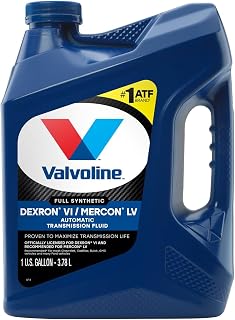
Valvoline
DEXRON VI / MERCON LV Full Synthetic ATF
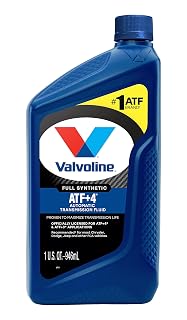
Valvoline
ATF+4 Full Synthetic Automatic Transmission Fluid
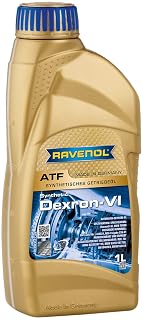
Ravenol
ATF Dexron VI
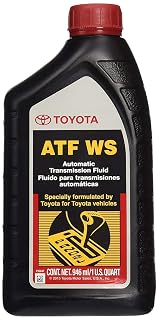
Toyota
Genuine ATF WS Automatic Transmission Fluid (6-Pack)
As an Amazon Associate I earn from qualifying purchases. Full disclosure

Community
0 postsShare how you use this product
Drop a quick comment or post a full review with photos and a star rating.
Sign in to postNew here? Create a free account.