CarCareTruth Score
Decent, but it's tough on the environment.
Opens Amazon in a new tab. No account needed to look.
Saved to your guest loadout. Sign up to also save to your Cabinet (consumables) or Kit (tools you own).
As an Amazon Associate I earn from qualifying purchases. Full disclosure
Prices may varyHealth score is for adult use as intended, per the manufacturer's SDS. It does not model child ingestion, accidental spill cleanup, or off-label use. See the safety panel below for full hazard classification, and /disclaimer for the full editorial scope.
GHS hazard codes are quoted from the manufacturer’s Safety Data Sheet. PPE tiers below translate those codes and the listed ingredient chemistry; they are not CarCareTruth recommendations.
Show details for all categories ▾Hide details ▴
Only when: splash risk
Translated from the manufacturer’s Safety Data Sheet, Section 8
SDS Section 8 states eye protection is 'Not required under normal conditions of use' but calls for splash-proof safety goggles if the fluid could be misted or splashed into the eyes. Section 2 carries no mixture-level eye-hazard classification (H319 appears only at the ingredient level for the 0.77 percent calcium sulfonate detergent, well under the mixture threshold), and Section 11 reports only slight, transient eye irritation at the product level. Goggles are a splash-contingency for drain-and-pour work, not a routine requirement.
CarCareTruth publishes the cited sources verbatim and does not advise what action a user should take. Consult the full SDS before use.
Translated from the manufacturer’s Safety Data Sheet, Section 2
SDS Section 2 mixture-level Skin Sens. 1 (H317) classification is the substantive PPE driver, triggered by three ingredients individually classified as skin sensitizers (calcium sulfonate detergent, sulfurized friction modifier, and boron-amine dispersant). SDS Section 8 calls for resistant gloves, and Section 7 advises that anyone susceptible to skin sensitization, asthma, allergies, or chronic respiratory disease should not work with this mixture. Sensitization risk accrues with repeated unprotected contact, so gloves during drain and pour are not boilerplate.
U.S. regulatory standard
29 CFR 1910.138(a); 1910.132(d)
“appropriate hand protection when employees' hands are exposed to hazards such as those from skin absorption of harmful substances.”
OSHA standards apply to workplaces. Cited here as the U.S. reference threshold for the underlying hazard class.
CarCareTruth publishes the cited sources verbatim and does not advise what action a user should take. Consult the full SDS before use.
No PPE specified in published sources for lungs. Absence does not imply “not needed” — consult the full Safety Data Sheet.
No PPE specified in published sources for ventilation. Absence does not imply “not needed” — consult the full Safety Data Sheet.
PPE tiers translate the manufacturer’s SDS and U.S. regulatory standards. Not professional safety advice. How we report safety.
California Prop 65 warning
This product's Amazon listing carries a California Prop 65 warning. The manufacturer's Safety Data Sheet (§15) does not list a Prop 65 substance for this product — we show the warning for transparency and flag the discrepancy rather than silently picking a side.
Scope of these PPE tiers. The tiers on this page translate the product's Safety Data Sheet where one is published, plus its ingredient chemistry, into a comparable rating. They describe a formulation, not a situation: a tier is not a safety determination for any specific user, task, quantity, or environment. The manufacturer's label and use instructions govern how the product is handled. Where the product is used at work, the employer's PPE program and hazard assessment under 29 CFR 1910.132 decide what protection is selected, not this page.
No warranties. CarCareTruth makes no warranties, express or implied, and expressly disclaims the implied warranties of merchantability and fitness for a particular purpose.
This product ranks #3 of 14 in Transmission Fluid.
Last reviewed May 25, 2026
TL;DR Carries the genuine FCA-licensed ATF+4 (MS-9602) approval · "ATF+4" is a Chrysler/Stellantis registered trademark, so the name itself is the OEM license. Dedicated single-spec fluid for Chrysler, Dodge, Ram, and Jeep automatics · not a multi-vehicle universal. SDS classifies the mixture as a skin sensitizer (H317, WARNING) driven by the spec-required additive package; gloves during drain and pour are not boilerplate guidance.
One real OEM license · FCA's ATF+4 (MS-9602) · covers Chrysler, Dodge, Ram, and Jeep automatics that call for ATF+4. Because "ATF+4" is itself a registered FCA trademark, every aftermarket fluid sold under that name has been licensed against the spec; this is not a "meets spec" claim. Full synthetic Group III base stock per the SDS. No Dexron VI, no Mercon LV, no Toyota WS, no ZF Lifeguard, no Honda DW-1. Because ATF+4 is the OEM-required fluid for these transmissions, the Chrysler owner-manual interval (60,000 mi normal, 30,000 mi severe) is accepted by the community as design intent rather than deflated.
The clearest fit is owners of Chrysler, Dodge, Ram, or Jeep vehicles whose owner's manual specifies ATF+4 · the license is real and the product is positioned for exactly that application. Skip if your vehicle requires Dexron VI, Mercon LV, Toyota WS, Honda DW-1, ZF LifeguardFluid, or any other non-Chrysler spec · using ATF+4 in a transmission designed for a different friction package can cause shift quality issues and accelerated wear.
SDS §2 signal word is WARNING. H317 ("May cause an allergic skin reaction") at mixture level, driven by three skin-sensitizing additives in the spec-required ATF+4 package totaling about 1.93 percent. Sensitization risk accrues with repeated unprotected contact, so gloves during drain and pour are a real call. SDS §15: Prop 65 not required. Spent ATF goes to a used-oil collection facility · the SDS notes per-ingredient acute aquatic toxicity in the sulfurized friction modifier, so do not let it reach storm drains or soil.
It is genuinely licensed. ATF+4 is a Chrysler/Stellantis registered trademark for the MS-9602 specification; every aftermarket product sold under the ATF+4 name has, by definition, been licensed by FCA US LLC against that spec. Valvoline ATF+4 is one of the named licensed aftermarket suppliers alongside Mopar, Castrol Transmax ATF+4, Pennzoil, and Ravenol. The license number is printed on the bottle back label.
No. ATF+4 (MS-9602) is a Chrysler-specific friction-modifier specification. Toyota transmissions require Toyota WS, Aisin, or another Toyota-listed fluid; Honda transmissions require Honda DW-1 or model-specific Honda CVT fluid. Using ATF+4 in a transmission designed for a different spec can cause shift quality issues, clutch slippage, and accelerated wear. Match the fluid to the owner-manual spec.
The two formulas are not the same. MaxLife is classified by Valvoline as not hazardous at the mixture level · no signal word, no H-codes. ATF+4 carries a WARNING signal word and Skin Sens. 1 (H317) at mixture level, driven by three skin-sensitizing additives in the spec-required additive package (calcium sulfonate detergent, sulfurized friction modifier, boron-amine dispersant) totaling about 1.93 percent of the formula. The H317 classification reflects a real allergic-reaction risk with repeated unprotected exposure · wearing gloves during drain and pour is not boilerplate guidance.
SDS §15 explicitly states that Proposition 65 warnings are not required for this product based on the results of Valvoline's risk assessment. The product listing's Prop 65 flag for this ASIN is a platform-level false positive · Amazon flags many petroleum-derived products with a generic Prop 65 warning regardless of the SDS conclusion. The same false-positive pattern is documented in our SDS-sourcing notes for BlueDEF and several other Valvoline products.
Follow your Chrysler/Dodge/Ram/Jeep owner-manual interval · typically 60,000 miles for normal duty and 30,000 miles for severe duty (towing, frequent stop-and-go, high heat). Because ATF+4 is the OEM-required fluid for these transmissions, the manufacturer interval is generally accepted by the community as design intent · unlike multi-vehicle universal ATFs where community VOA data suggests shorter practical intervals than the label claims.
Marketing copy from Valvoline, via Amazon. Not editorial.
Weekly pick
One product, one safety verdict, every week. No spam.


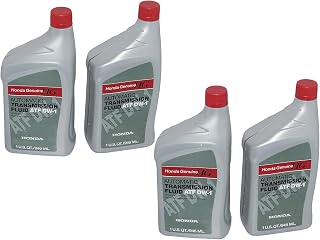
Honda
Genuine ATF DW-1 Automatic Transmission Fluid (4-Pack)
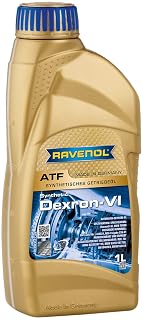
Ravenol
ATF Dexron VI
Toyota
Genuine ATF WS Automatic Transmission Fluid (6-Pack)
ACDelco
DEXRON-VI Automatic Transmission Fluid
As an Amazon Associate I earn from qualifying purchases. Full disclosure

Community
0 postsShare how you use this product
Drop a quick comment or post a full review with photos and a star rating.
Sign in to postNew here? Create a free account.