
The 13th Generation Ford F-150 Clubhouse
Ford F-150 (13th Gen, 2015-2020) Owner's Hub
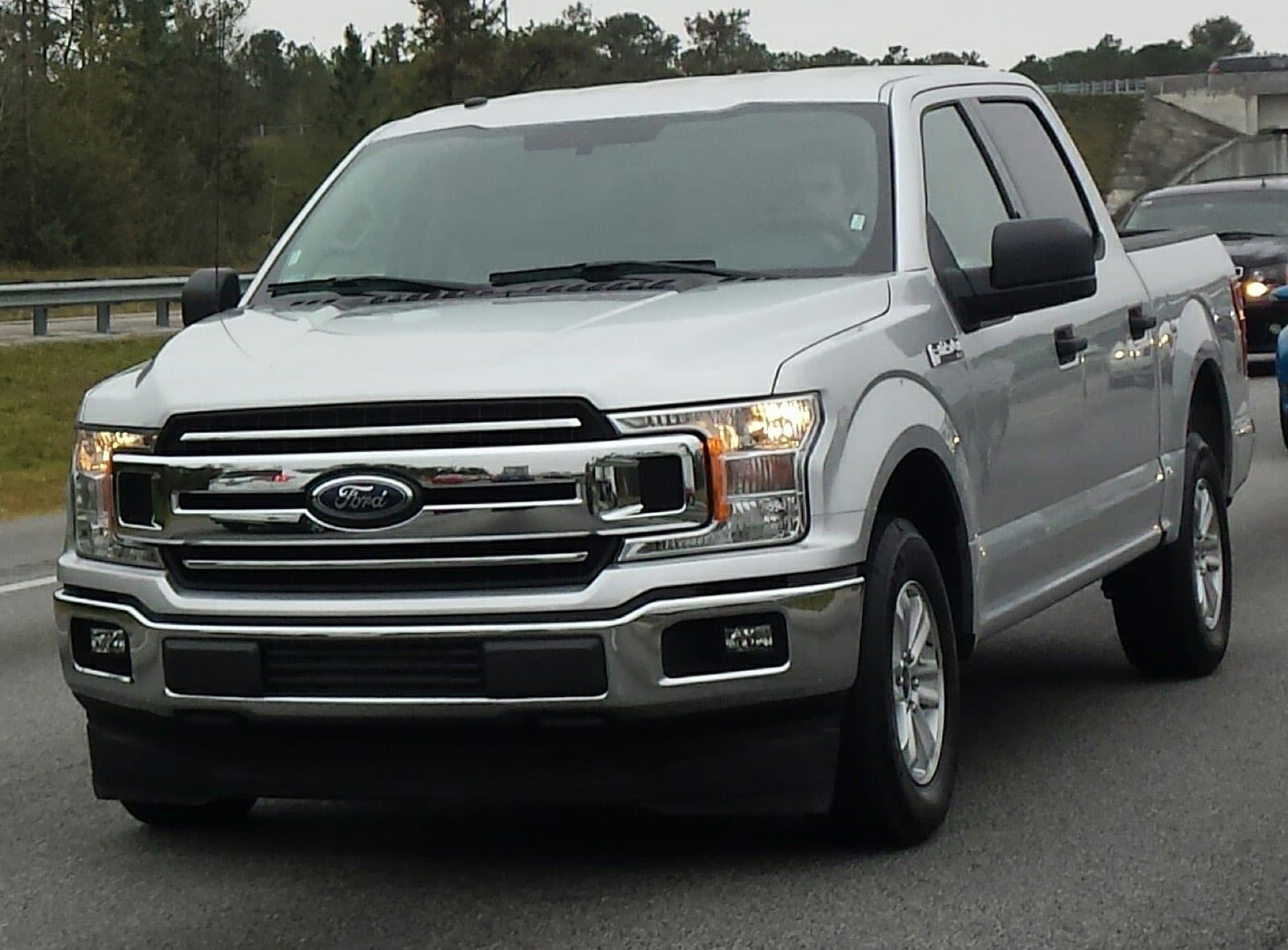
First aluminum-body F-150. Lighter, more fuel-efficient, but body panels dent easier than steel. The 2.7L and 3.5L EcoBoost engines dominate over the naturally aspirated 5.0L V8 for towing. Frame is still steel. Common issues center on 3.5L EcoBoost cam phasers (2017 on) and 10-speed transmission shift quality (2017+).
- Production
- 2015-2020
- Engines
- 3.5L · 5L · 2.7L · 3.5L · 3.3L · 3L
- Body weight cut vs steel
- ~700lb
What your F-150 takes
The parts and fluids that fit this generation. Specs we publish are confirmed against two independent sources; the rest fill in as we verify them.
- Wiper blades22" driver · 22" passenger✓ VerifiedView
- Engine oil5W-30 (6 qt) · 5W-20 (8.8 qt) · 5W-20 (6.3 qt) · 5W-20 (6 qt) · 5W-30 (6.5 qt)✓ VerifiedView
- Headlight bulbsH11 low · 9005 high (XL/XLT)✓ VerifiedView
- CoolantMotorcraft Orange WSS-M97B44-D2 · ~13.9 qt✓ VerifiedView
- Tire pressure35 psi✓ VerifiedView
- Serpentine belt5.0L Coyote: 6PK1390✓ VerifiedView
- Wheel fitment6x135 · 87.1mm bore✓ VerifiedView
- Spark plugs3.5L EcoBoost: SP-534 (2015-2016) / SP-594 (2017-2020) · 2.7L EcoBoost: SP-578 / SP-594 · 5.0L Coyote: SP-548 (NGK 94806)From owner's manualShop
- Brake fluidMotorcraft DOT 4 LV (Ford WSS-M6C65-A2)From owner's manualShop
- Transmission fluidMotorcraft Mercon ULV (10R80) or Mercon LV (6R80)From owner's manualShop
- Differential fluidRear: 75W-85 (Motorcraft Premium Synthetic Hypoid Gear Lubricant, WSS-M2C942-A) (~2.75 qt) · Front: 75W-85 (Motorcraft Premium Synthetic Hypoid Gear Lubricant, WSS-M2C942-A) (~1.75 qt) · T-case: MERCON LV ATF (Motorcraft, WSS-M2C938-A) (~1.5 qt)From owner's manualShop
- Oil filterParts in catalogShop
- Engine air filterParts in catalogShop
- Cabin air filterParts in catalogShop
- BatteryParts in catalogShop
- Brake rotorsParts in catalogShop
- Tire sizeNot catalogued yetFind yours soon
- Key fob batteryNot catalogued yetFind yours soon
- Brake padsNot catalogued yetFind yours soon
- ThermostatNot catalogued yetFind yours soon
- A/C refrigerantNot catalogued yetFind yours soon
- Fuel filterNot catalogued yetFind yours soon
- Power steering fluidElectric power steering — no fluid.N/A
Floor mats
Our top custom-fit pick for the Ford F-150 is the Husky Liners Weatherbeater Floor Mats 1st & 2nd rows.
Floor mats for the Ford F-150 →Heritage · 13th Generation F-150
2015-2020- 1948
The F-Series is born
Ford launches the first F-Series, the bloodline that becomes the best-selling truck in America.
- 1977
America's best-seller
The F-Series begins its run as the best-selling truck in the United States, a streak it still holds.
- 2015
The aluminum gamble
The 13th generation moves to an aluminum body, cutting about 700 pounds and betting the country's top truck on a new material.
- 2017
10-speed and the Raptor returns
The 10-speed 10R80 automatic arrives and the second-generation Raptor debuts with a 450-hp high-output EcoBoost.
- 2018
Diesel joins the lineup
A mid-cycle refresh adds the 3.0L Power Stroke diesel and swaps the base V6 to the 3.3L.
Last verified: June 2026.
The 13th-generation Ford F-150 (2015-2020, chassis P552) is the truck where Ford bet the best-selling vehicle in America on aluminum. The cab and bed switched from steel to a military-grade aluminum alloy, dropping roughly 700 pounds, and the whole point was fuel economy and payload without a rust-prone bed floor. Eleven years and a full generation later, that bet looks smart: these trucks shrug off the bed and cab corrosion that eats steel pickups in the salt belt. What owners argue about now is which engine to buy, whether the 10-speed shudder is really fixed, and what a body shop charges to fix an aluminum fender.
Should you buy one in 2026
A clean 13th-gen F-150 in 2026 trades from around $15,000 for a high-mile XL up to $48,000 for a loaded Limited or a low-mile Raptor. The value is in the middle: a 2.7L or 3.5L EcoBoost XLT or Lariat with records is the truck most people should be shopping. The aluminum body means you are not buying someone else's rust, and the parts are everywhere because Ford built millions of them.
- Good for: daily driving with real truck duty, towing 5,000 to 13,000 pounds depending on engine and config, salt-belt owners who are tired of rusty beds, and anyone who wants a modern truck with a huge parts and accessory ecosystem.
- Bad for: buyers who want the cheapest possible collision repair, anyone allergic to turbos who still wants the best fuel economy, or someone expecting a base 3.3L V6 to tow like the EcoBoost.
- Skip if: the 3.5L EcoBoost has a loud cold-start rattle, the 10-speed shudders after its software update, or the VIN shows open fire-risk recalls that were never closed.
The engines, honestly
This generation offered more engine choices than any F-150 before it. The naturally aspirated base V6 (3.5L through 2017, 3.3L from 2018) is honest and cheap but works hard with a load; it runs 5W-20. The 2.7L EcoBoost is the value sweet spot, strong and efficient, and it runs 5W-30. The 3.5L EcoBoost is the tow champion, 375 hp and 470 lb-ft from 2017 on, also 5W-30. The 5.0L Coyote V8 is the simplest, most durable choice and the one to buy if you distrust turbos; it runs 5W-20 and holds 8.8 quarts with a filter. A 3.0L Power Stroke diesel joined in 2018 for the long-haul tower.
The viscosity split is the single most-confused maintenance fact on this truck. EcoBoost engines take 5W-30. The V8 and the naturally aspirated V6 take 5W-20. Putting EcoBoost 5W-30 in a 5.0L V8 is the most common oil mistake owners make.
The maintenance that actually matters
Change the oil on time and these trucks routinely pass 200,000 miles. The two things that separate a long-lived EcoBoost from an early rebuild are the cooling system and clean oil; the turbos do not forgive neglect the way the V8 does.
- Every 5,000 to 7,500 miles: oil and the Motorcraft FL-500S filter (FL-2062-A cartridge on the 2.7L), and rotate tires at the same visit.
- Every 30,000 miles: engine air filter (FA-1883) on dusty duty, cabin filter (FP-79/FP-92), brake inspection.
- Around 100,000 miles: spark plugs on the EcoBoost engines (sooner if you tow in heat or dust), coolant service, and a hard look at the 3.5L EcoBoost cam phasers if you hear a cold-start rattle.
The aluminum body is the headline feature and the one real trade-off. It does not rust, which is why these hold value, but a collision repair costs more and needs a shop with aluminum-certified techs and a separate clean room. Budget for that if you buy one to keep.
Common problems, ranked by severity
1. Recall fire risks: block heater cable and seat-belt pretensioner
catastrophicTwo separate NHTSA campaigns hit this generation. An engine block-heater cable can short and start an underhood fire, and a front seat-belt pretensioner can spark on deployment and ignite the B-pillar insulation. Both fixes are free at a Ford dealer. Run the VIN and confirm the recall work was done before you buy.
Years affected: 2015-2019
2. 10R80 10-speed harsh shifts and torque-converter shudder
expensiveThe 10-speed automatic that arrived in 2017 is known for clunky 1-2 and 2-3 shifts and a shudder you feel at light throttle. Ford issued several PCM recalibration bulletins; a software flash cures many trucks but not all. A test drive with slow-speed shifts tells you which one you have.
Years affected: 2017-2020
3. 3.5L EcoBoost cam phaser rattle and timing wear
expensiveThe second-generation 3.5L EcoBoost (2017 on) can develop a two to five second cold-start rattle from worn cam-phaser pins, and in neglected trucks it can progress to timing-chain stretch. Ford ran a Customer Satisfaction Program on some of these. A phaser job runs roughly $800 to $2,500. Listen for the cold-start rattle from outside the truck.
Years affected: 2017-2020
4. 2.7L EcoBoost oil-pan-gasket leak
MinorThe 2.7L uses a plastic oil pan whose gasket weeps over time, worst on the 2015-2017 trucks. It is a slow leak, not a coolant-intrusion failure. The repair is labor-heavy because the pan sits low in the subframe, but it is not an engine-killer if you stay ahead of it.
Years affected: 2015-2020
5. Aluminum body panel repair cost
cosmeticThe aluminum body resists rust, but collision repair costs more and needs a shop with aluminum-certified techs and a separate clean room. IIHS measured repair bills roughly a quarter higher than a comparable steel truck, and minor hits total out more easily. Great for rust, pricier for fender-benders.
Years affected: 2015-2020
Year-by-year notes
- 2015
- All-new 13th generation. The body switches to aluminum alloy, dropping about 700 pounds. Engines: 3.5L NA V6, 2.7L EcoBoost, 3.5L EcoBoost and 5.0L V8, all on a 6-speed automatic.
- 2016
- Carryover year. The Limited trim joins as the new flagship.
- 2017
- The 10-speed 10R80 automatic begins rolling out, the 3.5L EcoBoost is updated to 375 hp and 470 lb-ft, and the second-generation Raptor arrives with the 450-hp high-output 3.5L EcoBoost.
- 2018
- Mid-cycle refresh. The 3.3L V6 replaces the naturally aspirated 3.5L as the base engine, the 5.0L V8 and 2.7L EcoBoost are updated, the 3.0L Power Stroke diesel is added, and the grille is restyled.
- 2019
- Carryover. The Limited gets the 450-hp high-output 3.5L EcoBoost shared with the Raptor.
- 2020
- Final year of the 13th generation. The lineup is essentially unchanged before the 14th-gen redesign for 2021.
Trim decoder
XL (2015-2020)
Work-spec base trim. Vinyl floor, steel wheels, halogen lights.
XLT (2015-2020)
Volume trim. The one most owners buy used.
Lariat (2015-2020)
Leather and the first LED-headlight trim.
King Ranch (2015-2020)
Western-themed luxury trim.
Platinum (2015-2020)
Top luxury trim.
Limited (2016-2020)
Loaded flagship; gets the 450-hp HO 3.5L EcoBoost from 2019.
Raptor (2017-2020)
450-hp HO 3.5L EcoBoost off-road truck. A separate buying conversation.
What owners actually buy
Hand-picked from the CarCareTruth catalog, ordered to match the spec card above. Every score is health + chemistry + effectiveness, in one number.
Engine oil (5W-30 EcoBoost / 5W-20 V8 and NA V6)
Oil filter (Motorcraft FL-500S)
Engine air filter (Motorcraft FA-1883)
Cabin air filter (Motorcraft FP-79 / FP-92)
Spark plugs (Motorcraft SP-series)
Wiper blades (22 inch driver / 22 inch passenger)
Verified fit: 22″ both front blades · no rear wiper
Confirmed across 3 independent fitment sources. See blades that fit & add the right sizes to your cart →
Brake fluid (Motorcraft DOT 4 LV)
Headlight bulbs (H11 low / 9005 high, halogen trims)
Battery (Group 48/H6 base, 94R/H7 premium)
Car wash soap (pH-neutral)
Paint protection (hybrid ceramic spray)
The shortlist
One top pick per category, fitting your F-150
Skip the comparison. The Best Of page shows the single highest-scored CarCareTruth product in every category that fits the 13th generation F-150.
See the Best Of →Sources
- Ford Owner's Manuals (2015-2020 F-150), accessed via the Ford Owner portal · accessed 2026-06-26
- NHTSA recalls and complaints database (Ford F-150) · accessed 2026-06-26
- Ford F-Series (thirteenth generation) on Wikipedia · accessed 2026-06-26