CarCareTruth Score
Decent, but it's tough on the environment.
Opens Amazon in a new tab. No account needed to look.
Saved to your guest loadout. Sign up to also save to your Cabinet (consumables) or Kit (tools you own).
As an Amazon Associate I earn from qualifying purchases. Full disclosure
Prices may varyHealth score is for adult use as intended, per the manufacturer's SDS. It does not model child ingestion, accidental spill cleanup, or off-label use. See the safety panel below for full hazard classification, and /disclaimer for the full editorial scope.
GHS hazard codes are quoted from the manufacturer’s Safety Data Sheet. PPE tiers below translate those codes and the listed ingredient chemistry; they are not CarCareTruth recommendations.
Show details for all categories ▾Hide details ▴
Only when: splash risk
Translated from the manufacturer’s Safety Data Sheet, Section 8
No H319 or H318 at mixture level. SDS §8 recommends safety glasses. Situational tier reflects splash risk during pressure bleeding and overhead caliper work · conditions where brake fluid can contact the eyes directly.
CarCareTruth publishes the cited sources verbatim and does not advise what action a user should take. Consult the full SDS before use.
Only when: prolonged use
Translated from the manufacturer’s Safety Data Sheet, Section 8
No H315 or H314 at mixture level. SDS §8 recommends chemical-resistant gloves during handling. Situational tier reflects incidental skin contact during a full fluid flush or bleed operation.
U.S. regulatory standard
29 CFR 1910.1000; 1910.1200
“Each employer shall assure that no employee is exposed [in excess of the PEL]…”
OSHA standards apply to workplaces. Cited here as the U.S. reference threshold for the underlying hazard class.
UN GHS hazard statement
H361“Suspected of damaging fertility or the unborn child”
UN GHS Rev. 9 (2021)
CarCareTruth publishes the cited sources verbatim and does not advise what action a user should take. Consult the full SDS before use.
Only when: in enclosed space
Beyond SDS: translated from the ingredient chemistry
No H335 or H331 at mixture level. Flash point 279.5°F · not volatile at ambient temperature. Situational tier reflects working in an enclosed, unventilated space. Standard garage ventilation is adequate for normal brake service.
U.S. regulatory standard
29 CFR 1910.134; 1910.138; 1910.1000
“the primary objective shall be to prevent atmospheric contamination…”
OSHA standards apply to workplaces. Cited here as the U.S. reference threshold for the underlying hazard class.
UN GHS hazard statement
H373“May cause damage to organs through prolonged or repeated exposure”
UN GHS Rev. 9 (2021)
CarCareTruth publishes the cited sources verbatim and does not advise what action a user should take. Consult the full SDS before use.
No PPE specified in published sources for ventilation. Absence does not imply “not needed” — consult the full Safety Data Sheet.
PPE tiers translate the manufacturer’s SDS and U.S. regulatory standards. Not professional safety advice. How we report safety.
Scope of these PPE tiers. The tiers on this page translate the product's Safety Data Sheet where one is published, plus its ingredient chemistry, into a comparable rating. They describe a formulation, not a situation: a tier is not a safety determination for any specific user, task, quantity, or environment. The manufacturer's label and use instructions govern how the product is handled. Where the product is used at work, the employer's PPE program and hazard assessment under 29 CFR 1910.132 decide what protection is selected, not this page.
No warranties. CarCareTruth makes no warranties, express or implied, and expressly disclaims the implied warranties of merchantability and fitness for a particular purpose.
This product ranks #5 of 12 in Brake Fluid.Three above it ↓
Last reviewed July 8, 2026
TL;DR Meets DOT 4 (FMVSS 116 minimum 446°F dry / 311°F wet); the SDS documents a 519.8°F dry boiling point, +73.8°F above minimum, while the 365°F wet figure is manufacturer-claimed, not independently tested. Not compatible with DOT 5 silicone systems, and it carries a California Prop 65 warning.
The Bosch ESI6 is labeled DOT 4, requiring a 446°F minimum dry boiling point and 311°F minimum wet boiling point under FMVSS 116. The SDS documents a fresh dry boiling point of 519.8°F, well above that floor. Brake fluid absorbs moisture over time, lowering heat resistance; the manufacturer claims a 365°F wet boiling point after moisture absorption, +54°F above minimum, though that figure comes from the product listing rather than a published test document. The formula also clears the DOT 3 and DOT 5.1 boiling-point requirements, and ABS, ESC, and traction control compatibility is confirmed on the label.
The ESI6 suits daily drivers where DOT 4 is the OEM spec; its documented dry boiling point beats commodity DOT 4 fluids clustered near the 446°F floor, and Bosch's OEM heritage is backed by a large, highly rated owner base on Amazon. Skip it if your vehicle requires DOT 5: the ESI6 is glycol-ether based and incompatible with DOT 5 silicone systems. Track use needing verified boiling points above 500°F dry is better served by a dedicated DOT 5.1 product.
The SDS signal word is WARNING. H361 classifies the product as a suspected reproductive toxicant (Category 2), and H373 flags possible kidney damage from prolonged or repeated exposure. SDS Section 8 specifies safety glasses and chemical-resistant gloves; splash risk during pressure bleeding and overhead caliper work makes eye protection worthwhile, and standard garage ventilation is adequate for normal service. The sweet taste of brake fluid attracts pets and children, so store it sealed and out of reach. It also carries a California Prop 65 warning (label and SDS Section 15). Spent fluid cannot go down a household drain; collect it during a flush and take it to a used-fluid collection facility.
The ESI6 is labeled and sold as a DOT 4 product. It is engineered to simultaneously clear the boiling-point minimums for DOT 3, DOT 4, and DOT 5.1, but it carries a DOT 4 label certification, not a DOT 5.1 label. For applications specifying DOT 5.1 by label, confirm with your vehicle OEM whether a DOT 4 fluid that meets DOT 5.1 boiling points is acceptable as a substitute.
Yes. DOT 4 fluids are backward-compatible with DOT 3 systems. The ESI6 is explicitly marketed as compatible with vehicles requiring DOT 3, DOT 4, or DOT 5.1. Always check your vehicle owner's manual for the recommended spec before adding or replacing fluid.
Yes. The product label explicitly confirms compatibility with ABS (anti-lock braking), ESC (electronic stability control), and traction control systems. This is expected for all glycol-ether DOT 3/4/5.1 fluids; DOT 5 silicone-based fluid is the type that is incompatible with ABS/ESC systems.
No. DOT 5 is a silicone-based fluid that is physically and chemically incompatible with glycol-ether fluids like the ESI6. The product label explicitly marks DOT 5 as incompatible with a red X. Mixing the two fluids damages seals and degrades braking performance. If your vehicle specifies DOT 5, use only DOT 5 silicone fluid.
Yes. The product carries a California Prop 65 warning. This is disclosed on the product label and SDS §15.
Marketing copy from Bosch, via Amazon. Not editorial.
Weekly pick
One product, one safety verdict, every week. No spam.


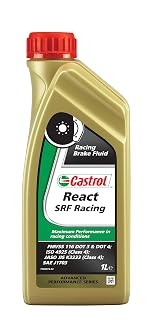
Castrol
React SRF Racing Brake Fluid
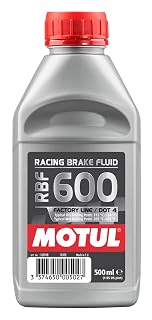
Motul
RBF 600 DOT 4 Factory Line Racing Brake Fluid
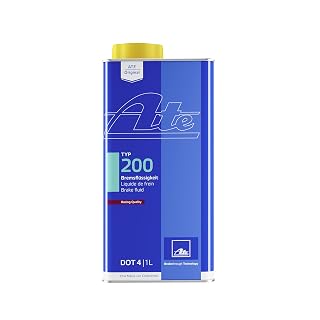
ATE
Original TYP 200 DOT 4 Racing Brake Fluid
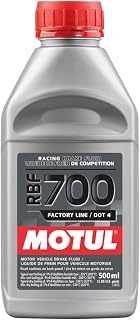
Motul
RBF 700 Factory Line Racing Brake Fluid
As an Amazon Associate I earn from qualifying purchases. Full disclosure

Community
0 postsShare how you use this product
Drop a quick comment or post a full review with photos and a star rating.
Sign in to postNew here? Create a free account.