CarCareTruth Score
Decent.
Saved to your guest loadout. Sign up to also save to your Cabinet (consumables) or Kit (tools you own).
As an Amazon Associate I earn from qualifying purchases. Full disclosure
The manufacturer's Safety Data Sheet classifies this product with one or more GHS Category 1 health hazards — the most severe tier. The hazard statements in quotes below are the verbatim GHS language from the SDS, as required by OSHA's Hazard Communication Standard. The line under each statement translates the GHS classification into plain language.
GHS Category 1 aspiration toxicity — thin, oily liquids can slip into the lungs if swallowed, causing chemical pneumonia.
If swallowed:
The aspiration hazard (H304) is about the liquid being swallowed and reaching the airway, not about breathing fumes during normal use.
Call Poison Control immediately at 1-800-222-1222 (US, 24/7, free) and have the product container with you. Poison Control's standing guidance is to not induce vomiting after chemical exposure; they will direct first-aid steps based on the specific product.
About this product's hazards. This product's Safety Data Sheet uses signal word DANGER.Read the manufacturer's SDS and follow all safety instructions before use. CarCareTruth ratings translate the manufacturer's safety sheet. They do not replace the SDS or substitute for a hazard assessment specific to your task.
Health score is for adult use as intended, per the manufacturer's SDS. It does not model child ingestion, accidental spill cleanup, or off-label use. See the safety panel below for full hazard classification, and /disclaimer for the full editorial scope.
GHS hazard codes are quoted from the manufacturer’s Safety Data Sheet. PPE tiers below translate those codes and the listed ingredient chemistry; they are not CarCareTruth recommendations.
Show details for all categories ▾Hide details ▴
Especially relevant: prolonged use
Translated from the manufacturer’s Safety Data Sheet, Section 2
H319 (eye irritation) confirmed at SDS §2 mixture level. Gel format applied by foam applicator does not routinely generate eye-level mist or splash, but the mixture-level classification is a real hazard, not boilerplate, so eye protection is warranted for normal use.
U.S. regulatory standard
29 CFR 1910.133(a)(1)
“The employer shall ensure that each affected employee uses appropriate eye or face protection when exposed to eye or face hazards from… liquid chemicals…”
ANSI Z87.1 (incorporated via §1910.6)
OSHA standards apply to workplaces. Cited here as the U.S. reference threshold for the underlying hazard class.
CarCareTruth publishes the cited sources verbatim and does not advise what action a user should take. Consult the full SDS before use.
Especially relevant: prolonged use
Translated from the manufacturer’s Safety Data Sheet, Section 2
H315 (skin irritation) confirmed at SDS §2 mixture level for the hydrocarbon gel carrier; SDS §8 lists chemical-resistant gloves as the skin protection measure.
U.S. regulatory standard
29 CFR 1910.138(a)
“appropriate hand protection when employees' hands are exposed to hazards such as those from… chemicals which produce an adverse effect on the skin or eyes…”
OSHA standards apply to workplaces. Cited here as the U.S. reference threshold for the underlying hazard class.
CarCareTruth publishes the cited sources verbatim and does not advise what action a user should take. Consult the full SDS before use.
Only when: in enclosed space
Translated from the manufacturer’s Safety Data Sheet, Section 8
No H335 in SDS §2. Gel applied by foam applicator rather than sprayed, so inhalation risk is limited to enclosed or poorly ventilated spaces. SDS §7 specifies use in well-ventilated areas given the petroleum hydrocarbon carrier.
U.S. regulatory standard
29 CFR 1910.1200(f); 1910.132(d)
“The employer shall assess the workplace to determine if hazards are present, or are likely to be present, which necessitate the use of personal protective equipment.”
OSHA standards apply to workplaces. Cited here as the U.S. reference threshold for the underlying hazard class.
CarCareTruth publishes the cited sources verbatim and does not advise what action a user should take. Consult the full SDS before use.
No PPE specified in published sources for ventilation. Absence does not imply “not needed” — consult the full Safety Data Sheet.
PPE tiers translate the manufacturer’s SDS and U.S. regulatory standards. Not professional safety advice. How we report safety.
Scope of these PPE tiers. The tiers on this page translate the product's Safety Data Sheet where one is published, plus its ingredient chemistry, into a comparable rating. They describe a formulation, not a situation: a tier is not a safety determination for any specific user, task, quantity, or environment. The manufacturer's label and use instructions govern how the product is handled. Where the product is used at work, the employer's PPE program and hazard assessment under 29 CFR 1910.132 decide what protection is selected, not this page.
No warranties. CarCareTruth makes no warranties, express or implied, and expressly disclaims the implied warranties of merchantability and fitness for a particular purpose.
Last reviewed August 2, 2026
TL;DR DANGER signal word from H304: the petroleum hydrocarbon carrier is an aspiration hazard if swallowed, and outdoor application with nitrile gloves and eye protection is the appropriate precaution per the SDS. This surface-coating gel darkens tires and plastic trim to a satin or gloss finish for 3-6 weeks on a weekly-washed vehicle, not a penetrating restorer, and the no-sling formula holds up across multiple independent community reviews.
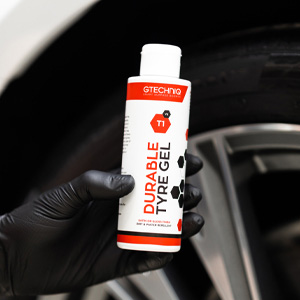
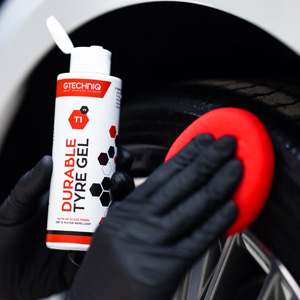
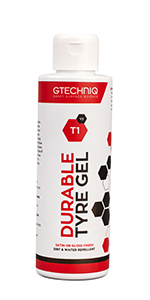
T1 is a surface-coating gel, not a penetrating polymer restorer; it darkens tire rubber and exterior plastic trim without addressing underlying oxidation in faded plastic. Deep satin finish at one coat, buildable to higher gloss. Wipe-on with a foam applicator, no dwell window. Community durability runs 3-6 weeks on a weekly-washed vehicle; the manufacturer's "durable" description carries no stated duration, and community evidence confirms T1 is a surface dressing, not a months-long restorer.
Good fit for owners who want dark, clean tires and trim and are comfortable refreshing every four to six weeks, especially those who have had other products sling onto bodywork. Skip it for heavily faded or chalky trim that needs real restoration, or if you need three-plus months between applications.
The DANGER signal word is from H304; the hydrocarbon carrier is an aspiration hazard if swallowed, so do not induce vomiting and seek medical attention. H315 and H319 (skin and eye irritation per SDS §2) apply during wipe-on contact; the SDS §8 protection measures are chemical-resistant gloves and eye protection. SDS §7 specifies outdoor or well-ventilated use. H412 (chronic aquatic toxicity Cat 3, SDS §2) is relevant at disposal via carwash runoff. The label claims "100% biodegradable"; SDS §12 states "not established."
The SDS carries a DANGER signal word driven by H304, an aspiration hazard from the petroleum hydrocarbon carrier if the product is swallowed or aspirated into the lungs; it is not a hazard from normal wipe-on application. H315 and H319 (skin and eye irritation) are also classified at SDS §2, so gloves and eye protection are worth using during application. SDS §7 specifies outdoor or well-ventilated use.
Community reports consistently put the hold at 3 to 6 weeks on a vehicle washed weekly, with gloss visibly reducing toward the lower end of that window. It is a surface-coating gel, not a multi-month restorer, so expect to reapply roughly monthly for owners who wash often.
Independent community reviews describe a no-sling formula with no documented paint transfer incidents after driving or through rain. That track record is consistent across multiple separate reviewers, which is the main reason owners who have had sling problems with other dressings switch to this one.
T1 is a surface-coating hydrocarbon polymer film. It darkens tire rubber and exterior plastic trim to a satin or gloss finish on contact, but it does not penetrate or chemically address underlying oxidation in chalky, severely faded plastic the way a penetrating polymer restorer would.
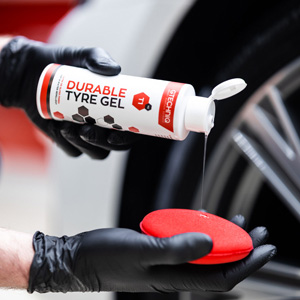
T1 is a gel applied with a foam applicator or wipe-on cloth; a small amount covers a tire or trim panel well and there is no dwell time before the vehicle can be driven. Community feedback is largely first-timer-friendly, with the main technique note being to use the correct applicator type for an even coat.
Marketing copy from Gtechniq, via Amazon. Not editorial.
Weekly pick
One product, one safety verdict, every week. No spam.


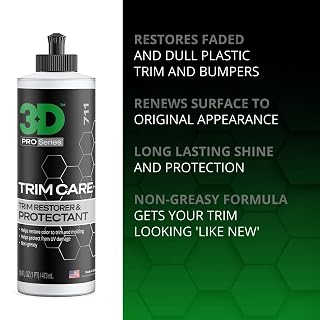
3D Car Care
Trim Care Restorer
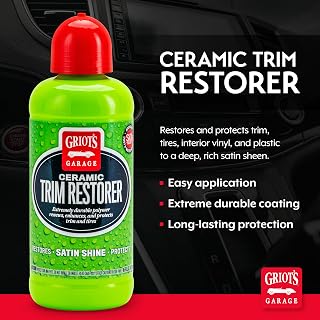
Griot's Garage
Ceramic Trim Restorer
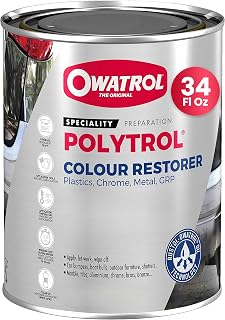
OWATROL
Polytrol Colour Restorer
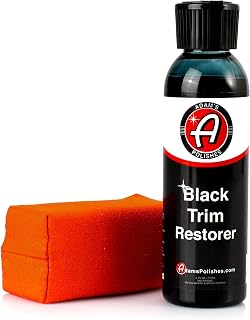
Adam's Polishes
Black Trim Restorer
As an Amazon Associate I earn from qualifying purchases. Full disclosure


Community
0 postsShare how you use this product
Drop a quick comment or post a full review with photos and a star rating.
Sign in to postNew here? Create a free account.