
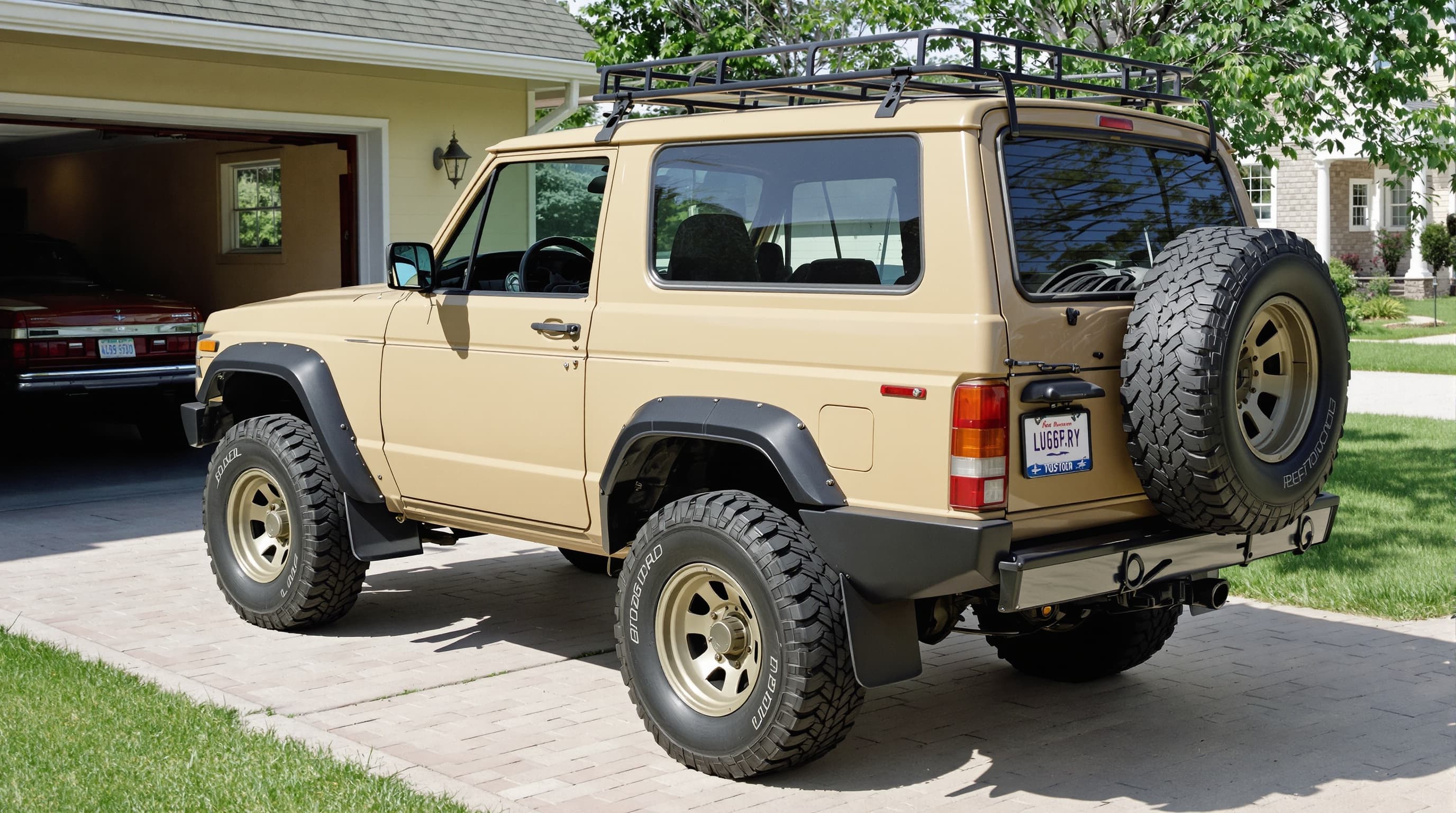
Best Plastic Trim Restorer of 2026: What Actually Lasts vs Washes Off
We score every plastic trim restorer we can verify, for performance and ingredient safety. These are the 9 best of 12 in our catalog.
CarCareTruth scored 12 plastic trim restorers for 2026, and Adam's Black Trim Restorer ranks first: a linseed-oil-and-dye wipe-on that re-colors faded trim, holds 4 to 8 weeks, and posts a clean health 8.5. The thing to understand before you buy is that plastic trim restorers are three different chemistries, and the result follows the chemistry. Temporary dressings (Chemical Guys VRP, Meguiar's Ultimate Black, Gtechniq T1) coat the surface for an instant dark look that washes or bakes off in a few weeks. Durable dye and bonding restorers re-color or grab onto the plastic and hold for months, led by the Turtle Wax graphene-acrylic at 8 to 16 weeks. Ceramic trim coatings, the adjacent upgrade, hold months to a year-plus, and we cross-link those rather than rank them. There is a real score tension worth knowing: the most durable picks (Turtle Wax, Car Guys) sit at health 3.0 purely on the no-SDS health floor, while the cleanest-chemistry picks (VRP at 8.8, Adam's, Solution Finish, Owatrol) are mostly the shorter-lived dressings. How we score: CCT ranks each trim restorer on how long the black actually holds AND on health read straight off each SDS, never marketing copy.
Affiliate disclosure: CarCareTruth is reader-supported. As an Amazon Associate I earn from qualifying purchases. We may also earn commissions from other retailers linked on this page, at no extra cost to you. Affiliate revenue never influences our scores or rankings. Full disclosure
Best of Plastic Trim Restorer
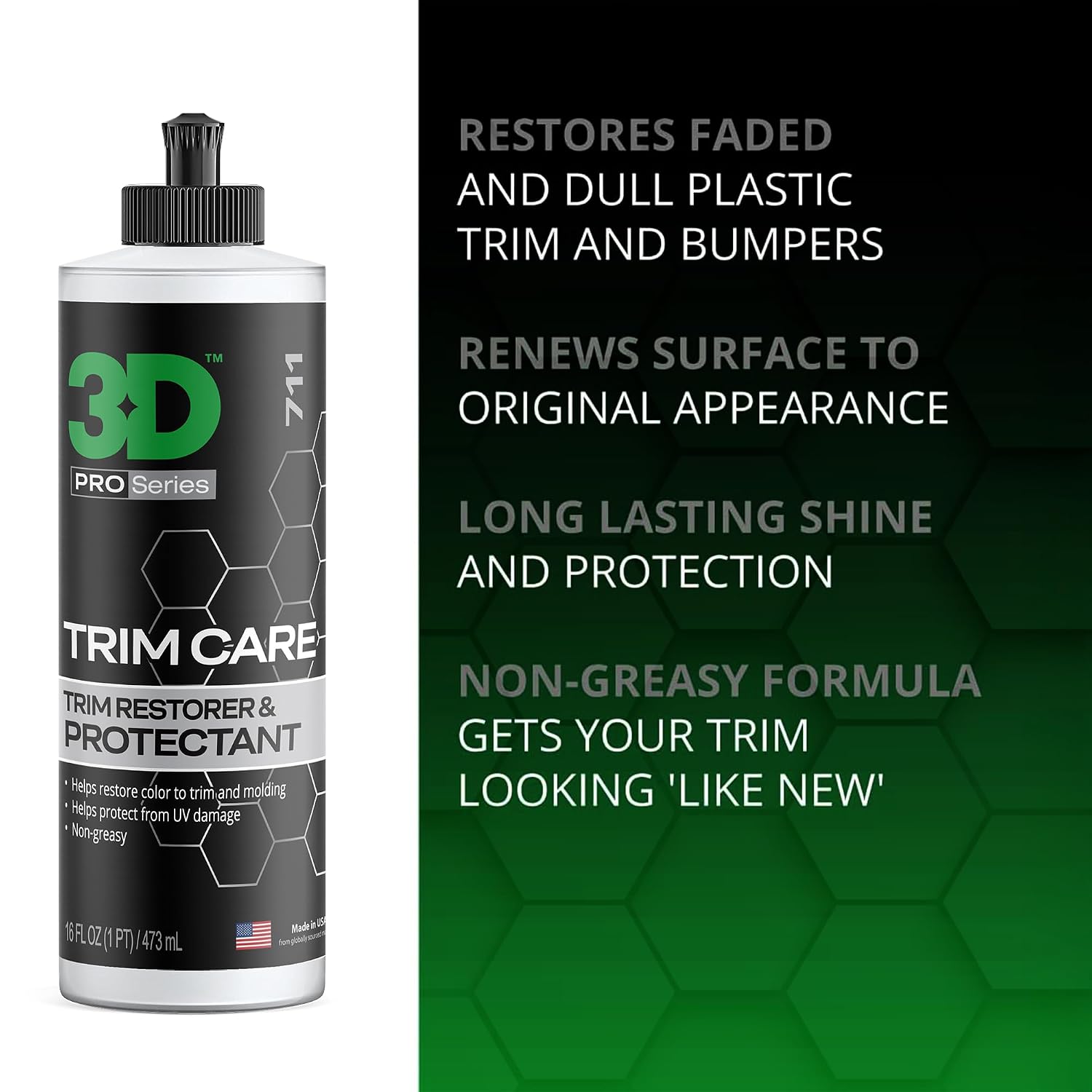
3D Car Care Trim Care Restorer
biodegradable formula
The Full Ranking
| Rank | Product | CCTCCT Score | HealthHealth & Safety | Price tier | Buy |
|---|---|---|---|---|---|
1Best Overall | Trim Care Restorer3D Car Care Biodegradable | 7.5/10 | 8.7/10 | Check Price | |
2 | Ceramic Trim RestorerGriot's Garage | 7.2/10 | 8.5/10 | Check Price | |
3 | Polytrol Colour RestorerOWATROLBest for Severe, Chalky Fade | 7.2/10 | 8.5/10 | Check Price | |
4 | Black Trim RestorerAdam's PolishesBest Overall | 6.9/10 | 7.0/10 | Check Price | |
5 | Premium Series Plastic RestorerCAR GUYSBest Value and Most Popular No SDS | 6.6/10 | 5.0/10 | Check Price | |
6 | Black Trim RestorerSolution Finish | 6.5/10 | 4.8/10 | Check Price | |
7 | Hybrid Solutions Graphene Acrylic Black Trim RestorerTurtle WaxBest Long-Lasting Prop 65No SDS | 6.4/10 | 5.0/10 | Check Price | |
8 | Ultimate Black Plastic Restorer AerosolMeguiar's Prop 65 | 6.1/10 | 4.5/10 | Check Price | |
9 | Outlast Trim & Plastic RestorerArmor All Prop 65 | 6.0/10 | 5.0/10 | Check Price | |
Editorial pick, unranked | VRP Vinyl, Rubber, and Plastic DressingChemical GuysCleanest Chemistry Prop 65 | 7.4/10 | 7.0/10 | Check Price | |
Editorial pick, unranked | Ultimate Black Plastic RestorerMeguiar'sMost Honest Buy (read before you grab the famous one) Prop 65 | 5.7/10 | 3.8/10 | Check Price |
Why each pick earned its spot
Best Overall: Adam's Polishes Black Trim Restorer
The Adam's Black Trim Restorer tops our card and is the only restorer here carrying both our top_pick and recommended awards. It is a genuine color restorer rather than a surface dressing: boiled linseed oil carries a black dye into faded ABS, polypropylene, and rubber, then cures by oxidation. Adam's own words call it a temporary dye coloring, and owners report the black holding 4 to 8 weeks on a daily driver. For a first-timer it is the most forgiving option in the group, one wipe-on pass with the included applicator, and the chemistry is clean: a WARNING signal word from H315 and H319 only, zero VOC, CARB compliant, health 8.5. The one caveat is to tape adjacent painted panels first, which the product FAQ and owner reports both recommend and which caps its non-transfer-to-paint at 6.5. It is not the longest-lasting restorer here, but it has the best all-around balance of result, ease, and clean chemistry.
Best Long-Lasting: Turtle Wax Hybrid Solutions Graphene Acrylic Black Trim Restorer
The Turtle Wax Hybrid Solutions Graphene Acrylic Black Trim Restorer is the durability champion by mechanism: an acrylic polymer that bonds to the trim plus a graphene UV layer (patent US 11,512,265 B1), holding 8 to 16 weeks in owner reports, the longest true-restorer window here. The brand claims up to 12 months, which owner data does not corroborate, so we rank it on the 8-to-16-week figure. This is exactly why our quick picks exist independent of score order: its CCT composite is the lowest in the pool, sitting at the no-SDS health floor of 3.0. Separately, the available manufacturer data does carry a Prop 65 warning tied to Carbon Black (H351) and a skin-sensitizer code (H317), which are disclosed classifications, not our call. Buy it for the longest-lasting restore in the pool, with eyes open on the missing SDS.
Best for Severe, Chalky Fade: OWATROL Polytrol Colour Restorer
When trim is so far gone that surface dressings just bead up and wash off, the OWATROL Polytrol is the one that reaches the oxidation. It is the only chemistry-confirmed penetrating restorer in the group, an alkyd-resin and linseed-oil blend (disclosed via TSCA) that wets back into the oxidized pigment layer instead of sitting on top, which earns the deepest restoration score here. It carries our recommended award, a large and satisfied owner base, and a clean health 8.5, and it holds 4 to 10 weeks on a daily driver. A few caveats come with it: the VOC is high at 460 g/L, so the SDS calls for outdoor or well-ventilated application; it cannot go on white or light-colored trim because it will yellow them; and oil-soaked rags can self-ignite, so dry them flat. The WARNING here is H227, a combustible-liquid physical hazard rather than a health classification, so the health score still lands at a clean 8.5. The pick for severely chalky, gray oxidation.
Cleanest Chemistry: Chemical Guys VRP Vinyl, Rubber, and Plastic Dressing
The Chemical Guys VRP posts the highest health score in the entire group at 8.8: a water-based silicone emulsion the SDS rates Not Classified, with no signal word and zero documented paint transfer across one of the largest review bases in this group, carrying our recommended award. Worth being straight about, since the product name literally says Dressing: durability is 2 to 5 weeks, tied for the shortest in this group. This is the clean, paint-safe quick refresh, not a long-lasting restore. Its only knock is a Prop 65 warning for a trace ethylene-oxide processing residual rather than an active ingredient. It is also a dual tire-and-trim product and our number-one pick over on the tire-shine guide. Reach for it when you want the lowest-hazard bottle and do not mind reapplying often.
Best Value and Most Popular: CAR GUYS Premium Series Plastic Restorer
The Car Guys Premium Plastic Restorer is the big-bottle, multi-surface workhorse here, with one of the largest review bases in the pool. It is a polymer-emulsion restorer the brand says is not oil-based and dries completely to the touch, and owner reviews confirm a clean, non-greasy, satin result on faded bumpers and fender flares with zero documented paint transfer. The black holds 4 to 12 weeks, with the low end reflecting wet climates and frequent washing. Same situation as the Turtle Wax: it sits at the no-SDS health floor of 3.0, so the real knock is formula opacity, no SDS and no ingredient list. The strongest big-bottle value if you want an easy, repeatable refresh and can live with an unrated safety sheet.
Most Honest Buy (read before you grab the famous one): Meguiar's Ultimate Black Plastic Restorer
This is the one the page exists to be straight about. The Meguiar's Ultimate Black Plastic Restorer is the most widely distributed option here, with a huge owner base, and it does what it says, wipes on and looks dark fast. The reason it is not our top pick is specific. Owner data puts it at the shortest durability in the group, 2 to 4 weeks, despite the Lasts and Lasts label, because its mineral-oil and silicone formula fills the texture rather than bonding to the plastic. Multiple owner reports, including a named Toyota Tundra forum thread, document the product migrating onto adjacent paint when rain hits before it cures, which is why its paint-transfer score is the lowest in the pool. Applied carefully and left to cure overnight before rain, that risk drops sharply. It also carries the heaviest health profile of the nine at 5.6: H317 skin sensitizer, H361 suspected reproductive toxin, a CMIT/MIT asthmagen preservative, and a Prop 65 warning on the 12oz, so the SDS specifies nitrile gloves. None of that is a knock on a bestseller, it is the sourced data, and it is why a famous name is not our top pick.
Full ranked catalog — including picks 11+, out-of-stock options, and the ones we couldn’t crown.
How we rank
Every plastic trim restorerin our catalog runs through the same scoring rubric: scored effectiveness, ingredient-safety data translated from each product’s SDS, and environmental impact. We don’t take placement fees, and affiliate links never move a product up the list.
What actually lasts vs what washes off in a week
The reason you need this page and not an Amazon listing is simple: half the products called "trim restorers" do not restore anything, they dress the surface and wash off. An oil or silicone dressing darkens faded trim instantly and then bakes or rinses off in a few weeks. The Chemical Guys VRP runs 2 to 5 weeks, the Meguiar's Ultimate Black 2 to 4. Both are the same dual-purpose dressings you will see topping our tire shine guide, which is exactly the point: they are quick refreshers, not restorations. The products that actually hold are the ones that re-color or bond to the plastic. The Turtle Wax graphene-acrylic holds 8 to 16 weeks in owner reports, and the OWATROL Polytrol and the likely-penetrating Solution Finish sit in the 4 to 10 week range. Be skeptical of the durability claims floating around: the brand and popular write-ups market Solution Finish as much longer-lasting, but our sourced range tracks what owners actually report, 4 to 10 weeks. Every durability number on this page is the owner-reported range, not the bottle's promise.
Wipe-on dressings vs dye restorers vs ceramic trim coatings
Trim products fall on a three-rung ladder, and the rung sets the result. The bottom rung is the surface dressing: oil or silicone that coats the texture for an instant dark look and a short life. The middle rung is the dye or bonding restorer that chemically re-colors or grabs onto the plastic, like the Adam's black dye or the Turtle Wax graphene-acrylic, holding for a couple of months. The top rung is the ceramic trim coating, a separate category that cures into a hard film and holds months to a year-plus. We rank the restorers here and cross-link the coatings rather than mixing them in, because a coating is a different buying decision with cure time, paint masking, and a premium price. When you are ready for the longest-lasting upgrade, look at a true trim coat such as the Gtechniq C4 permanent trim restorer in our exterior-restoration lineup. The chemistry behind dressings, dyes, and coatings is the same solvent-vs-water-based split we break down in our tire-dressing chemistry guide.
How to restore black plastic trim so it lasts
The biggest factor in how long any restorer holds is the part most people skip: prep. A faded panel is coated in old dressing, road film, and oxidation, and a fresh restorer will not bond to any of that. Wash the panel, strip the residue with a dedicated plastic trim cleaner, and let the trim dry completely before you apply anything, because product over grime fails fast. Then go thin and even, work it into the texture, and wipe excess off adjacent paint and glass right away. Give it the cure or dwell window on the label before the car sees rain or a wash, ideally overnight. Penetrating and dye restorers reward a second thin coat once the first sets; dressings do not. This is also where paint safety lives: the Meguiar's is documented to run onto paint when rain hits before it cures, so tape the edge if your hand is not steady. As for "permanent," nothing on a daily driver holds up against UV forever. The bonding restorers and ceramic coatings get you the closest, the penetrating restorers reach the deepest oxidation, and a dressing buys you a clean few weeks at a time.
Finish: factory matte-satin vs greasy wet-look
Most of this group finishes the way enthusiasts actually want, a factory matte-to-satin black rather than a greasy wet-look shine, and that is a good thing. The Adam's, Car Guys, Solution Finish, and OWATROL all read as natural satin in the community record, close to how the trim left the factory. Steer away from anything that leaves a slick, glossy, oily film: it looks artificial on textured plastic, slings onto paint, and attracts dust. If your trim still looks wet and plasticky an hour after application, you used too much. Thin coats give the factory look; heavy coats give the grease. If a glossy sheen is actually your goal, this is the wrong category, and a dedicated trim shine is the better tool.
Health: solvent vs water-based, DANGER labels, and the NO-SDS gap
Here is the part no competitor publishes, and we pull it straight off each safety data sheet. The clean end of the shelf is the water-based Chemical Guys VRP at health 8.8 with no signal word, followed by the Adam's, Solution Finish, and OWATROL products at 8.5. The one DANGER label belongs to the Gtechniq T1, and even that is driven by H304 (an aspiration hazard relevant only if the product is swallowed) and H226 (flammability, a physical hazard that contributes nothing to the health score), rather than an inhalation or skin escalation, so it reads as a physical-hazard flag, not a health one. Then there is the score tension worth understanding in full: the two most durable restorers by mechanism, Car Guys and the Turtle Wax graphene, ship with no public safety data sheet on file. With nothing to read, we cannot rate the chemistry, so both land at a health floor of 3.0. That is a documentation gap, not a hazard we found or invented, and it is the reason the longest-lasting restorer in the pool carries the lowest composite score while one of the cleanest-chemistry picks is among the shortest-lived. Knowing that trade-off is the difference between buying on a star rating and buying on the truth. Where a real chemistry hazard exists, like the Meguiar's H317 skin sensitizer, H361 suspected reproductive toxin, asthmagen preservative, and Prop 65 on the 12oz, we say so, sourced. Our guide on detailing chemicals that can damage paint, trim, or your lungs covers the codes that matter.
How we score: CCT grades each plastic trim restorer on real-world restoration and how long the black actually holds AND on health translated straight from its SDS, never marketing copy.
Related guides
Frequently Asked Questions
What is the best plastic trim restorer?
It depends on what you want it to do, because plastic trim restorer covers three different chemistries. Our Best Overall is the Adam's Black Trim Restorer, the catalog's top-scored pick and the only one here with both our top_pick and recommended awards: a linseed-oil-and-dye wipe-on that genuinely re-colors faded trim, runs zero VOC, scores a clean health 8.5, and holds 4 to 8 weeks. If you want the longest-lasting result, the Turtle Wax graphene-acrylic bonds to the plastic and holds 8 to 16 weeks. If your trim is severely chalky and gray, the penetrating OWATROL Polytrol wets down into the oxidized layer the surface products cannot reach. And if you want the cleanest bottle on the shelf, the water-based Chemical Guys VRP posts the highest health score here at 8.8.
How do you permanently restore black plastic trim, and is anything actually permanent?
Nothing in a wipe-on bottle is truly permanent, and any product or blog promising forever black is overselling it. What lasts comes down to mechanism. Temporary oil and silicone dressings sit on the surface and wash or bake off in weeks. Dye and bonding restorers, like the Adam's dye formula or the Turtle Wax graphene-acrylic, re-color or bond to the plastic and hold for a couple of months. Penetrating restorers like OWATROL Polytrol soak into the oxidized layer for a deeper, longer result. The closest thing to permanent is the adjacent category of ceramic trim coatings, which cure into a hard film and hold months to a year-plus, and even those eventually need a refresh. Prep is half the battle: clean and fully dry the trim first, and the result lasts noticeably longer regardless of which product you pick.
Which plastic trim restorer lasts the longest?
Among the wipe-on restorers in this group, the Turtle Wax Hybrid Solutions Graphene Acrylic Black Trim Restorer lasts the longest at 8 to 16 weeks community-confirmed, thanks to a graphene plus acrylic-polymer chemistry that bonds to the plastic rather than coating the surface. The brand claims up to 12 months, but owner reports show the shorter window, so we rank on what owners actually see. The penetrating OWATROL Polytrol, the likely-penetrating Solution Finish, and the polymer-emulsion Car Guys restorer follow in the 4 to 12 week range. If you want longer than that, you are really looking at a ceramic trim coating, a separate category that cures into a durable film and holds months to over a year. Keep in mind the Turtle Wax scores health 3.0 only because of the no-SDS health floor, not a hazard we found.
Why does my back-to-black trim restorer wash off so fast?
Because most back-to-black products are dressings, not restorers, and that is how they are built, not a defect. Oil and silicone dressings darken trim by coating the surface, so they look great immediately and then wash off in the next few washes or bake off in the sun, typically in 2 to 5 weeks. In this group the Chemical Guys VRP runs 2 to 5 weeks and the Meguiar's Ultimate Black 2 to 4. If you want the black to hold, you need a dye or bonding restorer like the Adam's or Turtle Wax, a penetrating restorer like OWATROL Polytrol, or a ceramic trim coating. And clean the trim thoroughly first, since a dressing applied over road film and old residue fails even faster.
Do oil and silicone trim dressings actually work, or are they a waste of money?
They work, they just do not last, and whether that is worth it depends on your expectations. An oil or silicone dressing like the Chemical Guys VRP or Meguiar's Ultimate Black produces an instant, even, dark finish and is about as foolproof to apply as it gets. The trade-off is durability measured in weeks rather than months, because the product coats the surface instead of bonding to it. They are not a waste if you understand them as a quick, cheap, paint-safe refresh you reapply often, and the VRP in particular earns the cleanest health score in this group at 8.8 with zero documented paint transfer. They are a waste if you bought one expecting the months-long result that only a dye, bonding, or ceramic product delivers.
Will plastic trim restorer stain or damage my paint or glass?
Some can transfer onto adjacent paint, and the risk varies by product, so it is worth checking before you buy. The Meguiar's Ultimate Black is documented across owner forum threads to run onto painted panels in rain before it cures, which is why its paint-transfer score is the lowest in this group, and the fix is to let it cure overnight before rain. Adam's and Turtle Wax both recommend wiping or taping at the trim-and-paint boundary. By contrast, the Car Guys, Chemical Guys VRP, and OWATROL Polytrol show no documented paint-transfer incidents across a broad owner base. None of these is intended for painted or clear-coated panels, so the safe habit on any of them is to keep it off glass, wipe excess promptly, and tape the edge if your hand is not steady. One more note: OWATROL Polytrol should not go on white or light-colored trim, since it can yellow it.
Is plastic trim restorer safe to use, or are the chemicals dangerous?
It varies a lot by product, and CCT reads the hazard straight from each product's SDS rather than the marketing copy. At the clean end, the Chemical Guys VRP carries no GHS signal word and scores health 8.8, and the Adam's, Solution Finish, and OWATROL products all sit at health 8.5. The Gtechniq T1 is the one DANGER label in the group, but that is driven by H304 (an aspiration hazard relevant only if the product is swallowed) and H226 (flammability, a physical hazard that contributes nothing to the health score), not by an inhalation or contact health classification. The Meguiar's has the worst health profile here at 5.6, with a skin sensitizer (H317), a suspected reproductive toxin (H361), an asthmagen preservative, and a Prop 65 warning on the 12oz, so its SDS specifies nitrile gloves. The Car Guys and Turtle Wax sit at the no-SDS health floor of 3.0, since neither publishes a public SDS to read. Read the hazard codes on the one you pick and follow its label.
What's the difference between a plastic trim restorer and a trim coating?
They sit on a durability ladder. A trim restorer is a wipe-on you apply in minutes that either dresses the surface (oil or silicone, weeks of life) or re-colors and bonds to the plastic (dye, penetrating, or polymer chemistry, a couple of months). A ceramic trim coating is a curing product that bonds into a hard, water-shedding film and holds for months to over a year, but it asks for careful surface prep, masking of adjacent paint, and a cure window before the car gets wet. A common, durable approach is to restore the color first with a penetrating restorer and then lock it in with a coating. For most owners a bonding restorer is the easy sweet spot. This page ranks the restorers, and we cross-link the coating products as the upgrade tier rather than mixing them in, since a coating is a different buying decision.
Do I need to clean the trim first, and how do I apply a trim restorer so it lasts?
Yes, clean and fully dry the trim first, and it is the single biggest thing you control over how long the result holds. A restorer bonds to the plastic, not to the road film, wax, and old dressing sitting on it, so applying over grime guarantees an early failure. Wash the panel, strip the old residue with a dedicated plastic-trim cleaner, and let it dry completely. Then apply thin and even with the included applicator or a microfiber, work it into the texture, wipe any excess off adjacent paint and glass promptly, and give it the cure or dwell window on the label before exposing it to rain or a wash. Dye and penetrating restorers like the Adam's, OWATROL, and the likely-penetrating Solution Finish reward a second thin coat once the first sets; dressings do not need one. Thin, clean, and patient beats thick and rushed every time.
Will it work on severely chalky, gray trim, and can I use it on rubber seals and bumpers?
For severely chalky, oxidized gray trim, reach for a penetrating restorer rather than a surface dressing. The OWATROL Polytrol is the standout here, an alkyd-resin and linseed-oil formula with the deepest restoration in the group, because it wets down into the oxidized pigment layer a surface coat just sits on top of. Dye restorers like the Adam's also re-color rather than merely coat, and the Turtle Wax graphene formula handles heavy fade well. Surface dressings like the Chemical Guys VRP and Meguiar's Ultimate Black look good on light-to-moderate fade but barely touch severe chalking. As for surfaces, most of this group is rated for exterior textured plastic, ABS, polypropylene bumpers, rubber, and vinyl weatherstripping, so bumpers and seals are fair game, but always confirm the specific product lists your surface and keep the OWATROL off light-colored trim since it can yellow it. For the worst, deepest oxidation, a ceramic trim coating over clean trim lasts longest of all.
#1 · Trim Care Restorer
7.5/10 CCT
As an Amazon Associate I earn from qualifying purchases.