CarCareTruth Score
Decent.
Opens Amazon in a new tab. No account needed to look.
Saved to your guest loadout. Sign up to also save to your Cabinet (consumables) or Kit (tools you own).
As an Amazon Associate I earn from qualifying purchases. Full disclosure
Prices may varyHealth score is for adult use as intended, per the manufacturer's SDS. It does not model child ingestion, accidental spill cleanup, or off-label use. See the safety panel below for full hazard classification, and /disclaimer for the full editorial scope.
GHS hazard codes are quoted from the manufacturer’s Safety Data Sheet. PPE tiers below translate those codes and the listed ingredient chemistry; they are not CarCareTruth recommendations.
Show details for all categories ▾Hide details ▴
Only when: splash risk
Translated from the manufacturer’s Safety Data Sheet, Section 8
SDS §8.3 explicitly states 'Use splash goggles when eye contact due to splashing is possible.' No H319 or H318 in §2 mixture classification. Splash at the valve stem during aerosol discharge is the specific cited trigger.
CarCareTruth publishes the cited sources verbatim and does not advise what action a user should take. Consult the full SDS before use.
Translated from the manufacturer’s Safety Data Sheet, Section 2
Section 2 classifies this product Skin Sensitization Category 1 (H317, 'may cause an allergic skin reaction'), driven by the MIT preservative at the label's SCL threshold, and Section 11 confirms real reported effects (redness, itching, rash). Section 8.3 calls for chemical-resistant gloves and the label (P280, P302+P352) instructs washing exposed skin. Since this is a genuine product-level sensitizer classification, not just an ingredient-trace note, gloves are a real precaution for standard use, not only for people already sensitized.
U.S. regulatory standard
29 CFR 1910.138(a); 1910.132(d)
“appropriate hand protection when employees' hands are exposed to hazards such as those from skin absorption of harmful substances.”
OSHA standards apply to workplaces. Cited here as the U.S. reference threshold for the underlying hazard class.
CarCareTruth publishes the cited sources verbatim and does not advise what action a user should take. Consult the full SDS before use.
Translated from the manufacturer’s Safety Data Sheet, Section 8
Section 8.3 recommends respiratory protection where inhalation exposure may occur from use, and the label's P261 instructs 'Avoid breathing spray' as a standing precaution on every application, not a conditional one. Section 11 reports genuine inhalation symptoms (shortness of breath, chest tightness, sore throat, cough), and Section 6 notes the CO2 propellant can displace oxygen in an enclosed space. No H330, H331, or H334 appears in the Section 2 mixture classification, so this stops short of required, but the spray-use case calls for more than a situational note: use outdoors or in a well-ventilated area and avoid breathing the mist.
CarCareTruth publishes the cited sources verbatim and does not advise what action a user should take. Consult the full SDS before use.
No PPE specified in published sources for ventilation. Absence does not imply “not needed” — consult the full Safety Data Sheet.
PPE tiers translate the manufacturer’s SDS and U.S. regulatory standards. Not professional safety advice. How we report safety.
California Prop 65 warning
This product's Amazon listing carries a California Prop 65 warning. The manufacturer's Safety Data Sheet (§15) does not list a Prop 65 substance for this product — we show the warning for transparency and flag the discrepancy rather than silently picking a side.
Scope of these PPE tiers. The tiers on this page translate the product's Safety Data Sheet where one is published, plus its ingredient chemistry, into a comparable rating. They describe a formulation, not a situation: a tier is not a safety determination for any specific user, task, quantity, or environment. The manufacturer's label and use instructions govern how the product is handled. Where the product is used at work, the employer's PPE program and hazard assessment under 29 CFR 1910.132 decide what protection is selected, not this page.
No warranties. CarCareTruth makes no warranties, express or implied, and expressly disclaims the implied warranties of merchantability and fitness for a particular purpose.
This product ranks #6 of 10 in Tire Repair Kit.Three above it ↓
Last reviewed July 12, 2026
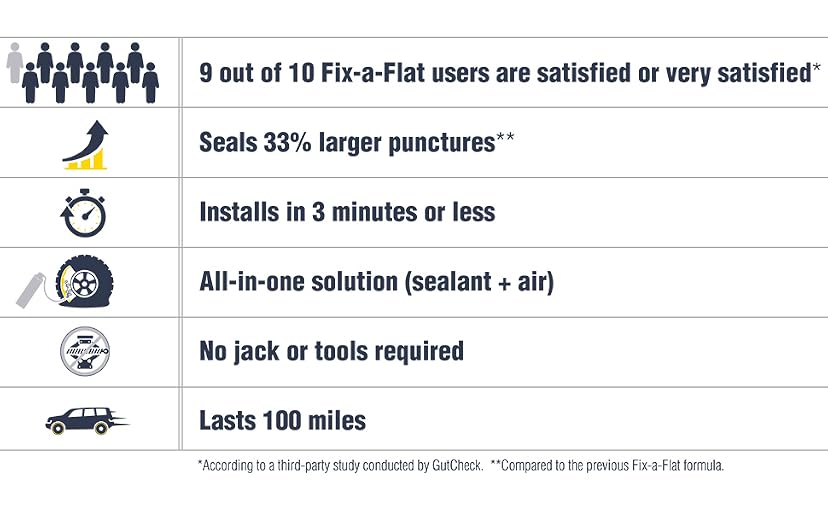
TL;DR Community reviews confirm this aerosol seals most tread-area punctures and re-inflates the tire to driveable pressure · and Fix-A-Flat explicitly claims the formula is TPMS-safe, a critical differentiator for any modern vehicle. It's a temporary fix: get to a tire shop within 100 miles or 3 days.
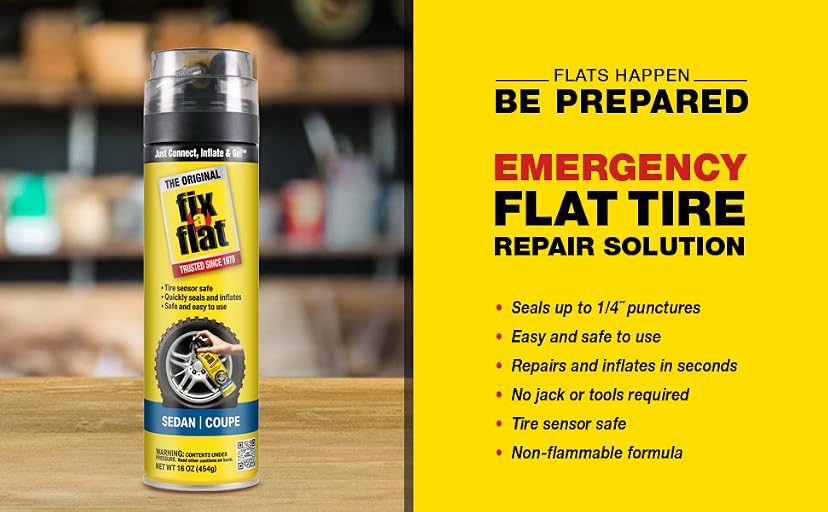
Fix-A-Flat S60420 is a single-step aerosol emergency tire repair for standard passenger-car tires: attach to the valve stem, press, and the can simultaneously seals the puncture and re-inflates. It's well-reviewed by a large owner base, where the dominant theme is "worked when I needed it" on tread punctures up to 1/4 inch. Fix-A-Flat claims TPMS-safe formula; no widespread sensor damage appears in the current eco-formula review pool. Drive no more than 100 miles or 3 days, then visit a tire shop.
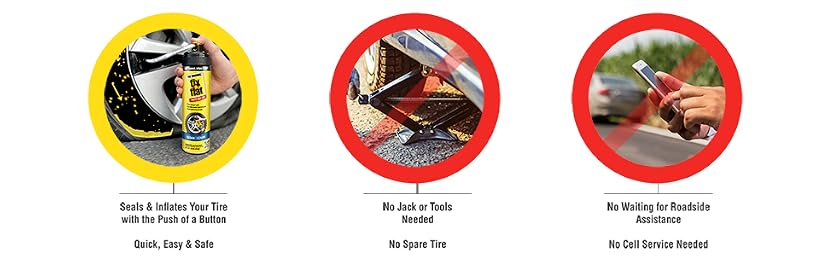
A sensible trunk backup for any driver who wants a no-tools, no-jack roadside option. TPMS-safe claim covers modern vehicles; the SKU lineup (12-24 oz) ranges from compact to SUV. Skip it for sidewall tears, run-flat tires, or if the nearest shop is beyond 100 miles.
The SDS lists signal word WARNING. H317 (skin sensitizer) comes from the MIT preservative · not from natural rubber latex. SDS §8.3 specifies splash goggles when splashing is possible; those with known MIT sensitization should handle with gloves. No inhalation H-codes in the §2 mixture classification; outdoor use poses no meaningful inhalation risk. SDS §15 explicitly negates Prop 65 concern · the product listing's flag is a false positive. Non-flammable propellant (DOT Class 2.2). Depressurize fully before disposal; SDS §13 directs to a hazardous waste collection point.
The Safety Data Sheet for Fix-A-Flat S60420 Aerosol Emergency Tire Sealant carries a WARNING signal word, with classified hazards including H229 (pressurized container: may burst if heated); H317 (may cause an allergic skin reaction). See the PPE breakdown above for use-case-specific guidance translated from the SDS hazard codes.
CarCareTruth scores Fix-A-Flat S60420 Aerosol Emergency Tire Sealant at 7.0 out of 10 on the composite CCT score, with a health sub-score of 9.0/10. The CCT score blends real-world effectiveness, ingredient health impact pulled from the manufacturer's safety sheet, and environmental footprint against a published category rubric. See the methodology link on this page for the full scoring breakdown.
Per the Safety Data Sheet ingredient disclosure: SDS §3 (Version 3.0, revision 3/10/2025): Glycerol (CAS 56-81-5) 1-5%; Quartz, SiO2 (CAS 14808-60-7) 0.1-1%; Magnesium oxide (CAS 1309-48-4) 0.1-1%; Cellulose (CAS 9004-34-6) 0.1-1%; Propan-2-ol / IPA (CAS 67-63-0) 0.01-0.1%; 2-methylisothiazol-3(2H)-one / MIT (CAS 2682-20-4) 0.0015-0.01%. Primary sealant polymer not named in §3 (trade secret). No natural rubber/latex listed.
Marketing copy from Fix-A-Flat, via Amazon. Not editorial.
Weekly pick
One product, one safety verdict, every week. No spam.
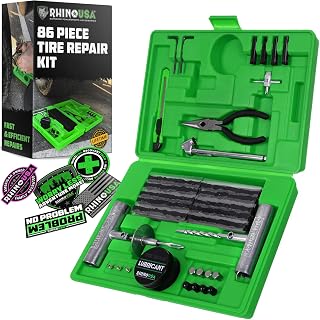
Rhino USA
Tire Repair Kit (86-Piece)
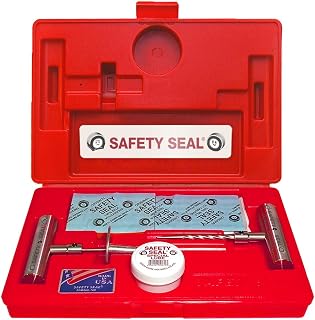
Safety Seal
Auto/LT Deluxe Tire Repair Kit
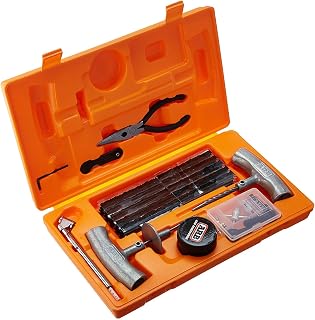
ARB
Speedy Seal Series II Tire Repair Kit
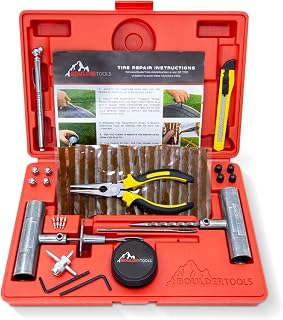
Boulder Tools
Heavy Duty Tire Repair Kit
As an Amazon Associate I earn from qualifying purchases. Full disclosure

Community
0 postsShare how you use this product
Drop a quick comment or post a full review with photos and a star rating.
Sign in to postNew here? Create a free account.