CarCareTruth Score
Decent, but it's tough on the environment.
Opens Amazon in a new tab. No account needed to look.
Saved to your guest loadout. Sign up to also save to your Cabinet (consumables) or Kit (tools you own).
As an Amazon Associate I earn from qualifying purchases. Full disclosure
Prices may varyHealth score is for adult use as intended, per the manufacturer's SDS. It does not model child ingestion, accidental spill cleanup, or off-label use. See the safety panel below for full hazard classification, and /disclaimer for the full editorial scope.
GHS hazard codes are quoted from the manufacturer’s Safety Data Sheet. PPE tiers below translate those codes and the listed ingredient chemistry; they are not CarCareTruth recommendations.
Show details for all categories ▾Hide details ▴
Translated from the manufacturer’s Safety Data Sheet, Section 8
H319 (eye irritation Cat 2A) in SDS §2 and formula pH 12 (SDS §9) · SDS §8 directs eye/face protection. The alkaline pH 12 and H319 classification together support required tier.
U.S. regulatory standard
29 CFR 1910.133(a)(1)
“The employer shall ensure that each affected employee uses appropriate eye or face protection when exposed to eye or face hazards from… liquid chemicals…”
ANSI Z87.1 (incorporated via §1910.6)
OSHA standards apply to workplaces. Cited here as the U.S. reference threshold for the underlying hazard class.
CarCareTruth publishes the cited sources verbatim and does not advise what action a user should take. Consult the full SDS before use.
Translated from the manufacturer’s Safety Data Sheet, Section 8
Alkaline pH 12 (SDS §9) and SDS §8 directive to wear protective gloves. SDS §11 confirms no H314 corrosion or H317 sensitization at mixture level; the pH 12 base chemistry and SDS §8 directive nonetheless require gloves.
CarCareTruth publishes the cited sources verbatim and does not advise what action a user should take. Consult the full SDS before use.
Only when: in enclosed space
Translated from the manufacturer’s Safety Data Sheet, Section 8
No inhalation H-codes (H332, H335) in SDS §2 mixture classification. SDS §8 OEL table lists occupational exposure limits for 2-butoxyethanol · relevant for repeated occupational use in enclosed spaces, not typical one-time consumer application outdoors. The `not_needed` tier is invalid for chemical/fluid products per rubric; `situational` with enclosed_space trigger is the correct floor.
CarCareTruth publishes the cited sources verbatim and does not advise what action a user should take. Consult the full SDS before use.
No PPE specified in published sources for ventilation. Absence does not imply “not needed” — consult the full Safety Data Sheet.
PPE tiers translate the manufacturer’s SDS and U.S. regulatory standards. Not professional safety advice. How we report safety.
This product ranks #6 of 10 in Bug & Tar Remover.Three above it ↓
Last reviewed June 14, 2026
TL;DR Aqueous surfactant bug remover for regular wash workflows, scoring 7.4 on quality · solid for fresh-to-recent bugs, limited for heavily baked-on residue. The WARNING classification covers H319 (eye irritation) as the sole mixture-level hazard; wear goggles and gloves · the formula is alkaline at pH 12.
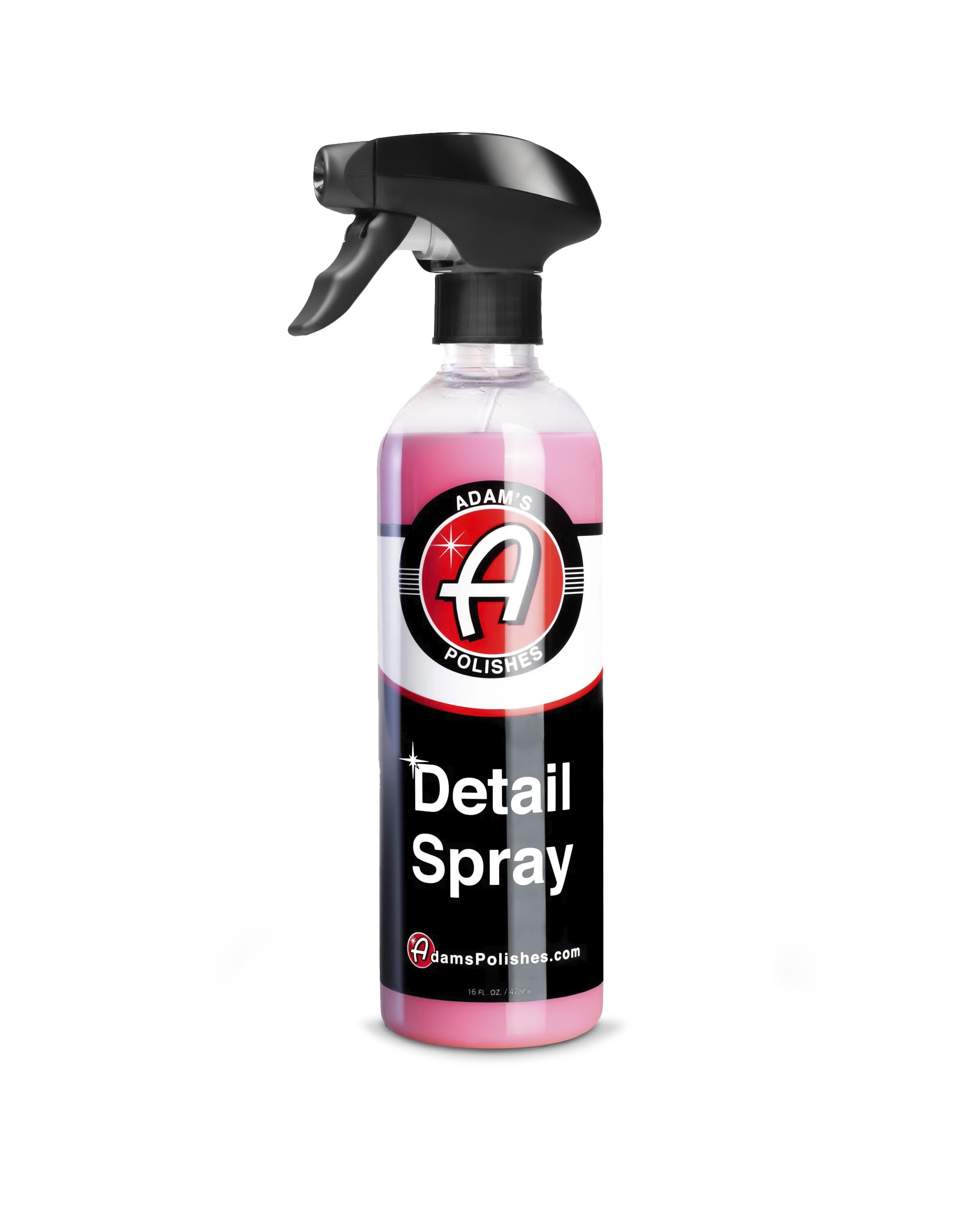
Spray onto the front bumper, grille, or lower panels, let it dwell for a minute or two, then wipe or rinse. The high-foaming formula breaks down bug protein and loosens contamination so it lifts with minimal scrubbing. Owners confirm consistent results on fresh and recent bugs, including love bugs, and describe the workflow as straightforward. Several note that the dried bottom layer of a baked-on splat may still need light scrubbing · consistent with an aqueous surfactant formula's honest limitation versus a petroleum-solvent product. Available RTU in the 16 oz bottle and in a gallon refill size.
Right for owners who wash regularly and want a pump spray that handles fresh-to-recent bug contamination without petroleum solvents or inhalation risk. Skip it if your primary challenge is week-old baked-on tar or asphalt overspray · a solvent-based product clears that faster, accepting the chemistry trade-off.
The SDS (WARNING signal word, 2019-12-05) classifies H319 (eye irritation Cat 2A) as the sole mixture-level hazard. SDS §8 directs eye and face protection and gloves · the eye and skin required tiers reflect the H319 classification and the alkaline pH 12 (SDS §9). No inhalation H-codes and no Prop 65 warning per SDS §15. SDS §13 directs not to empty into drains · two surfactant ingredients are aquatically toxic at low concentrations per SDS §12.
The brand markets this as clear coat safe. Owners report no paint damage in typical spray-dwell-rinse use, and the broad owner consensus backs that up. The alkaline pH 12 (SDS §9) is relevant: concentrated product left to dry on the surface could affect wax and potentially soften ceramic coatings · rinse promptly within the recommended dwell window.
According to the manufacturer, yes · the label describes use during a wash process or on a dry vehicle. Owners confirm it integrates into normal pre-wash routines, spraying on before the wash pass and rinsing with the normal soap step.
SDS §15 CA-RTK lists a fragrance blend including linalool, benzyl benzoate, ethyl methylphenylglycidate, ethyl butyrate, and gamma undecalactone · the grape-fruit-adjacent scent noted in the product listings. These are fragrance esters and terpenes at undisclosed concentrations.
No. SDS §15 explicitly states 'none of the ingredients are listed' under California Proposition 65. The product listing also does not flag a Prop 65 warning.
Marketing copy from Adam's Polishes, via Amazon. Not editorial.
Guide
How Often to Actually Wash Your Car (by Climate)
Every two weeks is wrong for most people. Salt-belt cars need a full wash plus undercarriage rinse every 7 to 14 days through the salt season. Coastal cars run 2 to 3 weeks year-round. Desert cars stretch to 3 to 4 weeks but need waterless or rinseless methods in between.
Guide
Detailing PPE: When You Actually Need Gloves or a Respirator
Most weekend car care needs zero PPE. A small list of chemistries (fluoride wheel acids, isocyanate spray, strong solvent aerosols) genuinely does need gloves, goggles, or a respirator. This guide names the H-codes that trigger each, and points to safer picks by category.
Weekly pick
One product, one safety verdict, every week. No spam.


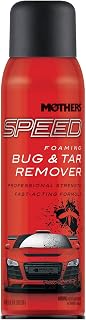
Mothers
Speed Foaming Bug & Tar Remover
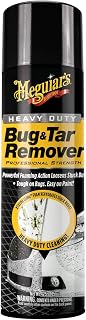
Meguiar's
Heavy Duty Bug & Tar Remover (G180515, 15 oz Aerosol)
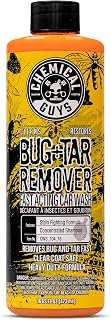
Chemical Guys
Bug and Tar Heavy Duty Car Wash (CWS104)
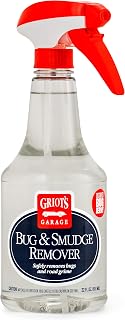
Griot's Garage
Bug & Smudge Remover
As an Amazon Associate I earn from qualifying purchases. Full disclosure

Community
0 postsShare how you use this product
Drop a quick comment or post a full review with photos and a star rating.
Sign in to postNew here? Create a free account.