CarCareTruth Score
Recommended.
Opens Amazon in a new tab. No account needed to look.
Saved to your guest loadout. Sign up to also save to your Cabinet (consumables) or Kit (tools you own).
As an Amazon Associate I earn from qualifying purchases. Full disclosure
Prices may varyHealth score is for adult use as intended, per the manufacturer's SDS. It does not model child ingestion, accidental spill cleanup, or off-label use. See the safety panel below for full hazard classification, and /disclaimer for the full editorial scope.
GHS hazard codes are quoted from the manufacturer’s Safety Data Sheet. PPE tiers below translate those codes and the listed ingredient chemistry; they are not CarCareTruth recommendations.
Show details for all categories ▾Hide details ▴
Translated from the manufacturer’s Safety Data Sheet, Section 2
SDS §2 classifies the concentrate as H319 (causes serious eye irritation) with the GHS07 exclamation pictogram. SDS §8 specifies eye protection when decanting or splashing the concentrate.
U.S. regulatory standard
29 CFR 1910.133(a)(1)
“The employer shall ensure that each affected employee uses appropriate eye or face protection when exposed to eye or face hazards from… liquid chemicals…”
ANSI Z87.1 (incorporated via §1910.6)
OSHA standards apply to workplaces. Cited here as the U.S. reference threshold for the underlying hazard class.
CarCareTruth publishes the cited sources verbatim and does not advise what action a user should take. Consult the full SDS before use.
Translated from the manufacturer’s Safety Data Sheet, Section 2
SDS §2 classifies the concentrate as H315 (causes skin irritation). SDS §8 specifies protective gloves when handling concentrate; nitrile is among acceptable materials. Working-solution dilution reduces but does not eliminate skin-contact irritation potential.
U.S. regulatory standard
29 CFR 1910.138(a)
“appropriate hand protection when employees' hands are exposed to hazards such as those from… chemicals which produce an adverse effect on the skin or eyes…”
OSHA standards apply to workplaces. Cited here as the U.S. reference threshold for the underlying hazard class.
CarCareTruth publishes the cited sources verbatim and does not advise what action a user should take. Consult the full SDS before use.
Only when: in enclosed space · prolonged use
Beyond SDS: translated from the ingredient chemistry
No inhalation H-codes are listed in SDS §2 (no H332, no H335). The concentrate is not an aerosol and has a flash point of 94°C, so vapor inhalation is not a routine concern. SDS §7 directs use in well-ventilated areas as a general practice; enclosed-bay use with prolonged decanting of concentrate is the situational trigger.
CarCareTruth publishes the cited sources verbatim and does not advise what action a user should take. Consult the full SDS before use.
No PPE specified in published sources for ventilation. Absence does not imply “not needed” — consult the full Safety Data Sheet.
PPE tiers translate the manufacturer’s SDS and U.S. regulatory standards. Not professional safety advice. How we report safety.
Scope of these PPE tiers. The tiers on this page translate the product's Safety Data Sheet where one is published, plus its ingredient chemistry, into a comparable rating. They describe a formulation, not a situation: a tier is not a safety determination for any specific user, task, quantity, or environment. The manufacturer's label and use instructions govern how the product is handled. Where the product is used at work, the employer's PPE program and hazard assessment under 29 CFR 1910.132 decide what protection is selected, not this page.
No warranties. CarCareTruth makes no warranties, express or implied, and expressly disclaims the implied warranties of merchantability and fitness for a particular purpose.
This product ranks #2 of 9 in Bug & Tar Remover.
Last reviewed August 1, 2026
TL;DR An aqueous wash-style concentrate that doubles as a normal 2-bucket shampoo and a fresh-bug-and-tar pre-decontamination step. WARNING-level chemistry · a skin and eye irritant at concentrate strength, no inhalation classification, no flammability. Carries a Prop 65 warning per the 2026 SDS revision. Baked-on tar will need a dedicated solvent product; for a regular wash with integrated fresh-contamination removal, this is solidly Recommended.
Dilute into the wash bucket, or pre-spray panels at stronger concentration before the wash. The foam lifts fresh bug residue, road grime, and light tar in the same pass. Community on r/AutoDetailing and Autogeek uses it both as a decontamination pre-wash before clay and as a heavy-duty wash shampoo. Honest limitations: baked-on tar and weathered asphalt will not lift in one pass at standard dilution. The alkaline builder strips wax at strong pre-wash strength · intentional pre-decon behavior; rewax after use when wax stripping is unwanted.
Buy it for a regular wash routine that handles fresh bugs, road tar, and grime without bringing solvent-aerosol chemistry or an outdoor-use requirement into the workflow. Skip it if the main use case is multi-day baked-on tar · a petroleum-solvent product clears hardened residue faster, accepting the chemistry trade-off. Also skip it if preserving a fresh wax layer matters; the alkaline builder strips wax at concentrate by design.
SDS Version 5 (2026-01-23) classifies the concentrate as WARNING with H315 (skin irritation) and H319 (serious eye irritation), GHS07 pictogram. The revision adds an explicit Prop 65 statement in §2.2 and §15 · a change from earlier Chemical Guys SDSs and corroborated by the product listing flag. SDS §8 directs eye protection and protective gloves when handling concentrate. No inhalation classification (no H332, no H335), no aerosol form factor, flash point 94°C, pH ≤ 11.4. Disclosed VOC is the 2-butoxyethanol at 1-<5% · well below the 250 g/L high_voc threshold; it is an aquatic toxicant flagged in SDS §12, which combined with the drain-destined wash-runoff pathway lands the environment score at Average.
Both. At standard wash dilution it functions as a 2-bucket shampoo with bug and tar lifting in the same pass. At concentrate or pre-spray strength it functions as a dedicated decontamination step before clay or rinseless work. Community on r/AutoDetailing uses it both ways.
Yes, at strong pre-wash strength. The alkaline builder (pH ≤ 11.4) and surfactant package are documented by community on r/AutoDetailing and Autogeek to lift wax · that is intentional behavior for a pre-decontamination prep wash. If a panel is freshly waxed and you want to keep the wax, dilute closer to standard wash strength and skip the dedicated pre-spray. Rewax after use is the documented community workflow at concentrate strength.
Different chemistry, different use case. Stoner Tarminator is a DANGER-signal-word petroleum-distillate aerosol that clears baked-on tar faster on a single vertical-surface burst · at the cost of suspected carcinogen and reproductive toxin Cat 2 classifications, high VOC, and an outdoor-use requirement. CWS104 carries only WARNING-level eye and skin irritation and no inhalation classification at concentrate. It is slower on hardened tar but integrates into a normal wash and adds no inhalation risk.
The 2026-01-23 SDS Version 5 explicitly lists Prop 65 chemicals in §2.2 and §15. This is a change from earlier Chemical Guys SDSs, which often carried explicit Prop 65 negative statements. The product listing flag corroborates the SDS · this is not a label-versus-data divergence on this product. The deduction applied to the health score follows the rubric's prop65_warning rule.
SDS §9 does not state a numerical VOC. The only disclosed volatile organic is 2-butoxyethanol at 1-<5% of the concentrate; at typical product density and that concentration the absolute VOC is well below the 250 g/L high_voc threshold. The SB258 ingredient disclosure document is on file with the SDS source archive but not parsed here.
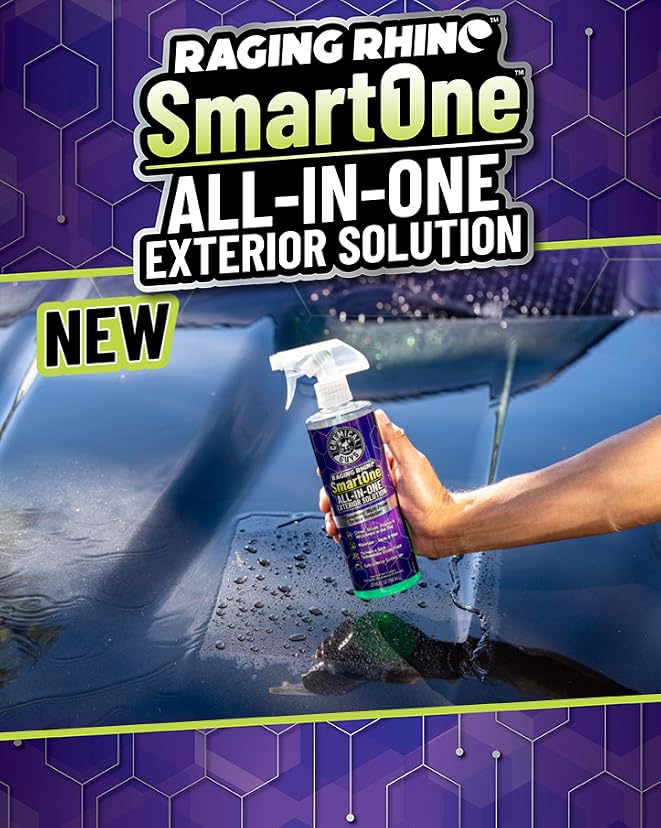
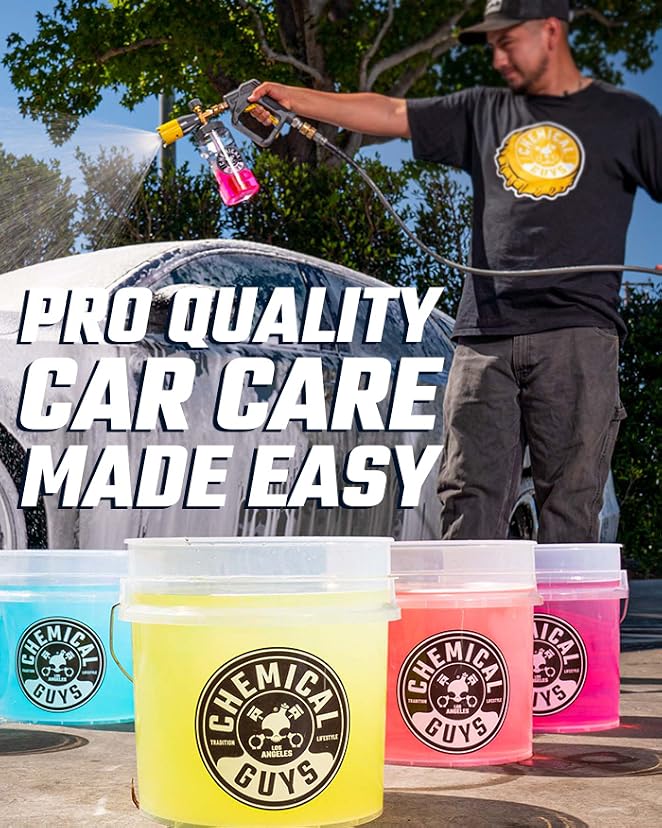
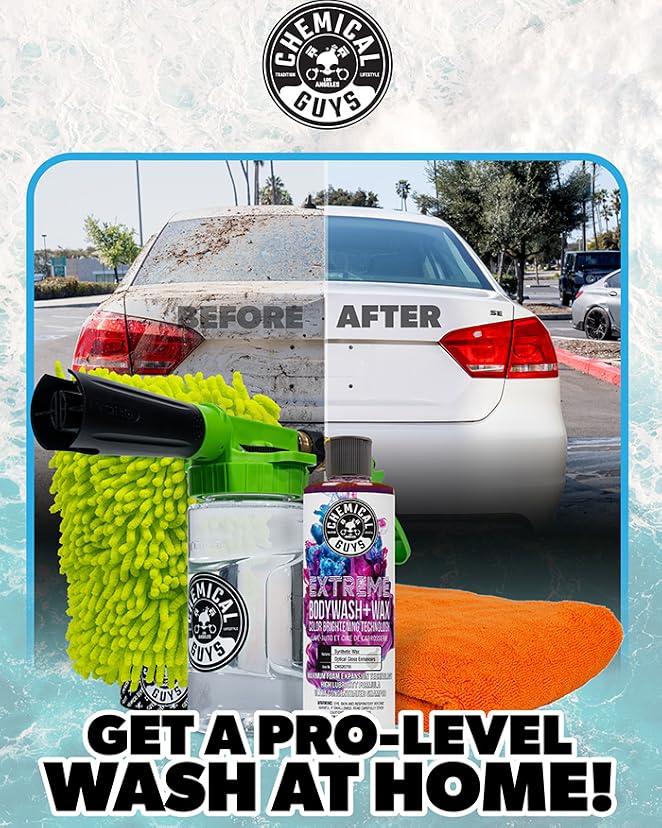
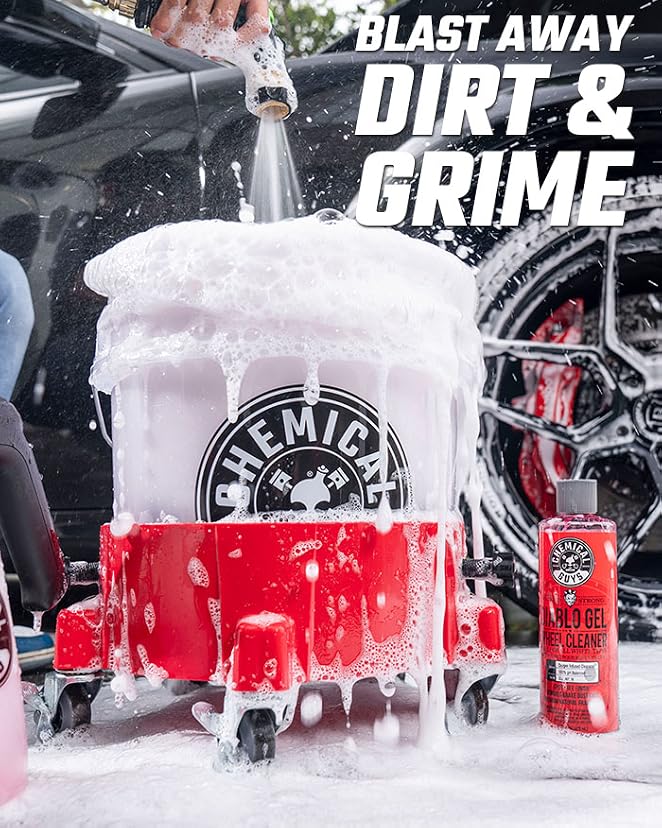
Marketing copy from Chemical Guys, via Amazon. Not editorial.
Weekly pick
One product, one safety verdict, every week. No spam.
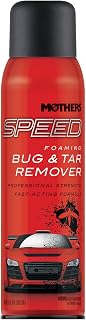
Mothers
Speed Foaming Bug & Tar Remover
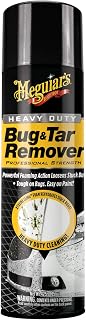
Meguiar's
Heavy Duty Bug & Tar Remover (G180515, 15 oz Aerosol)
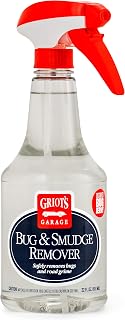
Griot's Garage
Bug & Smudge Remover
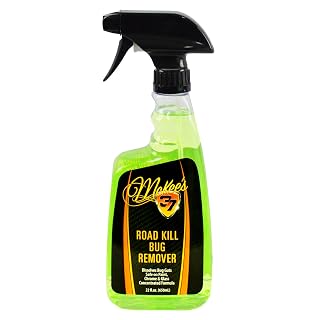
McKee's 37
Road Kill Bug Remover
As an Amazon Associate I earn from qualifying purchases. Full disclosure

Community
0 postsShare how you use this product
Drop a quick comment or post a full review with photos and a star rating.
Sign in to postNew here? Create a free account.