CarCareTruth Score
Decent.
Saved to your guest loadout. Sign up to also save to your Cabinet (consumables) or Kit (tools you own).
As an Amazon Associate I earn from qualifying purchases. Full disclosure
The manufacturer's Safety Data Sheet classifies this product with one or more GHS Category 1 health hazards — the most severe tier. The hazard statements in quotes below are the verbatim GHS language from the SDS, as required by OSHA's Hazard Communication Standard. The line under each statement translates the GHS classification into plain language.
GHS Category 1 aspiration toxicity — thin, oily liquids can slip into the lungs if swallowed, causing chemical pneumonia.
If swallowed:
The aspiration hazard (H304) is about the liquid being swallowed and reaching the airway, not about breathing fumes during normal use.
Call Poison Control immediately at 1-800-222-1222 (US, 24/7, free) and have the product container with you. Poison Control's standing guidance is to not induce vomiting after chemical exposure; they will direct first-aid steps based on the specific product.
About this product's hazards. This product's Safety Data Sheet uses signal word DANGER.Read the manufacturer's SDS and follow all safety instructions before use. CarCareTruth ratings translate the manufacturer's safety sheet. They do not replace the SDS or substitute for a hazard assessment specific to your task.
Health score is for adult use as intended, per the manufacturer's SDS. It does not model child ingestion, accidental spill cleanup, or off-label use. See the safety panel below for full hazard classification, and /disclaimer for the full editorial scope.
GHS hazard codes are quoted from the manufacturer’s Safety Data Sheet. PPE tiers below translate those codes and the listed ingredient chemistry; they are not CarCareTruth recommendations.
Show details for all categories ▾Hide details ▴
Beyond SDS: translated from the ingredient chemistry
Eye irritation classification is present from the SDS · aerosol mist can reach eye height during application. Safety glasses are appropriate for routine use. No serious eye damage classification is present; the DANGER signal word is driven by aspiration and organ-damage hazard routes, not an ocular pathway.
U.S. regulatory standard
29 CFR 1910.133(a)(1)
“The employer shall ensure that each affected employee uses appropriate eye or face protection when exposed to eye or face hazards from… liquid chemicals…”
ANSI Z87.1 (incorporated via §1910.6)
OSHA standards apply to workplaces. Cited here as the U.S. reference threshold for the underlying hazard class.
CarCareTruth publishes the cited sources verbatim and does not advise what action a user should take. Consult the full SDS before use.
Beyond SDS: translated from the ingredient chemistry
Skin irritation classification is present from the SDS · repeated or prolonged contact with the petroleum-solvent carrier can cause irritation. Nitrile gloves are appropriate for routine use. No skin corrosion classification is present; the DANGER signal word is driven by aspiration and organ-damage routes, not a dermal corrosion pathway.
U.S. regulatory standard
29 CFR 1910.138(a)
“appropriate hand protection when employees' hands are exposed to hazards such as those from… chemicals which produce an adverse effect on the skin or eyes…”
OSHA standards apply to workplaces. Cited here as the U.S. reference threshold for the underlying hazard class.
CarCareTruth publishes the cited sources verbatim and does not advise what action a user should take. Consult the full SDS before use.
Translated from the manufacturer’s Safety Data Sheet, Section 8
The SDS §2 classifies single-exposure organ damage to the cardiovascular system via aerosol propellant inhalation. Respiratory protection is required. Use outdoors or with powered ventilation; never apply in a sealed garage.
U.S. regulatory standard
29 CFR 1910.134; 1910.138; 1910.1000
“the primary objective shall be to prevent atmospheric contamination… When effective engineering controls are not feasible… appropriate respirators shall be used.”
OSHA standards apply to workplaces. Cited here as the U.S. reference threshold for the underlying hazard class.
CarCareTruth publishes the cited sources verbatim and does not advise what action a user should take. Consult the full SDS before use.
The published Safety Data Sheet for this product does not specify ventilation protection for consumer use.
Workplace context
29 CFR 1910.134(a); 1910.1000
“the primary objective shall be to prevent atmospheric contamination [via] accepted engineering control measures (for example, enclosure or confinement of the operation, general and local ventilation…).”
Triggered by GHS H336 on the SDS.
OSHA standards apply to workplaces. Cited here as the U.S. reference threshold for the underlying hazard class.
PPE tiers translate the manufacturer’s SDS and U.S. regulatory standards. Not professional safety advice. How we report safety.
Scope of these PPE tiers. The tiers on this page translate the product's Safety Data Sheet where one is published, plus its ingredient chemistry, into a comparable rating. They describe a formulation, not a situation: a tier is not a safety determination for any specific user, task, quantity, or environment. The manufacturer's label and use instructions govern how the product is handled. Where the product is used at work, the employer's PPE program and hazard assessment under 29 CFR 1910.132 decide what protection is selected, not this page.
No warranties. CarCareTruth makes no warranties, express or implied, and expressly disclaims the implied warranties of merchantability and fitness for a particular purpose.
Last reviewed July 31, 2026
TL;DR Rated DANGER by GHS · the aerosol propellant causes single-exposure organ damage to the cardiovascular system via inhalation, and the petroleum-solvent carrier has an aspiration hazard. Wear safety glasses and nitrile gloves; respiratory protection is required. Reliably eliminates squeaks in door seals and window tracks, dries clean, straw nozzle reaches tight gaps · keep it off painted panels.
Aerosol silicone lubricant for rubber door seals, weatherstripping, window tracks, and plastic trim slides. Spray, let it flash dry, and the silicone film reduces friction and prevents stiffening. The straw fits tight hinge gaps and weatherstrip channels without overspray on adjacent paint. Community reviews confirm four to eight weeks of hold on outdoor-exposed seals · adequate for seasonal maintenance. The Dry Type label means no oily residue that traps dust. Keep it off any surface that may need bodywork · silicone contamination prevents paint adhesion.
Car owners with squeaky door seals, sticky window tracks, or binding weatherstripping. Skip it for metal-on-metal contact · load-bearing hinges, fasteners, chains · and never near brake components; white lithium grease is the right tool for those. Anyone who cannot work outdoors or with powered ventilation should choose a pump-trigger silicone formula.
DANGER signal word. The aerosol propellant carries a single-exposure organ-damage classification affecting the cardiovascular system via inhalation · respiratory protection is required. The petroleum-solvent carrier has an aspiration hazard if swallowed; eye irritation and skin irritation classifications are present. Wear safety glasses and nitrile gloves; use outdoors or with powered ventilation. VOC ≤390 g/L; California Prop 65 warning applies.
The Safety Data Sheet for 3M Silicone Lubricant (Dry Type) carries a DANGER signal word, with classified hazards including H222 (extremely flammable aerosol); H229 (pressurized container: may burst if heated); H315 (causes skin irritation). The Amazon listing also carries a California Prop 65 warning. See the PPE breakdown above for use-case-specific guidance translated from the SDS hazard codes.
CarCareTruth scores 3M Silicone Lubricant (Dry Type) at 6.2 out of 10 on the composite CCT score, with a health sub-score of 5.0/10. The CCT score blends real-world effectiveness, ingredient health impact pulled from the manufacturer's safety sheet, and environmental footprint against a published category rubric. See the methodology link on this page for the full scoring breakdown.
Per the Safety Data Sheet ingredient disclosure: From SDS §3 (Singapore GHS, 2024-03-18): Poly(Dimethylsiloxane) (CAS 63148-62-9, 1-10%), Hydrotreated Light Naphtha Petroleum (CAS 64742-49-0, 20-40%), Propane (CAS 74-98-6, 20-40%), Acetone (CAS 67-64-1, 20-40%), Solvent Naphtha Petroleum Light Aliphatic (CAS 64742-89-8, 1-5%), Methylcyclohexane (CAS 108-87-2, 1-5%). US back label: Propane (74-98-6); Acetone (67-64-1); Heptane (142-82-5); Polydimethylsiloxane (63148-62-9).
Marketing copy from 3M, via Amazon. Not editorial.
Weekly pick
One product, one safety verdict, every week. No spam.
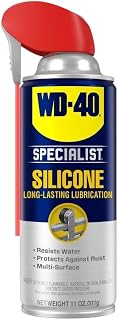
WD-40
Specialist Water Resistant Silicone Lubricant
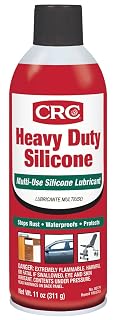
CRC
Heavy Duty Silicone Lubricant (11 oz aerosol)
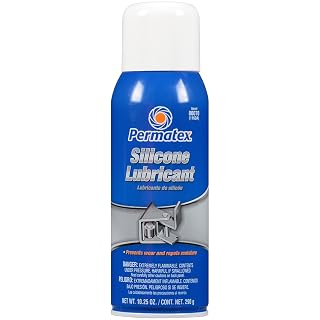
Permatex
Silicone Spray Lubricant (10.25 oz aerosol)
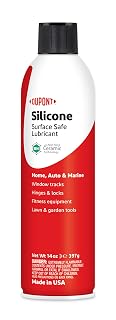
DuPont
Silicone Lubricant Aerosol (DS0614101)
As an Amazon Associate I earn from qualifying purchases. Full disclosure

Community
0 postsShare how you use this product
Drop a quick comment or post a full review with photos and a star rating.
Sign in to postNew here? Create a free account.