CarCareTruth Score
Decent.
Opens Amazon in a new tab. No account needed to look.
Saved to your guest loadout. Sign up to also save to your Cabinet (consumables) or Kit (tools you own).
As an Amazon Associate I earn from qualifying purchases. Full disclosure
Prices may varyThe manufacturer's Safety Data Sheet classifies this product with one or more GHS Category 1 health hazards — the most severe tier. The hazard statements in quotes below are the verbatim GHS language from the SDS, as required by OSHA's Hazard Communication Standard. The line under each statement translates the GHS classification into plain language.
GHS Category 1 aspiration toxicity — thin, oily liquids can slip into the lungs if swallowed, causing chemical pneumonia.
If swallowed:
The aspiration hazard (H304) is about the liquid being swallowed and reaching the airway, not about breathing fumes during normal use.
Call Poison Control immediately at 1-800-222-1222 (US, 24/7, free) and have the product container with you. Poison Control's standing guidance is to not induce vomiting after chemical exposure; they will direct first-aid steps based on the specific product.
About this product's hazards. This product's Safety Data Sheet uses signal word DANGER.Read the manufacturer's SDS and follow all safety instructions before use. CarCareTruth ratings translate the manufacturer's safety sheet. They do not replace the SDS or substitute for a hazard assessment specific to your task.
Health score is for adult use as intended, per the manufacturer's SDS. It does not model child ingestion, accidental spill cleanup, or off-label use. See the safety panel below for full hazard classification, and /disclaimer for the full editorial scope.
GHS hazard codes are quoted from the manufacturer’s Safety Data Sheet. PPE tiers below translate those codes and the listed ingredient chemistry; they are not CarCareTruth recommendations.
Show details for all categories ▾Hide details ▴
Only when: misting overhead
Beyond SDS: translated from the ingredient chemistry
The DANGER signal word here is driven by an aspiration/swallowing hazard classification · an ingestion pathway with no eye-contact relevance. SDS §2 carries no eye irritation or serious eye damage code. SDS §8 only invokes eyewear via generic boilerplate. Eye protection is situational: wear safety glasses when spraying overhead or into confined gaps where mist can fall back toward the face.
CarCareTruth publishes the cited sources verbatim and does not advise what action a user should take. Consult the full SDS before use.
Translated from the manufacturer’s Safety Data Sheet, Section 8
Skin irritation is classified at the mixture level · repeated or prolonged contact with the petroleum-distillate and heptane carriers can defat skin and cause irritation. SDS §8 specifies nitrile or butyl rubber gloves when prolonged skin contact is likely. Gloves are warranted for any extended application session, not unconditionally.
U.S. regulatory standard
29 CFR 1910.138(a)
“appropriate hand protection when employees' hands are exposed to hazards such as those from… chemicals which produce an adverse effect on the skin or eyes…”
OSHA standards apply to workplaces. Cited here as the U.S. reference threshold for the underlying hazard class.
CarCareTruth publishes the cited sources verbatim and does not advise what action a user should take. Consult the full SDS before use.
Only when: in enclosed space · prolonged use
Beyond SDS: translated from the ingredient chemistry
No respiratory irritation classification is present at the mixture level · the SDS lists narcotic effects (drowsiness/dizziness) but not respiratory irritation. SDS §8 invokes respiratory protection only via the boilerplate 'in case of insufficient ventilation' trigger. Brief outdoor aerosol use does not require a respirator; an enclosed garage or prolonged application does.
U.S. regulatory standard
29 CFR 1910.1200(f); 1910.132(d)
“The employer shall assess the workplace to determine if hazards are present, or are likely to be present, which necessitate the use of personal protective equipment.”
OSHA standards apply to workplaces. Cited here as the U.S. reference threshold for the underlying hazard class.
CarCareTruth publishes the cited sources verbatim and does not advise what action a user should take. Consult the full SDS before use.
The published Safety Data Sheet for this product does not specify ventilation protection for consumer use.
Workplace context
29 CFR 1910.134(a); 1910.1000
“the primary objective shall be to prevent atmospheric contamination [via] accepted engineering control measures (for example, enclosure or confinement of the operation, general and local ventilation…).”
Triggered by GHS H336 on the SDS.
OSHA standards apply to workplaces. Cited here as the U.S. reference threshold for the underlying hazard class.
PPE tiers translate the manufacturer’s SDS and U.S. regulatory standards. Not professional safety advice. How we report safety.
Scope of these PPE tiers. The tiers on this page translate the product's Safety Data Sheet where one is published, plus its ingredient chemistry, into a comparable rating. They describe a formulation, not a situation: a tier is not a safety determination for any specific user, task, quantity, or environment. The manufacturer's label and use instructions govern how the product is handled. Where the product is used at work, the employer's PPE program and hazard assessment under 29 CFR 1910.132 decide what protection is selected, not this page.
No warranties. CarCareTruth makes no warranties, express or implied, and expressly disclaims the implied warranties of merchantability and fitness for a particular purpose.
This product ranks #4 of 6 in Silicone Lubricant.Three above it ↓
Last reviewed June 12, 2026
Reliable on door seals, weatherstripping, window tracks, hinges, and locks · community confirms 4-8 weeks on outdoor rubber. DANGER signal word from an aspiration hazard, not an inhalation risk; the petroleum-distillate carrier warrants gloves for extended use. Keep it off painted panels.
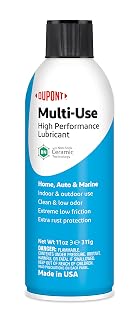
An aerosol silicone lubricant from the Finish Line / DuPont consumer-lubricants line · the modern successor to the legacy "DuPont Teflon Silicone Lubricant" under the same DS0614101 part number. The current can pitches "Non-Stick Ceramic Technology" (boron-nitride in a silicone-oil base), but the product listing copy still references the legacy Teflon additive. The 2021 SDS no longer discloses PTFE in Section 3 · the reformulation is real: today's can is the ceramic-tech build, not the original Teflon one. Standard wide-fan valve, no precision straw. Broad, well-rated owner feedback confirms first-application effectiveness on squeaks and sticky tracks, with 4-8 week durability on outdoor rubber. Keep it off painted panels; silicone residue prevents primer and paint from sticking.
Best for squeaky door seals, sticky window channels, binding sunroof tracks, and stiff weatherstripping. Skip it for metal-on-metal under load · white lithium grease is the right tool there · and keep it away from brake components.
DANGER signal word from an aspiration hazard (a swallowing pathway), not an inhalation hazard in normal use. No respiratory irritation code at the mixture level. Skin irritation is classified · gloves for extended sessions; eye protection is situational since no eye-irritation code is present. Use outdoors or with the garage door open: the heptane/petroleum-distillate carrier and propane/butane propellant dissipate rapidly outdoors but can concentrate indoors. No California Prop 65 warning per the 2021 SDS.
The product listing copy and feature bullets still reference 'Teflon Fluoropolymer,' but the current 2021 SDS Section 3 no longer discloses PTFE as an ingredient. The 2008-era legacy MSDS listed PTFE at 0.01-2%; the 2021 reformulation appears to have shifted the headline additive from Teflon to a boron-nitride ceramic particle (the 'Non-Stick Ceramic Technology' on the current can). Treat the SDS as the authoritative ingredient document · current cans are scored as PFAS-free.
The DANGER label is driven by an aspiration hazard classification · the spray may be fatal if swallowed and enters the airways. That's an ingestion/swallowing pathway, not an inhalation hazard during normal use. Extreme flammability also contributes to the DANGER label as a physical hazard. For a home detailer applying the spray to door seals or window tracks, the practical risk is: don't ingest it, keep it away from ignition sources, and wear gloves for extended sessions.
No. Keep silicone spray off all painted surfaces, primer, and any area that may need touch-up paint or body-panel adhesive bonding. Silicone residue is very difficult to fully degrease and prevents paint and primer from adhering · a known issue in body shop work. Apply only to rubber seals, weatherstripping, window tracks, hinges, locks, and plastic trim slides.
The current the product listing imagery does not confirm a permanently attached straw or detachable precision straw on the 14 oz can · it shows a standard wide-fan aerosol valve. If you need a focused stream for tight hinge gaps or weatherstripping channels, a competitor with a confirmed straw nozzle is a better choice.
No. SDS §15 (Rev 2, 2021-01-18) explicitly states 'California Proposition 65 List: None.' The product listing also does not display a Prop 65 warning. The petroleum-distillate fractions disclosed in §3 are hydrotreated, which reduces trace impurities that commonly trigger Prop 65 on other petroleum-carrier aerosols.
Marketing copy from DuPont, via Amazon. Not editorial.
Weekly pick
One product, one safety verdict, every week. No spam.
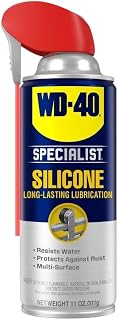
WD-40
Specialist Water Resistant Silicone Lubricant
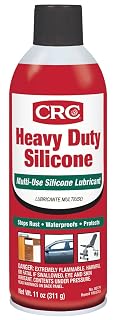
CRC
Heavy Duty Silicone Lubricant (11 oz aerosol)
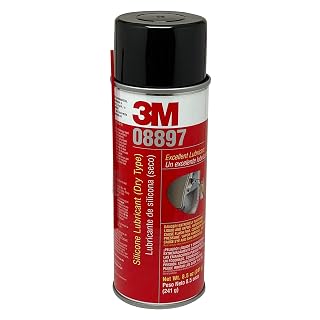
3M
Silicone Lubricant (Dry Type)
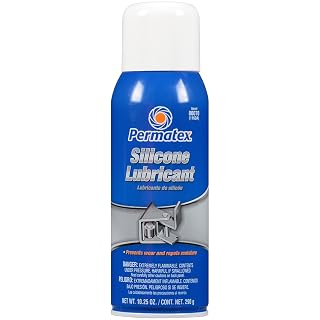
Permatex
Silicone Spray Lubricant (10.25 oz aerosol)
As an Amazon Associate I earn from qualifying purchases. Full disclosure

Community
0 postsShare how you use this product
Drop a quick comment or post a full review with photos and a star rating.
Sign in to postNew here? Create a free account.