CarCareTruth Score
Decent.
Opens Amazon in a new tab. No account needed to look.
Saved to your guest loadout. Sign up to also save to your Cabinet (consumables) or Kit (tools you own).
As an Amazon Associate I earn from qualifying purchases. Full disclosure
Prices may varyThe manufacturer's Safety Data Sheet classifies this product with one or more GHS Category 1 health hazards — the most severe tier. The hazard statements in quotes below are the verbatim GHS language from the SDS, as required by OSHA's Hazard Communication Standard. The line under each statement translates the GHS classification into plain language.
GHS Category 1 aspiration toxicity — thin, oily liquids can slip into the lungs if swallowed, causing chemical pneumonia.
If swallowed, inhaled, or splashed in eyes:
Call Poison Control immediately at 1-800-222-1222 (US, 24/7, free) and have the product container with you. Poison Control's standing guidance is to not induce vomiting after chemical exposure; they will direct first-aid steps based on the specific product.
About this product's hazards. This product's Safety Data Sheet uses signal word danger. Read the manufacturer's SDS and follow all safety instructions before use. CarCareTruth ratings translate the manufacturer's safety sheet. They do not replace the SDS or substitute for a hazard assessment specific to your task.
Health score is for adult use as intended, per the manufacturer's SDS. It does not model child ingestion, accidental spill cleanup, or off-label use. See the safety panel below for full hazard classification, and /disclaimer for the full editorial scope.
GHS hazard codes are quoted from the manufacturer’s Safety Data Sheet. PPE tiers below translate those codes and the listed ingredient chemistry; they are not CarCareTruth recommendations.
Show details for all categories ▾Hide details ▴
Only when: when spraying
Translated from the manufacturer’s Safety Data Sheet, Section 8
SDS Section 8: 'Wear splash-proof safety goggles if material could be misted or splashed into eyes.' No H319/H318 at Section 2 mixture level; the aerosol mist near the face during spray application is the specific trigger.
CarCareTruth publishes the cited sources verbatim and does not advise what action a user should take. Consult the full SDS before use.
Only when: handling concentrate
Translated from the manufacturer’s Safety Data Sheet, Section 8
SDS Section 8 names hand and body protection ('wear resistant gloves'; 'choose body protection according to the amount and concentration of the dangerous substance') as boilerplate, with no H315/H317/H314 at Section 2 mixture level. Shown as situational per the full-cautious rule rather than omitted, since Section 8 does name the gear.
CarCareTruth publishes the cited sources verbatim and does not advise what action a user should take. Consult the full SDS before use.
Only when: when spraying · in enclosed space
Translated from the manufacturer’s Safety Data Sheet, Section 8
SDS Section 8: 'In case of vapour formation use a respirator with an approved filter... In case of dust or aerosol formation use respirator with an approved filter.' H336 (narcotic effect) is present at Section 2 but H335 is not, so this stays at situational rather than escalating to recommended.
U.S. regulatory standard
29 CFR 1910.1200(f); 1910.132(d)
“The employer shall assess the workplace to determine if hazards are present, or are likely to be present, which necessitate the use of personal protective equipment.”
OSHA standards apply to workplaces. Cited here as the U.S. reference threshold for the underlying hazard class.
CarCareTruth publishes the cited sources verbatim and does not advise what action a user should take. Consult the full SDS before use.
The published Safety Data Sheet for this product does not specify ventilation protection for consumer use.
Workplace context
29 CFR 1910.134(a); 1910.1000
“the primary objective shall be to prevent atmospheric contamination [via] accepted engineering control measures (for example, enclosure or confinement of the operation, general and local ventilation…).”
Triggered by GHS H336 on the SDS.
OSHA standards apply to workplaces. Cited here as the U.S. reference threshold for the underlying hazard class.
PPE tiers translate the manufacturer’s SDS and U.S. regulatory standards. Not professional safety advice. How we report safety.
This product ranks #20 of 24 in Penetrating Oil / Multi-Purpose Lubricant.Three above it ↓
Last reviewed July 31, 2026
TL;DR DANGER-rated aerosol: the safety data sheet warns it can be fatal if swallowed and enters the lungs, and concentrated vapor can cause drowsiness, so ventilate when you spray it. No independent data confirms its penetration speed or its rust-protection claim.
Penetrating oil wicks into a corroded thread and breaks rust's grip so the fastener turns again. Spray it on, let it soak, then work the bolt. Niteo, which owns Pyroil and makes this can, discloses no distinct rust-inhibitor ingredient beyond the base carrier, and no independent data covers its penetration speed or how long a freed fastener stays loose. Treat the label's claims (frees rusted parts, protects against rust, dries wet ignition systems, stops squeaks) as manufacturer claims, not confirmed results.
A reasonable, budget pick if you already shop the Menards or farm-and-fleet aisle where Pyroil is sold and want a basic aerosol penetrant on hand. Anyone wanting documented penetration speed or a proven rust-inhibitor package has better-tested options, since neither claim is independently confirmed here, and the swallowing hazard behind the DANGER rating favors non-aerosol alternatives for frequent use.
The DANGER rating is driven by an aspiration hazard: if swallowed, the liquid can enter the lungs instead of the stomach. Concentrated vapor can also cause drowsiness, so an unventilated space is where exposure adds up fastest. Eye and skin protection are named only as general precautions, not a chemistry-driven hazard. No Prop 65 warning applies, though the data sheet is about eight years old (pulled from an archive; the live host was down) with no newer revision found. The carrier is toxic to aquatic life and not confirmed biodegradable; VOC content is low.
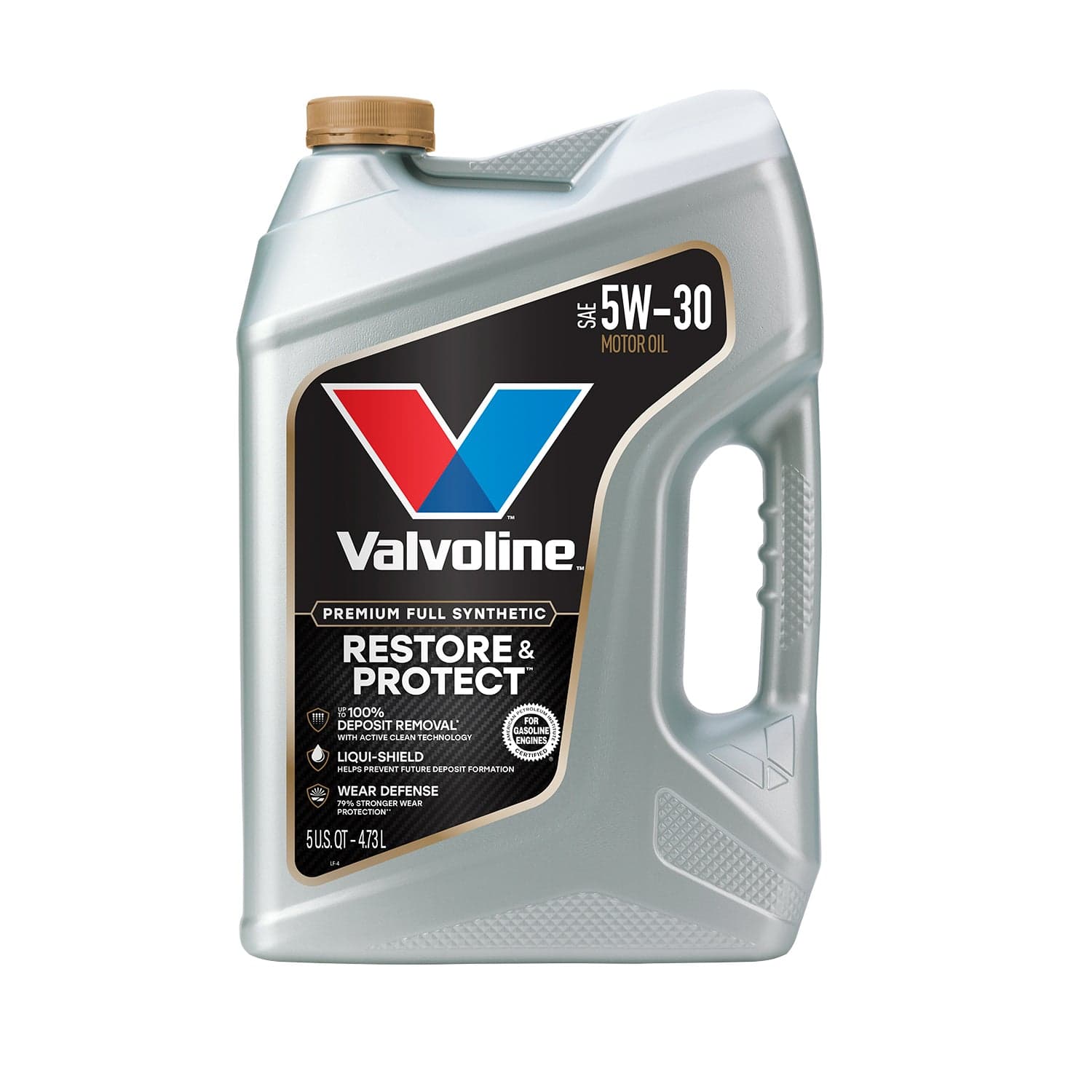
Niteo Products, LLC owns the Pyroil brand outright and makes this can itself; Valvoline is not the manufacturer here. The safety data sheet lists Niteo Products as the supplier of record, and the official Pyroil product site is a Niteo-operated site. Niteo separately licenses the Valvoline name for a different line of maintenance chemicals, which is why Amazon's listing brands this can 'by Valvoline' even though Pyroil itself belongs to Niteo, not Valvoline. Worth knowing if you're comparing it against a genuine Valvoline house-brand chemical.
The safety data sheet classifies an aspiration hazard: if swallowed, the thin petroleum-based liquid can enter the lungs instead of the stomach, which is a serious medical risk regardless of how the product is normally used (sprayed on a fastener, not ingested). That single classification drives the DANGER rating. The same data sheet also notes the vapor can cause drowsiness or dizziness in a poorly ventilated space, though that effect on its own would not have forced DANGER.
No. The safety data sheet states explicitly that the product does not contain any chemicals known to the State of California to cause cancer, birth defects, or reproductive harm, and no Prop 65 warning appears on the current Amazon listing either. None of the four disclosed ingredients matches a substance on California's Proposition 65 list.
The safety data sheet does not disclose a distinct corrosion-inhibitor ingredient separate from the base carrier, so any rust protection comes from the light oil film the carrier leaves behind rather than a dedicated additive package. That puts rust protection here below the category's better-documented corrosion-inhibitor formulas, and no independent, product-specific test data confirms how long the residue lasts.
The safety data sheet notes breathing concentrated vapor or aerosol mist can cause drowsiness or dizziness, and recommends a respirator only if vapor or aerosol builds up, which points to keeping air moving (garage door open, or a fan running) rather than spraying it in a sealed, unventilated space. It is not classified for the stronger respiratory-irritation hazard some other penetrating oils carry.
Marketing copy from Valvoline, via Amazon. Not editorial.
Weekly pick
One product, one safety verdict, every week. No spam.
Fluid Film
NAS Aerosol Penetrant & Lubricant
Kroil
Penetrant Original Aerosol
Made Here Co.
Multi-use Lubricating Penetrant Oil
Boeshield
T-9 Rust & Corrosion Protection
As an Amazon Associate I earn from qualifying purchases. Full disclosure

Community
0 postsShare how you use this product
Drop a quick comment or post a full review with photos and a star rating.
Sign in to postNew here? Create a free account.