CarCareTruth Score
Decent, but wear gloves and ventilate.
Saved to your guest loadout. Sign up to also save to your Cabinet (consumables) or Kit (tools you own).
As an Amazon Associate I earn from qualifying purchases. Full disclosure
The manufacturer's Safety Data Sheet classifies this product with one or more GHS Category 1 health hazards — the most severe tier. The hazard statements in quotes below are the verbatim GHS language from the SDS, as required by OSHA's Hazard Communication Standard. The line under each statement translates the GHS classification into plain language.
GHS Category 2 acute oral toxicity — classified as toxic if swallowed.
GHS Category 2 acute dermal toxicity — classified as toxic in contact with skin.
GHS Category 2 acute inhalation toxicity — classified as toxic if inhaled.
If swallowed, inhaled or on skin:
Call Poison Control immediately at 1-800-222-1222 (US, 24/7, free) and have the product container with you. Poison Control's standing guidance is to not induce vomiting after chemical exposure; they will direct first-aid steps based on the specific product.
About this product's hazards. This product's Safety Data Sheet uses signal word DANGER.Read the manufacturer's SDS and follow all safety instructions before use. CarCareTruth ratings translate the manufacturer's safety sheet. They do not replace the SDS or substitute for a hazard assessment specific to your task.
Health score is for adult use as intended, per the manufacturer's SDS. It does not model child ingestion, accidental spill cleanup, or off-label use. See the safety panel below for full hazard classification, and /disclaimer for the full editorial scope.
GHS hazard codes are quoted from the manufacturer’s Safety Data Sheet. PPE tiers below translate those codes and the listed ingredient chemistry; they are not CarCareTruth recommendations.
Show details for all categories ▾Hide details ▴
Translated from the manufacturer’s Safety Data Sheet, Section 2
H370 STOT SE Cat 1 targets the optic nerve (methanol). SDS §2 lists eyes as a target organ for single-exposure damage. GHS06 and GHS08 pictograms reinforce. Aerosol mist at face level during windshield application creates a direct eye exposure pathway.
CarCareTruth publishes the cited sources verbatim and does not advise what action a user should take. Consult the full SDS before use.
Translated from the manufacturer’s Safety Data Sheet, Section 2
H311 (toxic in contact with skin, Acute Tox dermal Cat 3). Methanol absorbs through skin causing systemic poisoning. GHS06 skull-and-crossbones pictogram present. SDS §2 classifies dermal toxicity at Cat 3.
U.S. regulatory standard
29 CFR 1910.132(d); 1910.138(a)
“appropriate hand protection when employees' hands are exposed to hazards such as those from skin absorption of harmful substances.”
OSHA standards apply to workplaces. Cited here as the U.S. reference threshold for the underlying hazard class.
CarCareTruth publishes the cited sources verbatim and does not advise what action a user should take. Consult the full SDS before use.
Translated from the manufacturer’s Safety Data Sheet, Section 2
H331 (toxic if inhaled, Cat 3). Aerosol format generates methanol mist at face level during application. Outdoor use mitigates sustained exposure but does not eliminate inhalation risk from pressurized spray. GHS06 floor applies.
U.S. regulatory standard
29 CFR 1910.134(a)(1)–(2)
“When effective engineering controls are not feasible… appropriate respirators shall be used.”
OSHA standards apply to workplaces. Cited here as the U.S. reference threshold for the underlying hazard class.
CarCareTruth publishes the cited sources verbatim and does not advise what action a user should take. Consult the full SDS before use.
No PPE specified in published sources for ventilation. Absence does not imply “not needed” — consult the full Safety Data Sheet.
PPE tiers translate the manufacturer’s SDS and U.S. regulatory standards. Not professional safety advice. How we report safety.
Scope of these PPE tiers. The tiers on this page translate the product's Safety Data Sheet where one is published, plus its ingredient chemistry, into a comparable rating. They describe a formulation, not a situation: a tier is not a safety determination for any specific user, task, quantity, or environment. The manufacturer's label and use instructions govern how the product is handled. Where the product is used at work, the employer's PPE program and hazard assessment under 29 CFR 1910.132 decide what protection is selected, not this page.
No warranties. CarCareTruth makes no warranties, express or implied, and expressly disclaims the implied warranties of merchantability and fitness for a particular purpose.
Last reviewed May 26, 2026
TL;DR Community-confirmed fast ice clearing in general winter conditions; the −88°F label claim is not independently verified, but the methanol chemistry supports strong low-temp performance. No documented surface damage. Health 1.0/10: methanol-based DANGER formula, acute toxicity on all three exposure routes, optic nerve damage risk. Eye, skin, and respiratory protection are warranted by the SDS classifications.
Prestone AS244 is a methanol-based 17 oz aerosol deicer. Reviews describe rapid clearing within seconds; repeat buyers stock up each winter. Methanol is more effective at extreme cold than isopropyl alcohol but significantly more toxic. No documented paint, seal, or trim damage from normal windshield use. The built-in polycarbonate scraper cap is functional but receives mixed marks. The 17 oz can stretches further per application than the 11 oz AS242.
Best for cold-climate drivers who park outside and need rapid ice clearing without scraping. Skip it if children or pets have access to your vehicle supplies: methanol is acutely poisonous. Those concerned about toxicity should use an IPA-based deicer, which scores higher on health while still clearing ice at moderate temperatures.
The SDS DANGER classification reflects H301 (toxic if swallowed), H311 (toxic in contact with skin), H331 (toxic if inhaled), and H370 (organ toxicity targeting optic nerve and CNS). Genuine acute toxicity, not a flammability warning. Proposition 65 applies for reproductive and developmental harm. Eye protection, chemical-resistant gloves, and respiratory precaution are all justified by the SDS hazard classifications. Environmental: high VOC from methanol; biodegradable per SDS §12; neutral road-runoff pathway, no aquatic toxicity concern.
Methanol (methyl alcohol) at 45-70% by weight per SDS §3. This is NOT isopropyl alcohol (IPA). Methanol is the more effective ice-melting alcohol but carries serious acute toxicity, classified as toxic by all three exposure routes (swallowed, skin contact, inhaled) and causes irreversible optic nerve damage.
AS244 is 17 oz; AS242 is 11 oz. Both use the same methanol-based formula (SDS002) with the same chemistry, H-codes, and performance characteristics. The 17 oz can offers better coverage economy per application.
The product label claims deep freeze protection to −88°F. SDS §9 confirms a melting/freezing point below −58°F (below −50°C). Cold-climate community evidence confirms fast ice clearing in typical winter conditions, though no reviews specifically validate performance at the extreme −88°F label claim.
No community reports of paint etching, rubber seal damage, or trim discoloration from normal windshield application. The product is sprayed on glass and ice · incidental contact with paint and seals during runoff has not produced documented damage complaints.
The DANGER signal word reflects acute toxicity from methanol on all three exposure routes (oral, dermal, inhalation) AND specific organ toxicity (STOT-SE Cat 1 targeting the central nervous system and optic nerve). It also carries flammable aerosol Cat 1 classification. This is a genuine health-driven DANGER, not a physical-only flammability warning.
Marketing copy from Prestone, via Amazon. Not editorial.
Weekly pick
One product, one safety verdict, every week. No spam.
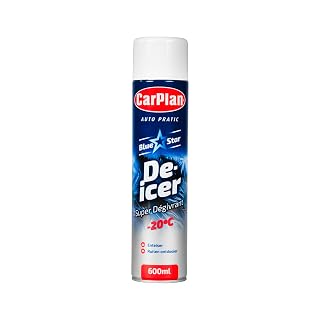
CarPlan
Blue Star De-Icer Spray
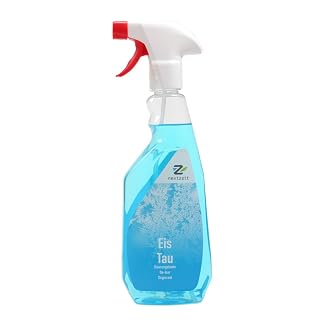
nextzett
Eistau De-Icer Spray
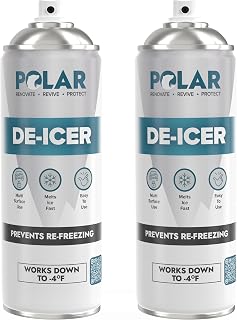
Polar Specialist Coatings
Polar De-Icer Spray
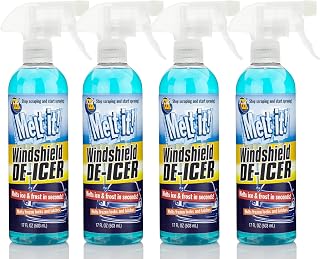
EZR
Melt it! Windshield De-Icer, 17 oz (4-pack)
As an Amazon Associate I earn from qualifying purchases. Full disclosure

Community
0 postsShare how you use this product
Drop a quick comment or post a full review with photos and a star rating.
Sign in to postNew here? Create a free account.