CarCareTruth Score
Decent, but it's tough on the environment.
Opens Amazon in a new tab. No account needed to look.
Saved to your guest loadout. Sign up to also save to your Cabinet (consumables) or Kit (tools you own).
As an Amazon Associate I earn from qualifying purchases. Full disclosure
Prices may varyHealth score is for adult use as intended, per the manufacturer's SDS. It does not model child ingestion, accidental spill cleanup, or off-label use. See the safety panel below for full hazard classification, and /disclaimer for the full editorial scope.
GHS hazard codes are quoted from the manufacturer’s Safety Data Sheet. PPE tiers below translate those codes and the listed ingredient chemistry; they are not CarCareTruth recommendations.
Show details for all categories ▾Hide details ▴
Only when: splash risk
Translated from the manufacturer’s Safety Data Sheet, Section 8
SDS s8 specifies splash-proof goggles or safety glasses during handling. No H318 or H319 classification in SDS s2; the goggles instruction in s8 is based on the liquid-pour splash scenario, not on a GHS eye-irritation classification. Situational tier applies during concentrate pour or drain work where splash is possible.
CarCareTruth publishes the cited sources verbatim and does not advise what action a user should take. Consult the full SDS before use.
Only when: handling concentrate · splash risk
Translated from the manufacturer’s Safety Data Sheet, Section 8
H302 (harmful if swallowed, Cat 4) applies to the ethylene glycol in this concentrate. The same chemistry that drives the oral hazard is present on skin contact during drain and pour operations. SDS s8 specifies chemical-resistant gloves where skin contact is possible. No H315 skin irritation code in SDS s2; skin protection is specified in s8 based on the H302-classified chemistry.
U.S. regulatory standard
29 CFR 1910.132(d); 1910.1200(f)
“The employer shall assess the workplace to determine if hazards are present, or are likely to be present, which necessitate the use of personal protective equipment.”
OSHA standards apply to workplaces. Cited here as the U.S. reference threshold for the underlying hazard class.
CarCareTruth publishes the cited sources verbatim and does not advise what action a user should take. Consult the full SDS before use.
Only when: in enclosed space
Translated from the ingredient chemistry
EG/PG vapor pressure is negligible at ambient temperature; no inhalation H-codes in SDS s2. Situational risk limited to draining hot coolant or work in enclosed engine compartments where steam is present.
CarCareTruth publishes the cited sources verbatim and does not advise what action a user should take. Consult the full SDS before use.
No PPE specified in published sources for ventilation. Absence does not imply “not needed” — consult the full Safety Data Sheet.
PPE tiers translate the manufacturer’s SDS and U.S. regulatory standards. Not professional safety advice. How we report safety.
Scope of these PPE tiers. The tiers on this page translate the product's Safety Data Sheet where one is published, plus its ingredient chemistry, into a comparable rating. They describe a formulation, not a situation: a tier is not a safety determination for any specific user, task, quantity, or environment. The manufacturer's label and use instructions govern how the product is handled. Where the product is used at work, the employer's PPE program and hazard assessment under 29 CFR 1910.132 decide what protection is selected, not this page.
No warranties. CarCareTruth makes no warranties, express or implied, and expressly disclaims the implied warranties of merchantability and fitness for a particular purpose.
This product ranks #13 of 21 in Coolant / Antifreeze.Three above it ↓
Last reviewed June 9, 2026
TL;DR Meets ASTM D3306 and D4985 with OAT inhibitor chemistry (Cor-Guard), covering most domestic and Asian OEM applications. No traceable OEM document approval numbers; the 10-year/300,000-mile drain interval on the current bottle label (the product listing still shows an older 5-year/150,000-mile figure) is consistent with OAT chemistry but lacks independent VOA corroboration. Ethylene glycol base -- H302 (harmful if swallowed) applies; households with pets should consider a propylene glycol alternative.
Prestone AF2000 is an ethylene glycol concentrate using OAT (Organic Acid Technology) inhibitor chemistry -- carboxylate-based, silicate-free, phosphate-free -- under the Cor-Guard name. It meets ASTM D3306 and D4985 as confirmed on the bottle label, covering most domestic and Asian vehicle cooling systems. The current bottle front label claims a 10-year/300,000-mile service interval (the product listing still cites an older 5-year/150,000-mile figure), consistent with OAT chemistry. Concentrate must be diluted 50/50 with distilled water; a pre-diluted 50/50 version (AF2100) is also available. Contains 30-50 ppm denatonium benzoate as a bittering deterrent.
Best for owners of domestic and most Asian-brand vehicles who want a widely available OAT coolant at a competitive bulk price. The 6-pack concentrate format is a strong value for anyone doing their own maintenance. Skip this for vehicles requiring European OEM-specific coolant (VW TL 774-G, BMW GS 94000-02, or similar Si-OAT specs) -- Prestone AF2000 does not carry those OEM qualifications. Also skip for households where a propylene glycol alternative with materially lower oral toxicity is preferred.
SDS501 (Prestone, Rev 2021-01-27) carries signal word WARNING with H302 (harmful if swallowed, Cat 4) and H361d (suspected developmental toxicant). Ethylene glycol is California Prop 65-listed for reproductive harm. SDS s8 specifies splash-proof goggles and chemical-resistant gloves during handling; no inhalation protection is specified because EG vapor pressure at ambient temperatures is very low. Spent coolant is drain-destined -- collect for recycling at auto parts store collection programs; do not drain to the ground or storm sewer.
Prestone AF2000 meets ASTM D3306 and D4985 and covers most domestic and Asian OEM cooling system specifications. It is not verified to carry European OEM-specific approvals such as VW TL 774-G or BMW GS 94000-02. The 'compatible with all vehicles' marketing language is a general claim; owners of German vehicles with OEM-specific coolant requirements should confirm compatibility against their owner's manual or OEM coolant spec list before switching formulations.
The H302 classification (harmful if swallowed, Cat 4) applies to the ethylene glycol in this formula. Prestone AF2000 contains 30-50 ppm denatonium benzoate as a bittering agent added as a deterrent, but H302 acute oral toxicity still applies at higher doses. Keep coolant containers sealed and store out of reach of pets and children. Collect and properly dispose of any spilled or drained coolant; do not leave puddles or open containers accessible. If a pet-safer option is needed, propylene glycol-based coolants have materially lower oral toxicity.
The 10-year/300,000-mile figure is the guarantee printed on the current bottle front label. Worth noting: the product listing still cites an older 5-year/150,000-mile figure, so the two numbers do not match. Either way, the interval rests on OAT (Organic Acid Technology) inhibitor chemistry, which is long-lived compared to older IAT (silicate) formulas that required 2-year changes. Independent coolant analysis data confirming the full 10-year interval at 300,000 miles is limited, though the label claim is consistent with OAT chemistry. Follow your vehicle manufacturer's coolant service schedule as the primary guide; the Prestone claim is a maximum interval under ideal conditions.
Prestone AF2000 labels state it is compatible with any antifreeze/coolant regardless of color. OAT and HOAT coolants generally mix without immediate chemical incompatibility, though mixing can dilute the inhibitor package and shorten the effective service life of the blend. For optimal performance at the stated 10-year interval, flush the system before switching formulas or topping off with a different coolant chemistry.
Spent ethylene glycol coolant must be collected and recycled; it cannot be poured down storm drains, into the ground, or into household trash. Auto parts stores including AutoZone, O'Reilly Auto Parts, and Advance Auto Parts operate used-fluid collection programs that accept coolant at no charge. Check store availability before transport.
Yes. Ethylene glycol (CAS 107-21-1) is listed under California Proposition 65 as a chemical known to cause birth defects or other reproductive harm (specifically developmental toxicity, H361d in GHS classification). The Prop 65 warning is visible on the product's back label and is confirmed in SDS s15.
Marketing copy from Prestone, via Amazon. Not editorial.
Weekly pick
One product, one safety verdict, every week. No spam.


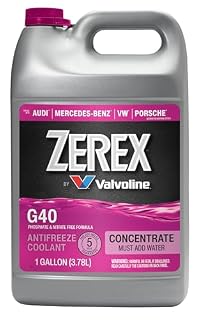
Zerex
G-40 Concentrate Antifreeze/Coolant
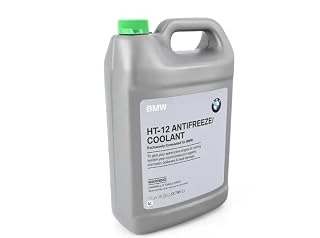
BMW
HT-12 Antifreeze/Coolant Concentrate, Green Si-OAT
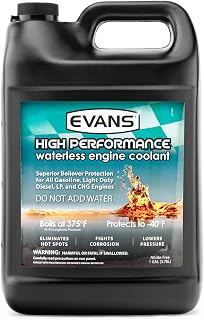
Evans Cooling Systems
Evans High Performance Waterless Engine Coolant
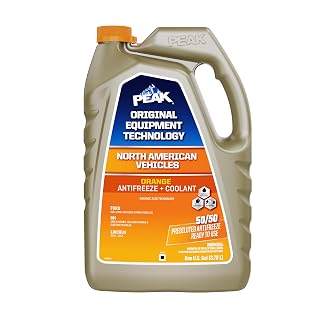
PEAK
OET Extended Life Orange 50/50 Prediluted Antifreeze/Coolant
As an Amazon Associate I earn from qualifying purchases. Full disclosure

Community
0 postsShare how you use this product
Drop a quick comment or post a full review with photos and a star rating.
Sign in to postNew here? Create a free account.