CarCareTruth Score
Decent, but it's tough on the environment.
Opens Amazon in a new tab. No account needed to look.
Saved to your guest loadout. Sign up to also save to your Cabinet (consumables) or Kit (tools you own).
As an Amazon Associate I earn from qualifying purchases. Full disclosure
Prices may varyHealth score is for adult use as intended, per the manufacturer's SDS. It does not model child ingestion, accidental spill cleanup, or off-label use. See the safety panel below for full hazard classification, and /disclaimer for the full editorial scope.
GHS hazard codes are quoted from the manufacturer’s Safety Data Sheet. PPE tiers below translate those codes and the listed ingredient chemistry; they are not CarCareTruth recommendations.
Show details for all categories ▾Hide details ▴
Only when: splash risk
Translated from the manufacturer’s Safety Data Sheet, Section 8
H302 is the primary classification · eye splash during drain or pour carries H302-classified chemistry. SDS §8 lists eye protection where splash is possible.
CarCareTruth publishes the cited sources verbatim and does not advise what action a user should take. Consult the full SDS before use.
Only when: splash risk · prolonged use
Translated from the manufacturer’s Safety Data Sheet, Section 8
SDS §8 specifies chemical-resistant gloves where skin contact is possible. H302 (harmful if swallowed) applies; skin contact during concentrate handling is the primary exposure route.
U.S. regulatory standard
29 CFR 1910.132(d); 1910.1200(f)
“The employer shall assess the workplace to determine if hazards are present, or are likely to be present, which necessitate the use of personal protective equipment.”
OSHA standards apply to workplaces. Cited here as the U.S. reference threshold for the underlying hazard class.
CarCareTruth publishes the cited sources verbatim and does not advise what action a user should take. Consult the full SDS before use.
Only when: in enclosed space
Translated from the ingredient chemistry
EG/PG vapor pressure is negligible at ambient temperature; no inhalation H-codes in SDS §2. Situational risk limited to draining hot coolant or work in enclosed engine compartments where steam is present.
U.S. regulatory standard
29 CFR 1910.134; 1910.138; 1910.1000
“the primary objective shall be to prevent atmospheric contamination…”
OSHA standards apply to workplaces. Cited here as the U.S. reference threshold for the underlying hazard class.
UN GHS hazard statement
H373“May cause damage to organs through prolonged or repeated exposure”
UN GHS Rev. 9 (2021)
CarCareTruth publishes the cited sources verbatim and does not advise what action a user should take. Consult the full SDS before use.
No PPE specified in published sources for ventilation. Absence does not imply “not needed” — consult the full Safety Data Sheet.
PPE tiers translate the manufacturer’s SDS and U.S. regulatory standards. Not professional safety advice. How we report safety.
Scope of these PPE tiers. The tiers on this page translate the product's Safety Data Sheet where one is published, plus its ingredient chemistry, into a comparable rating. They describe a formulation, not a situation: a tier is not a safety determination for any specific user, task, quantity, or environment. The manufacturer's label and use instructions govern how the product is handled. Where the product is used at work, the employer's PPE program and hazard assessment under 29 CFR 1910.132 decide what protection is selected, not this page.
No warranties. CarCareTruth makes no warranties, express or implied, and expressly disclaims the implied warranties of merchantability and fitness for a particular purpose.
This product ranks #2 of 21 in Coolant / Antifreeze.
Last reviewed June 14, 2026
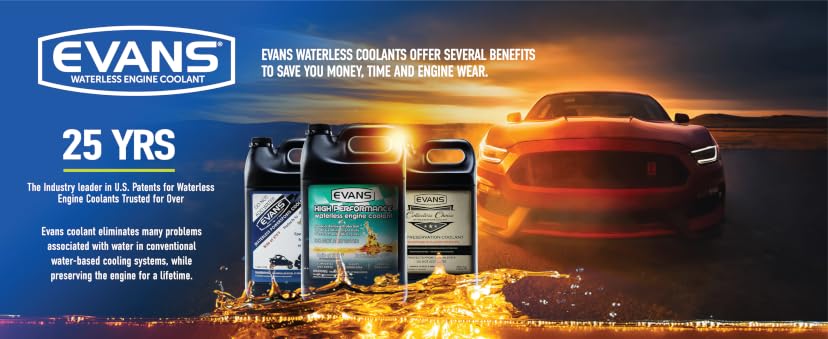
TL;DR Waterless EG coolant for performance and track builds · meets ASTM D3306/D8085 with a 375°F boiling point that eliminates boilover. **This is not a top-off product.** Converting a system means flushing it and running Evans Prep Fluid first to get residual water below 3 percent, and every later top-off has to be Evans too · a roadside gallon of conventional coolant undoes the conversion. No OEM approvals (its own spec track). Ethylene glycol base · H302 (harmful if swallowed), H361, H373 and a Prop 65 warning apply; waterless does not mean less toxic, and the bittering agent deters accidental ingestion without changing the hazard classification.
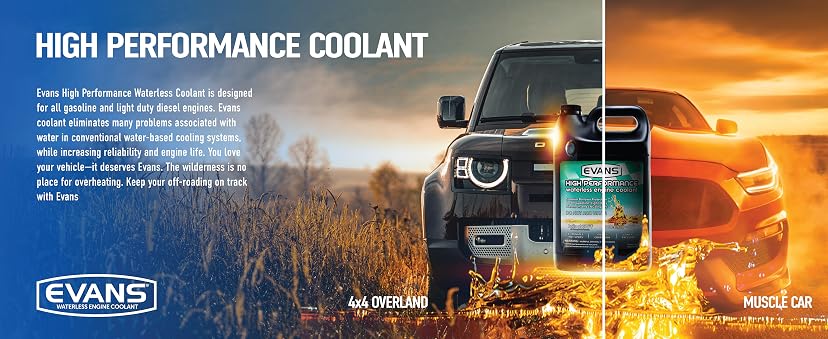
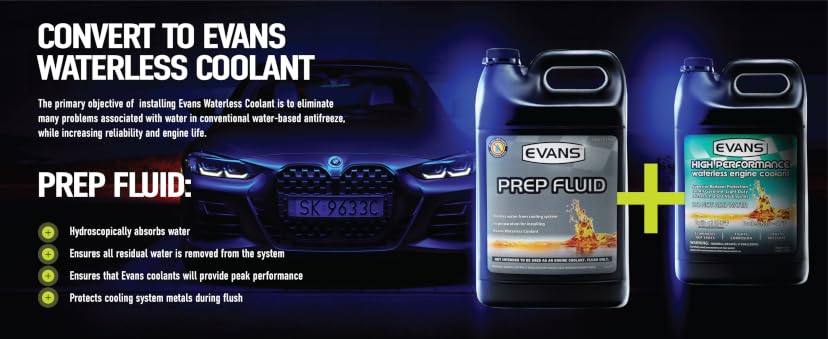
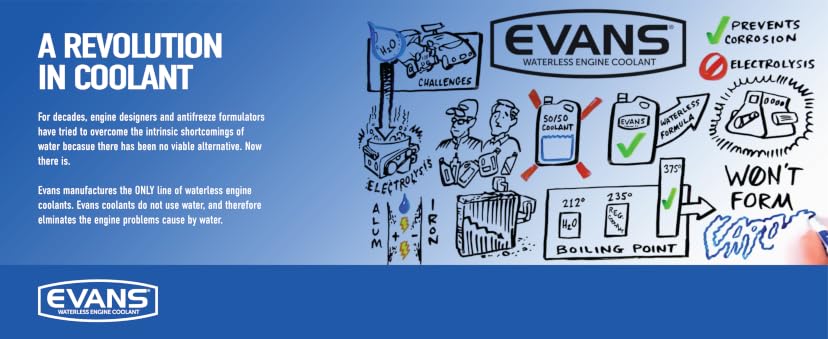
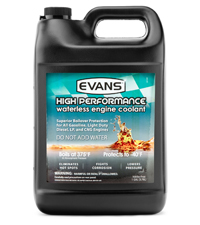
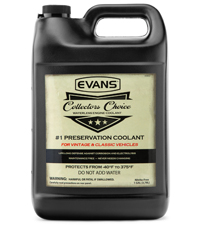
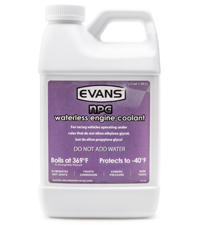
Evans EC53001 replaces water-based coolant permanently in gasoline, light diesel, LP, and CNG vehicles. Meets ASTM D3306, D8085 (the non-aqueous standard Evans helped develop), and D7583. The 375°F boiling point eliminates boilover and sharply reduces system pressure vs. conventional 50/50 mixes, and Evans states the fluid stays liquid to -40°F and contracts rather than expanding when frozen. Both of those properties come from the absence of water, which is why the conversion procedure is part of the product rather than a detail: Evans' instructions call for flushing any part of the system suspected of holding residual coolant or water with Evans Prep Fluid · "DO NOT use water" · to get residual water below 3 percent, and for placing warning stickers on the radiator cap, shroud, overflow bottle and expansion tank so nobody later adds a water-based coolant. No named OEM approvals · an aftermarket product on its own spec track. Evans claims an indefinite, lifetime service interval; no independent VOA data corroborates that. Ethylene glycol base · ingestion hazard in the Safety section.
Best for track cars, classic vehicles, or high-performance builds where boilover elimination justifies the per-gallon premium, and where the owner is doing a full conversion rather than a top-off. Evans Prep Fluid (EC42001) is required first · most negative reviews trace to incomplete water removal. Skip it for vehicles requiring a named OEM-approved coolant (GM Dexos, Ford WSS-M97B44-D, VW TL 774-G) · Evans carries none. Skip it too if the car is a daily driver that someone else might service or top up, or if you travel far from a supply of Evans, because there is no correct roadside top-off for this system other than more Evans. And do not choose it on toxicity grounds: it is ethylene glycol, with the same ingestion hazard as the coolants it replaces.
Signal word WARNING. H302 (ethylene glycol, harmful if swallowed, Cat 4) is the primary hazard; H361 (reproductive toxin, Cat 2), H373 (STOT RE Cat 2, kidney), and a Prop 65 warning for ethylene glycol (CAS 107-21-1) also apply. Being waterless changes the thermal behaviour of the fluid and nothing about its toxicity · the base chemistry is the same ethylene glycol found in conventional coolant, at a higher concentration than a 50/50 premix carries. Denatonium benzoate (40 ppm) reduces palatability but does not change H302. SDS §8 lists eye and skin protection where splash is possible. Collect spent coolant for recycling · not to the ground.
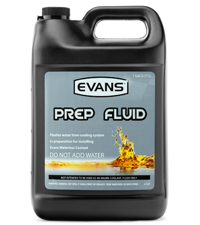
No, and this is the single most important thing to know before buying. Evans is a waterless coolant, so the water already in your system has to come out first. Evans' own instructions say to flush any part of the system suspected of holding residual coolant or water with Evans Prep Fluid and, in capitals, DO NOT use water, with the target being residual water below 3 percent. Skipping that step is the most common way this product disappoints an owner. Budget for the Prep Fluid (part EC42001) and the extra time as part of the job, not as an optional extra.
You lose the property you paid for. The 375°F boiling point and the low system pressure both come from there being no water in the system, so adding any water-based coolant reintroduces exactly what the conversion removed. Evans' own instructions tell you to put warning stickers on the radiator cap, the radiator shroud, the overflow bottle and the expansion tank specifically to stop this happening. The practical consequence is that a roadside gallon of green coolant is not an option for this system: any top-off has to be Evans too, so keep some in the car if you travel.
No. Evans is ethylene glycol based, the same base chemistry as the conventional coolants it replaces, and its safety data sheet carries a WARNING signal word with H302 (harmful if swallowed), H361 (suspected reproductive toxicity) and H373, plus a California Proposition 65 warning for ethylene glycol. It contains denatonium benzoate at 40 ppm, which makes it taste bitter but does not change the classification. Waterless changes how the fluid behaves thermally; it does not change the ingestion hazard, and it must be stored and disposed of with the same care as any other ethylene glycol coolant.
No. Evans meets ASTM D3306, ASTM D8085 (the non-aqueous coolant standard Evans helped develop) and ASTM D7583, which are real performance standards with real pass criteria. It carries no named original-equipment approval document number from any carmaker, because Evans runs its own specification track rather than seeking those approvals. If your owner's manual names a specific carmaker specification, this product does not carry it, and that is a decision to make with your eyes open rather than a gap to talk yourself past.
Evans states an indefinite life span and calls it a lifetime coolant under normal use. That is the manufacturer's claim, and no independent used-coolant analysis publicly corroborates it, which is why our inhibitor-package score is capped at 7 rather than higher. Treat it as a long-life fluid whose condition is still worth checking, not as a fill-and-forget guarantee.
The listing for Evans Cooling Systems Evans High Performance Waterless Engine Coolant carries a California Prop 65 warning. Evans Cooling Systems Evans High Performance Waterless Engine Coolant is a working automotive fluid rather than a passive part, so the warning points at the formulation itself. The manufacturer's Safety Data Sheet is the primary source for what is in it: the hazard classification and the PPE tiers on this page are translated from that sheet, and the full SDS is linked from the safety panel. California requires the warning whenever exposure to any of roughly 900 listed substances is possible. It does not name which substance applies to a given product, and it states no dose or risk level, so it is not on its own a measure of how hazardous this fluid is in normal use.
Marketing copy from Evans Cooling Systems, via Amazon. Not editorial.
Weekly pick
One product, one safety verdict, every week. No spam.


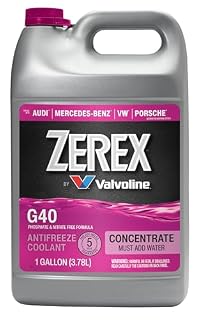
Zerex
G-40 Concentrate Antifreeze/Coolant
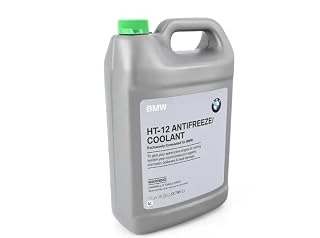
BMW
HT-12 Antifreeze/Coolant Concentrate, Green Si-OAT
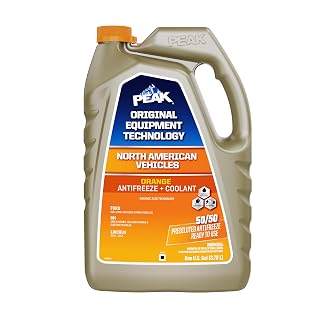
PEAK
OET Extended Life Orange 50/50 Prediluted Antifreeze/Coolant
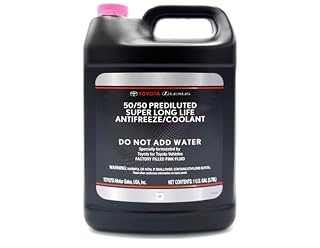
Toyota
Genuine Super Long Life Coolant SLLC2 (Pink), 50/50 Pre-Diluted, 1 Gallon
As an Amazon Associate I earn from qualifying purchases. Full disclosure

Community
0 postsShare how you use this product
Drop a quick comment or post a full review with photos and a star rating.
Sign in to postNew here? Create a free account.