CarCareTruth Score
Decent, but it's tough on the environment.
Opens Amazon in a new tab. No account needed to look.
Saved to your guest loadout. Sign up to also save to your Cabinet (consumables) or Kit (tools you own).
As an Amazon Associate I earn from qualifying purchases. Full disclosure
Prices may varyHealth score is for adult use as intended, per the manufacturer's SDS. It does not model child ingestion, accidental spill cleanup, or off-label use. See the safety panel below for full hazard classification, and /disclaimer for the full editorial scope.
GHS hazard codes are quoted from the manufacturer’s Safety Data Sheet. PPE tiers below translate those codes and the listed ingredient chemistry; they are not CarCareTruth recommendations.
Show details for all categories ▾Hide details ▴
Only when: handling concentrate · splash risk
Translated from the manufacturer’s Safety Data Sheet, Section 8
SDS Section 8 recommends protective safety glasses. Section 2's classification table lists no eye-hazard GHS code (serious eye damage/irritation: Not Applicable), so this is a general pour/transfer precaution during concentrate handling and dilution, not a mixture-level eye hazard.
CarCareTruth publishes the cited sources verbatim and does not advise what action a user should take. Consult the full SDS before use.
Only when: handling concentrate · splash risk
Translated from the manufacturer’s Safety Data Sheet, Section 8
SDS Section 8 recommends protective gloves. Section 2's classification table lists no skin-hazard GHS code (skin corrosion/irritation: Not Applicable), so this is a general precaution for concentrate handling and pour/drain work, not a skin-corrosivity hazard.
U.S. regulatory standard
29 CFR 1910.132(d); 1910.1200(f)
“The employer shall assess the workplace to determine if hazards are present, or are likely to be present, which necessitate the use of personal protective equipment.”
OSHA standards apply to workplaces. Cited here as the U.S. reference threshold for the underlying hazard class.
CarCareTruth publishes the cited sources verbatim and does not advise what action a user should take. Consult the full SDS before use.
Only when: in enclosed space
Translated from the manufacturer’s Safety Data Sheet, Section 8
SDS Section 8's respiratory guidance is conditional (certified respirators only if exposure exceeds occupational limits). No inhalation H-codes in SDS Section 2 (no H330, H331, H335), consistent with the glycol base's negligible vapor pressure at ambient temperature. Situational risk is limited to draining hot coolant or working in enclosed engine compartments where steam is present.
CarCareTruth publishes the cited sources verbatim and does not advise what action a user should take. Consult the full SDS before use.
No PPE specified in published sources for ventilation. Absence does not imply “not needed” — consult the full Safety Data Sheet.
PPE tiers translate the manufacturer’s SDS and U.S. regulatory standards. Not professional safety advice. How we report safety.
Scope of these PPE tiers. The tiers on this page translate the product's Safety Data Sheet where one is published, plus its ingredient chemistry, into a comparable rating. They describe a formulation, not a situation: a tier is not a safety determination for any specific user, task, quantity, or environment. The manufacturer's label and use instructions govern how the product is handled. Where the product is used at work, the employer's PPE program and hazard assessment under 29 CFR 1910.132 decide what protection is selected, not this page.
No warranties. CarCareTruth makes no warranties, express or implied, and expressly disclaims the implied warranties of merchantability and fitness for a particular purpose.
This product ranks #10 of 21 in Coolant / Antifreeze.Three above it ↓
Last reviewed August 18, 2026
TL;DR A Pentosin aftermarket concentrate (not genuine VW/Audi factory fluid) formulated to meet Audi/Volkswagen spec TL 774 J (G13); the manufacturer's sheet also lists Bentley and Lamborghini approval. Ethylene glycol base, a documented ingestion risk for pets and children; dilute 50/50 with distilled water, never pour concentrate directly into the cooling system.
Pentofrost E is Pentosin's violet, phosphate-free coolant, built on organic-acid inhibitor chemistry, the family Volkswagen calls Si-OAT for its current G13 specification; this is an aftermarket formulation meeting that spec, not VW's own factory-branded fluid. The manufacturer's approvals table names Audi/Volkswagen TL 774 J directly, alongside separate Bentley and Lamborghini approvals. It ships as a full-strength concentrate, not a ready-to-use mix, so a 50/50 dilution with distilled water is required before it goes into any cooling system.
Best for VW, Audi, Bentley, and Lamborghini owners whose manual calls for G13 (violet, Si-OAT), since the named Bentley and Lamborghini approvals make this a direct match for those brands. Skip it for cars specced to a different color or chemistry family, such as older green G12++ or phosphate-based Asian-market HOAT; the wrong inhibitor package risks corrosion or seal issues.
Signal word is WARNING: the ethylene glycol base is harmful if swallowed, and California's Prop 65 warning applies. Keep the concentrate sealed and away from pets and children. SDS Section 8 recommends gloves and eye protection during concentrate handling and drain work. Collect spent coolant for recycling at an auto parts store; never drain it to the ground or a storm sewer.
G13 is Volkswagen's current coolant standard, officially designated TL 774 J, using a violet Si-OAT (silicate organic acid technology) inhibitor package. Pentofrost E's manufacturer data sheet lists Audi/Volkswagen TL 774 J directly in its approvals table, alongside separate Bentley and Lamborghini approvals, since those brands share Volkswagen Group cooling-system components.
This is a full-strength concentrate, not a pre-diluted mix. The manufacturer's data sheet caps water content at 5 percent and specifies a 50/50 dilution with distilled water before use. Pouring the concentrate directly into a cooling system without diluting it first can damage the engine and reduces the coolant's freeze protection.
No. Mixing different inhibitor chemistries, such as silicate-based Si-OAT with an older IAT or a phosphate-based HOAT, can cause the additive packages to interact poorly and reduce corrosion protection. A full flush is the safer approach when switching coolant types, per general OEM guidance for organic-acid-technology coolants.
The warning traces to the ethylene glycol base, which California lists for suspected developmental toxicity. This is standard across almost every ethylene-glycol-based coolant on the market, not something specific to this formula. Propylene-glycol-based coolants are a materially less toxic alternative where that matters, such as households with pets or small children.
Collect it in a sealed container and take it to an auto parts store that accepts used antifreeze for recycling; most major chains do. Never pour spent coolant onto the ground or into a storm drain. Ethylene glycol has a sweet taste that can attract pets, so keep containers sealed and out of reach until they can be dropped off.
Weekly pick
One product, one safety verdict, every week. No spam.
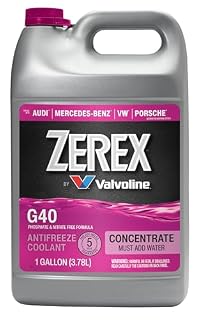
Zerex
G-40 Concentrate Antifreeze/Coolant
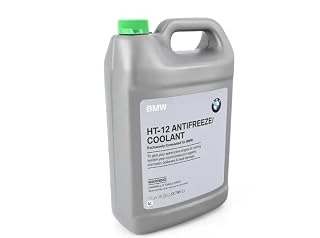
BMW
HT-12 Antifreeze/Coolant Concentrate, Green Si-OAT
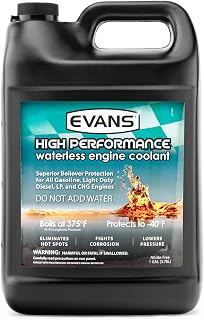
Evans Cooling Systems
Evans High Performance Waterless Engine Coolant
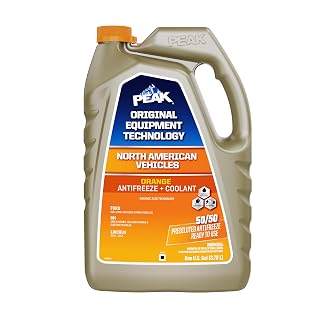
PEAK
OET Extended Life Orange 50/50 Prediluted Antifreeze/Coolant
As an Amazon Associate I earn from qualifying purchases. Full disclosure

Community
0 postsShare how you use this product
Drop a quick comment or post a full review with photos and a star rating.
Sign in to postNew here? Create a free account.