CarCareTruth Score
Decent, but wear gloves and ventilate.
Saved to your guest loadout. Sign up to also save to your Cabinet (consumables) or Kit (tools you own).
As an Amazon Associate I earn from qualifying purchases. Full disclosure
The manufacturer's Safety Data Sheet classifies this product with one or more GHS Category 1 health hazards — the most severe tier. The hazard statements in quotes below are the verbatim GHS language from the SDS, as required by OSHA's Hazard Communication Standard. The line under each statement translates the GHS classification into plain language.
GHS Category 1 eye damage — classified as causing irreversible eye damage on contact.
If splashed in eyes:
Call Poison Control immediately at 1-800-222-1222 (US, 24/7, free) and have the product container with you. Poison Control's standing guidance is to not induce vomiting after chemical exposure; they will direct first-aid steps based on the specific product.
About this product's hazards. This product's Safety Data Sheet uses signal word DANGER.Read the manufacturer's SDS and follow all safety instructions before use. CarCareTruth ratings translate the manufacturer's safety sheet. They do not replace the SDS or substitute for a hazard assessment specific to your task.
Health score is for adult use as intended, per the manufacturer's SDS. It does not model child ingestion, accidental spill cleanup, or off-label use. See the safety panel below for full hazard classification, and /disclaimer for the full editorial scope.
GHS hazard codes are quoted from the manufacturer’s Safety Data Sheet. PPE tiers below translate those codes and the listed ingredient chemistry; they are not CarCareTruth recommendations.
Show details for all categories ▾Hide details ▴
Translated from the manufacturer’s Safety Data Sheet, Section 8
H318 (Causes serious eye damage, Cat 1) is classified at mixture level · direct splash can cause permanent injury. SDS §8 specifies protective safety glasses; chemical splash goggles are warranted whenever pressure bleeding or working on overhead calipers where fluid can spray.
U.S. regulatory standard
29 CFR 1910.133(a)(1); 1910.151(c)
“The employer shall ensure that each affected employee uses appropriate eye or face protection when exposed to eye or face hazards from… liquid chemicals, acids or caustic liquids…”
ANSI Z87.1 (chemical splash protection — incorporated via §1910.6)
OSHA standards apply to workplaces. Cited here as the U.S. reference threshold for the underlying hazard class.
CarCareTruth publishes the cited sources verbatim and does not advise what action a user should take. Consult the full SDS before use.
Only when: prolonged use
Translated from the manufacturer’s Safety Data Sheet, Section 8
No skin H-code is classified at mixture level. SDS §8 recommends protective gloves; situational tier reflects prolonged or repeated contact during a full system flush, where the boric-acid-triester base can cause defatting and irritation even without an H315 classification.
U.S. regulatory standard
29 CFR 1910.1000; 1910.1200
“Each employer shall assure that no employee is exposed [in excess of the PEL]…”
OSHA standards apply to workplaces. Cited here as the U.S. reference threshold for the underlying hazard class.
CarCareTruth publishes the cited sources verbatim and does not advise what action a user should take. Consult the full SDS before use.
Only when: in enclosed space
Beyond SDS: translated from the ingredient chemistry
No H335/H331/H330/H334 at mixture level. Flash point 266°F · low vapor pressure at ambient temperature. SDS §8 calls for respirators only above exposure limits; no OSHA, ACGIH, or NIOSH limits are established for the three named ingredients. Standard garage ventilation is adequate for open-air brake service.
CarCareTruth publishes the cited sources verbatim and does not advise what action a user should take. Consult the full SDS before use.
No PPE specified in published sources for ventilation. Absence does not imply “not needed” — consult the full Safety Data Sheet.
PPE tiers translate the manufacturer’s SDS and U.S. regulatory standards. Not professional safety advice. How we report safety.
Scope of these PPE tiers. The tiers on this page translate the product's Safety Data Sheet where one is published, plus its ingredient chemistry, into a comparable rating. They describe a formulation, not a situation: a tier is not a safety determination for any specific user, task, quantity, or environment. The manufacturer's label and use instructions govern how the product is handled. Where the product is used at work, the employer's PPE program and hazard assessment under 29 CFR 1910.132 decide what protection is selected, not this page.
No warranties. CarCareTruth makes no warranties, express or implied, and expressly disclaims the implied warranties of merchantability and fitness for a particular purpose.
Last reviewed August 1, 2026
TL;DR Class 6 DOT 4 LV with TDS-documented 509°F dry / 338°F wet boiling points · +63°F and +27°F above the DOT 4 FMVSS 116 floors. DANGER signal word with H361d (suspected fetal harm) at mixture level · pregnant readers should hand off the job or wear chemical-splash goggles plus nitrile gloves.
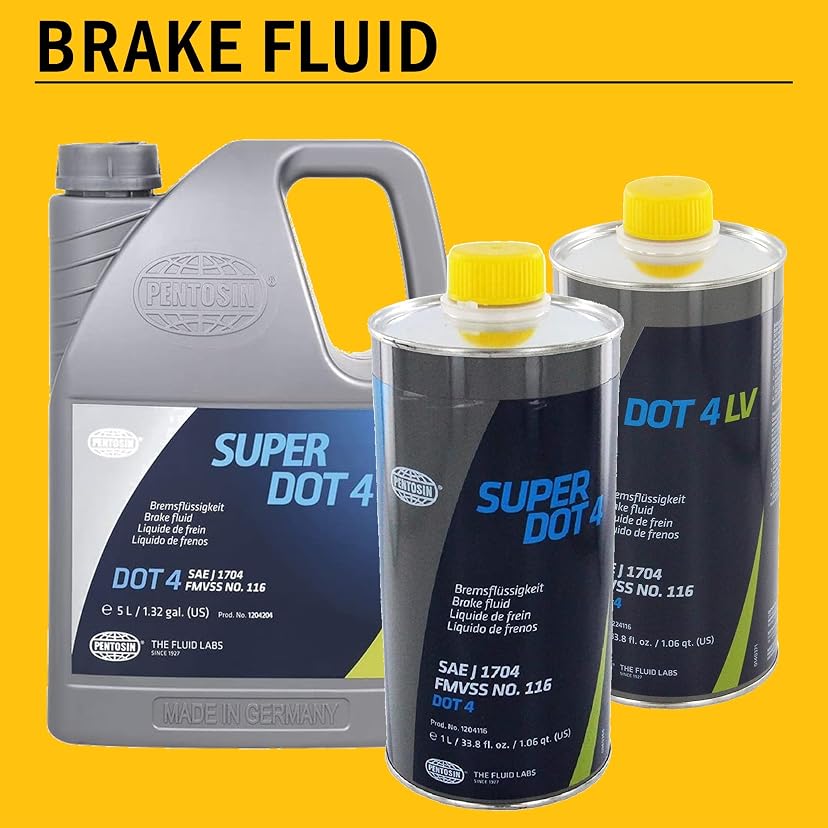
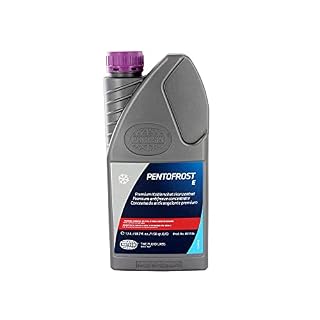
DOT 4 LV is the low-viscosity (ISO 4925 Class 6) variant of DOT 4, engineered for ABS/ESP modulators that need fast valve response in cold weather · BMW, MINI, Audi/VW, and certain Ford applications. The Pentosin TDS documents 509°F dry and 338°F wet, above the DOT 4 minimums of 446°F / 311°F. The +27°F wet margin is moderate, not category-leading, but holds meaningful headroom across a typical 2-3 year service interval. The dry BP clears the DOT 5.1 dry floor; the wet BP is 18°F below the 5.1 wet floor · correctly labeled DOT 4, not a 5.1 substitute.
Best for European-vehicle and Ford owners whose OEM service procedure calls out Class 6 / Low Viscosity DOT 4 · the reference matrix on the can matches BMW, MINI, Audi/VW, GM, and Saab numbers, and the bottle carries Ford WSS-M6C65-A2 and Motorcraft PM-20 approvals. Skip if your vehicle specifies only generic DOT 4 (commodity fluid is cheaper) or specifies DOT 5.1 by label. Not compatible with DOT 5 silicone fluid.
Signal word is DANGER. H318 (DIPA, 5-10%) means direct splash can cause permanent eye injury · chemical-splash goggles are warranted for caliper and pressure-bleed work, not just safety glasses. H361d (boric-acid-triester base, 75-100%) flags suspected harm to the unborn child; pregnant readers and anyone planning a pregnancy soon should hand off brake service or wear full splash PPE · the SDS does not specify a safe exposure window. SDS §15 states no Prop 65 chemicals are present. Brake fluid's mild sweet taste attracts pets and small children · store sealed and inaccessible. Spent fluid cannot go down a household drain; take it to a used-fluid collection site.
No. The product is certified DOT 4 (specifically ISO 4925 Class 6 / Low Viscosity). Its TDS-documented dry boiling point of 509°F technically exceeds the DOT 5.1 dry minimum of 500°F, but the wet boiling point of 338°F is 18°F below the DOT 5.1 wet minimum of 356°F · the fluid does not clear both spec floors and therefore cannot carry a DOT 5.1 label. DOT 5.1 and DOT 4 LV are different specifications with different cold-viscosity and wet-BP requirements; do not substitute one for the other where the OEM is specific.
ISO 4925 Class 6 is the low-viscosity variant of DOT 4, with a maximum kinematic viscosity at −40°C of 700 mm²/s. It exists for vehicles with ABS, ESP, and other electronically controlled hydraulic modulators that depend on fast valve response at very cold temperatures · primarily BMW, Audi, Mercedes, and certain Ford applications. A standard DOT 4 fluid may be too viscous for those modulators in winter conditions. Pentosin DOT 4 LV is one of the OE-spec fluids called out for these systems.
Yes. The TDS and the product listing both explicitly state the fluid is engineered for vehicles with ESP and ABS. The boric-acid-triester / glycol-ether chemistry is the correct (non-silicone) base for all modern electronically modulated brake systems. DOT 5 silicone fluid is the type that is incompatible with these systems · never substitute DOT 5 for DOT 4 LV.
H361d is a GHS classification triggered by the boric-acid-triester base (CAS 302790-70-1) at 75-100% · boric acid is classified as Reprotoxic Category 2 in the EU. California's Prop 65 list, however, does not currently include CAS 302790-70-1, DIPA (CAS 110-97-4), or TEGBE (CAS 143-22-6) as developmental or reproductive toxins. The two systems use different evaluation criteria, so a product can carry a GHS reproductive-risk H-code without triggering a Prop 65 warning. SDS §15 documents this explicitly: 'no chemicals known to the State of California to cause cancer and birth defects or other reproductive harm.'
Pentosin is the formulation behind multiple OE-spec part numbers on the bottle · Ford WSS-M6C65-A2 and Motorcraft PM-20 approvals are explicitly listed on the TDS, alongside the BMW, MINI, Audi/VW, GM, and Saab OEM reference numbers. Several owner forums note that Motorcraft-branded DOT 4 LV is the same Pentosin chemistry rebadged. For the listed European and Ford applications, this fluid is the OE-spec choice; for vehicles that simply call for generic DOT 4, a commodity DOT 4 fluid is also acceptable.
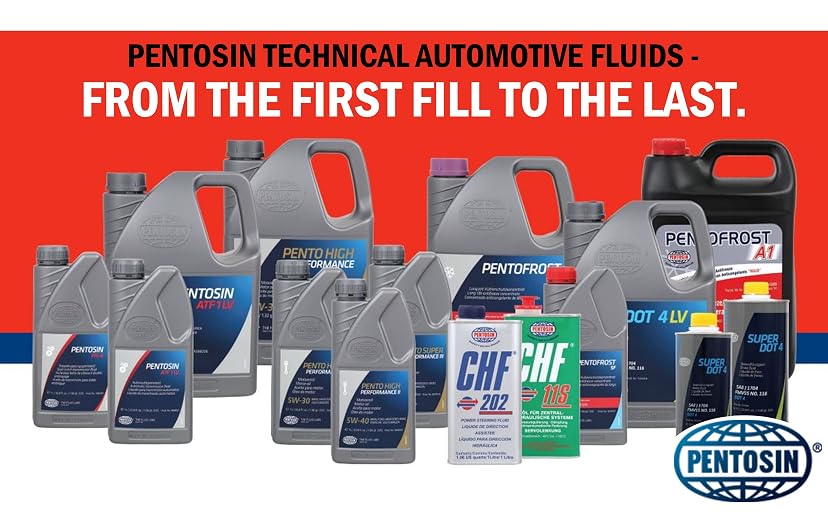
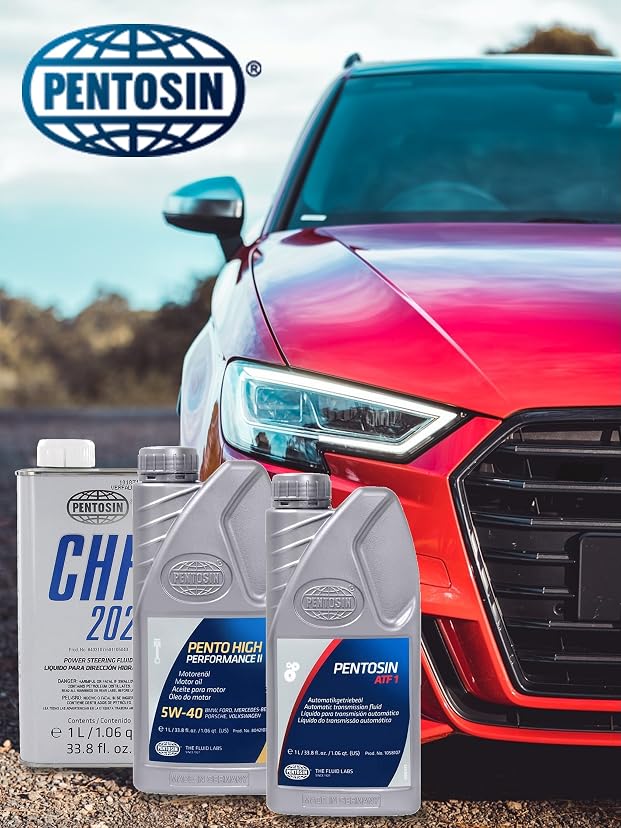
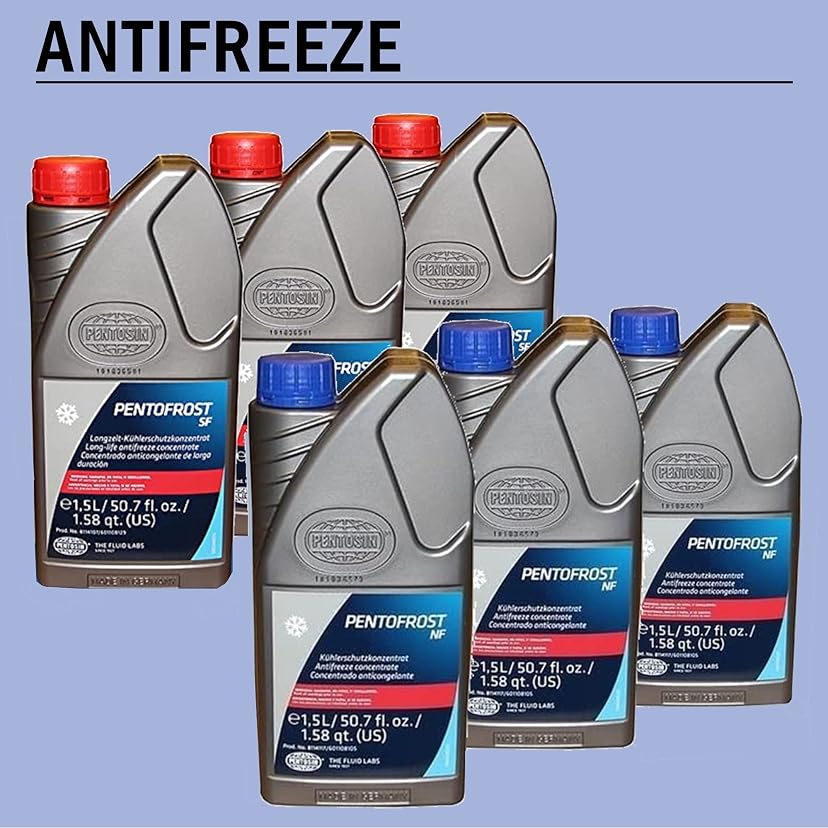
Marketing copy from Pentosin, via Amazon. Not editorial.
Weekly pick
One product, one safety verdict, every week. No spam.

Castrol
React SRF Racing Brake Fluid
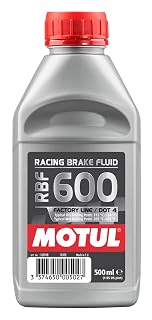
Motul
RBF 600 DOT 4 Factory Line Racing Brake Fluid
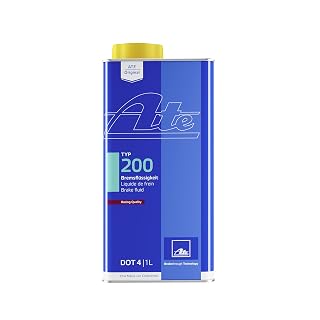
ATE
Original TYP 200 DOT 4 Racing Brake Fluid
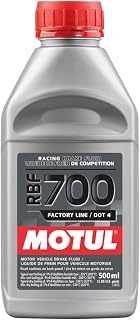
Motul
RBF 700 Factory Line Racing Brake Fluid
As an Amazon Associate I earn from qualifying purchases. Full disclosure

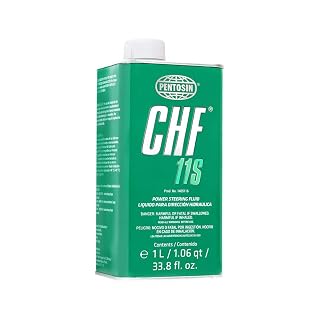
Community
0 postsShare how you use this product
Drop a quick comment or post a full review with photos and a star rating.
Sign in to postNew here? Create a free account.