CarCareTruth Score
Decent.
Opens Amazon in a new tab. No account needed to look.
Saved to your guest loadout. Sign up to also save to your Cabinet (consumables) or Kit (tools you own).
As an Amazon Associate I earn from qualifying purchases. Full disclosure
Prices may varyHealth score is for adult use as intended, per the manufacturer's SDS. It does not model child ingestion, accidental spill cleanup, or off-label use. See the safety panel below for full hazard classification, and /disclaimer for the full editorial scope.
GHS hazard codes are quoted from the manufacturer’s Safety Data Sheet. PPE tiers below translate those codes and the listed ingredient chemistry; they are not CarCareTruth recommendations.
Show details for all categories ▾Hide details ▴
Especially relevant: misting overhead · in enclosed space
Translated from the manufacturer’s Safety Data Sheet, Section 8
H319 eye irritation at working dilution (the concentrate carries H318 serious eye damage, driven by disodium metasilicate and ethoxylated alcohol, which steps toward irritation as the 1:3 dilution drops those components below the mixture Cat-1 threshold). Overhead spray application on a headliner creates a downward mist-fallout vector toward the applicator's face, making eye contact a more likely exposure pathway than in floor-level cleaning.
U.S. regulatory standard
29 CFR 1910.133(a)(1)
“The employer shall ensure that each affected employee uses appropriate eye or face protection when exposed to eye or face hazards from… liquid chemicals…”
ANSI Z87.1 (incorporated via §1910.6)
OSHA standards apply to workplaces. Cited here as the U.S. reference threshold for the underlying hazard class.
CarCareTruth publishes the cited sources verbatim and does not advise what action a user should take. Consult the full SDS before use.
Especially relevant: prolonged use
Translated from the manufacturer’s Safety Data Sheet, Section 8
H315 skin irritation in SDS §2 from the alkaline metasilicate builder. Repeated blotting and agitation during a cleaning session is the primary skin-contact pathway; gloves are a reasonable precaution, particularly when using the product at full strength.
U.S. regulatory standard
29 CFR 1910.138(a)
“appropriate hand protection when employees' hands are exposed to hazards such as those from… chemicals which produce an adverse effect on the skin or eyes…”
OSHA standards apply to workplaces. Cited here as the U.S. reference threshold for the underlying hazard class.
CarCareTruth publishes the cited sources verbatim and does not advise what action a user should take. Consult the full SDS before use.
Especially relevant: in enclosed space · misting overhead
Translated from the manufacturer’s Safety Data Sheet, Section 8
The trace CMIT/MIT isothiazolinone preservative system carries an asthmagen (respiratory-sensitizer class) classification at the ingredient level. Site rubric policy assigns this tier whenever contains_asthmagen is true. SDS §11 records no respiratory sensitization at the product level; the tier is a conservative translation of the ingredient chemistry, reinforced by the enclosed-cabin, overhead spray context.
CarCareTruth publishes the cited sources verbatim and does not advise what action a user should take. Consult the full SDS before use.
No PPE specified in published sources for ventilation. Absence does not imply “not needed” — consult the full Safety Data Sheet.
PPE tiers translate the manufacturer’s SDS and U.S. regulatory standards. Not professional safety advice. How we report safety.
Scope of these PPE tiers. The tiers on this page translate the product's Safety Data Sheet where one is published, plus its ingredient chemistry, into a comparable rating. They describe a formulation, not a situation: a tier is not a safety determination for any specific user, task, quantity, or environment. The manufacturer's label and use instructions govern how the product is handled. Where the product is used at work, the employer's PPE program and hazard assessment under 29 CFR 1910.132 decide what protection is selected, not this page.
No warranties. CarCareTruth makes no warranties, express or implied, and expressly disclaims the implied warranties of merchantability and fitness for a particular purpose.
This product ranks #8 of 8 in Headliner Cleaner.Three above it ↓
Last reviewed July 2, 2026
TL;DR A genuinely strong carpet and upholstery cleaner that leaves a substantive polymer film to slow re-soiling, but it is not a headliner-specific product. It is a liquid concentrate community owners run at full strength for deep cleaning, with no documented overhead headliner or board-safety evidence, so treat headliner use with strict dilute-and-blot discipline. The concentrate is a DANGER-signal alkaline product; at the labeled 1:3 working dilution the signal word steps to WARNING (H315 skin and H319 eye irritation), and a trace CMIT/MIT preservative carries an asthmagen classification, so apply with doors open and wear eye protection and gloves.
Optimum Fabric Clean and Protect is a concentrated, water-based fabric and carpet cleaner that adds a "protect" step: after lifting soil, a substantive wax/polymer film bonds to the fibers to resist re-soiling. It slows how quickly dirt and dust re-attach rather than beading water like an exterior sealant. It is a liquid pump application, not a low-moisture foam, and independent detailer reviews consistently rate its general-grime removal highly, using it at full strength for badly soiled carpet, mats, and upholstery; organic body-sweat stains are a documented weak spot. Because it is a full-strength liquid concentrate with brush agitation, over-saturation is the real risk on a headliner's cardboard or foam backing board, and no community evidence documents safe overhead headliner use. It dries without reported tide marks, though it deposits a polymer film by design.
A strong fit for owners tackling general carpet, floor-mat, and seat soiling who also want a film that helps the surface stay cleaner between details. Used at full strength it is one of the more capable fabric cleaners in the enthusiast community. It is a weaker fit for a headliner specifically: it is a liquid concentrate rather than a low-moisture foam, no community evidence documents board safety overhead, and buyers whose main concern is not sagging their headliner should choose a dedicated low-moisture foam headliner cleaner and reserve this product for the seats and carpet. Owners of premium foam-backed or Alcantara-style headliner materials should skip it without explicit compatibility confirmation, and anyone needing to neutralize set-in smoke or pet odor should pair it with an enzymatic deodorizer, since this formula cleans and protects but does not chemically break down odor.
The Optimum SDS classifies the concentrate as DANGER (GHS05 corrosion + GHS07 irritant, driven by disodium metasilicate at 5-8%), carrying H302, H315 skin irritation, H317 skin sensitization, and H318 serious eye damage. Scored at the labeled 1:3 maintenance working solution, the alkaline builder and ethoxylated-alcohol surfactant fall below the Category-1 eye-damage mixture threshold, so the signal word steps to WARNING and the effective codes are H315 (skin irritation) and H319 (eye irritation). H319 with overhead spray application means mist fallout toward the face is a real exposure pathway, so eye protection addresses that route; gloves address the alkaline skin-irritation route, especially at full strength. A trace CMIT/MIT isothiazolinone preservative carries an asthmagen (respiratory-sensitizer class) classification at the ingredient level, though the SDS records no respiratory sensitization at the product level, but the conservative reading is to apply with vehicle doors open for cabin airflow. Environmentally, the product carries an H412 chronic-aquatic classification, and several disclosed components (the ethoxylated-alcohol surfactant, copper dinitrate, and the CMIT/MIT preservative) are individually toxic to aquatic life; the dirty blotting or rinse water goes down the drain via the sink or laundry, so avoid pouring residue into a storm drain. VOC is low (6 g/L at concentrate, roughly 1.5 g/L at working dilution) and the protectant is polymer-based, not a PFAS/fluorochemical stain guard.
Use caution. Optimum markets this as a carpet, mat, seat, and upholstery product; independent community reviews document it on those surfaces, not on headliners. It is a liquid concentrate that community owners use at full strength for dedicated carpet cleaning, and a headliner's cardboard or foam backing board can sag permanently if it gets saturated. If you use it overhead, dilute it to the labeled 1:3 maintenance ratio, apply the lightest possible mist, and blot immediately rather than soaking the fabric. A dedicated low-moisture foam headliner product is the safer choice when board saturation is the main concern.
After cleaning, the formula leaves a substantive polymer/wax film that bonds to the fabric fibers to help the surface resist re-soiling. It is designed to slow how quickly dirt and dust re-attach, not to bead water like an exterior sealant. Community owners who expected water-beading were corrected on this point: the protection is anti-re-soiling, and its practical duration is unreliable in high-traffic areas. It is a polymer-based treatment, not a fluorochemical (PFAS) stain guard.
Optimum's label calls for a 1:3 concentrate-to-water dilution for routine maintenance cleaning and full strength for stain removal on badly soiled fabric. Community owners report the best deep-cleaning results at or near full strength on heavily soiled carpet, with the diluted ratio suited to lighter maintenance work. Because the concentrate is a DANGER-signal alkaline product, wear eye protection and gloves when handling it undiluted.
Marketing copy from Optimum, via Amazon. Not editorial.
Weekly pick
One product, one safety verdict, every week. No spam.
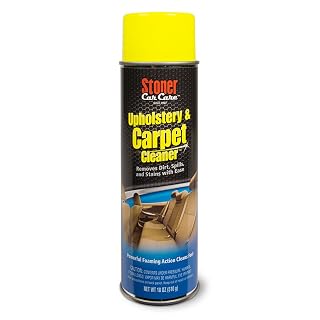
Stoner Car Care
Upholstery & Carpet Cleaner
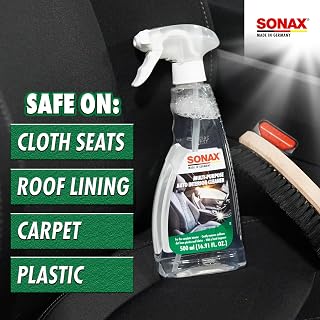
SONAX
Multi-Purpose Interior Cleaner
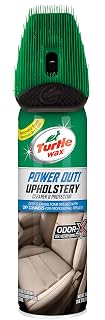
Turtle Wax
Power Out! Upholstery Cleaner Odor Eliminator
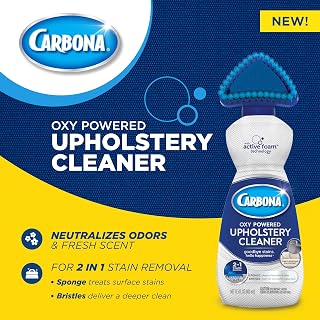
Carbona
Oxy-Powered Upholstery Cleaner with Built-In Brush
As an Amazon Associate I earn from qualifying purchases. Full disclosure

Community
0 postsShare how you use this product
Drop a quick comment or post a full review with photos and a star rating.
Sign in to postNew here? Create a free account.