CarCareTruth Score
Decent.
Opens Amazon in a new tab. No account needed to look.
Saved to your guest loadout. Sign up to also save to your Cabinet (consumables) or Kit (tools you own).
As an Amazon Associate I earn from qualifying purchases. Full disclosure
Prices may varyHealth score is for adult use as intended. No manufacturer SDS is on file, so it is translated from the ingredient chemistry. It does not model child ingestion, accidental spill cleanup, or off-label use. See the safety panel below for full hazard classification, and /disclaimer for the full editorial scope.
No Safety Data Sheet on file.
CarCareTruth has not received a Safety Data Sheet from the manufacturer for this product, so no GHS hazard classification can be cited. The tiers below are cautious defaults — “Beyond SDS” — translated from the product’s ingredient chemistry and how comparable formulations classify, not from a manufacturer hazard classification. Request an SDS from the manufacturer before use.
Show details for all categories ▾Hide details ▴
Only when: prolonged use · in enclosed space
Beyond SDS: translated from the ingredient chemistry
No full GHS SDS on file for this SKU. The bottle caution says to avoid eye contact and flush thoroughly if contact occurs; the oxygen-bleach chemistry is a plausible eye-irritation pathway. Situational for splash during squeeze-and-brush application, especially overhead on a headliner. Tier is precautionary based on label caution and disclosed chemistry, not a confirmed H-code.
No Safety Data Sheet is on file for this product. The tier above is a cautious default translated from the ingredient chemistry, not a cited manufacturer classification. Request an SDS from the manufacturer before use.
Only when: prolonged use
Beyond SDS: translated from the ingredient chemistry
No full GHS SDS on file. The bottle caution says to avoid prolonged skin contact. Surfactant plus hydrogen-peroxide oxidizer; situational for the extended hand contact of pressing a brush and blotting cloth against the fabric. Precautionary based on label caution pending an SDS for this SKU.
No Safety Data Sheet is on file for this product. The tier above is a cautious default translated from the ingredient chemistry, not a cited manufacturer classification. Request an SDS from the manufacturer before use.
Only when: in enclosed space
Beyond SDS: translated from the ingredient chemistry
No full GHS SDS on file. This is a squeeze-to-foam applicator, not a pump-spray or aerosol, so there is no atomized-mist inhalation vector. Situational is the mandatory minimum for this category in a semi-enclosed vehicle cabin; no confirmed respiratory H-code is on file to escalate it.
No Safety Data Sheet is on file for this product. The tier above is a cautious default translated from the ingredient chemistry, not a cited manufacturer classification. Request an SDS from the manufacturer before use.
No PPE specified in published sources for ventilation. Absence does not imply “not needed” — no Safety Data Sheet is on file, so request one from the manufacturer before use.
PPE tiers here are cautious defaults translated from the product’s ingredient chemistry — no manufacturer SDS is on file to cite. Not professional safety advice. How we report safety.
Scope of these PPE tiers. The tiers on this page translate the product's Safety Data Sheet where one is published, plus its ingredient chemistry, into a comparable rating. They describe a formulation, not a situation: a tier is not a safety determination for any specific user, task, quantity, or environment. The manufacturer's label and use instructions govern how the product is handled. Where the product is used at work, the employer's PPE program and hazard assessment under 29 CFR 1910.132 decide what protection is selected, not this page.
No warranties. CarCareTruth makes no warranties, express or implied, and expressly disclaims the implied warranties of merchantability and fitness for a particular purpose.
This product ranks #4 of 8 in Headliner Cleaner.Three above it ↓
Last reviewed July 2, 2026
TL;DR A low-moisture oxy foam spot cleaner that applies through a built-in brush, so board saturation is easier to control than with a soaking spray. It lifts organic stains (food, drink, sweat, body oil) from fabric well, but headliner-specific evidence is thin and the moisture-ring risk on dark headliner material is real: feather the edges and never soak. No full GHS SDS is on file for this SKU, so the health score sits at the neutral no-SDS floor.
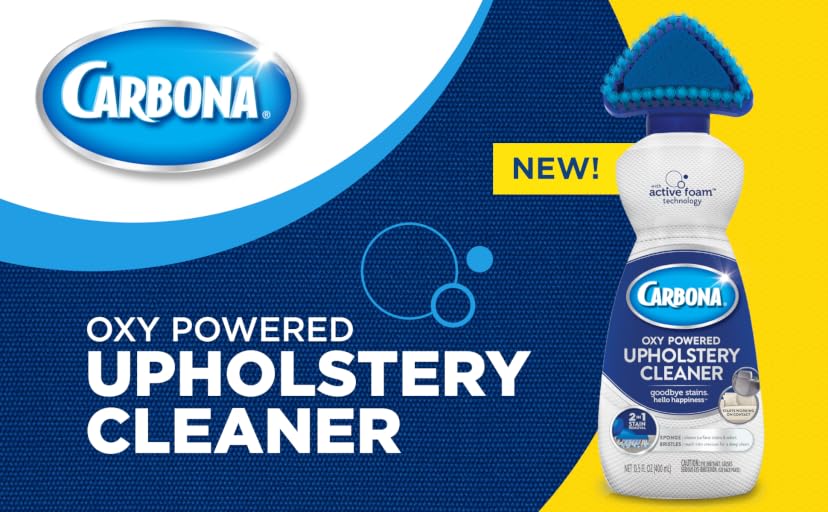
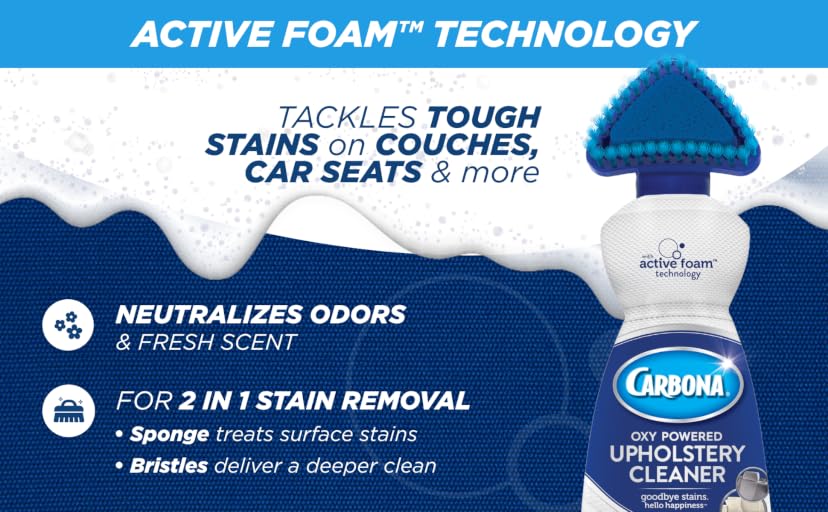
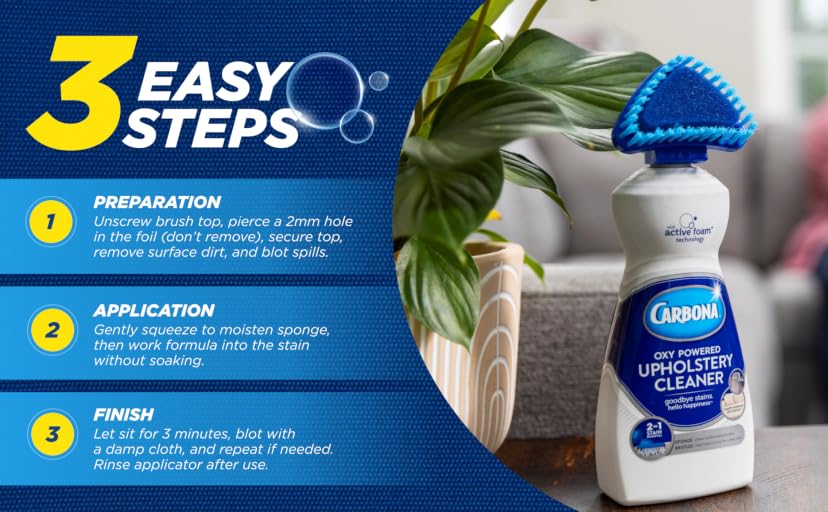
This is a 13.5 oz squeeze bottle with a built-in brush cap and an oxygen-based active-foam formula, marketed for spot-cleaning couches, car seats, and mattresses. You pierce the foil seal, squeeze to feed foam into the brush, work it into the stain, wait a few minutes, then blot with a damp cloth. The hydrogen-peroxide oxidizer and surfactants handle organic stains reliably, and the squeeze-and-brush format keeps liquid volume low, which matters overhead where a soaked headliner board delaminates. Headliner use is community-documented but limited; the recurring caution for oxy fabric cleaners on dark fabric is a moisture ring or slight dye lightening if a small spot is over-wetted and left to dry on its own.
A reasonable pick for spot-treating organic stains on a standard OEM cloth headliner when you want a controlled low-moisture application rather than a spray. Feather the cleaned area into the surrounding fabric to avoid a ring. Owners of vehicles with suede-type or Alcantara-style headliners should skip it: the label excludes leather, silk, velvet, and water-sensitive fabrics. Anyone cleaning a whole grimy headliner rather than a spot, or needing confirmed overhead chemistry, is better served by a dedicated low-moisture headliner or fabric cleaner with a published GHS SDS.
No full GHS safety data sheet is published for this exact SKU, so the safety data reflects the disclosed ingredient chemistry and the label caution only, and the health score is the neutral 5.0 no-SDS floor. Carbona does publish a California Right-to-Know ingredient disclosure: water, anionic and nonionic surfactants, hydrogen peroxide as the oxygen-based bleaching agent, a phosphonate stabilizer, and fragrance. No California Proposition 65 warning appears on the label or the disclosure. The bottle caution is mild: avoid eye contact and prolonged skin contact, and flush the eyes thoroughly on contact. Because this applies through a squeezed brush rather than a pump-spray or aerosol, there is no atomized-mist inhalation vector overhead; eyes, skin, and lungs are set to the situational minimum for splash and enclosed-cabin context. The formula is water-based with no VOC solvent and is described by the manufacturer as biodegradable; environmental load on the rinse-off pathway is low.
It can be used on a fabric headliner, but with care. The product is marketed for seats, couches, and mattresses, and headliner-specific evidence is limited. The built-in brush is fed by squeezing the bottle, so it applies a controlled low-moisture foam rather than a soaking spray, which helps protect the cardboard or foam backing board. The bigger risk on a headliner is a moisture ring: treat the whole panel or feather the edges of the cleaned area, and never soak the fabric. Test an inconspicuous spot first.
The label claims no residue, but oxygen-based fabric cleaners as a class can leave a tide mark or lighten dark dye if a small spot is over-wetted and left to dry on its own. On a dark or gray headliner, work outward from the stain, blot promptly with a clean damp cloth, and blend the treated area into the surrounding fabric so any faint ring is not concentrated in one spot.
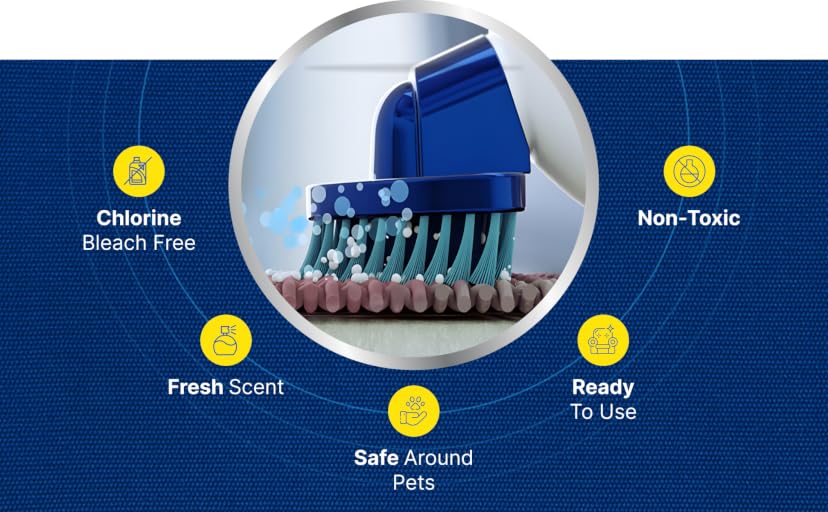
Carbona's California ingredient disclosure lists water, a sodium ethylhexyl sulfate anionic surfactant, a C13 ethoxylated nonionic surfactant, hydrogen peroxide as the oxygen-based bleaching agent, a phosphonate stabilizer, and a fragrance component. The label summarizes this as less than 5 percent anionic and nonionic surfactants, oxygen-based bleaching agents, sodium benzoate, and perfumes. It is chlorine-bleach free.
Carbona publishes a California Right-to-Know ingredient disclosure for this SKU (product code 053-22) but not a full GHS safety data sheet with a hazard classification. Because there is no Section 2 signal word or hazard codes on file, the health score is set to the neutral no-SDS floor of 5.0 rather than assigning hazard codes that cannot be verified.
No. The label says not to use it on leather, silk, velvet, or fabrics sensitive to water. Suede-type and Alcantara-style headliner materials fall in that water-sensitive group, so this product is not appropriate for them without explicit manufacturer confirmation. It is intended for standard OEM cloth fabric.
Weekly pick
One product, one safety verdict, every week. No spam.
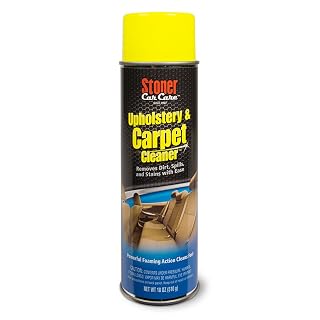
Stoner Car Care
Upholstery & Carpet Cleaner
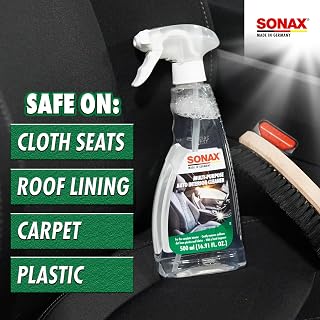
SONAX
Multi-Purpose Interior Cleaner
Turtle Wax
Power Out! Upholstery Cleaner Odor Eliminator
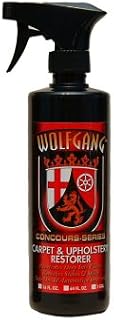
Wolfgang Concours-Series
Carpet & Upholstery Restorer
As an Amazon Associate I earn from qualifying purchases. Full disclosure

Community
0 postsShare how you use this product
Drop a quick comment or post a full review with photos and a star rating.
Sign in to postNew here? Create a free account.