CarCareTruth Score
Mediocre, but it's tough on the environment.
Opens Amazon in a new tab. No account needed to look.
Saved to your guest loadout. Sign up to also save to your Cabinet (consumables) or Kit (tools you own).
As an Amazon Associate I earn from qualifying purchases. Full disclosure
Prices may varyThe manufacturer's Safety Data Sheet classifies this product with one or more GHS Category 1 health hazards — the most severe tier. The hazard statements in quotes below are the verbatim GHS language from the SDS, as required by OSHA's Hazard Communication Standard. The line under each statement translates the GHS classification into plain language.
GHS Category 1 aspiration toxicity — thin, oily liquids can slip into the lungs if swallowed, causing chemical pneumonia.
GHS Category 1 eye damage — classified as causing irreversible eye damage on contact.
If swallowed or splashed in eyes:
The aspiration hazard (H304) is about the liquid being swallowed and reaching the airway, not about breathing fumes during normal use.
Call Poison Control immediately at 1-800-222-1222 (US, 24/7, free) and have the product container with you. Poison Control's standing guidance is to not induce vomiting after chemical exposure; they will direct first-aid steps based on the specific product.
About this product's hazards. This product's Safety Data Sheet uses signal word DANGER.Read the manufacturer's SDS and follow all safety instructions before use. CarCareTruth ratings translate the manufacturer's safety sheet. They do not replace the SDS or substitute for a hazard assessment specific to your task.
Health score is for adult use as intended, per the manufacturer's SDS. It does not model child ingestion, accidental spill cleanup, or off-label use. See the safety panel below for full hazard classification, and /disclaimer for the full editorial scope.
GHS hazard codes are quoted from the manufacturer’s Safety Data Sheet. PPE tiers below translate those codes and the listed ingredient chemistry; they are not CarCareTruth recommendations.
Show details for all categories ▾Hide details ▴
Translated from the manufacturer’s Safety Data Sheet, Section 2
SDS §2 classifies H318 (causes serious eye damage, Cat 1) · the US bottle label reads 'EYE CORROSIVE.' Hard escalation · sealed splash goggles required during the pour and any transfer step.
U.S. regulatory standard
29 CFR 1910.133(a)(1); 1910.151(c)
“The employer shall ensure that each affected employee uses appropriate eye or face protection when exposed to eye or face hazards from… liquid chemicals, acids or caustic liquids…”
ANSI Z87.1 (chemical splash protection — incorporated via §1910.6)
OSHA standards apply to workplaces. Cited here as the U.S. reference threshold for the underlying hazard class.
CarCareTruth publishes the cited sources verbatim and does not advise what action a user should take. Consult the full SDS before use.
Only when: splash risk
Translated from the manufacturer’s Safety Data Sheet, Section 2
SDS §2 classifies H315 (skin irritation). Brief accidental drip contact during a standard pour is the exposure · nitrile gloves are appropriate when splash is likely.
U.S. regulatory standard
29 CFR 1910.138(a)
“appropriate hand protection when employees' hands are exposed to hazards such as those from… chemicals which produce an adverse effect on the skin or eyes…”
OSHA standards apply to workplaces. Cited here as the U.S. reference threshold for the underlying hazard class.
CarCareTruth publishes the cited sources verbatim and does not advise what action a user should take. Consult the full SDS before use.
Translated from the manufacturer’s Safety Data Sheet, Section 2
SDS §2 classifies H335 (respiratory irritation) and the carrier includes xylene at 25-50% (an individually named aromatic solvent above the 5% threshold). Respiratory protection is appropriate during the pour, especially in a semi-enclosed space.
U.S. regulatory standard
29 CFR 1910.134(a); 1910.1200(f)
“The employer shall assess the workplace to determine if hazards are present, or are likely to be present, which necessitate the use of personal protective equipment.”
OSHA standards apply to workplaces. Cited here as the U.S. reference threshold for the underlying hazard class.
CarCareTruth publishes the cited sources verbatim and does not advise what action a user should take. Consult the full SDS before use.
The published Safety Data Sheet for this product does not specify ventilation protection for consumer use.
Workplace context
29 CFR 1910.134(a); 1910.1000
“the primary objective shall be to prevent atmospheric contamination [via] accepted engineering control measures (for example, enclosure or confinement of the operation, general and local ventilation, and substitution with less toxic materials).”
Triggered by GHS H335 on the SDS.
OSHA standards apply to workplaces. Cited here as the U.S. reference threshold for the underlying hazard class.
PPE tiers translate the manufacturer’s SDS and U.S. regulatory standards. Not professional safety advice. How we report safety.
Scope of these PPE tiers. The tiers on this page translate the product's Safety Data Sheet where one is published, plus its ingredient chemistry, into a comparable rating. They describe a formulation, not a situation: a tier is not a safety determination for any specific user, task, quantity, or environment. The manufacturer's label and use instructions govern how the product is handled. Where the product is used at work, the employer's PPE program and hazard assessment under 29 CFR 1910.132 decide what protection is selected, not this page.
No warranties. CarCareTruth makes no warranties, express or implied, and expressly disclaims the implied warranties of merchantability and fitness for a particular purpose.
This product ranks #6 of 9 in Fuel System Cleaner.Three above it ↓
Last reviewed July 31, 2026
TL;DR A PEA-plus-solvent gasoline fuel system cleaner: the SDS confirms polyetheramine for injectors and intake valves, with an aromatic-solvent package extending cleaning to combustion-chamber deposits. Motul is a trusted lubricant name, but this US listing is new with no independent test data yet. Health 4.0/10 (Serious Hazard): DANGER, serious eye damage (H318) at concentrate, so wear sealed goggles.
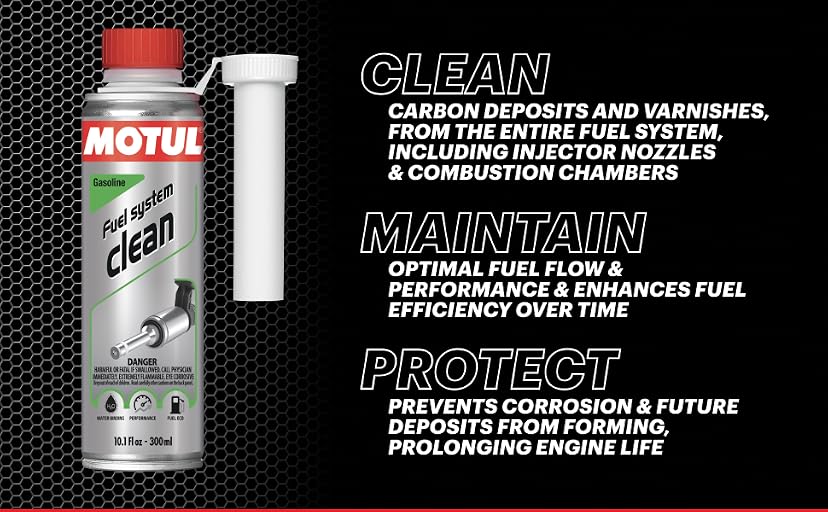
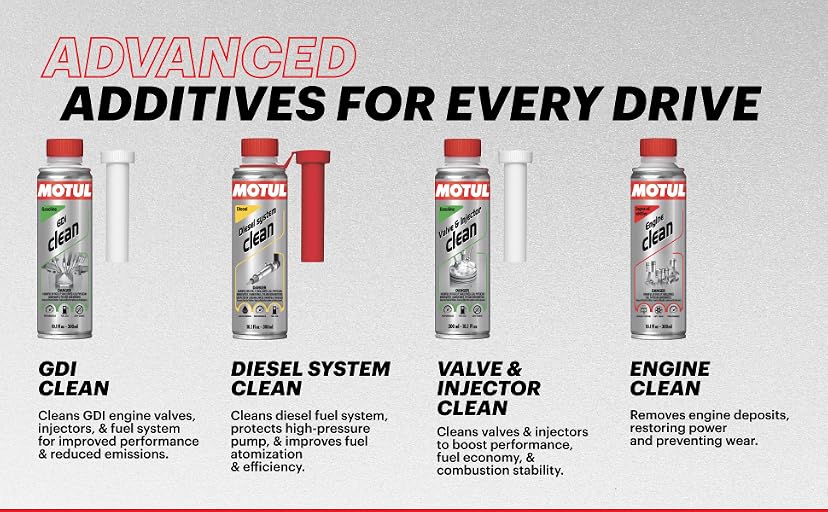
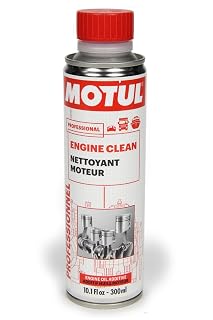
The SDS confirms polyetheramine as the detergent active, backed by a volatile solvent package (an aromatic carrier plus a ketone and an alcohol co-solvent). That chemistry credibly reaches the whole system: the detergent lifts injector and intake-valve deposits, the solvents dissolve combustion-chamber varnish, and the alcohol fraction disperses tank moisture. Motul positions it as periodic maintenance: one 300 ml can treats up to 60 liters, poured in before a refuel. The multi-system claim fits the chemistry, but no independent test data corroborates it.
Best for gasoline-engine owners (port injection, direct injection, or carbureted) wanting a maintenance additive to keep injectors, valves, and chambers clean, especially after non-Top-Tier fuel. Skip it if you run Top Tier gasoline; the OEM detergent package already prevents these deposits. Skip it for misfires or injector failure beyond typical fouling, where professional service is the right call. Not for diesel; Motul sells a separate Diesel System Clean.
SDS §2 is DANGER, driven by H318 (serious eye damage) and H304 (aspiration hazard), with H315, H332, H335, H336, and H373 also classified; the US label reads "EYE CORROSIVE." Sealed goggles suit the pour, with gloves and ventilation given the aromatic carrier and -9°C flash point. Do not induce vomiting if ingested; seek medical attention (H304). The product combusts in the engine; exhaust is the environmental endpoint.
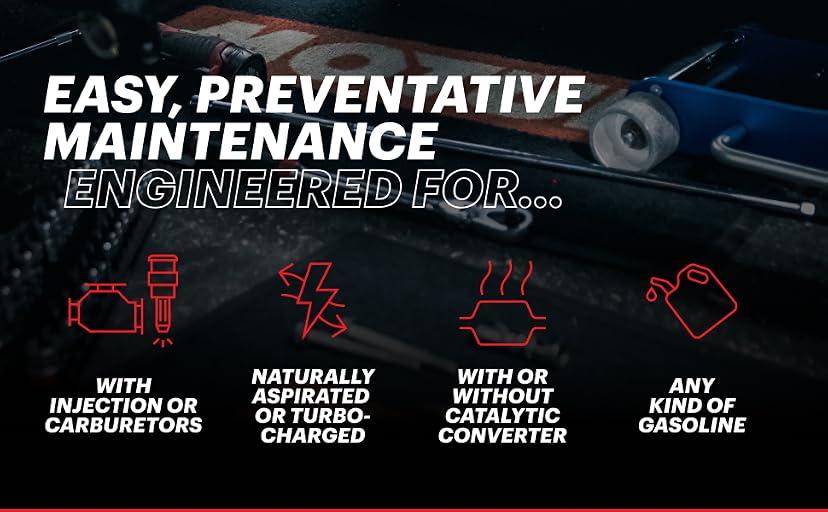
The product listing states it is safe for engines with or without a catalytic converter and lists port injection, direct injection, and carbureted gasoline engines as compatible. PEA-class chemistry is relevant to GDI intake-valve carbon, where the port is not fuel-washed. The brand makes no separate O2-sensor claim on this listing; verify with the manufacturer for unusual applications.
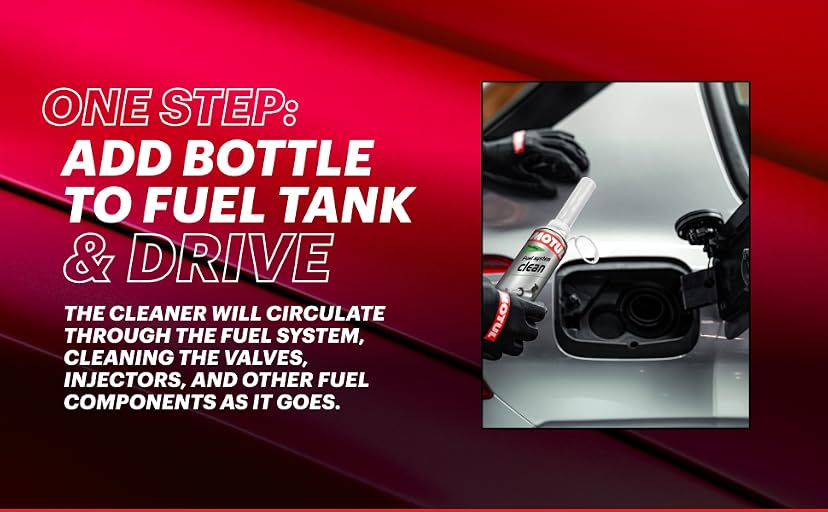
One 300 ml can treats a fuel tank up to 60 liters (about 16 gallons) · a single fill-up for most vehicles. Motul positions it as a periodic maintenance additive: pour it in before you refuel and drive normally, using it at regular intervals and more often in city driving.
No. This is the gasoline version. Motul sells a separate Diesel System Clean formulated for diesel performance · use that product for diesel engines. This can is labeled for gasoline engines only.
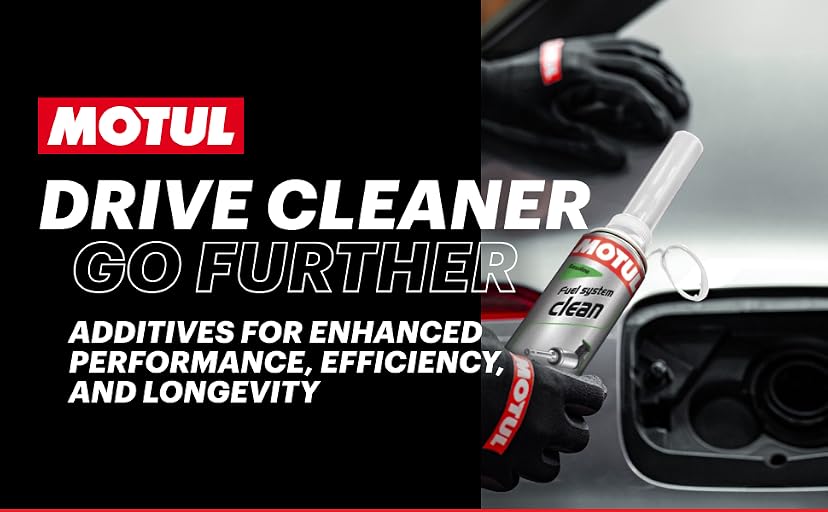
Marketing copy from Motul, via Amazon. Not editorial.
Weekly pick
One product, one safety verdict, every week. No spam.
BG Products
44K Platinum Fuel System Cleaner
Sea Foam
Motor Treatment (3-Pack)
Chevron
Techron D Concentrate Diesel Fuel System Cleaner
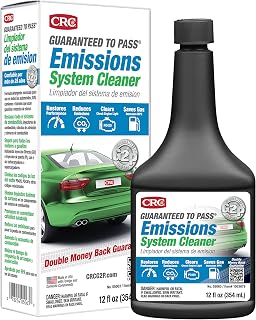
CRC
Guaranteed to Pass Emissions System Cleaner
As an Amazon Associate I earn from qualifying purchases. Full disclosure

Community
0 postsShare how you use this product
Drop a quick comment or post a full review with photos and a star rating.
Sign in to postNew here? Create a free account.